Whether a Malamute Is Stronger Than a Husky
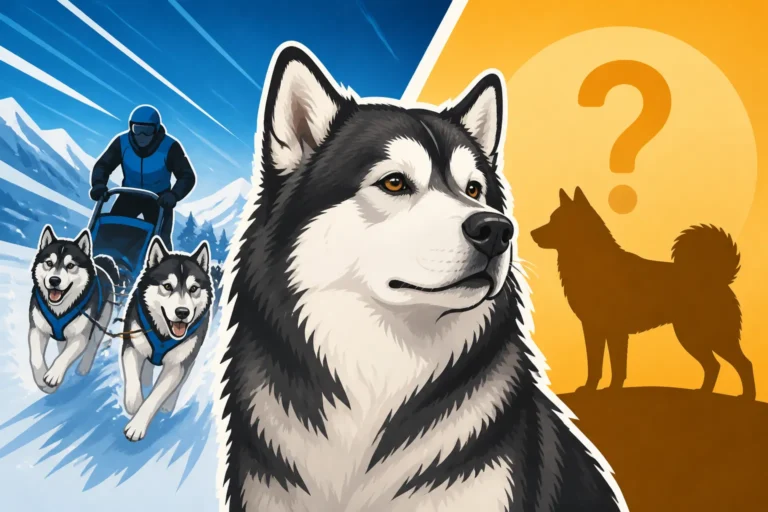
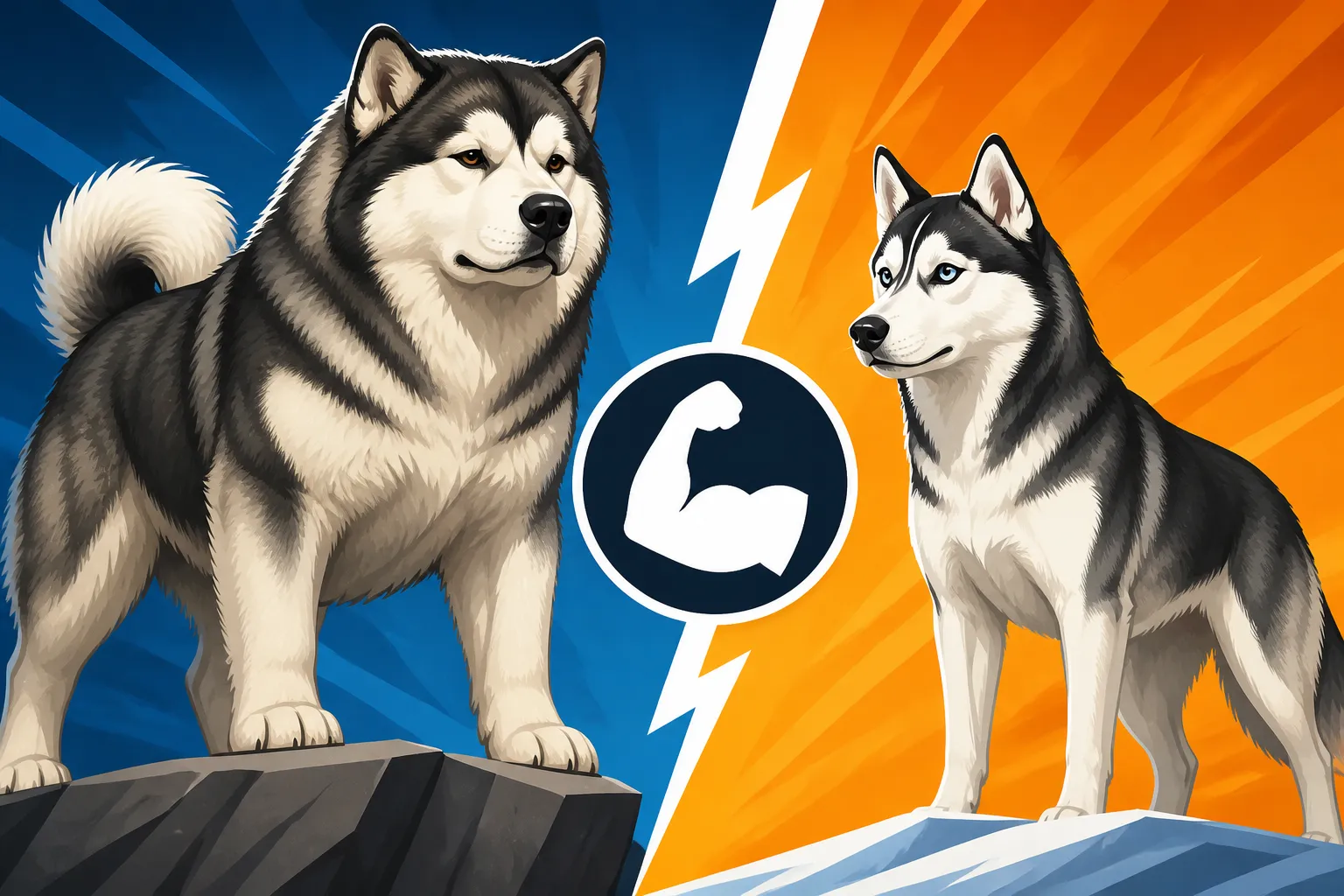
A Malamute often looks stronger than a Siberian Husky, but “stronger” can mean more than bigger muscles: body size, endurance, pulling style, conditioning, and handling all matter. This guide explains what the breeds were built to do, where a Malamute may have an advantage, and why neither breed should be judged—or worked—by appearance alone.
What “stronger” means in a Malamute and a Husky
Size and build are part of the story
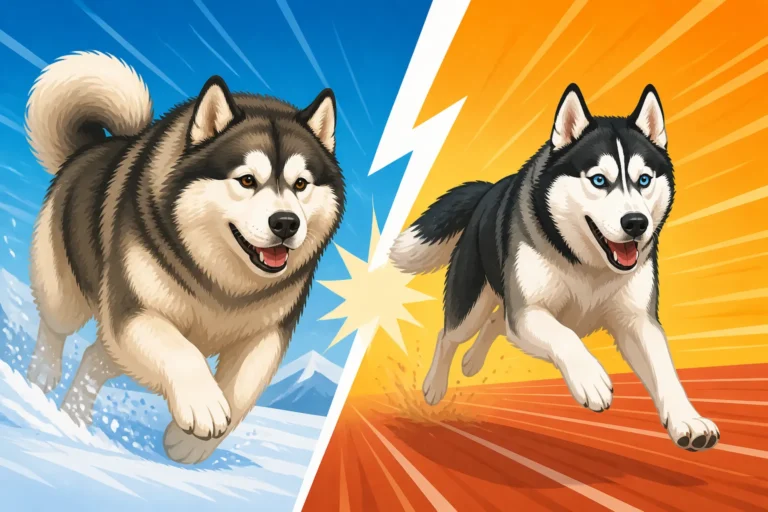
Alaskan Malamutes are generally larger and heavier-built than Siberian Huskies. Their substantial frame, broad chest, and powerful limbs can make an adult Malamute look like the obvious choice in a strength contest. A Husky is usually more lightly built, with a body suited to traveling efficiently over distance.
That difference is real, but it does not mean every Malamute is stronger than every Husky. Individual dogs vary in size, muscle, health, age, and conditioning. A fit, mature Husky may be more capable than a young, overweight, or untrained Malamute in a particular task. Comparing breed averages can help describe tendencies; it cannot predict what two individual dogs can safely do.
It also helps to separate raw size from functional strength. A heavier dog may produce considerable pulling force, but that force is useful only when the dog can move comfortably, keep its footing, and work without pain or strain. A dog’s skeletal structure, joint health, and training matter as much as its appearance. For more context about typical build, see What an Alaskan Malamute Actually Weighs and How Much Bigger a Malamute Is Than a Husky.
Pulling power is not the same as speed
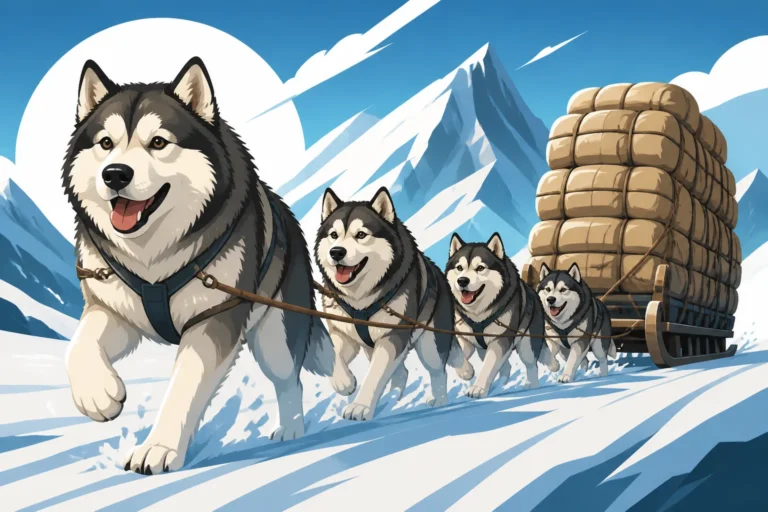
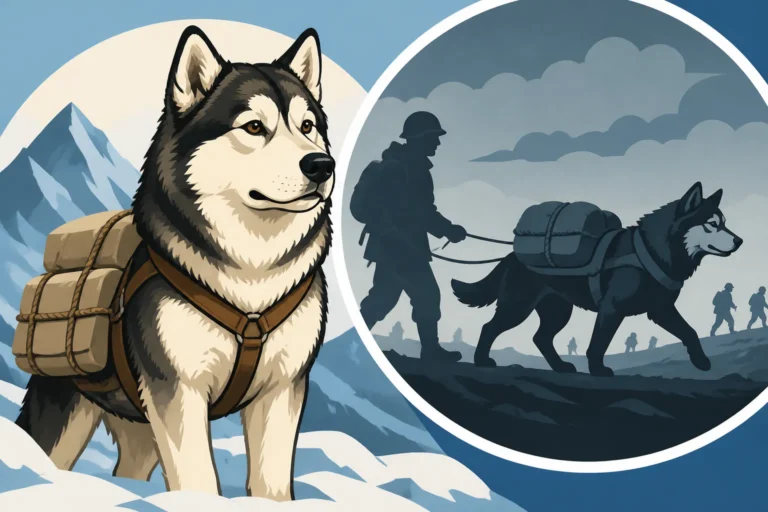
Malamutes were developed as freight dogs: their traditional work emphasized moving loads steadily. Huskies are widely associated with racing and covering distance at speed. These are different kinds of performance, not a simple ranking of one breed as “strong” and the other as “weak.”
A Malamute’s heavier build can be an advantage when the task calls for moving a load at a controlled pace. A Husky’s lighter build can be advantageous when efficiency and speed over distance matter. Real performance also depends on the dog’s training, the surface, weather, harness fit, load, team setup, and the individual animal’s fitness. Breed history offers useful context, but it does not mean a family pet is automatically prepared for work.
This distinction can clear up a common misconception: a dog that can pull hard for a short time is not necessarily the best distance worker, and a dog that excels at sustained movement is not necessarily able to move every heavy load safely. The contrast is explored further in Freight, Not Speed: What Separates a Malamute From a Racing Dog and Whether a Malamute Outpulls a Husky.
| Comparison | Alaskan Malamute | Siberian Husky |
|---|---|---|
| Typical build | Larger and more heavily built | Generally lighter and more streamlined |
| Traditional work | Moving freight steadily | Traveling efficiently, including at speed |
| What appearance may suggest | Greater body mass and potential pulling power | Greater emphasis on efficient movement |
| What appearance cannot prove | The dog’s health, conditioning, or safe working ability | The dog’s health, conditioning, or safe working ability |
| Best comparison | Evaluate the individual dog and task | Evaluate the individual dog and task |
What Malamute strength looks like in everyday life
A powerful dog can be challenging on leash
People often notice a Malamute’s strength when the dog leans into a leash, spots a squirrel, or decides that a walk should go in a different direction. That can feel like trying to steer a small freight train, particularly if the dog is excited and the person holding the leash is unprepared.
But pulling on a walk is not a reliable test of strength. It may reflect excitement, habit, poor leash skills, or a highly interesting distraction. A dog that pulls should be taught more manageable walking habits and handled with equipment fitted for that dog—not encouraged to drag a person as a demonstration of power. A well-fitted harness can be useful for some activities, but it is not a substitute for training or control.
If you are choosing equipment, fit and intended use matter more than a label that promises extra strength. A local pet shop or an online retailer such as Chewy may offer different harness styles, but check the dog’s measurements and follow the manufacturer’s fitting guidance. The harness should not rub, restrict movement, or put pressure in an unsafe place. If you are unsure what suits your dog, ask a veterinarian or a qualified trainer.
Pulling sports require preparation, not just muscle
Weight pulling, sledding, and other pulling activities may look like natural outlets for a strong northern breed. They still require careful preparation. A dog needs gradual conditioning, suitable equipment, clear cues, and time to rest. The handler also needs to know how to keep the activity appropriate for the dog’s age, health, and experience.
A dog that is eager to pull may not know when to stop. People sometimes mistake enthusiasm for readiness, especially when a young dog charges into a harness. That is a reason to progress carefully rather than increase the load to see what happens. For a puppy or adolescent, growth and joint development are important considerations; ask a veterinarian before starting strenuous or load-bearing work.
For organized activities, work with experienced instructors who can assess the dog and teach safe handling. The goal is not to prove that one breed can overpower another. It is to give the dog a suitable job while protecting its body. For more on the breed’s working instincts, see Pulling Is the Only Job an Alaskan Malamute Really Wants and The Alaskan Malamute in Skijoring.
Why breed labels do not predict an individual dog’s strength
Conditioning, age, and health change the comparison
A healthy, conditioned adult may be more capable than a dog with the same breed label that rarely exercises. Muscle develops through appropriate activity, and stamina depends on practice as well as genetics. Age matters, too: a growing dog, an older dog, and an adult in good condition should not be expected to perform the same way.
Body condition is easy to misread under a thick double coat. A dog may look bulky because of fur while carrying a healthy amount of weight—or be heavier than is comfortable without it being obvious. Excess weight can make exercise harder and increase stress on joints. If you are unsure about your dog’s body condition or exercise plan, ask your veterinarian to assess the dog rather than relying on appearance.
Pain and illness can also change how a dog moves or works. Limping, stiffness, reluctance to jump, unusual fatigue, or a sudden change in activity deserves attention. Do not treat these signs as stubbornness or assume that a powerful breed should simply push through. Owners interested in joint health can read Hip Dysplasia in an Alaskan Malamute for more background on a condition that may affect movement.
Temperament and training affect what strength looks like
A dog’s willingness to pull, focus, and respond to cues can make it seem more or less powerful in a given situation. A Malamute that is calm and well managed may be easier to handle than a smaller dog that is highly aroused and pulling unpredictably. That does not mean one is physically stronger; it means behavior changes the experience of handling the dog.
Both breeds benefit from patient, consistent training. Teach skills such as walking on a loose leash, waiting at doors, and responding to familiar cues in different environments. Practice when distractions are manageable before expecting the dog to respond around wildlife, other dogs, or a busy trail. Physical strength makes reliable handling more important, not less.
Avoid trying to settle the question by staging a contest between dogs or encouraging one dog to pull against another. That can create injury, fear, or conflict, and it tells you little about the dogs’ safe working capacity. If you are choosing between the breeds, think about your daily routine, experience, exercise plans, and ability to manage a large, energetic dog. Alaskan Malamute or Siberian Husky for a First Sled Breed can help frame that broader decision.
How to compare the breeds responsibly
Match the dog to the activity
Start with the activity you actually want to do. For neighborhood walks, manageable leash behavior and a good fit with your household matter more than maximum pulling force. For hiking, consider stamina, temperature, terrain, and the dog’s training. For organized pulling sports, seek experienced instruction and veterinary guidance before increasing effort or load.
A Malamute’s size does not make it a safe choice for every heavy task, and a Husky’s lighter build does not make it incapable of demanding work. The suitable load and pace depend on the individual dog, the equipment, the conditions, and the handler’s skill. When in doubt, choose a lower-intensity activity and build up gradually rather than testing the dog’s limits.
Heat deserves special attention with thick-coated northern breeds. Avoid strenuous exercise in hot conditions, watch for signs of overheating, and provide access to shade and water. A dog that appears eager may still be getting too warm. If the dog becomes unusually distressed, weak, confused, or unsteady, stop activity and seek veterinary help promptly.
Use a practical checklist instead of a strength contest
Before comparing two dogs, ask what you mean by “stronger.” Are you asking which dog is larger, which can pull a particular load, which has more stamina, or which is easier to handle? These questions have different answers, and some cannot be answered from breed alone.
A useful comparison focuses on observable, relevant details: each dog’s age, body condition, health, training, and experience with the activity. If the question is about a working dog, involve a knowledgeable instructor or veterinarian. If it is about choosing a companion, consider the realities of daily care, not just the appeal of a powerful-looking dog.
For instance, imagine two healthy adult dogs on a trail: one Malamute and one Husky. The Malamute may have more body mass, while the Husky may move more lightly. If the Malamute is out of condition or overheated, its size is no advantage. If the Husky is untrained and pulling erratically, its lighter frame does not automatically make it easier to manage. The useful answer is about the dogs in front of you, not a universal breed ranking.
Chewy and other retailers may be one place to compare everyday supplies, but buying a stronger-looking leash or harness does not by itself make a dog safe to handle. Prioritize training, correct fit, and a realistic activity plan. For a broader look at breed differences, see The Alaskan Malamute Against the Siberian Husky.
Disclaimer
This article is for general informational purposes only and does not constitute professional advice. Laws, prices and regulations vary by location and change over time. Consult a qualified professional for guidance on your specific situation.