Whether a Malamute Works for Praise
It’s a common frustration for Alaskan Malamute owners: you’re trying to teach your big, fluffy companion something new, you’re showering them with enthusiastic praise – "Good dog! Yes! Such a clever boy!" – and they just… stare at you. Or worse, they yawn and walk away. It leaves you wondering if your heartfelt adoration means absolutely nothing to them. This guide dives into the unique psychology of the Alaskan Malamute, exploring why traditional praise often needs a little extra something, and how to create a reward system that truly resonates with your magnificent, intelligent, and yes, sometimes infuriatingly independent companion.
The Independent Spirit of the Alaskan Malamute
Understanding why your Malamute might not jump through hoops for a simple "good boy" starts with a look at their incredible history. These aren't dogs bred for dainty parlor tricks; they were indispensable partners in some of the harshest environments on Earth.
A History of Self-Reliance
The Alaskan Malamute's ancestors, the dogs of the Mahlemut people of Alaska's Kotzebue Sound, were bred for incredible endurance and intelligence, especially when it came to freighting heavy loads across vast, often treacherous, Arctic terrain. Their survival, and the survival of their human companions, often depended on their ability to make smart decisions independently, without constant instruction. Imagine a team of dogs navigating a blizzard – the lead dog couldn't wait for a human command for every turn or obstacle. They had to think for themselves, assess risks, and apply their own judgment.
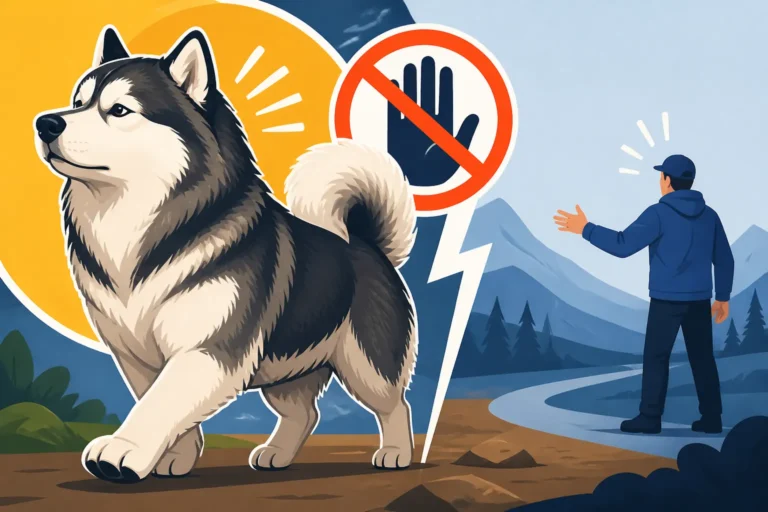
This deep-seated history has woven an impressive thread of self-reliance into the Malamute's genetic makeup. They weren't created to be blindly obedient or to live for human praise alone. Their intrinsic value was in their capability, their resilience, and their ability to problem-solve. When you call your Malamute and they consider it for a moment before deciding to come, or not, they’re not being disobedient out of spite; they're often weighing the situation, just as their ancestors might have done before committing to a path on icy tundra. It's a hallmark of their magnificent heritage, but it definitely means a different approach to training.
The "What's In It For Me?" Mindset
This isn't to say Malamutes don't love their people—they absolutely do, with a profound, loyal affection. But their affection doesn't always translate into an innate desire to please in the same way some other breeds might. A Malamute operates with a very clear, albeit often unspoken, "what's in it for me?" clause for most tasks. If a behavior doesn't offer a tangible reward, satisfy an intrinsic need, or provide some form of meaningful satisfaction, they'll often opt out. They are incredibly efficient creatures; why expend energy for mere words when there's no clear benefit?
This isn't pure stubbornness, though it can certainly feel that way when you're standing in the rain with an uncooperative Malamute on the end of a leash. It's more accurately described as independence and a practical outlook. They understand cause and effect, and if the effect (a treat, a game, a walk, a chance to pull) isn't immediately apparent or compelling, then the cause (performing the requested behavior) simply isn't worth their time and effort. Recognizing this fundamental aspect of their personality is the first step toward successful training. You can explore this further by understanding Telling a Stubborn Malamute From an Independent One.
Beyond "Good Dog!": What Truly Motivates a Malamute
Since mere verbal praise often falls short as a primary motivator for our self-sufficient Malamutes, what does get their magnificent minds and powerful bodies moving? The answer lies in tapping into their primal drives and their love for tangible rewards.
The Power of High-Value Treats and Food Rewards
Let's be honest: food is often the Malamute's love language, and it’s usually the most effective tool in the initial stages of training. This isn't a sign of a lesser dog; it's a testament to their survival instincts. For a dog whose ancestors often faced food scarcity, a high-value treat is an undeniable, immediate reward. When teaching a new command, a delicious morsel serves as instant, unequivocal communication: "Yes, that's exactly what I wanted you to do!"
When we talk about high-value treats, we're not necessarily talking about dry kibble (unless your Malamute is unusually enthusiastic about it!). Think about small pieces of cooked chicken, cheese, or even specially formulated soft training treats. These treats should be enticing enough to capture and hold their attention, even amidst distractions. Consistency is key here; the treat needs to appear the instant the desired behavior occurs, so having a treat pouch ready, perhaps one you found easily on Amazon, is incredibly helpful. This immediate gratification helps solidify the connection between their action and the reward, laying a strong foundation for future learning. For more on this, check out What an Alaskan Malamute Will Work For.
Play, Adventure, and Purposeful Work
Beyond food, Malamutes are deeply motivated by activities that engage their physical and mental capabilities. These are working dogs, and a job, even a seemingly simple one, often provides more satisfaction than any amount of verbal praise. This means incorporating play, adventure, and purposeful work into their training and daily lives.
Think about games of tug-of-war (with clear rules, of course), short bursts of fetching (many Malamutes aren't built for endless retrieve, but a few throws can be a great reward), or engaging scent work where they get to use their powerful noses to find hidden treats. A securely fenced yard for a brief "free run" can also be a fantastic reward for a recall practice, provided safety is paramount given their impressive prey drive and lack of reliable recall. However, the ultimate motivator for many Malamutes is the chance to pull. Whether it's a sled, a cart, or even just their owner on skis, Pulling Is the Only Job an Alaskan Malamute Really Wants is a powerful statement about their core being. Using these activities as rewards for good behavior makes training less of a chore and more of a partnership.
The Reinforcement Schedule: Mixing It Up
While food and play are excellent initial motivators, you don't want your Malamute to become dependent on them forever. This is where the concept of an intermittent reinforcement schedule comes into play. Once your Malamute reliably performs a behavior, you can start varying when and how you reward them. This means you won't give a treat every single time; sometimes it'll be a treat, sometimes a quick game, sometimes just enthusiastic praise paired with a scratch behind the ears.
This "gambling effect" actually makes the behavior stronger and more resistant to extinction. Your Malamute never knows exactly when the big payoff is coming, so they keep trying, hoping for that jackpot reward. Praise starts to gain more value here because it's often accompanied by a tangible reward, making it a "promise" of something good to come. This keeps them engaged, attentive, and guessing, making them more likely to work for you rather than simply waiting for the guaranteed treat.
Integrating Praise and Building Connection
So, if food and play are the primary drivers, does praise have any role at all? Absolutely! Praise is crucial, but its function is often different for a Malamute than for a highly biddable breed. It acts as a marker, a bridge, and a vital component in building a deep, trusting relationship.
The Role of Praise as a Marker and Bridge
Think of verbal praise not just as a pat on the back, but as a precise signal. When your Malamute performs the desired action, a clear, concise verbal marker like "Yes!" or "Good!" delivered with enthusiasm, at the exact moment of success, tells them they've got it right. This marker then becomes a bridge to the tangible reward, whether it's a high-value treat or a quick game. The sequence is vital: action -> praise/marker -> reward. Over time, your Malamute learns that the sound of your praise predicts a good outcome.
This pairing is critical. Initially, the praise itself might not mean much, but by consistently coupling it with something they truly value, the praise itself acquires secondary reinforcing properties. Eventually, your Malamute will start to associate "Good dog!" with positive feelings, even if a treat doesn't follow every single time. It becomes a signal of your approval and a precursor to something they'll enjoy. This builds confidence and clarity in their understanding of what you're asking.
Making Praise Meaningful
For Malamutes, the meaning behind your praise is just as important as the words themselves. They are incredibly attuned to tone of voice and body language. A flat, unenthusiastic "good" won't have the same impact as a bright, happy, genuinely excited "YES!" delivered with a wagging tail (yours!) and a joyful expression. Your genuine connection and excitement become part of the reward.
Consider combining verbal praise with physical affection, but only if your Malamute truly enjoys it. Some Malamutes are all about the cuddles and ear rubs, finding them to be a delightful bonus to any training session. Others are more independent and prefer their personal space. Observe your dog; do they lean into your touch, or do they tolerate it? Tailor your physical affection as a reward to their individual preference. Resources like BAXTER & Bella, an online puppy school, often emphasize these positive, relationship-based training techniques where praise and connection are woven into the fabric of learning, even for independent breeds.
When Praise Might Be Enough (Sometimes!)
While it's rare for praise to be the sole motivator for a Malamute learning a new, challenging behavior, there are instances where it can suffice:
- For behaviors they already enjoy: If your Malamute loves to come to you for attention, a simple "good boy" after they approach might be enough to reinforce that naturally enjoyable interaction.
- In very low-stakes, familiar situations: Once a behavior is deeply ingrained and practiced hundreds of times, and the environment is calm and free of distractions, praise alone can sometimes maintain the behavior. This is more about maintaining a routine than actively working.
- When they are genuinely seeking connection: There are moments when your Malamute simply wants to bond, and your delighted praise, accompanied by a loving look, can be incredibly rewarding. This isn't necessarily "working for praise" in a formal training sense, but rather a mutual enjoyment of companionship.
It's important to remember these are generally the exceptions. For anything that requires effort, self-control, or overriding their strong instincts (like a reliable recall near a squirrel!), praise almost always needs to be coupled with something more tangible, especially when you are building the initial association. Trying to rely on praise alone for a complex task would be like asking a seasoned freight hauler to pull a heavy load for a pat on the head—it just doesn't make practical sense to them.
Practical Strategies for Motivating Your Malamute
Working with an Alaskan Malamute is a journey of understanding and adaptation. They are not miniature German Shepherds or Golden Retrievers; they are unique, powerful, and intelligent creatures who thrive on clear, consistent communication and rewards that make sense to them.
Consistency and Clear Communication
Malamutes, perhaps more than many breeds, crave consistency and clear expectations. Ambiguity in commands or an inconsistent reward system will quickly lead to them making their own rules or simply ignoring you. If "sit" sometimes means a treat and sometimes means nothing, they'll learn that "sit" is optional. If you say "stay" but allow them to break it sometimes, they'll test that boundary every single time. Whether an Alaskan Malamute Ignores a Cue It Knows often stems from this inconsistency.
Keep your cues short, distinct, and use them consistently. Everyone in the household needs to be on the same page regarding commands and reward systems. Malamutes learn best in short, frequent training sessions, perhaps 5-10 minutes a few times a day, rather than one long, arduous session. Whether Short Sessions Suit an Alaskan Malamute is a concept that plays directly into their attention spans and independent nature. These short bursts allow for focused learning before boredom or independent thought takes over.
Patience and Positive Reinforcement
Force, harsh corrections, or punitive training methods are not only ineffective for an Alaskan Malamute but can actively damage your relationship with them. Malamutes are incredibly sensitive to unfairness and will shut down, become resistant, or even defensively aggressive if they feel threatened or unfairly treated. Why Force Fails on an Alaskan Malamute is a lesson many new owners learn the hard way.
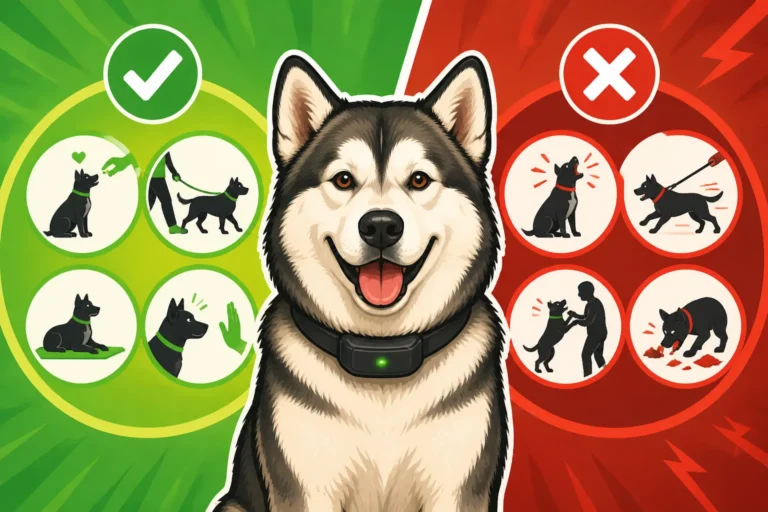
Instead, focus entirely on positive reinforcement. Reward what you want to see. If your Malamute offers a sit, reward it! If they don't jump on guests (even if it took them a moment to decide not to), reward that calm behavior. This builds a foundation of trust and makes training a positive experience for both of you. It's a journey, especially with an adolescent Malamute who might seem to rewrite the rules they once knew. The Adolescent Malamute That Rewrites the Rules at Fourteen Months often tests boundaries, requiring you to double down on consistent positive reinforcement. Celebrate small victories and remember that patience is your most valuable training tool.
Understanding Their Limits
Part of successfully motivating your Malamute is understanding when they've had enough. These dogs are smart, but they also have their own agenda. Pushing them too hard when they're tired, bored, or overstimulated with just verbal praise will likely lead to disengagement, frustration, and a breakdown in communication. They might lie down, look away, or simply wander off. Recognize these cues and end the session on a positive note, even if it's for a simple, easy command they already know.
Varying your rewards and keeping training fresh is also important to prevent boredom. Whether Repetition Bores an Alaskan Malamute is a resounding yes! They are intelligent and quickly figure things out, but they also get bored with doing the same thing for the same reward repeatedly. Introduce new challenges, switch up your treat types, or offer a different type of play reward to keep them guessing and engaged. Your Malamute is a partner, not a robot, and approaching training with respect for their independent mind will yield far greater success.
Comparison of Motivators for Alaskan Malamutes
Here's a quick overview of how different motivators stack up for your Alaskan Malamute:
| Motivator Category | Examples | Effectiveness for Malamutes | Notes |
|---|---|---|---|
| High-Value Food | Cooked chicken, cheese, specific training treats | High | Often the strongest initial motivator, especially for learning new, complex, or challenging behaviors. Crucial for capturing attention and making clear associations. |
| Play/Activities | Tug, short "chase," scent games, short pulling sessions | High | Satisfies deep-seated breed drives and provides mental and physical stimulation. Excellent for reinforcing desired behaviors in a fun way, and for building a strong bond through shared activity. |
| Verbal Praise | "Good dog!", "Yes!", enthusiastic tone | Moderate (as primary) | Essential as a precise marker of desired behavior and for building a positive emotional connection. However, rarely sufficient as the sole motivator, especially when competing with instinct or strong distractions. Must be paired with tangible rewards initially. |
| Physical Affection | Ear rubs, chest scratches, belly rubs (if desired) | Moderate (situational) | Can be a powerful reward for Malamutes who enjoy physical touch, reinforcing their connection with you. Always respect individual preferences; some Malamutes prefer less physical interaction. |
| Environmental Rewards | Access to a favorite sniffing spot, a walk, a dip in water | Moderate | Can be effective if linked directly to a desired behavior (e.g., "sit and wait" at the door for the reward of going outside). Taps into their desire for exploration and comfort. |
Disclaimer
This article is for general informational purposes only and does not constitute professional advice. Laws, prices and regulations vary by location and change over time. Consult a qualified professional for guidance on your specific situation.