The Year the AKC Recognized the Alaskan Malamute
It’s easy to take for granted the familiar breeds we know and love today, but many have fought tooth and nail for their place, often teetering on the brink of disappearance. The Alaskan Malamute, with its noble bearing and powerful spirit, is one such breed whose very survival was once uncertain, making its eventual recognition by the American Kennel Club a monumental moment for preservation and securing its future. This guide will walk you through the arduous journey this magnificent breed undertook to achieve its rightful place.
The Alaskan Malamute: A Legacy Forged in the Arctic Wilds
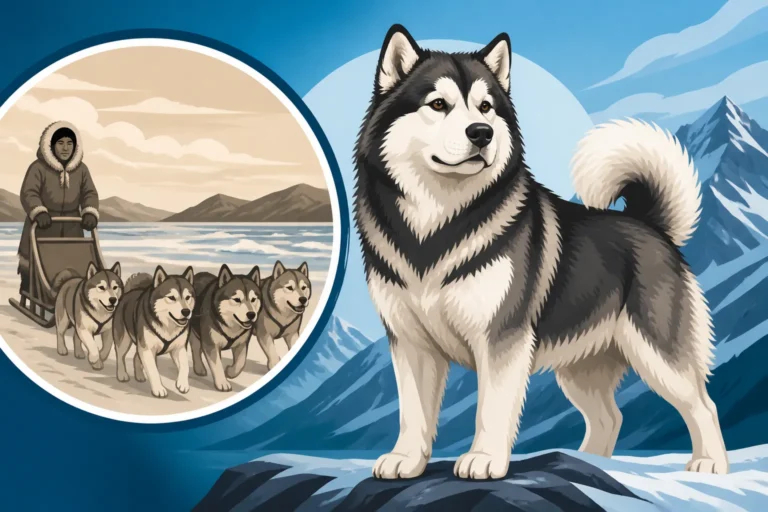
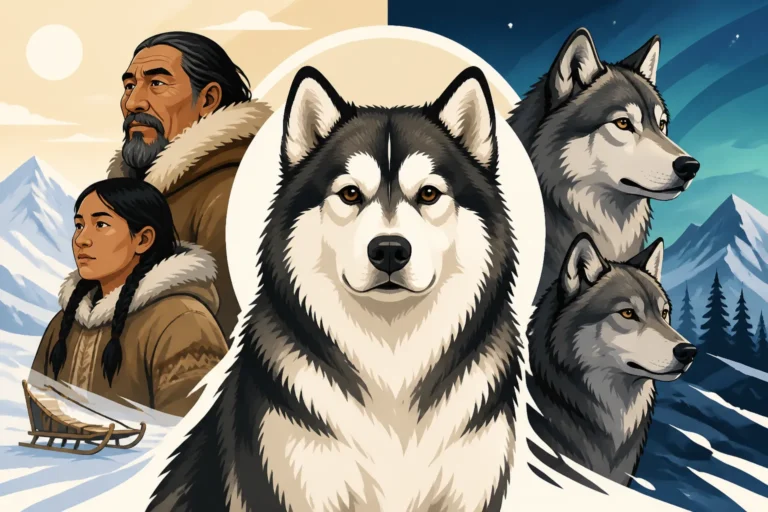
Long before any official kennel club existed, the Alaskan Malamute was already a cornerstone of survival in one of the harshest environments on Earth. These dogs weren't pets in the modern sense; they were indispensable partners, bred by the indigenous Mahlemut people of Alaska's Kotzebue Sound for millennia. Their existence was intrinsically linked to the lives of their human companions, a bond forged through necessity and mutual respect.
Indispensable Partners of the Mahlemut People
Imagine living in a world where your very existence hinged on your ability to move supplies, hunt, and navigate treacherous snowy landscapes. That was the reality for the Mahlemut, and their dogs were their lifeblood. These wasn't a breed for the faint of heart, nor were they bred for delicate beauty; they were pure utility, robust and powerful, capable of hauling heavy loads over vast distances with unwavering endurance. Their entire physique, from their dense double coat to their broad chest and powerful legs, was perfectly adapted for this demanding freighting work.
The Mahlemut people understood the unique qualities of their dogs. They selectively bred for strength, intelligence, and a temperament that allowed these powerful animals to work cohesively in teams. It wasn't about speed, which is a common misconception often drawn from comparisons to other sled dog breeds. Instead, it was about sustained power and stamina, making them perfectly suited for tasks like moving camps or bringing back game. This ancient connection is fascinating, and you can learn more about it in The Mahlemut of Kotzebue Sound Bred the Alaskan Malamute.
A Working Dog, Not a Racing Dog
One of the most crucial distinctions to grasp about the Alaskan Malamute is their original purpose. They were the ultimate freighting dogs, built for power and endurance over long distances, not the lightning-fast sprints of racing teams. Their heavy bone structure and deep chest, designed to maximize lung capacity for continuous exertion, meant they were the semi-trucks of the Arctic, not the sports cars. This distinction is often misunderstood, even today.
This focus on freighting also shaped their temperament. While they are intelligent and capable of learning, their independence and problem-solving skills, honed by centuries of working in unforgiving terrain, mean they aren't always eager to please in the way some other breeds might be. Their motivation often comes from the inherent joy of the work itself, particularly pulling. Indeed, for many, Pulling Is the Only Job an Alaskan Malamute Really Wants. Understanding this deep-seated drive is key to truly appreciating the breed.
Gold Rush Chaos and the Near Loss of a Noble Breed
The tranquility and purity of the Malamute's existence were dramatically disrupted with the arrival of the Gold Rush in Alaska in the late 19th and early 20th centuries. Suddenly, the isolated world of the Mahlemut was flooded with prospectors and adventurers, all desperately seeking their fortune, and all needing dogs. The demand for strong, resilient sled dogs skyrocketed, and this sudden boom had a devastating impact on the indigenous Malamute lines.
The Influx of "New" Blood
As thousands poured into Alaska, they brought with them a myriad of dog breeds, many of which were crosses or of unknown lineage. The priority for prospectors wasn't purebred preservation; it was sheer utility and speed to move their gear and themselves to the goldfields. Any dog that could pull, regardless of its heritage, was valuable. This led to widespread cross-breeding between the powerful native Malamutes and various other dogs, including smaller, faster breeds like Siberian Huskies or even European breeds, in an attempt to create faster or simply more numerous working dogs.
The market for these dogs was chaotic. Money talked, and breeders, or rather, opportunistic dog owners, were happy to breed anything that could be passed off as a sled dog. This era saw an explosion of mixed-breed "Alaskan Huskies" – a generic term for any sled dog mix – which further obscured and diluted the unique characteristics of the true Alaskan Malamute. The beautiful, distinct type that the Mahlemut had carefully cultivated for centuries began to fade, lost in a sea of hybrid offspring.
Dilution and the Threat of Extinction
The sheer scale of cross-breeding during the Gold Rush meant that purebred Malamutes became incredibly rare. Their unique traits, from their specific coat texture and coloring to their characteristic head shape and tail carriage, were quickly being bred out. It was a crisis for the breed. If left unchecked, the pure Alaskan Malamute, as it had existed for thousands of years, would have simply vanished, assimilated into the general population of sled dogs.
This period was a stark reminder of how fragile breed integrity can be, especially when economic pressures and urgent needs override considerations of genetic preservation. The pure Mahlemut dogs, once abundant, were now scattered, their lineage confused, and their future hanging precariously in the balance. It was a terrifying prospect for anyone who truly valued the breed for its historical significance and working prowess.
The Dedicated Efforts to Preserve the Alaskan Malamute
Thankfully, not everyone was swept up in the commercial frenzy of the Gold Rush. A few dedicated individuals recognized the imminent threat to the Alaskan Malamute and embarked on a painstaking mission to save the breed from extinction. These weren't easy times, and their efforts required immense dedication, travel, and a keen eye for identifying the authentic characteristics that defined a true Malamute.
Pioneering Preservationists: Arthur Walden and Eva Seeley
Among the most prominent figures in the early 20th-century preservation efforts were Arthur Walden and Eva "Short" Seeley. Walden, an experienced Arctic adventurer and dog driver, played a crucial role in bringing the first pure Malamutes out of Alaska. He ran dog teams, including those made up of large, powerful Malamute-type dogs, and his expeditions helped raise awareness of these magnificent animals. His "Chinook" kennel focused on powerful northern dogs, which laid some groundwork.
However, it was Eva Seeley who truly dedicated her life to systematically rebuilding and preserving the Alaskan Malamute. She was meticulous, seeking out the remaining examples of the old Mahlemut type and carefully breeding them to establish consistent lines. Her "Kotzebue" strain of Malamutes became legendary for their adherence to the original type – medium-sized, powerful, and uniform in appearance. Her efforts were instrumental in creating a foundation for the breed's future, as detailed in How the Malamute Was Rebuilt After the Gold Rush.
Identifying and Standardizing the Breed
The challenge for these early preservationists wasn't just finding pure dogs; it was also defining what a pure Malamute truly was. Without a formal breed standard, there was no objective measure. Seeley, along with other enthusiasts, worked to articulate the ideal Malamute – its size, its distinctive double coat, its powerful build, its head shape, ear set, and the characteristic plumed tail. They studied historical accounts and existing dogs, painstakingly documenting traits to create a blueprint.
This standardization was vital. It provided a clear goal for breeders and a way to distinguish the authentic Malamute from the countless crosses that proliferated during and after the Gold Rush. It was about capturing the essence of the dog that had served the Mahlemut so faithfully for centuries, ensuring that its physical and temperamental hallmarks would be passed down through generations. These early definitions formed the basis of what would become the official breed standard.
The Road to AKC Recognition: A Journey of Standards and Preservation
With a dedicated group of enthusiasts and a burgeoning understanding of what constituted a true Alaskan Malamute, the stage was set for the next crucial step: formal recognition by the American Kennel Club (AKC). This was not a quick or easy process; it required years of careful breeding, documentation, and advocacy to prove the breed's distinctiveness and stability.
Establishing the Alaskan Malamute Club of America
A critical step in gaining AKC recognition is the formation of a national breed club. This club serves as the official voice of the breed, responsible for setting ethical breeding guidelines, educating the public, and promoting the breed's welfare. The Alaskan Malamute Club of America (AMCA) was founded with this very purpose, bringing together the scattered but passionate proponents of the breed. Their efforts were crucial in consolidating information, establishing a clear lineage for their dogs, and presenting a united front to the AKC.
The club meticulously gathered pedigrees, traced back lineages to the purest available foundation stock, and worked to ensure that the dogs being presented for recognition were truly representative of the traditional Malamute type. This rigorous process meant that dogs from various foundational lines, notably the Kotzebue line championed by Eva Seeley and the M'Loot line, were evaluated. You can learn more about these foundational lines in What the Kotzebue Malamute Line Is and What the M'Loot Malamute Line Is.
Defining the Breed Standard
The AMCA's primary task, in conjunction with the AKC, was to finalize and codify the breed standard. This document is essentially the Malamute's constitution, describing the ideal physical characteristics, temperament, and movement of the breed. Every detail matters: the color and texture of the coat, the shape of the skull, the placement of the ears, the strength of the jaw, the muscular development, and even the way the tail is carried. It also outlined disqualifying faults, such as blue eyes, which are a clear indicator of non-Malamute lineage, as discussed in Why a Malamute Should Never Have Blue Eyes.
This standard served a dual purpose. Firstly, it provided breeders with a clear goal to strive for, ensuring uniformity and adherence to the historical type. Secondly, it gave judges a precise blueprint against which to evaluate dogs in the show ring, protecting the breed's integrity. The standard emphasizes that the Malamute is first and foremost a powerful freighting dog, capable of sustained effort in cold climates, and its characteristics reflect that purpose.
The Moment of Recognition: 1935
After years of dedicated work, careful breeding, and the establishment of a robust breed standard and club, the Alaskan Malamute finally received its official recognition from the American Kennel Club. The year was 1935. This was a landmark achievement, marking the breed's formal acceptance into the purebred dog world and providing a safeguard against the dilution that had nearly claimed it during the Gold Rush.
This recognition wasn't just a formality; it was a validation of the tireless efforts of the preservationists. It meant that the Alaskan Malamute was officially acknowledged as a distinct and valuable breed, with a protected lineage and a defined future. For anyone who had witnessed the near-loss of these incredible dogs, 1935 was a year to celebrate, signifying that the Mahlemut's ancient working companion was finally secure.
What AKC Recognition Meant for the Alaskan Malamute
AKC recognition brought a host of benefits and responsibilities to the Alaskan Malamute breed. It transformed the Malamute from a regional working dog, often conflated with other northern breeds, into a recognized and protected member of the purebred dog community, opening doors to greater visibility and preservation efforts.
Increased Visibility and Public Awareness
Before AKC recognition, the Alaskan Malamute was largely unknown outside of its native Alaska and a small circle of sled dog enthusiasts. Recognition changed that dramatically. Suddenly, the breed was featured in dog shows, publications, and became a part of the national purebred conversation. This increased visibility led to a surge in public interest, attracting new enthusiasts and responsible breeders who were committed to the breed standard.
However, this increased popularity also came with its own challenges. As more people became aware of the Malamute, some sought them out for their striking appearance without fully understanding their demanding needs as a working breed. This meant that the AMCA and responsible breeders had an even greater role to play in educating potential owners about the breed's true nature, exercise requirements, and potential challenges.
Establishing and Maintaining a Breed Registry
One of the most crucial aspects of AKC recognition is the establishment of a formal breed registry. This registry tracks the lineage of every registered Malamute, ensuring that breeders can verify parentage and maintain the genetic purity of their lines. For a breed that had experienced such severe dilution, this was an indispensable tool for preventing further cross-breeding and ensuring that future generations truly adhered to the Malamute standard.
The registry also provided valuable data for tracking health issues and genetic predispositions within the breed. With a clear lineage, patterns of inherited diseases could be identified and addressed through responsible breeding practices and health screening. This meant a healthier future for the breed, moving beyond just physical type to encompass overall well-being.
Promoting Responsible Breeding and Health Screening
AKC recognition empowers the national breed club (AMCA) to promote and enforce responsible breeding practices. Breeders of AKC-registered Malamutes are encouraged, and often required, to adhere to ethical guidelines, including health testing for common genetic conditions. These might include screening for hip and elbow dysplasia, eye conditions, and other inherited diseases that can impact the breed's quality of life. Understanding The Health Tests Both Alaskan Malamute Parents Should Have is vital for any responsible breeder or prospective owner.
This focus on health screening helps to slowly breed out or reduce the incidence of debilitating conditions, ensuring that Malamutes are not only beautiful and true to type but also robust and healthy companions. It emphasizes that a responsible breeder prioritizes the health and longevity of their dogs, rather than simply their appearance or immediate profit. When looking for supplies for your Malamute, whether it’s specialized diets or supplements, services like Chewy can be a great resource for finding reputable products.
Beyond Recognition: The Ongoing Story of the Alaskan Malamute
While AKC recognition in 1935 was a vital turning point, the story of the Alaskan Malamute didn't end there. It marked a new chapter, one where the breed's integrity was protected, but the ongoing commitment of breeders and owners continues to shape its future. Maintaining the balance between preserving historical type and adapting to modern challenges is a constant effort.
Evolving Challenges and Modern Preservation
In the decades since 1935, the Alaskan Malamute has continued to capture hearts worldwide. However, this popularity has brought new challenges. With greater numbers, there's always the risk of less scrupulous breeding practices emerging, where profit might outweigh health and temperament considerations. Educating the public about the true nature of the Malamute, as a powerful, intelligent, and often stubborn working dog, remains a critical task. This isn't a breed for everyone, and understanding its distinct traits, especially compared to breeds like the Siberian Husky, is paramount, as explored in The Alaskan Malamute Against the Siberian Husky.
Modern preservation efforts now extend beyond just physical type to encompass genetic diversity, ongoing health research, and responsible ownership. Clubs like the AMCA continue to advocate for rigorous health testing, responsible placement of puppies, and the promotion of the Malamute's original working capabilities.
The Role of Responsible Ownership
For every Malamute owner, the commitment goes beyond simply providing food and shelter. It means understanding their dog's unique needs, especially their powerful prey drive and their independent nature, which means Why an Alaskan Malamute Will Never Have a Reliable Recall. It means providing ample exercise, mental stimulation, and consistent training. It also means being prepared for the substantial costs of ownership over their lifespan, which can be considerable. Resources for proper nutrition, like specialized kibble or supplements, are readily available from online retailers such as Chewy, which makes it easier for owners to meet their Malamute’s dietary needs.
The journey of the Alaskan Malamute, from an ancient working companion to a recognized and cherished breed, is a testament to resilience and dedication. The year 1935 stands as a beacon in its history, symbolizing not just acceptance, but the enduring commitment to these magnificent Arctic dogs.
| Milestone | Year | Significance for Alaskan Malamute |
|---|---|---|
| Mahlemut People Breed Original Dogs | Ancient | Foundation of the breed's purpose: freighting, survival, and partnership in Arctic. |
| Gold Rush Era Begins | ~1896 | Increased demand for sled dogs leads to widespread cross-breeding and near dilution of pure Malamute lines. |
| Arthur Walden's Early Efforts | Early 1900s | Begins documenting and bringing pure Malamute types out of Alaska, raising initial awareness. |
| Eva Seeley's Kotzebue Kennel Established | ~1920s | Dedicated, systematic breeding to preserve the original Malamute type, forming a foundational strain. |
| Alaskan Malamute Club of America (AMCA) Formed | ~1930s | Unites enthusiasts, develops breed standard, and advocates for formal recognition. |
| AKC Recognition | 1935 | Official acceptance into the purebred dog world, establishing a registry and formal standard. |
| Continued Health & Preservation Efforts | Post-1935 | Ongoing work by AMCA and breeders to promote health testing, ethical breeding, and education. |
Disclaimer
This article is for general informational purposes only and does not constitute professional advice. Laws, prices and regulations vary by location and change over time. Consult a qualified professional for guidance on your specific situation.