Whether a Malamute Puppy’s Color Changes
A Malamute puppy’s coat can look noticeably different as it grows, leaving owners wondering whether the color is changing or whether they brought home a different-looking dog. Usually, the shift comes from the puppy coat giving way to a thicker adult coat, not from a new color appearing. Here’s what may change, what tends to stay the same, and when a coat change deserves a closer look.
Why a Malamute Puppy’s Coat Can Change
Puppy fur is not the finished coat
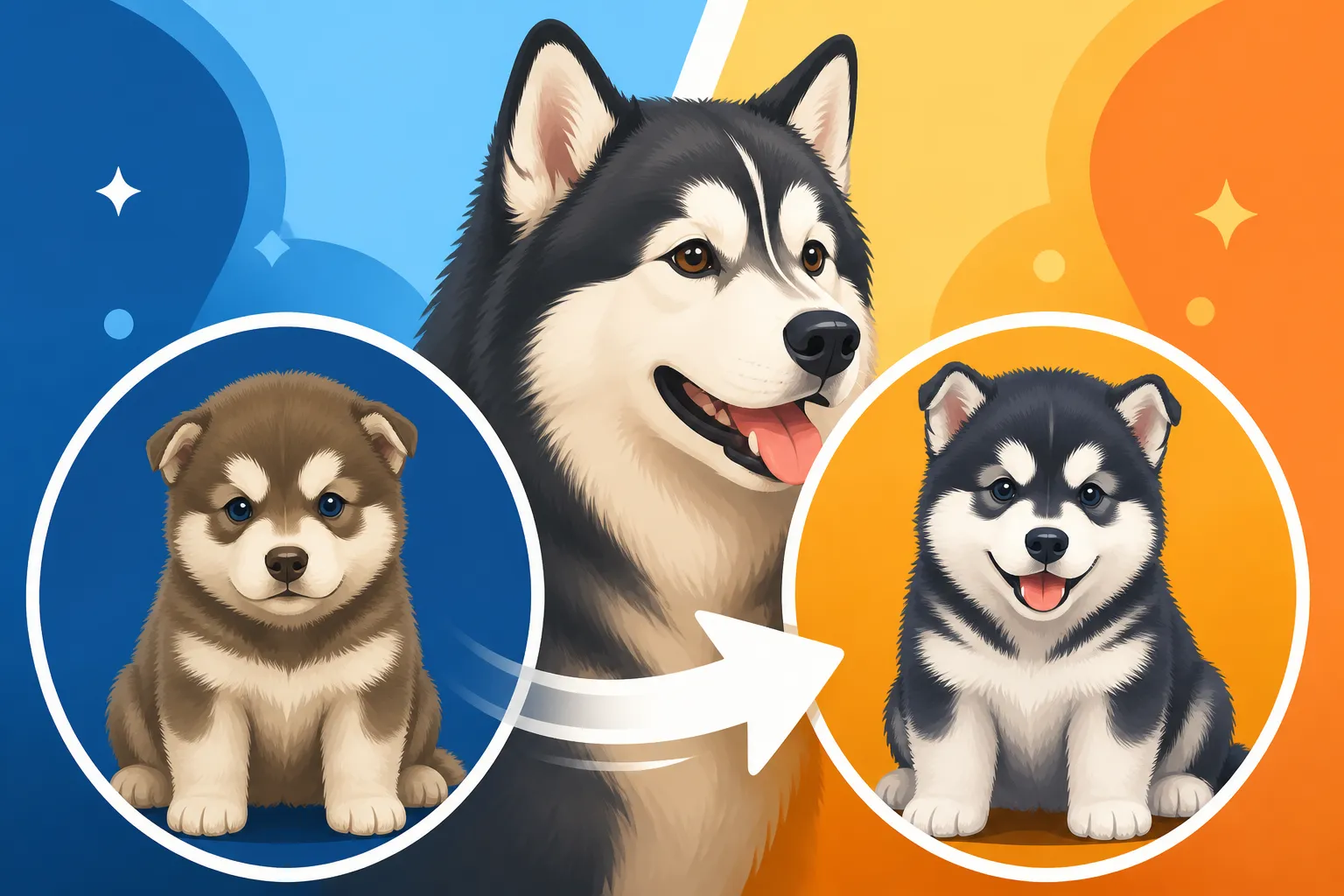
Alaskan Malamutes have a dense double coat: a softer undercoat beneath longer guard hairs. A young puppy’s coat can be softer and less defined than the coat it develops as it matures. As the puppy coat sheds and adult hairs come in, the coat’s color may look deeper, lighter, or more clearly patterned.
That change can be especially noticeable around the face, shoulders, back, and tail. A puppy with soft gray-and-white coloring, for example, may develop more distinct dark guard hairs along the back. A red-and-white puppy may look less vivid or more richly shaded once the adult coat grows in. The coat isn’t necessarily changing its underlying color; the new mix of hairs can alter the overall impression.
Timing varies from dog to dog. Coat development happens gradually, and seasonal shedding can make the transition look more dramatic. It’s common for an owner to notice a change after a big shed, then see the coat look different again as it fills back in. For more on how Malamute colors and patterns are described, see The Colors an Alaskan Malamute Comes In.
Hair length and lighting affect what you see
A coat can seem darker when it is wet, damp, or pressed flat, and lighter when the undercoat is fluffed out. Sunlight, indoor lighting, and even the color of a nearby wall can affect how you read a puppy’s coat. Comparing a photo taken in warm evening light with one taken under cool indoor lighting can make the same dog look like two different shades.
Hair length matters, too. Longer guard hairs can make the back or shoulders look more shaded than the puppy’s shorter fur did. When the coat is blown out, lighter undercoat may show through; when the coat lies flat, darker guard hairs may dominate. These ordinary visual changes can be surprising if you expect a puppy’s coat to keep the same appearance from the day you bring them home.
If you want to track the change, take occasional photos in similar natural light and from the same angle. A photo log is more useful than trying to remember exactly how the coat looked months ago. Avoid judging color from a single close-up, since one patch of fur may not represent the dog’s overall pattern.
A changing coat does not mean a new color has appeared
Malamutes come in recognized combinations of color and white, with a range of shading and markings. As an adult coat develops, those existing colors may become easier to see or appear differently distributed. That is not the same as a puppy genetically changing from one color into an unrelated one.
A dog’s appearance can also be affected by coat condition. Dirt, loose undercoat, matting, or staining may make fur look darker, duller, or uneven. If a coat looks patchy or discolored, check whether the change is limited to the hair surface or is accompanied by itching, redness, hair loss, or discomfort. The distinction between a normal coat transition and a skin problem is important; color alone is not a diagnosis.
What May Change and What Usually Stays the Same
Shading and contrast can become more noticeable
The broad color family often remains recognizable, while the contrast and distribution of shading shift. A gray-and-white puppy may develop darker guard hairs down the back, while the pale areas on the chest or legs remain light. A sable or red-toned coat may show more variation between the guard hairs and undercoat as the adult coat thickens.
Facial markings can also look different with age. The puppy’s face grows, the coat length changes, and the contrast between colored and white areas may become more or less pronounced. Owners sometimes describe a mask or cap as having changed, when what they are seeing is a growing face framed by a more mature coat. Read more about that distinction in Whether a Malamute's Face Markings Change With Age.
The breed standard describes acceptable colors and patterns, but a pet owner does not need to interpret every subtle shade as a meaningful change in the dog’s identity. If you are choosing a puppy for a show home, discuss the expected adult appearance with the breeder. If you are choosing a family companion, health, temperament, and a responsible source matter far more than whether the puppy’s back becomes a little darker. The range of accepted colors is covered in Which Colors the Alaskan Malamute Standard Allows.
The adult coat may look silvered or muted
Some Malamutes appear to develop a lighter or more muted look as their coat matures. In certain coats, pale undercoat becomes more visible as the hair length and density change. Older dogs may also show age-related changes, but a young puppy’s gradual change in shading is more commonly related to coat development and shedding.
This is why a puppy’s first few photographs can be a poor guide to the exact shade of the adult coat. Even within a single litter, siblings can develop different-looking coats as they grow. One may retain a darker back, while another appears lighter after shedding. For a closer look at this kind of appearance shift, see Whether a Malamute's Coat Silvers With Age.
The coat’s pattern and markings are still useful clues when discussing the dog with a breeder or veterinarian, but a dramatic-looking photo comparison does not necessarily indicate a health problem. Try to compare the puppy’s coat in consistent light and after it has been brushed, rather than immediately after a bath or during a heavy shed.
Fur color is different from nose and eye color
A change in fur shade should not be confused with seasonal changes in the nose. Some dogs develop lighter pigmentation on the nose at certain times of year, sometimes called snow nose. That is a change in skin pigment, not a change in the coat. If the nose becomes pale, cracked, sore, or otherwise unusual, ask a veterinarian rather than assuming it is a harmless seasonal variation. More detail is available in Whether a Malamute's Nose Can Be Snow Nose.
Eye color is another separate feature. A coat that becomes lighter or darker does not mean the eyes will change to match it. If you have questions about a puppy’s eyes or vision, raise them with the breeder and veterinarian; coat color is not a reliable guide to eye health.
| What you notice | Common explanation | What to do |
|---|---|---|
| Back looks darker after a shed | New guard hairs or a different mix of coat hairs | Photograph in consistent light and monitor |
| White areas seem more prominent | Coat length, fluffing, or contrast has changed | Brush gently and compare the overall pattern |
| Coat looks dull or patchy | Loose undercoat, dirt, matting, or a possible skin issue | Check the skin and contact a veterinarian if symptoms are present |
| Nose looks lighter while fur stays the same | Pigment change rather than coat-color change | Watch for irritation or sores and ask a vet if concerned |
| One area loses hair or becomes inflamed | Not a typical color transition by itself | Arrange veterinary advice |
How to Care for a Changing Malamute Coat
Brush regularly and avoid trying to alter the color
Brushing helps remove loose hair and lets you see the coat and skin more clearly. It can also make the coat look different by lifting the undercoat and separating hairs that were lying together. Use tools suited to a dense double coat, work gently, and pay attention to areas where tangles can develop, such as behind the ears and around the hindquarters. A routine that fits your puppy’s age and coat can be easier than waiting until a large amount of loose fur has accumulated. See How Often an Alaskan Malamute Needs Brushing.
Do not use bleach, hair dye, human color-correcting shampoo, or other products to make a puppy’s coat appear brighter or more even. These can irritate the skin or be unsafe if licked. If you need basic grooming supplies, look for products clearly labeled for dogs and appropriate for a puppy’s age; retailers such as Chewy carry grooming tools and dog shampoos, but product suitability matters more than brand. Ask your veterinarian or groomer if your puppy has sensitive skin or a suspected skin condition.
A bath can remove dirt and loose hair, but it will not change the dog’s natural coat color. Choose a dog-safe product, rinse thoroughly, and dry the coat carefully so moisture does not remain trapped in the dense undercoat. If you use Chewy to compare puppy grooming products, check the label and ask your veterinary clinic about ingredients if your dog has had skin reactions before.
Do not shave a Malamute to manage a color change
Shaving a double coat is not a solution for a coat that looks uneven, dark, or too warm. The coat helps protect the dog, and shaving can interfere with how the coat functions and regrows. If the coat seems unusually thin or your puppy is uncomfortable, look for the cause instead of removing the fur. This guide explains why shaving is discouraged: Why an Alaskan Malamute Must Never Be Shaved.
For normal grooming, the goal is to keep the coat clean, brushed, and free of mats—not to make it look like a particular shade. A qualified groomer familiar with double-coated breeds can help with routine coat care, especially during shedding. Chewy may be convenient for comparing basic brushes and combs, but a tool should be used gently and selected for the coat rather than for a promise to change its color.
If a groomer or product claims it can permanently correct a puppy’s natural color, be cautious. Coat appearance may be affected temporarily by cleaning or grooming, but the dog’s inherited pigmentation is not something a shampoo can safely redesign.
Watch for skin and coat changes that are not just cosmetic
A gradual change in shading, especially alongside a coat transition, is usually different from sudden hair loss or inflamed skin. Contact your veterinarian if you notice persistent itching, redness, sores, a strong skin odor, bald patches, or a coat that is breaking or falling out unevenly. Those signs may have causes unrelated to normal puppy coat development and deserve an examination.
Take a clear photo of any concerning area and note when it first appeared, whether it is spreading, and whether your puppy is scratching or licking it. This practical record can help your veterinarian understand the change. Do not start supplements or medicated products simply because the coat looks dull; the right response depends on the cause, and excess supplementation can be harmful.
A white or light patch that has always been part of the dog’s pattern is different from a new patch of missing hair. If you cannot tell whether you are seeing a color boundary or a skin change, gently part the fur and look at the skin beneath it. When in doubt, a quick call to the clinic is more useful than guessing from photographs.
Making Sense of Your Puppy’s Adult Appearance
Ask the breeder what to expect, not for a guarantee
A breeder who knows the puppy’s parents and relatives may be able to explain how similar coats developed in the family. They can tell you whether siblings or parents changed noticeably as their adult coats came in. Still, no one can promise that a puppy will look exactly like a particular adult relative; coat development varies.
When you ask, describe what you see rather than just asking whether the puppy’s color is “right.” For example: “The back looks darker after the recent shed, but the white chest is unchanged—is that typical in this line?” A specific question gives the breeder a better chance to explain what is ordinary for the family.
If your puppy came from a rescue or the breeder is unavailable, there is no need to identify the exact adult shade immediately. Keep the coat clean and comfortable, document noticeable changes, and let the pattern become clearer as the dog matures.
Give the coat time to develop
It can be tempting to compare your puppy with polished adult photos online, but those images may show different lighting, coat condition, grooming, age, and bloodlines. A puppy’s appearance at a few months old is only one stage. The adult coat can be fuller and more defined, and shedding can temporarily make the dog look uneven.
Enjoy the changes rather than treating every shift as a problem to solve. Take photos every so often, keep up with brushing, and focus on whether the skin is healthy and your puppy is comfortable. If the coat changes alongside itching, irritation, or hair loss, get veterinary guidance. If it simply becomes more shaded or more clearly patterned, that is often part of growing into a mature Malamute.
Separate normal variation from breed faults or health concerns
Owners sometimes worry that a coat that looks different from a photograph means the dog has a fault or is unhealthy. Color alone usually cannot answer either question. A show evaluation considers the dog as a whole, and a veterinarian evaluates health based on the dog’s symptoms and examination—not simply on whether a shade matches a photo.
A very woolly or unusually long coat is a separate issue from a puppy’s color changing as the coat matures. If you are curious about coat texture and how it differs from coat shade, see Whether a Malamute Has a Woolly Coat Fault. For a pet owner, the practical priorities are comfort, healthy skin, suitable grooming, and a good relationship with a veterinarian.
You may find puppy-safe grooming supplies at Chewy or a local pet shop, but there is no special product needed to preserve a Malamute’s natural color. Gentle care, patient observation, and professional advice when symptoms appear are the sensible approach.
Disclaimer
This article is for general informational purposes only and does not constitute professional advice. Laws, prices and regulations vary by location and change over time. Consult a qualified professional for guidance on your specific situation.