Whether Malamute Day Blindness Is Recessive
It’s heartbreaking to notice your energetic Alaskan Malamute puppy squinting or bumping into things on a sunny day, leaving you to wonder if something serious is going on with their eyesight. Many Malamute owners, myself included, have faced concerns about Day Blindness, or canine hemeralopia, and a critical question often arises: is this a genetic issue, and specifically, is Malamute Day Blindness recessive? This guide delves deep into the genetics behind this condition, offering clarity and practical advice for both current and prospective Malamute families.
Understanding Canine Hemeralopia in Alaskan Malamutes
When you first notice your Malamute struggling in bright conditions, it can be incredibly unsettling. You see them hesitant to step outside into the sun, perhaps bumping into furniture when indoors with strong daylight, or maybe even refusing to retrieve a toy thrown into a sunny patch of the yard. This isn't just sensitivity; it's a specific inherited eye condition called canine hemeralopia, more commonly known as Day Blindness.
The Specific Signs and Symptoms
What does Day Blindness actually look like in an Alaskan Malamute? It’s often subtle at first, especially in puppies, which can make it easy to miss or dismiss as typical puppy clumsiness. Affected dogs have significantly impaired vision in bright light, while their vision in dim light or at night remains perfectly normal, sometimes even appearing enhanced by comparison. This is the opposite of night blindness, which is far more common in other breeds. Imagine trying to navigate a brightly lit room with extremely dark sunglasses on, and you start to get a sense of what a day-blind Malamute experiences.
You might observe your Malamute actively trying to find shade, squinting excessively, or displaying an exaggerated startle response in well-lit environments. They might hesitate at thresholds from dark rooms to bright outdoors, or bump into familiar objects in full daylight. Sometimes, their pupils might appear abnormally dilated even in bright light, as their eyes struggle to adapt and take in more light, which ironically just makes their situation worse. This behavior is a tell-tale sign of How a Day Blind Malamute Behaves in Sunlight. It’s important to distinguish this from general light sensitivity that can accompany other eye conditions; with day blindness, the functional impairment is specifically tied to high light levels.
The Genetic Root Cause of Day Blindness
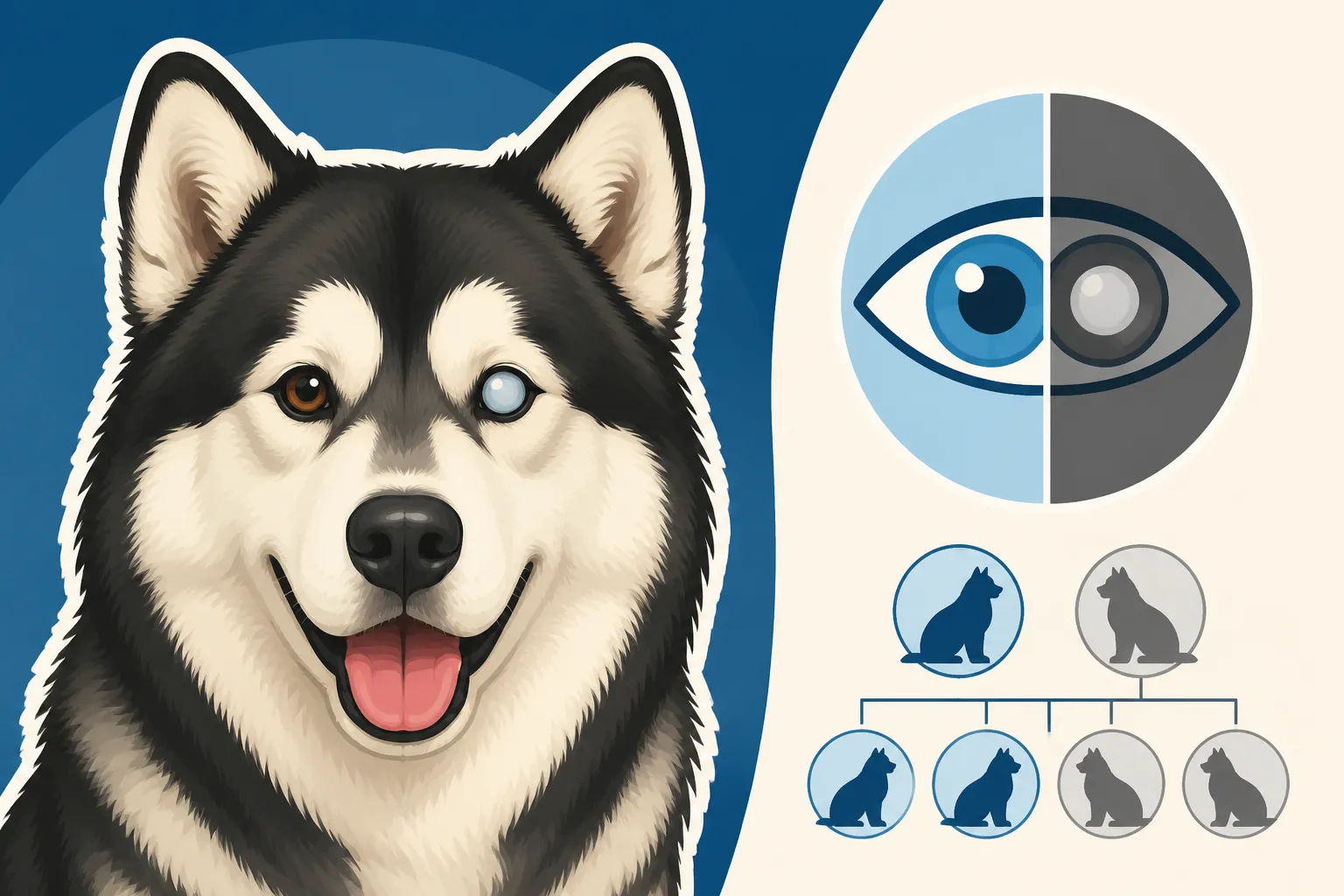
At the heart of Malamute Day Blindness is a specific genetic mutation. This condition is caused by a mutation in the CNGB3 gene. This gene is responsible for producing a crucial protein component of the cone photoreceptor cells in the retina of the eye. Cones are the cells that are primarily responsible for vision in bright light and for color perception. When the CNGB3 gene is mutated, these cone cells don't function correctly or effectively at all. They're essentially "offline" when the light gets intense, leaving the rod cells (which handle low-light vision) to do all the work, but rods get easily saturated in bright conditions.
This particular genetic fault means that the dog’s retina simply cannot process bright light properly, leading to the functional blindness observed during the day. It's not a structural defect in the eye that can be seen or corrected, but rather a malfunction at the cellular level. This is why a day blind Malamute sees perfectly well in lower light conditions; their rods are still working. Understanding this genetic basis is key to addressing the question of inheritance, and it's also why specific genetic tests have become invaluable for the breed.
The Recessive Inheritance Pattern Explained
So, let's get to the core question: Is Malamute Day Blindness recessive? The unequivocal answer is yes, it is. Understanding what "recessive inheritance" means is fundamental to comprehending how this condition is passed down through generations and why it’s not always apparent in the parents of an affected puppy.
What Recessive Genes Really Mean for Your Dog
In simple terms, an inherited disease that is recessive means that a dog must inherit two copies of the mutated gene—one from each parent—to actually show signs of the disease. If a dog only inherits one copy of the mutated gene and one normal copy, they won't typically exhibit any symptoms. Instead, they become what we call a "carrier" – they carry the gene and can pass it on, but they don't suffer from the condition themselves. This is a crucial distinction, as a carrier parent looks and acts completely normal.
Think of it like this: for a recessive trait, you need a "double dose" of the specific gene variation for it to manifest. If you only have one dose, the "normal" gene usually takes over and ensures proper function. This is why two healthy-looking Malamutes can still produce a puppy with Day Blindness. It's not a failure on their part, but simply the mechanics of recessive gene inheritance at play, where two carriers pass on their single copies of the faulty gene to their offspring. This makes Whether Both Malamute Parents Must Carry Polyneuropathy (a different recessive condition) a good analogy for how Day Blindness operates.
The CNGB3 Gene and Its Recessive Transmission
For Alaskan Malamutes, the CNGB3 gene mutation follows this classic recessive pattern. Let's break down the possible scenarios:
- Clear Dog (NN): This Malamute has two normal copies of the CNGB3 gene. They cannot get Day Blindness, nor can they pass the mutated gene to their offspring.
- Carrier Dog (Nn): This Malamute has one normal copy and one mutated copy of the CNGB3 gene. They will not show any signs of Day Blindness themselves, but they are capable of passing the mutated gene (n) to 50% of their offspring, on average.
- Affected Dog (nn): This Malamute has two copies of the mutated CNGB3 gene, one from each parent. They will develop Day Blindness and pass a mutated gene (n) to 100% of their offspring.
The most common situation leading to an affected puppy is when two carrier Malamutes (Nn x Nn) are bred together. In this pairing, statistically, each puppy has:
- A 25% chance of being Clear (NN)
- A 50% chance of being a Carrier (Nn)
- A 25% chance of being Affected (nn)
This means that a quarter of the litter, on average, could be dealing with Day Blindness, even if both parents appear perfectly healthy. This is why understanding the genetic status of breeding dogs is paramount to preventing the condition.
| Parent 1 Genetic Status | Parent 2 Genetic Status | Probability of Offspring Being Clear | Probability of Offspring Being Carrier | Probability of Offspring Being Affected |
|---|---|---|---|---|
| Clear (NN) | Clear (NN) | 100% | 0% | 0% |
| Clear (NN) | Carrier (Nn) | 50% | 50% | 0% |
| Clear (NN) | Affected (nn) | 0% | 100% | 0% |
| Carrier (Nn) | Carrier (Nn) | 25% | 50% | 25% |
| Carrier (Nn) | Affected (nn) | 0% | 50% | 50% |
| Affected (nn) | Affected (nn) | 0% | 0% | 100% |
This table clearly illustrates why two seemingly healthy carrier parents can produce affected puppies, highlighting the silent nature of recessive genes.
Implications for Breeding and Pet Owners
The recessive nature of Malamute Day Blindness has profound implications for both breeders committed to the health of the breed and prospective pet owners looking for a healthy companion. The good news is that we have the tools to manage this.
The Power of Genetic Testing and Responsible Breeding
Thanks to advancements in canine genetics, a reliable DNA test exists to identify the CNGB3 mutation. This test, often referred to as The CNGB3 Test for Malamute Day Blindness, allows breeders to know the genetic status of their dogs before making breeding decisions. A simple cheek swab or blood sample can determine if a dog is clear, a carrier, or affected. This knowledge empowers responsible breeders to make informed choices that prevent the birth of affected puppies.
For instance, a responsible breeder will never knowingly breed two carriers together. Instead, if a carrier dog is part of their breeding program (perhaps because it has other exceptional qualities that benefit the breed), they will only breed it to a Malamute that has tested "clear." This pairing ensures that while some offspring might be carriers themselves, none will be affected by Day Blindness. This commitment to genetic health is a hallmark of reputable breeding practices and has dramatically reduced the prevalence of this condition, so much so that many might ask Whether Day Blindness Still Occurs in Malamutes today. The goal is to eradicate the disease from the gene pool entirely, without sacrificing genetic diversity.
What to Look for When Choosing an Alaskan Malamute Puppy
As a prospective Malamute owner, this genetic insight is invaluable. When you’re researching breeders, one of the most critical questions to ask is about their health testing protocols. Specifically, inquire about the genetic testing for Day Blindness. Reputable breeders will openly share the results of both parents’ CNGB3 tests, often providing certificates from laboratories like Paw Print Genetics or Embark. They should be able to confirm that at least one parent (and ideally both) is "clear" of the mutation if they’ve produced a litter, or that appropriate pairings have been made if a carrier is involved.
Don't be shy about asking to see these documents. If a breeder is evasive or claims testing isn't necessary, it's a red flag. Choosing a puppy from parents that have been health-tested gives you peace of mind that you're less likely to face the challenges of managing an affected dog. It also supports breeders who are working hard to eliminate these inherited diseases. Remember, investing in a puppy from health-tested lines is an investment in a healthier future for your dog and the breed as a whole. It’s part of a broader picture of The Health Tests Both Alaskan Malamute Parents Should Have to ensure the longevity and well-being of the puppies they produce.
Living With and Managing Day Blindness
While the goal is to prevent Day Blindness through responsible breeding, sometimes an affected Malamute may come into your life. Whether through adoption or an unexpected outcome, knowing how to support a day-blind dog can make a world of difference to their quality of life.
Adapting Daily Routines for an Affected Malamute
Living with a day-blind Malamute requires understanding and adaptation. Their primary challenge is bright light, so your goal is to minimize their exposure to intense sunlight, particularly during the middle of the day. This might mean adjusting your walk schedule to early mornings or late evenings when the light is softer, much like a person with extreme light sensitivity might do. If you have an outdoor space, creating shaded areas where your Malamute can comfortably spend time without direct sun exposure is essential. Covered patios, large trees, or even shade cloths can make a huge difference.
Indoors, think about how natural light enters your home. Drawing curtains or blinds during peak sunlight hours in certain rooms can help create a more comfortable environment for your dog. For some dogs, a dog-specific visor or sunglasses (like Doggles) can offer a degree of protection and comfort when brief excursions into bright light are unavoidable. However, remember that these are just aids; they don't fix the underlying condition. The key is to be observant of your dog's comfort levels and adapt their routine to suit their visual needs. This proactive approach ensures your Malamute can still enjoy life to the fullest, even with their unique visual challenges, allowing them to Whether a Day Blind Malamute Can Live Normally.
Supportive Care and Ensuring Quality of Life
Beyond environmental adjustments, supportive care for a day-blind Malamute is largely about understanding their condition and communicating with your veterinarian. There's currently no cure for Day Blindness, as it's a genetic defect affecting the cone cells themselves. However, regular vet check-ups are still vital to ensure no other unrelated eye conditions develop, and to discuss any concerns you might have about your dog's well-being. Keeping up with routine veterinary care is crucial, and having pet insurance like Healthy Paws can be a tremendous help in managing any health needs that arise throughout your Malamute's life.
It's important to remember that Day Blindness doesn't cause pain or discomfort in itself; it simply limits vision in certain light conditions. Many affected Malamutes lead incredibly happy and fulfilling lives, relying on their other senses, especially their keen sense of smell and hearing, to navigate their world. They are highly adaptable creatures. Your patience, consistency, and dedication to providing a safe and understanding environment are the most powerful tools you have. An affected Malamute can still be a wonderful, loving companion, and their unique needs often forge an even deeper bond with their human families. Being prepared for various health situations is wise, and a robust pet insurance plan from providers like Healthy Paws offers peace of mind for the unexpected. For any Malamute, regardless of health status, regular check-ups and a healthy lifestyle are key to a long, happy life, and companies like Healthy Paws can assist with the costs of routine and emergency care.
Disclaimer
The information provided in this article is for educational purposes only and is not intended to be a substitute for professional veterinary advice, diagnosis, or treatment. Always seek the advice of your veterinarian or other qualified health provider with any questions you may have regarding a medical condition.