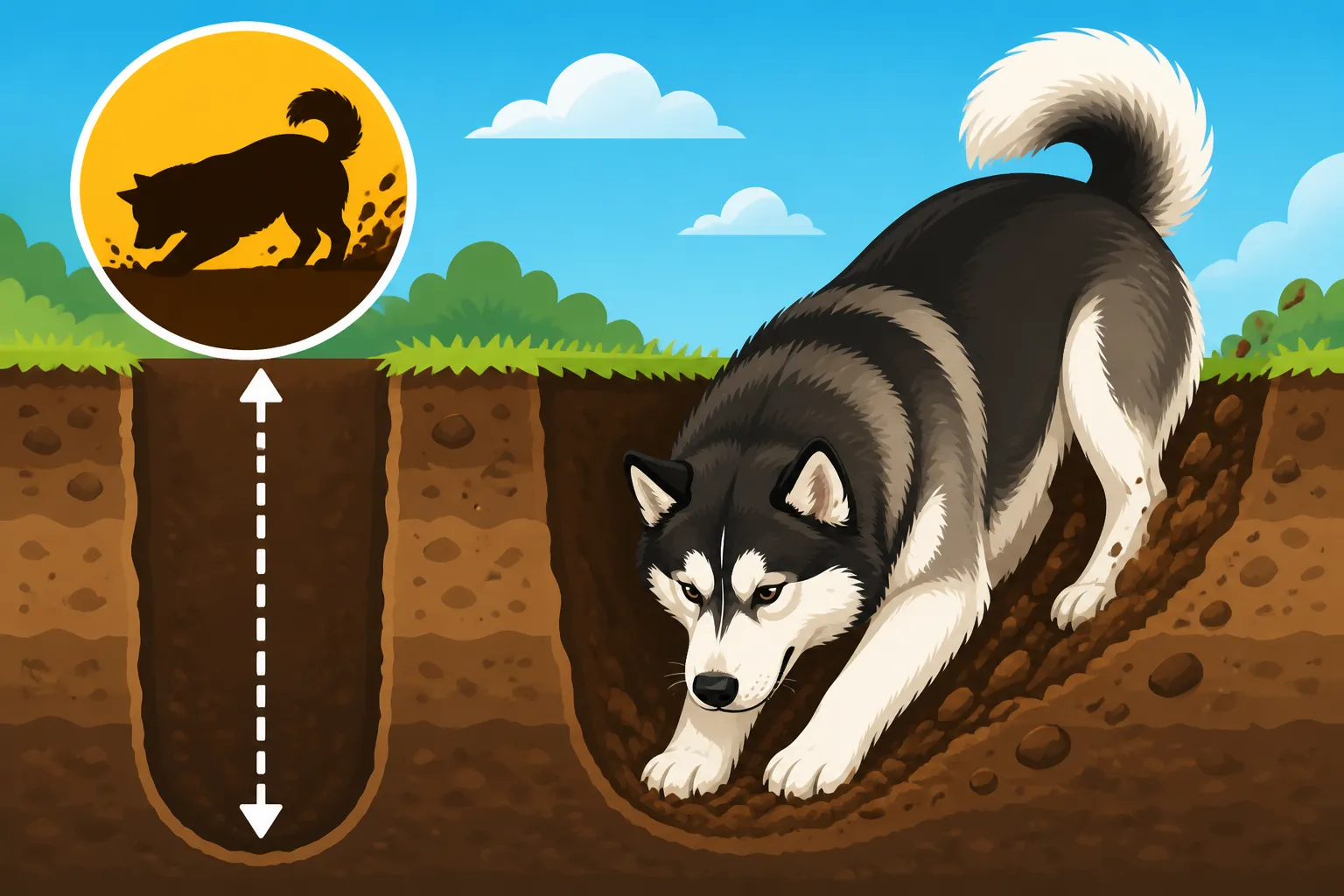
How Far Down a Malamute Will Dig
Oh, the age-old Malamute riddle: "How far down will they really dig?" If you've ever stood bewildered in your yard, staring at a crater that seems deep enough to reach China, you're not alone. Alaskan Malamutes are champions of excavation, and understanding the true extent of their digging capabilities is key to keeping your yard intact and, more importantly, your beloved companion safe and sound within your property. This guide will delve into the depths of Malamute digging, from their ancestral instincts to practical strategies for managing this formidable habit.
Understanding the Malamute's Instinctive Digging Drive
Let's be real, your Malamute isn't digging just to spite your prize-winning petunias. This isn't naughtiness; it's deeply ingrained behavior, part of what makes them who they are. It’s hardwired into their very being, a remnant of millennia spent surviving in harsh, unforgiving environments.
Historical Roots of the Digging Behavior
Imagine the ancestral Malamute, toiling alongside the Mahlemut people in the Arctic. Winter blizzards raged, and temperatures plummeted. What's a smart, resourceful dog to do? Dig, of course! They weren't just pulling sleds; they were architects of survival. Digging provided crucial shelter, creating insulated hollows in the snow or frozen earth to escape the biting wind and cold. This wasn't a leisure activity; it was essential for warmth and safety. Beyond shelter, they dug to cache food, burying meat and fish to preserve it from scavengers and store it for leaner times. This instinct to create a safe, hidden larder is still very much alive, even if your dog's "prey" is just a favorite squeaky toy.
When you see your Malamute meticulously scraping at the earth, picture their ancestors hunkering down for the night, instinctively carving out a den. This isn't a behavior you can simply train out of them with a stern "no" – it's a profound, genetic imperative. Trying to stop it completely is like asking a bird not to fly; it goes against their very nature.
Digging for Comfort and Temperature Regulation
If you live in any climate warmer than the Arctic Circle, you've probably noticed your Malamute panting on a warm day. With their incredibly dense double coats, designed for sub-zero temperatures, Malamutes can overheat quickly. And what's their natural solution? To create their own air conditioning! Digging into the earth, even just a few inches, exposes cooler soil beneath the surface. They'll excavate a shallow trench, lie down in it, and let the cool earth draw heat away from their bodies. This is pure, self-preservation behavior.
I’ve seen Malamutes dig elaborate sun-beds, perfectly contoured to their bodies, just to catch a cool breeze. They'll choose a shady spot under a bush or along the cool foundation of your house, and begin their architectural endeavors. These aren't deep escape tunnels, but rather pragmatic, self-cooling depressions. Ignoring this need can lead to an uncomfortable or even dangerously overheated dog, so understanding it is crucial. This is a big reason Why a Malamute Digs.
The "Hunting" and "Storing" Instincts
Beyond shelter and comfort, Malamutes dig because it's mentally stimulating and taps into their deeply ingrained predatory and provisioning instincts. They might be "hunting" for imaginary rodents, moles, or voles that their keen senses detect underground. It's a game, a puzzle, and a way to burn off mental energy. Sometimes, they're simply "storing" their treasures. You might find a half-eaten chew toy, a favorite tennis ball, or even a coveted sock meticulously buried beneath a few inches of dirt.
My own Malamute once buried an entire bag of dog treats I'd left out on the porch! I found it days later, perfectly preserved, albeit a bit damp. This "caching" behavior is deeply satisfying for them. It gives them a sense of control and accomplishment. They're not just digging; they're engaging in a complex, multi-stage behavior pattern that fulfills a fundamental drive.
How Deep and Wide Can a Malamute Dig?
This is the million-dollar question for many exasperated Malamute owners. The truth is, there's no single answer, as it depends on several factors. But let's just say, they're not afraid of a little hard work.
Factors Influencing Digging Depth
A Malamute's digging depth isn't uniform; it's a dynamic process influenced by motivation, soil conditions, and the dog's physical attributes. If the goal is comfort, they might only go a few inches deep, just enough to expose cooler earth. If the goal is to bury a toy, it's typically a foot or less. But if the motivation is escape, or the belief there's something exciting on the other side of that fence, then all bets are off.
- Soil Type: Soft, loamy soil or sand is far easier to move than heavy clay or rocky ground. A Malamute will make quicker and deeper progress in forgiving soil. If your yard is full of loose dirt from a recent landscaping project, consider it an open invitation.
- Motivation: Boredom, the scent of an animal on the other side, or the perceived "freedom" beyond the fence are powerful motivators. A truly determined Malamute, intent on reaching something, will dig with a relentless focus that's astonishing to behold.
- Physical Condition and Age: A young, energetic Malamute with boundless stamina and strong shoulder muscles will out-dig an older, less conditioned dog. However, even a senior Malamute can surprise you with their digging prowess if the motivation is high enough.
- Obstacles: If they hit a root or a rock, they'll often just work around it, creating a wider, more complex tunnel rather than stopping.
Typical Dimensions of a Malamute Dig Site
For casual digging, like creating a cool spot on a sunny afternoon, you might see a depression that's about 6-12 inches deep and perhaps a foot or two wide – enough for them to stretch out comfortably. These are usually shallow trenches or bowl-shaped hollows.
When they're burying "treasure," the holes are often smaller, just deep enough to cover the item securely, perhaps 8-15 inches deep and a foot wide. They're surprisingly adept at backfilling these holes, making them hard to spot later!
However, when a Malamute is on a mission to escape or pursue a scent, that's when you see truly impressive feats of engineering. They can easily dig down two to three feet (24-36 inches), and sometimes even deeper, especially if the soil is easy to work with. These escape tunnels aren't just narrow shafts; they'll typically be wide enough for their body, perhaps 18-24 inches across, forming a considerable trench or burrow. Their powerful forelegs are like shovels, and they can move an incredible amount of earth in a surprisingly short amount of time. I've heard stories of Malamutes tunneling under foundations or through retaining walls!
Here's a quick look at common digging scenarios:
| Digging Motivation | Typical Depth (Inches) | Typical Width (Inches) | Description |
|---|---|---|---|
| Seeking Cool Spot | 6-12 | 18-24 | Shallow, body-sized depression to lie in cooler earth. |
| Burying "Treasure" | 8-15 | 12-18 | Focused hole to hide items; often backfilled. |
| Escaping/Tunneling | 24-36+ | 18-30+ | Determined, often under fences; can be extensive tunnels. |
| Hunting Small Animals | 12-24 | 12-24 | Responsive to scent trails; can be multiple holes. |
The Escape Artist: Digging Under Fences
This is where the depth of a Malamute's digging becomes a real headache and a serious safety concern. An Alaskan Malamute sees a fence not as an impenetrable barrier, but as a challenge, or perhaps just a suggestion. They are problem-solvers, and if they want to get to the other side, they will find a way. Digging under the fence line is one of their primary escape strategies.
They'll often start right at the fence line, testing the ground, or find a weak spot where the fence isn't quite flush with the ground. Once they start, they are incredibly committed. They will create a tunnel large enough for their entire body, often going significantly deeper than the fence post itself is buried. This means that burying your fence posts deep isn't enough; you need a more comprehensive solution for How Deep a Malamute Fence Must Be Buried. They can create a substantial tunnel in just an hour or two if left unsupervised, especially if they are highly motivated by something on the other side, like a squirrel, another dog, or the irresistible allure of "the great unknown."
This relentless pursuit of escape is a major reason why Alaskan Malamutes Fill Rescues at Eighteen Months. Owners underestimate their drive and intelligence, only to find their well-meaning fence is no match for a Malamute with a mission.
Practical Strategies for Managing Malamute Digging
Given that you can't truly stop a Malamute from digging because it's so instinctual, the goal shifts to managing the behavior and channeling it appropriately. It's about working with their nature, not against it.
Fortifying Your Perimeter Against Escape
If you have a Malamute, a standard fence is merely a decorative suggestion. To truly contain them, you need to think like a Malamute and anticipate their tunneling efforts.
- L-Footings or Fence Aprons: This is arguably the most effective method. It involves burying a section of fence material (like heavy-gauge wire mesh or chain link) horizontally, extending inward from the bottom of your fence line. For example, your fence goes down 6-12 inches, and then the L-footing extends another 18-24 inches horizontally into your yard. When your Malamute digs down, they hit this buried barrier and are deterred. It prevents them from continuing their downward tunnel. You can also pour What Concrete Footings for a Malamute Fence Cost for an even more permanent solution, which involves burying concrete along the fence line. This method is often part of creating a What a Dig Proof Perimeter Costs a Malamute Owner.
- Burying the Fence Deep: While L-footings are better, simply burying your fence wire at least 18-24 inches deep can also help, especially if combined with other deterrents. The key is to make it incredibly difficult to get started.
- Reinforcing Problem Areas: Malamutes often target corners or areas where the ground slopes. Pay extra attention to these spots with additional buried mesh, rocks, or even large landscape timbers.
Remember, the goal isn't just to stop them, but to make it too much effort to even try. They are smart and will look for the path of least resistance.
Creating an Acceptable Digging Zone
Since digging is a natural behavior, a truly empathetic approach is to provide an acceptable outlet for it. This means creating a designated "dig pit" where your Malamute is allowed and encouraged to dig to their heart's content.
- Location: Choose a spot in your yard that's out of the way, perhaps in a less visible corner.
- Construction: A simple dig pit can be a sandbox or a raised garden bed frame filled with sand and loose soil. Make it at least 4×4 feet and a foot or two deep.
- Encouragement: The trick is to make the dig pit irresistible. Bury exciting toys, treats, or durable chews just beneath the surface when your Malamute isn't looking. Then, bring them to the pit and encourage them to "find it!" When they start digging in the right spot, lavish them with praise.
- Redirection: If you catch your Malamute digging elsewhere, immediately and calmly interrupt them, redirect them to their dig pit, and encourage them to dig there. The key is consistency and making the designated spot more rewarding than the forbidden one. This is a core part of Giving an Alaskan Malamute Its Own Digging Pit.
This strategy works because it acknowledges and satisfies their inherent drive, giving them a constructive outlet for Why a Bored Malamute Digs.
Addressing the Root Causes: Exercise and Enrichment
Often, excessive or destructive digging stems from boredom, pent-up energy, or a lack of mental stimulation. Malamutes are working dogs, bred for endurance and problem-solving, and they need a job.
- Physical Exercise: A simple walk around the block isn't enough. Malamutes need vigorous exercise. Think long hikes, jogging, bikejoring (if they're trained and conditioned for it), or even swimming (if they enjoy it and can be safely supervised). Aim for at least 1-2 hours of active exercise daily, more if possible. A tired Malamute is often a well-behaved Malamute.
- Mental Stimulation: Their minds are as active as their bodies. Incorporate training sessions, puzzle toys, scent work, or even just teaching new tricks. Whether an Alaskan Malamute Can Compete in Obedience or Whether an Alaskan Malamute Can Do Agility are excellent ways to provide this. Even short, engaging sessions throughout the day can make a huge difference.
- Consistent Training: A well-trained Malamute is generally less likely to engage in destructive behaviors out of frustration. Focus on positive reinforcement, keeping training sessions engaging and varied, as Whether Repetition Bores an Alaskan Malamute.
- Socialization: If your Malamute is lonely, they might dig out of boredom or a desire for company. Ensure they have appropriate social interaction with other dogs (if they are well-socialized) or regular quality time with you.
By addressing their fundamental needs for activity and purpose, you reduce the likelihood of them resorting to digging as a primary form of entertainment.
When Digging Becomes a Health or Safety Concern
While digging is natural, excessive or unsupervised digging can lead to several problems for your Malamute and your household. It's important to recognize when the behavior crosses into concerning territory.
Injury Risks from Extensive Digging
A Malamute digging with gusto isn't always graceful, and injuries can happen.
- Paw Pad Trauma: Constant digging in abrasive soil can lead to worn, torn, or cut paw pads. This is not only painful but can lead to infections. Regularly check Checking an Alaskan Malamute's Pads After Pulling or after any extensive digging session.
- Joint Strain and Muscle Injuries: The repetitive, powerful motion of digging can strain shoulder, elbow, and wrist joints, especially in younger, still-developing dogs or older dogs with pre-existing conditions like Hip Dysplasia in an Alaskan Malamute.
- Ingestion of Foreign Objects: In their enthusiasm, Malamutes can accidentally ingest dirt, rocks, roots, or other buried debris, which can lead to digestive upset, blockages, or dental problems.
- Impact Injuries: Striking hard rocks or roots can cause bruising or more severe trauma.
Environmental Hazards in Dug Areas
Beyond direct injury, the environment created or exposed by digging can pose risks.
- Pesticides and Fertilizers: If you've treated your lawn or garden, your Malamute could be exposed to harmful chemicals when they dig.
- Parasites: Digging can expose them to soil-borne parasites or fungal spores.
- Underground Utilities: While less common for typical yard digging, exceptionally deep or persistent digging could potentially expose or damage underground irrigation lines, electrical cables, or even gas lines, posing a significant risk.
- Collapse Risk: Deep, unsupervised tunnels can collapse, potentially trapping or injuring a smaller animal or even your Malamute.
Understanding When Professional Help Is Needed
Most Malamute digging can be managed with the strategies outlined above. However, there are times when professional intervention might be necessary.
- Extreme or Obsessive Digging: If your Malamute's digging seems truly obsessive, to the exclusion of other activities, or if they injure themselves repeatedly, it could indicate an underlying anxiety or compulsive disorder.
- Unmanageable Escape Attempts: If your Malamute is consistently escaping despite your best efforts to secure your yard, jeopardizing their safety (and potentially others, especially with their How Strong a Malamute's Prey Drive Is), then a professional trainer or behaviorist is crucial. They can assess the specific triggers and help you develop a tailored plan.
- Aggression or Resource Guarding Related to Digging: While less common, if your Malamute becomes aggressive when defending a dug hole or a buried item, it's time for expert help to prevent escalating behavior.
A qualified professional can help you understand the specific nuances of your Malamute's behavior and guide you towards solutions that ensure both your peace of mind and your dog's well-being. They can offer insights into What a Behaviorist Costs a Malamute Owner and what to expect from their services.
Disclaimer
This article is for general informational purposes only and does not constitute professional advice. Laws, prices and regulations vary by location and change over time. Consult a qualified professional for guidance on your specific situation.