What Cooling a House for a Malamute Costs in Summer
Summer with an Alaskan Malamute often brings a unique challenge: keeping these magnificent, double-coated dogs comfortable when the temperatures soar. Many Malamute owners feel the constant pressure to ensure their furry family members aren't just surviving, but truly thriving, even as the mercury climbs. This desire for their dog's well-being inevitably translates into significant financial considerations for cooling a house. This comprehensive guide will meticulously explore the various costs associated with maintaining a cool environment for your Malamute throughout the sweltering summer months, from upfront investments to ongoing expenses.
Understanding Your Malamute's Unique Cooling Needs
Living with an Alaskan Malamute means understanding that their physiology is purpose-built for extreme cold, not heat. Their lineage traces back to the Arctic, where their ancestors pulled heavy freight across vast, frozen landscapes for the Mahlemut people. This deep-rooted adaptation means they handle winter with grace and joy, but summer can become a genuine struggle if their environment isn't carefully managed.
The Double Coat and Heat Retention
The defining feature of an Alaskan Malamute is its incredible double coat, a marvel of natural engineering. This coat consists of two distinct layers: a soft, dense, woolly undercoat that acts as a superb insulator, and a coarser, protective outer coat of guard hairs. In their native environment, this coat would keep them warm in temperatures far below freezing, trapping a layer of insulating air close to their skin.
However, this same insulating quality works against them in warm weather. While it does offer some protection from direct sunlight, it primarily traps heat against their body, making it incredibly difficult for them to dissipate excess warmth. Imagine trying to run a marathon in a heavy winter parka – that’s akin to how a Malamute feels on a hot day. Their bodies simply aren't designed to efficiently cool themselves in high ambient temperatures, making artificial cooling of their living space absolutely essential for their health and comfort. This is also why you should never consider shaving your Malamute, as their coat, despite appearances, does provide some protection from sunburn and can actually make them more susceptible to heat in the long run if shorn. You can learn more about this common misconception in our article, Why an Alaskan Malamute Must Never Be Shaved.
Signs Your Malamute is Overheating
Recognizing the subtle, and then not-so-subtle, signs of overheating is paramount for any Malamute owner. What might be considered normal panting for another breed can quickly escalate into a dangerous situation for a Malamute. Initially, you might observe increased panting, perhaps a bit more pronounced than usual after a short outdoor potty break. They might also become lethargic, showing less interest in play or walks, and seeking out cool, hard surfaces like tile floors or shaded corners.
As their body temperature rises, the signs become more alarming. Excessive drooling, thick ropey saliva, bright red gums, and a frantic look in their eyes are all indicators of severe distress. They might start stumbling, exhibiting weakness, or even collapse. Some Malamutes will compulsively dig in cool soil or attempt to lie in shallow water if available, desperate to bring their core temperature down. Ignoring these signs can lead to heatstroke, a life-threatening condition that can cause organ damage and be fatal. Being vigilant is your first line of defense, and knowing when to act can literally save their life. Our guide on Signs an Alaskan Malamute Is Overheating offers more details, and if you suspect your Malamute is in distress, please refer to How to Cool an Overheated Alaskan Malamute for immediate steps.
Environmental Factors in Summer
Beyond their intrinsic coat, the specific environment your Malamute lives in plays a huge role in their comfort and the cost of keeping them cool. Regional climates vary wildly, with some areas experiencing dry, scorching heat that can be somewhat mitigated by evaporative cooling, while others suffer from oppressive humidity that makes cooling far more challenging. Humidity makes it harder for dogs to cool down through panting because the air is already saturated with moisture, reducing the efficiency of evaporative cooling from their respiratory tract.
The design and construction of your home also contribute significantly to the cooling equation. A well-insulated house, with modern, energy-efficient windows, will naturally retain less heat and be easier to cool than an older, drafty home with single-pane windows. The direction your house faces, the amount of direct sunlight it receives, and even the presence of shade trees can all impact indoor temperatures. Urban environments, with vast expanses of heat-absorbing concrete and asphalt, can create an urban "heat island" effect, raising ambient temperatures further and making it even more challenging to provide relief for your Malamute. All these factors contribute to how hard your cooling systems have to work, and therefore, what you'll pay.
Initial Investments: Setting Up for Summer Comfort
Before you even turn on the air conditioning, there are often significant upfront costs involved in making your home a comfortable haven for your Alaskan Malamute during the warmer months. These initial investments can range from minor tweaks to major home renovations, all aimed at reducing heat infiltration and improving cooling efficiency.
Home Insulation and Shading
One of the most effective long-term strategies for keeping a house cool, and thus your Malamute comfortable, is to improve its insulation and shading. Investing in better attic insulation, for example, can dramatically reduce the amount of heat radiating down into your living space from a sun-baked roof. Wall insulation, while a more involved and expensive project, also contributes significantly. These are typically one-time costs that pay dividends for years in reduced energy bills, not just for your Malamute's sake but for your own comfort too.
Beyond insulation, managing direct sunlight is crucial. Upgrading to double-paned or low-emissivity (Low-E) windows can block a substantial amount of solar heat gain. If window replacement isn't in the budget, even simpler solutions like installing awnings over south-facing windows or planting deciduous trees that provide summer shade can make a noticeable difference. While planting a tree takes years to fully mature, an awning or a well-placed pergola can offer immediate relief. These shading solutions come with their own price tags, from DIY patio umbrellas to professionally installed, custom-built structures, but they are all investments in a cooler home environment.
Air Conditioning Systems
For many Malamute owners, central air conditioning isn't just a luxury; it's a necessity. The initial cost of installing a new central AC system can be substantial, involving not only the unit itself but also ductwork, electrical upgrades, and professional labor. The price will vary widely based on the size of your home, the SEER (Seasonal Energy Efficiency Ratio) rating of the unit (higher SEER means more efficient but often pricier), and regional installation costs. This is often the single largest upfront expense in a Malamute-friendly summer home.
If central air isn't an option, or if you only need to cool specific rooms, window units or portable air conditioners become viable alternatives. These have much lower upfront costs per unit, but you might need several to adequately cool a larger space, and they are generally less efficient than central systems. Regardless of the type, remember that AC systems require regular maintenance—changing filters monthly and scheduling professional tune-ups annually—to operate efficiently and extend their lifespan. Neglecting this maintenance can lead to breakdowns exactly when you need it most, and unexpected repair costs.
Alternative Cooling Devices
Beyond traditional air conditioning, several other devices can contribute to a cooler indoor environment, each with its own cost considerations. Ceiling fans are an excellent way to create airflow and make a room feel cooler by enhancing the evaporation of sweat (and panting for dogs). Installation costs for ceiling fans vary, but they are relatively energy-efficient to run compared to AC. Portable tower fans or box fans offer a more flexible and lower-cost option, allowing you to direct airflow exactly where your Malamute prefers to lounge.
In humid climates, a dehumidifier can be invaluable. By removing moisture from the air, it makes the ambient temperature feel more comfortable and reduces the strain on your AC unit, potentially lowering energy costs. Dehumidifiers have an upfront purchase price and add to your electricity bill, but can be a worthwhile investment for your Malamute's comfort. For those in very dry climates, evaporative coolers, often called swamp coolers, present an alternative. These units are significantly cheaper to run than traditional AC, as they use water evaporation rather than refrigerants. However, they are ineffective in humid conditions and require a consistent water supply. Each of these solutions has a different financial footprint, allowing owners to tailor their approach based on their budget and climate.
Ongoing Energy Costs: Keeping the Thermostat Down
Once the initial investments are made, the true ongoing financial impact of owning an Alaskan Malamute in the summer becomes evident in your monthly utility bills. Keeping a large, double-coated dog comfortable means your cooling systems will work harder and longer, leading to what many Malamute owners affectionately, or sometimes exasperatedly, refer to as the "Malamute tax" on their power bill.
Running Your Air Conditioning
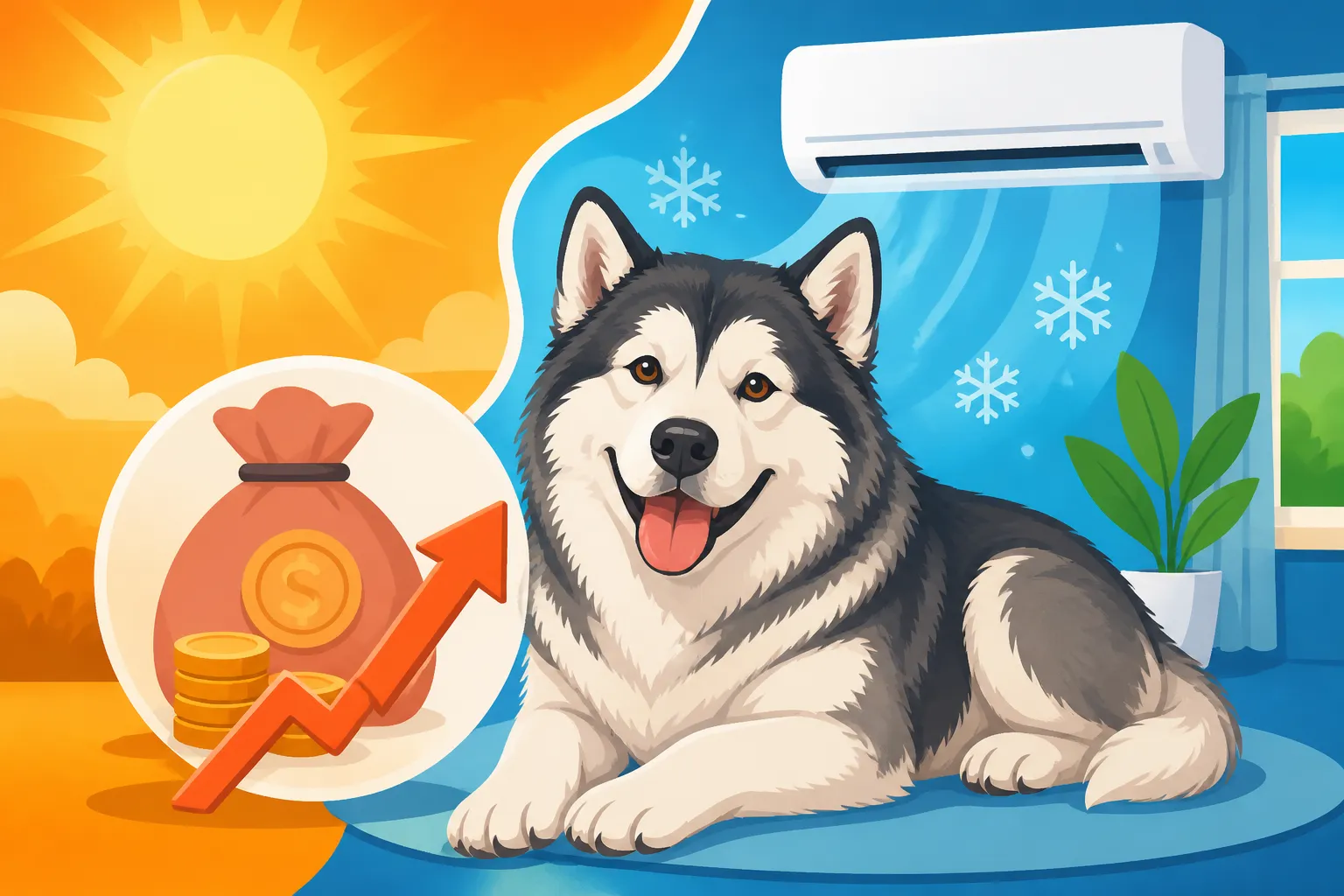
The most significant recurring cost for most Malamute owners in summer is the electricity consumed by their air conditioning system. Unlike simply cooling a house for human comfort, a Malamute's needs often dictate lower thermostat settings and longer run times. Where you might normally set your AC to 75°F (24°C) when you're out, for your Malamute you might find yourself leaving it at a cooler 70-72°F (21-22°C), or even lower in extreme heat.
The exact cost will fluctuate daily and monthly, dependent on several variables: the size of your home, the efficiency of your AC unit, the outdoor temperature, and critically, your chosen thermostat setting. Every degree lower you set your thermostat can lead to a noticeable increase in energy consumption. During a heatwave, your AC might run almost continuously, consuming a significant amount of electricity. This constant operation translates directly into higher monthly energy bills, making it an unavoidable and often substantial part of the summer budget for a Malamute household. You really need to consider What Keeping a Malamute Cool Adds to a Power Bill when you're looking at your annual expenses.
Smart Home Devices for Efficiency
While the idea of smart home devices might initially seem like another expense, they can actually help manage and potentially reduce your ongoing cooling costs, particularly with a Malamute. Smart thermostats, such as those from brands like Nest or Ecobee, come with an upfront purchase and installation cost but offer intelligent features that can optimize energy usage. They learn your habits, can be controlled remotely via a smartphone, and allow for precise scheduling.
For Malamute owners, the remote control feature is a game-changer. Imagine you're at work, and an unexpected heatwave hits. You can remotely lower your thermostat to ensure your dog stays comfortable, or if the day turns out cooler than expected, you can raise it to save energy. Some smart thermostats also offer geofencing, automatically adjusting the temperature when you leave or approach home. While they won't eliminate the need for constant cooling, they provide a level of control and efficiency that can help mitigate the peak costs and ensure your Malamute isn't suffering while you're away.
The "Malamute Tax" on Your Power Bill
Let's be real: having an Alaskan Malamute fundamentally changes your approach to summer energy consumption. The "Malamute tax" isn't a literal government levy, but rather the very real, often higher, electricity bill you pay compared to what you might if you didn't have such a cold-weather breed. You're no longer just cooling for yourself; you're cooling for a creature that literally needs it to prevent serious health issues.
This means you might choose to leave the air conditioning on all day, even when no one is home, which is a choice many people without Malamutes wouldn't make. You might find yourself turning the thermostat down an extra degree or two, just to ensure your dog is truly comfortable, even if it feels a bit chilly to you. This dedicated approach to canine comfort can result in a power bill that is consistently higher, sometimes by a significant margin, than what friends or neighbors with smaller, less heat-sensitive breeds might experience. It’s a cost born out of love and responsibility, but it’s a cost nonetheless, and it's something to factor into your overall budget for your beloved companion.
Ancillary Cooling Solutions and Their Costs
While air conditioning handles the primary cooling of your home, there are numerous supplementary products and strategies that contribute to your Malamute's comfort during the summer. These ancillary solutions often represent smaller, individual costs but can add up, providing targeted relief and enhancing your dog's overall well-being.
Cooling Beds and Mats
Cooling beds and mats are popular choices for providing immediate, localized relief for a hot Malamute. These products come in various forms, each with different price points and levels of effectiveness. Gel-filled mats contain a non-toxic gel that absorbs body heat, typically staying cooler than ambient temperature without refrigeration. Their cost varies by size and quality, but they usually range from a modest initial purchase to a more significant one for larger, more durable models. Elevated mesh beds lift your dog off the floor, allowing air to circulate all around them, which can be surprisingly effective. These are generally less expensive than gel mats and are quite durable.
Water-filled cooling mats are another option, often requiring you to add water to a chamber, which then provides a cool surface. These might be slightly more involved to set up but can offer substantial cooling. When browsing for these items, you'll find plenty of options on large pet supply sites like Chewy, offering a wide array of sizes and styles to fit your Malamute's needs and your budget. The key is finding one that is robust enough to withstand a Malamute's tendency to dig or chew, as cheaper options might not last through an entire summer. Remember, your Malamute has a thick coat, so selecting Which Cooling Gear Reaches a Malamute Through Its Coat effectively is important.
Outdoor Solutions
Even with a cool house, Malamutes still need outdoor access for potty breaks and often enjoy lounging in the yard. Providing outdoor cooling solutions is essential, especially if they spend any significant time outside. A simple kiddie pool filled with a few inches of water can be a true lifesaver. The upfront cost for a plastic kiddie pool is minimal, but you'll have ongoing costs for water, which can add up, especially if your Malamute enjoys splashing it out and requiring refills.
Shade structures are another critical investment. If your yard lacks natural shade, portable canopies, large patio umbrellas, or even sail shades can provide crucial relief from direct sun. These vary widely in price based on size, durability, and features. Misting systems, which attach to a garden hose, create a fine spray of cool water that can lower the ambient temperature in a specific area. These have an initial setup cost for the mister kit and involve ongoing water usage. Many Malamutes absolutely adore water, and you might find that Why a Malamute Lies in a Kiddie Pool for Hours is a common sight in your backyard.
Grooming and Hydration Aids
While not directly "cooling" the house, proper grooming and hydration are vital components of keeping your Malamute comfortable and reduce the burden on your cooling systems. Regular, thorough brushing is not just for aesthetics; it helps remove the dense, dead undercoat that can trap even more heat against your dog's skin. Investing in a good quality undercoat rake and a force dryer (if you're doing it yourself) can be an upfront cost, but these tools will be indispensable. Professional grooming, especially during a full coat blow, can be a significant expense, but a groomer can often do a more efficient job of removing shedding undercoat. This removal of dead hair helps their natural coat regulate temperature more effectively. Find out more about the challenges of shedding in How Much Undercoat Comes Off an Alaskan Malamute and consider if Whether a Groomer Will Take a Malamute in Coat Blow is right for you.
Beyond grooming, ensuring constant access to fresh, cool water is non-negotiable. Large water bowls that can't be easily tipped, multiple water stations throughout the house and yard, and even adding ice cubes to their water can encourage drinking. Some owners invest in automated water fountains, which keep water circulating and filtered, encouraging more hydration. While these are relatively low-cost items, they are crucial for preventing dehydration and helping your Malamute's internal cooling mechanisms work as efficiently as possible.
Lifestyle Adjustments and Indirect Costs
Owning an Alaskan Malamute means making significant lifestyle adjustments, especially during the summer, and these changes often come with their own set of indirect costs. It's not just about the tangible items you buy or the electricity you consume; it's about the shifts in your daily routine and the compromises you make for your dog's well-being.
Schedule Changes for Walks and Play
One of the most immediate and impactful lifestyle adjustments is the re-evaluation of your Malamute's exercise schedule. Gone are the leisurely midday strolls of spring and autumn. In summer, walks and strenuous play must be relegated to the very early morning hours or late in the evening, after the sun has set and the pavement has cooled. This means getting up earlier than you might prefer or staying out later, potentially impacting your work schedule, social life, or personal free time.
The indirect cost here is your time and flexibility. You might miss out on opportunities for certain outdoor activities or social gatherings that clash with your Malamute's heat-safe exercise window. Furthermore, if you typically rely on a dog walker, finding one willing and able to accommodate these extreme early or late hours, or one experienced with large, heat-sensitive breeds, might be more challenging and potentially more expensive. Understanding Why a Malamute Should Not Walk at Midday is critical for their safety.
Travel and Boarding Considerations
When planning summer travel, your Malamute's cooling needs will heavily influence your choices, often leading to increased costs. If your Malamute accompanies you, you'll need to seek out pet-friendly hotels or rentals that guarantee robust air conditioning. This might limit your options or push you towards higher-priced accommodations. Road trips become more complex, requiring frequent stops for cooling down, hydration, and careful monitoring of the car's interior temperature.
If boarding is necessary, you can't simply choose any kennel. You need a facility that is specifically equipped to handle large, double-coated breeds in summer, offering climate-controlled indoor spaces and perhaps even access to pools or shaded outdoor runs. Such specialized boarding often comes at a premium price compared to standard kennels. The peace of mind that your Malamute is safe and cool while you're away is invaluable, but it's a cost you must factor into your travel budget. Learn more about the expense of leaving your dog in What Boarding an Alaskan Malamute Costs Per Night.
Emergency Vet Visits for Heat-Related Issues
The most harrowing and potentially devastating indirect cost of summer for a Malamute owner is an emergency veterinary visit due to heatstroke. Despite all your best efforts, accidents can happen, or a sudden, unexpected temperature spike can overwhelm even a carefully managed dog. Symptoms like collapse, seizures, or loss of consciousness require immediate, intensive veterinary intervention, and these can quickly accumulate into substantial medical bills.
Treatment for heatstroke can involve intravenous fluids, oxygen therapy, cooling baths, blood work, and monitoring for organ damage. The cost can escalate rapidly, ranging from hundreds to thousands, depending on the severity and duration of treatment. This is where pet insurance, from providers like Healthy Paws, can be an absolute lifesaver. While it's an ongoing monthly expense, it can significantly mitigate the financial shock of an unexpected emergency, allowing you to focus on your Malamute's recovery without the added burden of overwhelming vet bills. Investing in prevention is always cheaper than treating an emergency, but having a financial safety net for the worst-case scenario is a wise choice for any Malamute owner.
Budgeting for Your Malamute's Summer Comfort
Bringing an Alaskan Malamute into your life means committing to their unique needs, and that commitment extends significantly to providing a safe and cool environment in summer. Budgeting for these costs is not just about crunching numbers; it's about responsible pet ownership and ensuring a long, healthy, and comfortable life for your companion.
Creating a Summer Cooling Budget
To truly understand the financial impact, it's helpful to create a dedicated summer cooling budget. Start by itemizing initial investments, such as insulation upgrades, new AC units, or permanent shade structures. These are typically one-time or infrequent expenses that can be spread out over time. Then, focus on the recurring costs. The largest will likely be your increased electricity bill for running the air conditioning or other cooling devices. It's incredibly insightful to compare your summer utility bills from before you had a Malamute to after, or even compare them to friends without heat-sensitive breeds, to truly see the "Malamute bump."
Beyond electricity, factor in the costs of ancillary items: cooling mats that might need replacing, the water for kiddie pools, extra grooming appointments, or high-quality deshedding tools. Don't forget the indirect costs, such as potentially higher boarding fees or the cost of pet insurance to cover unexpected heat-related emergencies. Prioritize the most essential cooling measures first, ensuring your home's core temperature is manageable, and then layer on supplementary comforts as your budget allows.
Long-Term Financial Planning
For those considering an Alaskan Malamute, or for current owners looking ahead, long-term financial planning regarding cooling is crucial. If you live in a perpetually hot climate, you might even consider the long-term cost of living there with a Malamute. While moving isn't feasible for everyone, it highlights the consistent, elevated expense you'll incur. For others, investing in more energy-efficient appliances over time, such as upgrading an older AC unit to a higher SEER model, can lead to significant savings over the years.
Thinking about the full lifespan of your Malamute, which can be The Ten to Fourteen Years an Alaskan Malamute Lives, these annual summer costs become a substantial cumulative figure. Factoring in potential home improvements for better insulation or more efficient windows, alongside the annual energy drain, paints a realistic picture of what's involved. It's part of the comprehensive financial commitment that encompasses The Full Cost of Twelve Years With an Alaskan Malamute. Being proactive with these considerations allows you to plan effectively and avoid financial stress when the temperatures inevitably rise.
The Value of Peace of Mind
Ultimately, while the monetary costs associated with cooling a house for an Alaskan Malamute in summer can be significant, the value of the peace of mind it provides is immeasurable. Knowing that your beloved companion is comfortable, safe, and protected from the dangers of overheating allows you to relax and enjoy the warmer months without constant worry.
Alaskan Malamutes are resilient, but their specific physiology means they truly depend on us to manage their environment during hot weather. Investing in their comfort and safety is a testament to the bond you share. The expense isn't just a line item on a budget; it's an investment in their health, happiness, and the longevity of your shared life together. The joyful "woo" of a cool Malamute, stretched out on a tile floor or lounging on a cooling mat, is a priceless reward for every dollar spent and every adjustment made.
Comparative Overview of Cooling Solutions
To help summarize the various options and their typical cost profiles, here's a general overview. Please remember that actual prices vary widely based on location, brand, installation complexity, and energy rates.
| Cooling Solution | Upfront Cost (Relative) | Running Cost (Relative) | Effectiveness for Malamutes | Key Considerations |
|---|---|---|---|---|
| Central Air Conditioning | High | High | Excellent, cools entire home to desired temperature. | Requires professional installation, significant energy use. |
| Window/Portable AC Units | Medium | Medium-High | Good for specific rooms or smaller spaces. | Less efficient than central AC, can be noisy. |
| Home Insulation Upgrades | High | Low (long-term savings) | Indirect but significant, reduces heat gain, making other cooling more efficient. | One-time investment, can require professional contractors. |
| Exterior Shading (Awnings) | Medium-High | Very Low | Excellent, blocks direct sunlight, reducing indoor heat. | Installation cost, aesthetics, can be DIY or professional. |
| Ceiling Fans | Low-Medium | Low | Good for air circulation, makes room feel cooler, aids evaporative cooling. | Doesn't cool air, just moves it; needs to be used in conjunction with other methods. |
| Portable Fans | Very Low | Very Low | Good for directed airflow, provides localized comfort. | Limited cooling capacity, best for direct comfort, not ambient temperature. |
| Dehumidifier | Medium | Medium | Excellent in humid climates, makes air feel cooler, aids natural cooling. | Adds to electricity bill, requires emptying water reservoir. |
| Evaporative Cooler | Medium | Low | Excellent in dry climates, ineffective in humid conditions. | Requires consistent water supply, adds humidity to indoor air. |
| Cooling Beds/Mats | Low-Medium | None (passive) | Good for localized comfort on a specific surface. | Malamute chewing/digging, effectiveness varies by type. |
| Kiddie Pool/Water Access | Very Low | Medium (water usage) | Excellent for direct body cooling and recreation. | Requires outdoor space, water source, potential for mess. |
| Professional Grooming | Medium (per session) | N/A | Helps remove heat-trapping undercoat, improving natural temperature regulation. | Recurring cost, frequency varies by shedding cycle. |
Disclaimer
This article is for general informational purposes only and does not constitute professional advice. Laws, prices and regulations vary by location and change over time. Consult a qualified professional for guidance on your specific situation.