Why a Loose Malamute Runs Toward Traffic
The terrifying scenario of a loose dog darting into traffic is every dog owner's nightmare. For those of us who share our lives with Alaskan Malamutes, this isn't just a distant fear; it's a stark reality we constantly guard against. This guide isn't about if your Malamute might run toward traffic, but why they possess this deeply ingrained instinct and what we can do to manage it, giving you a better understanding and peace of mind.
The Malamute's Instinct to Roam and Chase
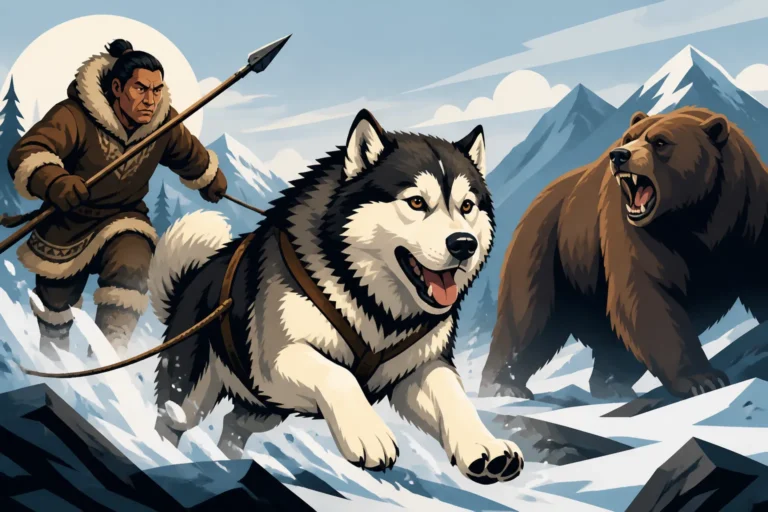
Let's be brutally honest: your Alaskan Malamute wasn't bred to stroll politely on a suburban sidewalk. They were bred for vast, open spaces, to cover incredible distances with purpose, often to hunt or pull heavy loads for their human companions, the Mahlemut people. This history is etched into their very being, and it manifests in their powerful drives.
The Call of the Wild and the Thrill of the Hunt
That irresistible urge to run, to explore, to chase – it’s not misbehavior in a Malamute; it's their heritage screaming through their veins. Imagine their ancestors, traversing miles of tundra, keenly aware of every scent, every rustle, every movement. When something moves quickly in their peripheral vision, whether it's a squirrel, a leaf blowing in the wind, or yes, a car, it triggers that ancient hardwired instinct. It’s a primal urge to pursue, to investigate, and potentially, to hunt. They literally cannot help themselves.
This isn't a dog being defiant; it's a dog being a Malamute. Their drive to chase and cover ground is immense. When they get loose, their primary directive isn't to find their way home safely, but to go. To see what's over that hill, to track that scent, to chase that fleeting glimpse of movement. This is why How Far a Loose Alaskan Malamute Travels can be utterly astounding, and why the concept of a reliable recall for this breed is often, frankly, a pipe dream. Why an Alaskan Malamute Will Never Have a Reliable Recall is something every Malamute owner comes to understand, often through terrifying experience.
Ignoring Danger for the Chase
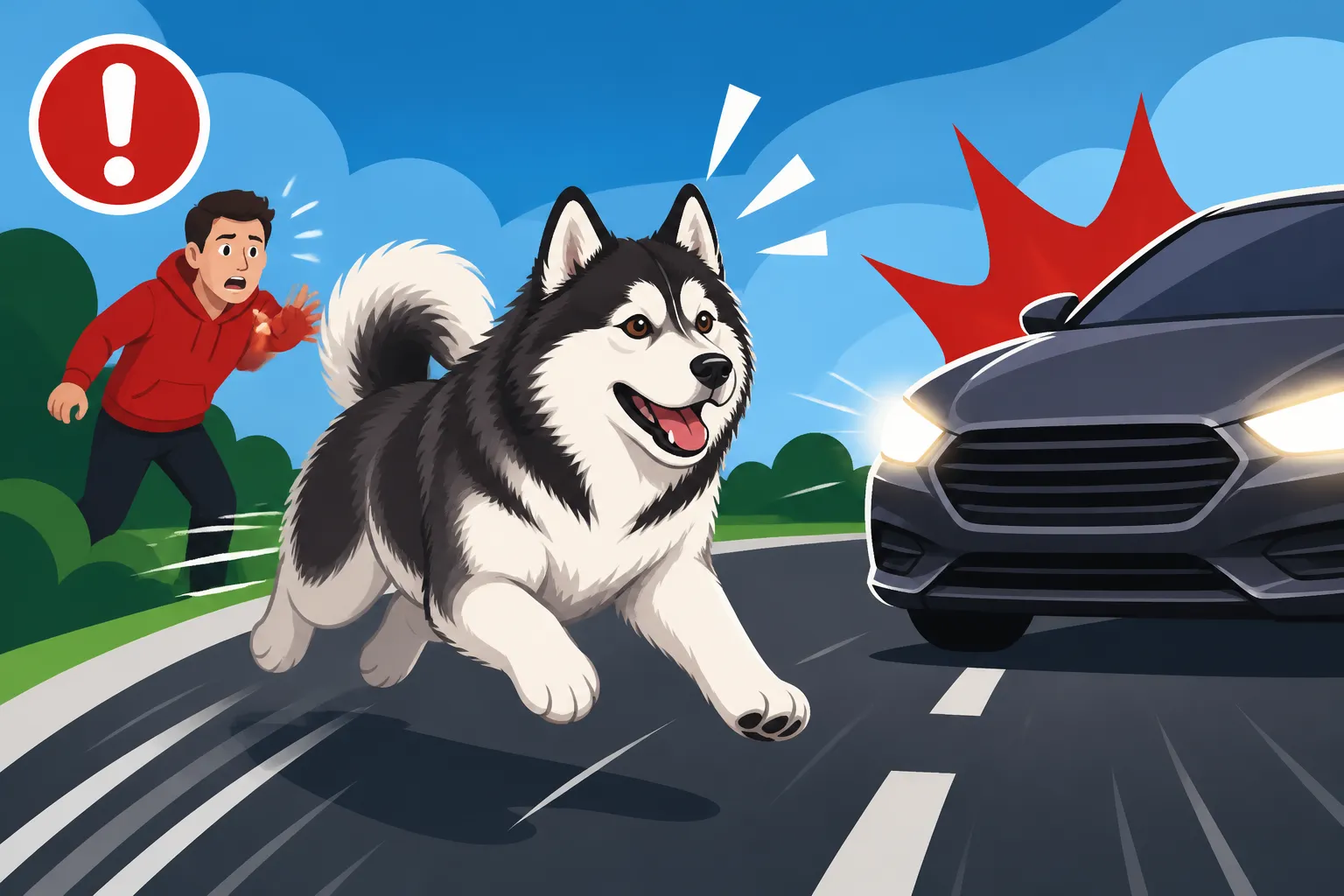
What makes this even more perilous when it comes to traffic is that their chase instinct often completely overrides any sense of self-preservation. When a Malamute locks onto something, whether it’s a person, another dog, or a vehicle, their world narrows down to that single target. It's a kind of tunnel vision fueled by adrenaline and instinct. They're not consciously thinking about the heavy, fast-moving object and the potential for grave injury. They're thinking, "Movement! Must investigate/pursue!"
This profound focus means they often disregard the blaring horn, the screeching tires, or even the frantic calls from their panicked owner. For them, the car is just another large, fast-moving stimulus in their environment, something to be engaged with, not something to avoid. Other breeds might pause, assess, or show caution around traffic, having a more innate understanding of danger. But for a Malamute, especially one caught in the thrill of the chase, that instinct for pursuit can be overwhelmingly strong, making them incredibly vulnerable in a traffic situation. This strong How Strong a Malamute's Prey Drive Is is something to be aware of constantly.
Lack of Road Sense vs. Strong Drive
It's easy for us, as humans who understand the physics and dangers of moving vehicles, to assume that a dog would instinctively avoid being hit. But a Malamute's brain simply isn't wired to comprehend the concept of a fast-moving metal box as a life-threatening object in the way we do.
Perceiving Cars as Stimulus, Not Threat
A car, to a Malamute, is just another large, fast-moving object. It might be interesting. It might be something to chase, like a deer or a rabbit that crosses their path. It certainly doesn't register as a "danger" in the way a wild predator might. Their ancestors never encountered such things on the tundra. They haven't evolved a natural caution around massive, quick-moving machines. Instead, their instincts tell them: "fast movement = something to engage with."
Think about it from their perspective. A deer bounds across a field, a Malamute chases. A car zooms down a street, it's just a different kind of fast-moving entity. The consequences of interacting with one versus the other are entirely alien to them. They're driven by the thrill of the chase, the boundless energy of their breed, and an innate curiosity. This isn't a sign of unintelligence; it's a testament to how differently their minds process the modern world compared to our own. When they bolt, they're not thinking about the lanes of traffic or the speed limit; they're only focused on the freedom and the chase.
The Power of Impulse Over Training
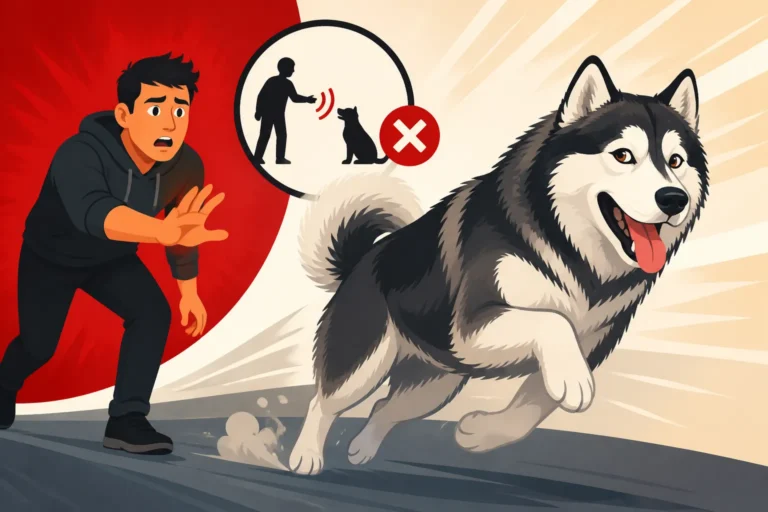
Many Malamute owners are diligent with training, and their dogs might be perfectly behaved in controlled environments. They know "stay," they might even have a decent "come" in the backyard. But then, the gate swings open, or a leash slips, and suddenly, all that training seems to vanish. This is incredibly frustrating, even heartbreaking, because you know your dog knows what you're asking. Yet, in that critical moment, the primal urge takes over. Why a Malamute's Recall Cannot Be Trusted becomes painfully clear when faced with a situation like this.
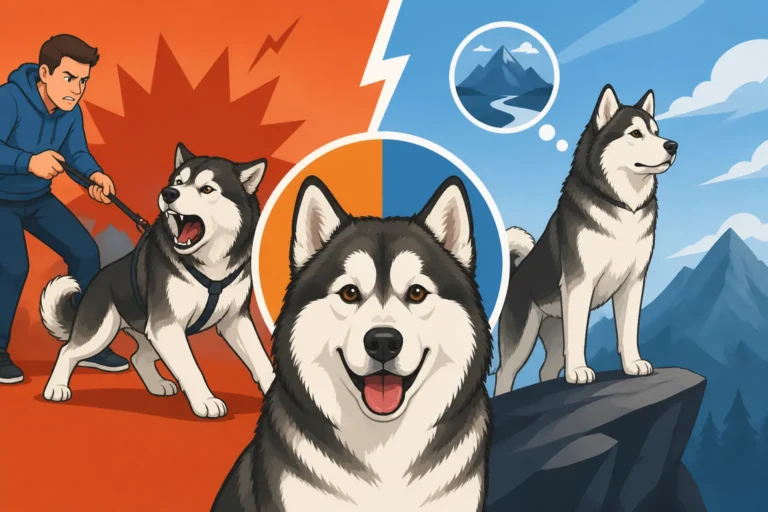
It's not that your Malamute is being malicious or deliberately disobedient. It's that the sheer, overwhelming impulse to run, to chase, to explore, is far more powerful than the learned command in an uncontrolled, high-stimulus environment. Imagine asking a marathon runner not to run when the starting gun goes off, or a bird dog not to retrieve a bird. It's against their very nature. While consistent, positive reinforcement training is vital for all dogs, for a Malamute, it's about managing expectations and understanding that some instincts are so strong they can rarely be fully "trained out" in high-stakes situations. This is why strict management becomes paramount.
Preventing the Worst: Management and Training
Given the Malamute's strong drives and natural inclination to roam, prevention is truly the best, and often only, defense against the tragedy of a traffic accident. This requires constant vigilance and robust systems.
Fortifying Your Perimeter
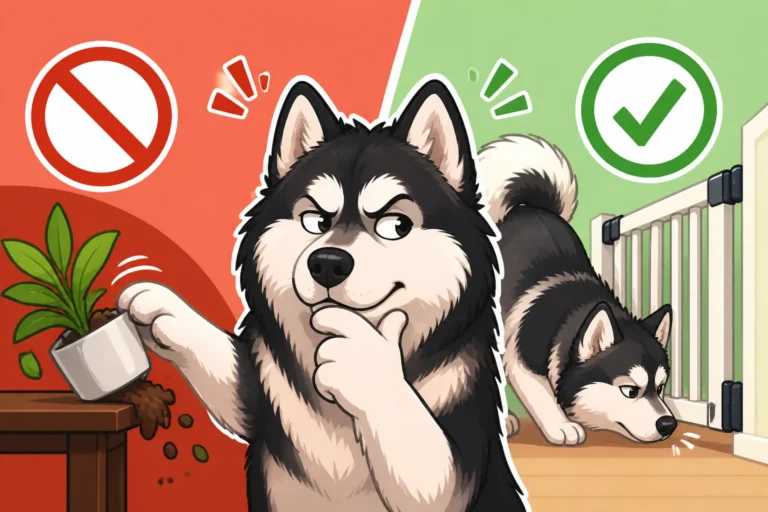
Your home and yard are your first line of defense. A simple fence isn't enough for a determined Malamute. They are master escape artists, gifted diggers, and surprisingly agile climbers. You need to think like a Malamute trying to get out, and then reinforce accordingly.
- Height: Fences should be at least six feet tall, preferably higher. Some Malamutes can clear impressive heights.
- Digging Prevention: This is crucial. Malamutes were bred to dig dens in the snow and find shelter, and that instinct means they will attempt to dig under fences. You might need to bury chicken wire or concrete footings along the fence line. How Far Down a Malamute Will Dig can surprise even experienced owners. For a truly secure solution, consider What Concrete Footings for a Malamute Fence Cost.
- Gate Security: Gates must be double-latched and secured with carabiners or heavy-duty locks. Never assume a simple latch will hold. Many Malamutes can figure out how to operate basic latches with their noses or paws.
- Supervision: Even with the most secure yard, never leave a Malamute unsupervised for long periods. Boredom is a powerful motivator for escape. A secure kennel run with a solid roof can be a valuable addition for times when you cannot directly supervise them.
Indispensable Tools and Training
Beyond physical barriers, you need reliable tools and a realistic approach to training. Management is key to keeping your Malamute safe.
- Leashes and Harnesses: A sturdy, well-fitting harness that discourages pulling and escape is non-negotiable. Traditional collars can slip off or put dangerous pressure on their trachea if they pull hard. Look for harnesses with multiple points of contact or front-clip options for better control. Many excellent options are available from retailers like Amazon, designed for strong pullers.
- Double Leashing: For extra security, especially in new or high-traffic areas, consider double-leashing. This means having one leash attached to a collar and another to a harness. If one fails, you have a backup.
- GPS Tracking Collars: These are absolute lifesavers. If, despite all precautions, your Malamute does manage to get loose, a GPS collar can dramatically increase your chances of finding them quickly and safely. Why a GPS Collar Is Essential for a Malamute cannot be overstated. There are many reliable brands on the market that offer real-time tracking through apps on your phone.
- "Wait" at Thresholds: While a perfect recall is elusive, teaching a rock-solid "wait" at every door, gate, and car door can buy you precious seconds if they try to bolt. This training takes immense patience and consistency, but it's invaluable. The Malamute That Bolts Through an Open Door is a common scenario, and a strong "wait" can prevent it.
- Professional Guidance: Sometimes, you hit a wall. Don't be afraid to seek help from a professional dog trainer or behaviorist who has experience with northern breeds. They can offer tailored strategies and help you understand your individual dog's nuances. Whether a Malamute Owner Needs a Professional Trainer is often answered with a resounding "yes" by experienced owners. Resources like BAXTER & Bella offer online programs that can provide structured training guidance from the comfort of your home, helping you build a stronger foundation.
| Aspect of Management | Description | Why It's Crucial for Malamutes |
|---|---|---|
| Secure Fencing | High, dig-proof, and escape-proof barriers. This includes buried wire, concrete footings, and secure gate latches. | Their innate desire to roam and dig means standard fences are often inadequate. A small gap or unlatched gate is an invitation to explore. |
| Leash Protocol | Always leashed outside a secure, Malamute-proof area. Use a sturdy harness, not just a collar, and consider double-leashing in high-risk areas. | Their prey drive and wandering instinct are too strong to rely on recall in an unfenced environment. A secure harness prevents slipping out. |
| GPS Tracking | A collar with real-time GPS tracking capabilities. | If an escape does happen, a GPS tracker is often the only way to locate them quickly before they encounter dangerous situations like traffic. |
| "Wait" Command | Teaching your Malamute to pause at every open door, gate, or car door until released. | This crucial command provides a safety buffer, preventing impulsive bolts and giving you time to react if they try to dash out. |
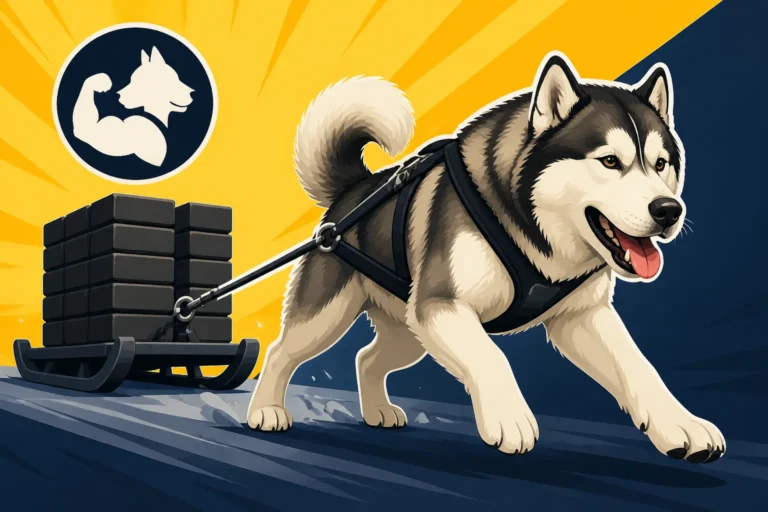
| Mental & Physical Enrichment | Providing ample exercise, puzzle toys, training sessions, and opportunities for 'jobs' like weight pulling or hiking on leash. | A bored Malamute is a destructive and escape-prone Malamute. Meeting their physical and mental needs reduces the urge to seek adventure elsewhere. |
The Emotional Toll on Owners
Living with an Alaskan Malamute, while incredibly rewarding, comes with a unique set of responsibilities and, let's be honest, anxieties. The fear of them getting loose and running toward traffic is a burden many owners carry daily.
The Constant Vigilance
It's exhausting, isn't it? The mental checklist you run through every single time you open a door: Is the gate double-latched? Is his leash securely clipped? Where is he? That split second of panic when a visitor leaves the door ajar, or you realize the back gate might not have clicked properly. It’s a constant, low-level hum of worry in the background, fueled by countless stories of dogs lost or, worse, hit by cars.
We love our Malamutes fiercely, and that love comes with the profound fear of losing them to something preventable. This isn't just about training or physical barriers; it's about the emotional energy invested in keeping these magnificent, instinct-driven creatures safe in a world that wasn't built for them. It's a testament to the Malamute owner's dedication that we maintain this vigilance day in and day out, despite the mental fatigue it can cause.
Moving Forward with Realistic Expectations
Understanding why your Malamute has this inclination to run toward traffic isn't about excusing behavior, but about empowering you to manage it effectively. It means accepting that some instincts are simply too strong to eradicate and that our role is to create a fortress of safety and structure around them.
It's about proactive prevention, not reactive punishment. It's about setting them up for success, not failure. By understanding their ancestral drives, their profound prey drive, and their boundless desire to roam, we can move past frustration and embrace a strategy of unyielding management. This includes secure fencing, diligent leash protocols, indispensable tools like GPS trackers, and a commitment to mental and physical enrichment that satisfies their innate needs within safe boundaries. It's a lifelong commitment, but for these incredible, loyal companions, it’s a commitment well worth making.
Disclaimer
This article is for general informational purposes only and does not constitute professional advice. Laws, prices and regulations vary by location and change over time. Consult a qualified professional for guidance on your specific situation.