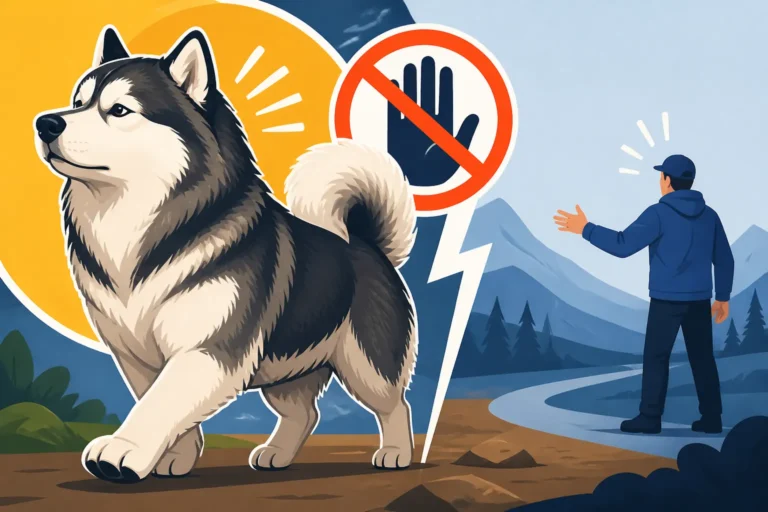
Whether an Alaskan Malamute Guards Its Owner
It's a common misconception to assume that all large, powerful dog breeds will instinctively guard their owners, especially one as imposing and wolf-like as the Alaskan Malamute. Many people bring these magnificent dogs home with the expectation that they'll be a natural deterrent or protector, only to find their Malamute greeting strangers with a joyful "woo" rather than a menacing growl. This guide aims to clear up those expectations, diving deep into the true protective instincts of the Alaskan Malamute and how to understand and manage them.
The Alaskan Malamute's True Nature: Not a Personal Bodyguard
When we think of a "guard dog," certain images come to mind: a dog standing sentinel, alert and ready to defend its human at a moment's notice. While admirable, this isn't the role the Alaskan Malamute was bred for, nor is it typically their natural inclination. Understanding their historical purpose is key to setting realistic expectations for their behavior in a modern home.
Bred for Freight, Not Fights
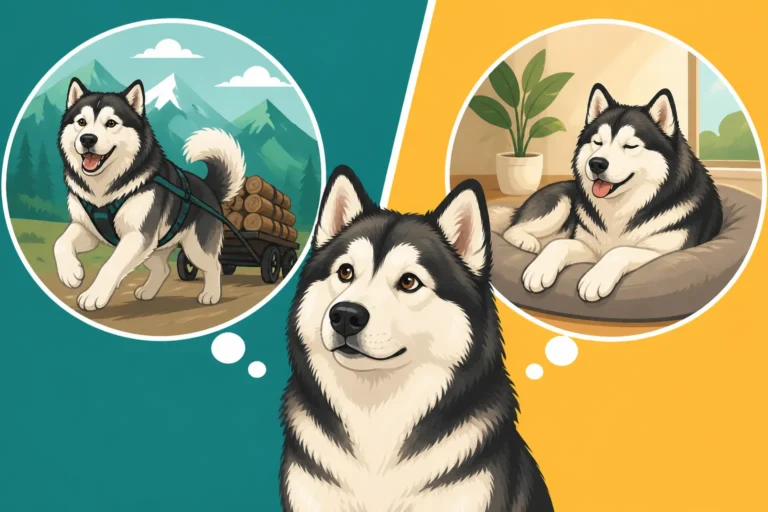
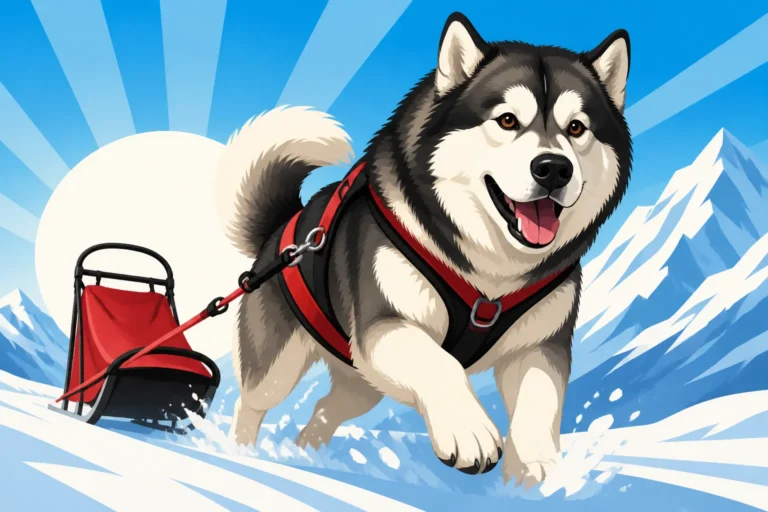
The Alaskan Malamute hails from a lineage of working dogs, carefully developed by the Mahlemut people of the Arctic. Their primary job was incredibly specific and demanding: to haul heavy loads over long distances in brutal conditions. These dogs were the ultimate freighting machines, built for endurance, strength, and cooperation within a team. Survival in such an environment depended on their ability to work together, their intelligence to navigate treacherous terrain, and their efficient metabolism to conserve energy. This meant that aggression towards humans, even strangers, was largely undesirable. A dog that bit or fought with people would be a liability, not an asset, when interactions with other tribes or traders were necessary for survival. The Mahlemut of Kotzebue Sound Bred the Alaskan Malamute specifically for this purpose. Their focus was on a dog that could endure, not one that would fight off intruders.
Imagine a scenario where a team of Malamutes is pulling a sled laden with supplies through a blizzard. Their handler relies on their cooperation, not their ferocity towards anyone they might encounter. Their job was about perseverance and strength, not territorial defense of a person. This fundamental difference in their ancestral role means their default setting isn't "attack intruder" but rather "assess situation, maybe play, then get back to work."
The Myth of the Fierce Guardian
Many people see the Malamute's impressive size, powerful build, and sometimes stoic demeanor and automatically project the "fierce guardian" role onto them. It's easy to mistake their reserved nature with strangers for suspicion, or their deep, resonant "woo" for a warning growl. In reality, while a Malamute might be imposing, they are generally not reactive in the same way a purpose-bred guard dog like a German Shepherd or Rottweiler might be. They lack the intense territorial drive or the singular focus on protecting a specific individual that defines true personal protection breeds. Their size can be a deterrent, simply because they look formidable, but it's often more of a passive effect than an active intent on their part.
Consider this: if a stranger approaches your Malamute, you're more likely to see a tail wag and a request for ear scratches than a defensive posture. Their lack of inherent suspicion towards humans, including those outside their immediate family, often surprises new owners. They might give a bark or a howl if someone approaches the door, but it's often more of an announcement, like "Hey, someone's here!" rather than a protective threat. Why a Malamute Wooes Instead of Barking explains this vocalization behavior further.
Understanding Their Independence
Alaskan Malamutes are known for their independent nature, a trait that also stems from their working heritage. They are intelligent, problem-solving dogs who were expected to make decisions in challenging environments, sometimes apart from their human handler. This independence means they often consider situations for themselves rather than defaulting to human direction, which can be perceived as stubbornness in training. This independent spirit also influences their "guarding" behavior. They're not typically "velcro dogs" that constantly seek to be physically attached to their owner, and their affection often comes on their own terms.
This independence is a double-edged sword when it comes to protection. While it makes them incredibly resilient and capable, it also means they're less likely to be instinctively protective of a person in a confrontation. They might observe, they might bark, but they aren't necessarily going to put themselves directly in harm's way for their owner in the same way a dog bred for personal protection would. They're loyal to their family unit, yes, but that loyalty manifests more as companionship and a desire to be part of the "pack" rather than a vigilant bodyguard. Their strength and size were geared for pulling, not for confrontation. Freight, Not Speed: What Separates a Malamute From a Racing Dog really highlights this fundamental difference.
Where Malamute Protective Instincts Actually Lie
While the Alaskan Malamute isn't typically a personal protection dog, they certainly aren't without protective instincts. It's just that these instincts manifest in ways that might be different from what a new owner expects. Understanding these nuances is crucial for managing their behavior and ensuring a safe, harmonious household.
Resource Guarding: A Common Malamute Trait
One of the most significant protective behaviors you might see in a Malamute is resource guarding. This is not about guarding their owner, but rather about guarding valuable possessions like food, toys, sleeping spots, or even favored chew bones. This instinct likely stems from their ancestral need to survive in harsh environments where resources were scarce, and claiming a valuable item could mean the difference between thriving and struggling. Resource guarding can manifest as growling, stiffening, a hard stare, or even snapping if another dog or a human approaches their guarded item.
A common scenario involves a Malamute with a high-value chew, like a Benebone from Amazon. If another dog or a child approaches too closely, the Malamute might give a low growl or stiffen its body, signaling "this is mine, back off." While it's a natural instinct, it's one that absolutely needs to be managed through careful training and management from puppyhood. Ignoring it can lead to dangerous situations, especially in multi-dog households or homes with children. It's not personal; it's instinctual, and it can be directed at anyone, regardless of their relationship with the dog. For a good understanding of broader behavioral issues, resources like BAXTER & Bella can be incredibly helpful for structured training.
Territoriality: The Home, Not Necessarily the Human
Malamutes do tend to be aware of their territory – namely, their home and yard. They might bark or "woo" when someone approaches the house, or if they see someone walking by outside. This isn't necessarily an aggressive "I'm going to attack you" warning, but more of a "Hey, I see you, and I'm letting everyone know you're here" announcement. They might be quite vocal as a delivery person approaches the door, but once the door is open, they're often more interested in a friendly sniff or even a bit of playful interaction.
Their territoriality is generally about the space they inhabit, not specifically about defending their human from an external threat. If a stranger enters their yard, they might investigate, possibly bark, and certainly make their presence known, but actual aggression or an attack is far less common than with traditional guard breeds. They are more likely to deter through their imposing presence and vocalizations than through a physical confrontation. This is why the saying that a Malamute deters nobody (Why a Malamute Deters Nobody) often rings true for owners; while they might be a "big scary dog" to some, they're usually big, friendly fluffballs to those who get close enough.
The "Woos" and Warnings, Not Attacks
Instead of aggressive growls or lunges, a Malamute's warning system often involves their unique vocalizations: the characteristic "woo-woo-woo" or a dramatic howl. They are generally not big barkers, but when they do bark, it's usually to alert or express excitement rather than to threaten. A deep, sustained howl might indicate boredom, loneliness, or an attempt to communicate with others, like a siren passing by.
When they encounter someone new, their body language often communicates curiosity and friendliness more than suspicion. A Malamute might lean into a stranger for pets, rather than placing themselves between their owner and the perceived threat. While their large size can sometimes be mistaken for an aggressive posture, it's typically just their natural way of exploring and interacting. Understanding these subtle cues is important for Malamute owners to accurately interpret their dog's intentions and manage interactions responsibly. How an Alaskan Malamute Greets Strangers often involves a lot of sniffing and a general air of wanting to make new friends.
Let's summarize these distinctions in a quick table:
| Trait / Behavior | Typical "Guard Dog" (e.g., German Shepherd) | Alaskan Malamute |
|---|---|---|
| Primary Instinct | Personal protection, territorial defense, vigilance | Freighting, endurance, pack cooperation, independence |
| Response to Strangers | Suspicion, watchful, potentially aggressive if uninvited | Curiosity, friendly greetings, vocal announcement |
| Focus of Protection | Owner/family, property | Resources (food, toys), general home territory |
| Warning Signs | Deep growl, snarling, direct stare, lunging | "Woo-woo," howling, barking (as alert), body stiffening around resources |
| Bred Purpose | Protection, herding, military/police work | Hauling heavy loads, survival in harsh climates |
| Recall Reliability | Often high with consistent training | Generally unreliable due to strong prey drive and independence Why an Alaskan Malamute Will Never Have a Reliable Recall |
Training and Management for a Secure Home with Your Malamute
Even though Alaskan Malamutes aren't natural guard dogs, their size and powerful instincts mean that proper training and management are absolutely essential. A well-adjusted Malamute is a joy to live with, but an unmanaged one can unintentionally cause problems, especially concerning their resource guarding or strong prey drive.
Prioritizing Socialization and Positive Reinforcement
Early and ongoing socialization is paramount for an Alaskan Malamute. Exposing your Malamute puppy to a wide variety of people, places, sounds, and other friendly dogs in a positive way will help them grow into a confident, well-adjusted adult. This helps them understand that new experiences are generally not threatening, reinforcing their naturally friendly disposition towards humans. Puppy classes and supervised playdates are excellent ways to build this foundation. Remember, a Malamute that is well-socialized is less likely to react out of fear or uncertainty, which can sometimes be mistaken for guarding.
Training with positive reinforcement methods works best for Malamutes. They are intelligent but can be independent and sensitive to harsh corrections. Using treats, praise, and play to reward desired behaviors will be far more effective than force. Organizations like BAXTER & Bella offer online puppy training programs that emphasize positive reinforcement, which can be a fantastic resource for new Malamute owners. This approach builds trust and cooperation, essential ingredients for any successful relationship with a Malamute. Trying to use force or intimidation will only backfire, as Why Force Fails on an Alaskan Malamute makes clear.
Addressing Resource Guarding Safely
Resource guarding is a behavior that needs proactive and consistent management, especially if you have children or other pets. The goal isn't to punish the dog for an instinctual behavior, but to teach them that humans approaching their resources is a good thing, leading to even better things. This can be done through "trade-up" games:
- Start with low-value items: Offer a higher-value treat in exchange for a toy they're not deeply attached to.
- Practice approach and retreat: Approach their food bowl, drop a high-value treat, and then walk away. Repeat this many times, gradually increasing proximity and duration. This teaches them that your approach means good things are coming, not that you're taking something away.
- "Leave It" and "Drop It" commands: Teach these commands thoroughly, using positive reinforcement. These are invaluable for managing situations where your Malamute has something they shouldn't or is guarding an item.
- Management: Until training is solid, manage their environment. Feed them separately from other pets, pick up toys after play, and ensure high-value chews are given in a safe, secluded spot where they won't feel threatened. Durable chew toys from Amazon can be a great option for keeping them occupied safely. If you notice signs of resource guarding, it's wise to consult a professional dog trainer or behaviorist.
Establishing Clear Boundaries and Leadership
Alaskan Malamutes thrive on clear, consistent leadership and boundaries. This doesn't mean being "alpha" or using dominance tactics, but rather being a reliable, fair, and confident guide for your dog. They need to understand what is expected of them and what the rules of the household are. Consistency in commands, daily routines, and expectations helps them feel secure and reduces the likelihood of them trying to "test the waters" or make their own rules. The Adolescent Malamute That Rewrites the Rules at Fourteen Months often illustrates this need for consistent guidance as they mature.
A Malamute who understands its place in the family unit is generally a happier and more well-behaved dog. This means teaching them basic obedience commands, ensuring they respect personal space, and always reinforcing positive behaviors. Their independent nature means they will often try to do things their own way if you're not clear and consistent. While they aren't looking to "dominate" you, they are natural leaders within a pack structure, and they need a human who can calmly and consistently show them the ropes. Investing time in their training from puppyhood is one of the best investments you can make for a fulfilling life with your Malamute.
Disclaimer
This article is for general informational purposes only and does not constitute professional advice. Laws, prices and regulations vary by location and change over time. Consult a qualified professional for guidance on your specific situation.