What a Malamute’s Cap Marking Looks Like
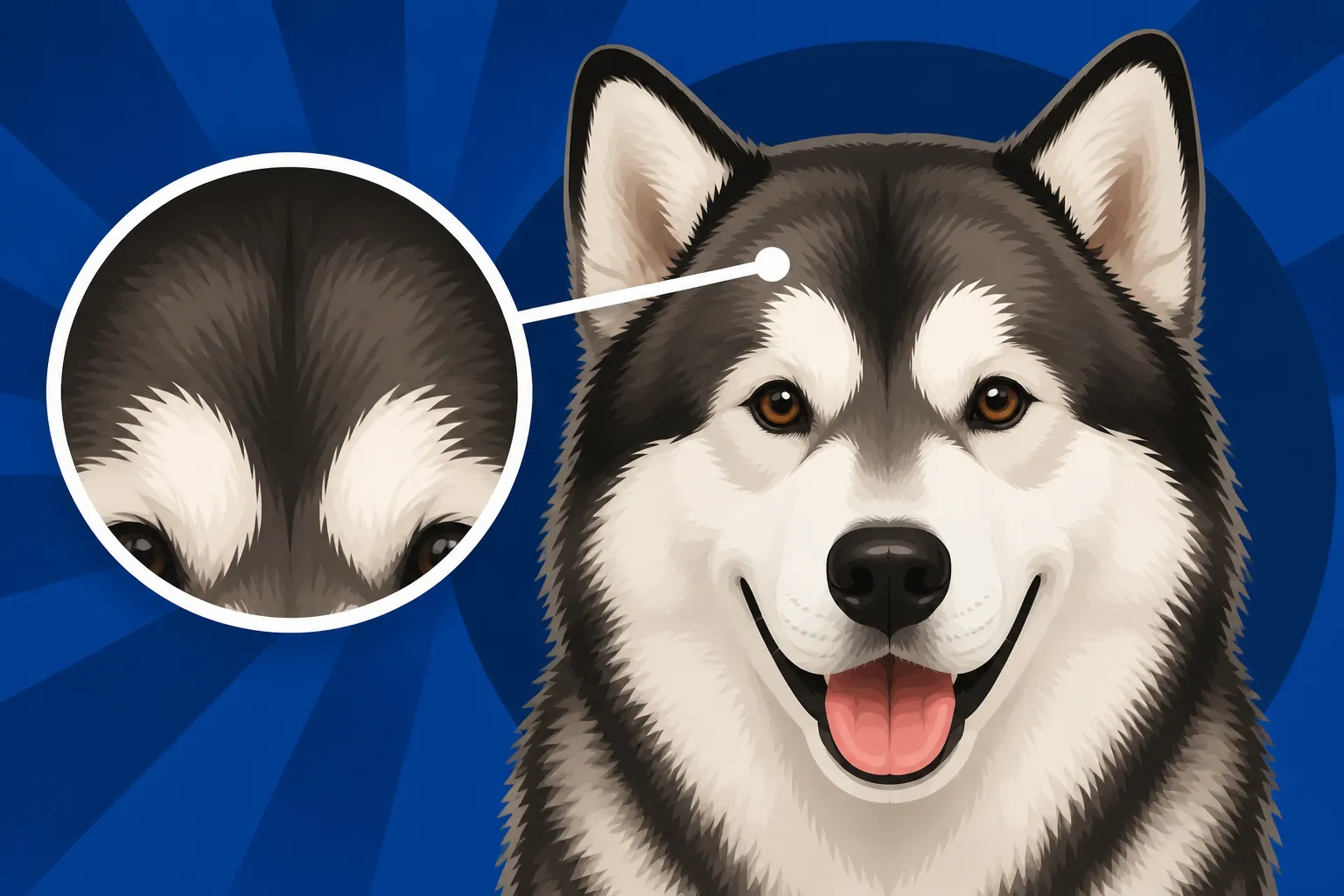
A Malamute’s cap marking is the darker-colored area over the top of the head, often extending across the ears, while much of the face remains white. It can look different from dog to dog, and fluffy fur, lighting, and age can make the pattern tricky to read. This guide explains what a cap looks like and how to distinguish it from other facial markings.
What a Malamute cap marking looks like
The basic pattern
Picture a darker “cap” of fur covering the crown of the head. On many Alaskan Malamutes, the color reaches down over the ears, while the muzzle and parts of the cheeks remain white or pale. The boundary is not necessarily a crisp, straight line; fur can soften the edges and make the marking appear blended.
The cap may be black, gray, sable, red, or another coat color permitted in the breed. Its appearance depends on the dog’s overall coloring, so a black-and-white Malamute may have a sharply contrasting cap, while a gray-and-white dog may show a subtler transition. The cap describes where the color appears on the head, not one specific coat color. For a broader look at coat shades, see The Colors an Alaskan Malamute Comes In.
A cap is best understood as a pattern rather than a fixed “face shape.” One dog’s cap may cover most of the top of the skull and both ears; another’s may appear narrower or blend into the shoulder coloring. You may notice the pattern most clearly when the coat is clean, dry, and lying naturally, rather than ruffled after play or packed with loose undercoat.
Where the cap ends and white facial fur begins
The darker area usually sits above the face, with lighter fur visible below it. But the border can vary. Some Malamutes have a broad white area between the eyes and muzzle; others have additional dark markings that descend into the facial white. A narrow streak of white running up the forehead can also break through the darker cap.
That white streak is commonly called a blaze. It can be easy to mistake for a gap in the cap, especially in puppies whose markings may be less visually defined while their coat is changing. The key is to look at the whole head: a cap is the darker coloring on top, while the blaze is a lighter stripe within or between the darker areas.
Breed descriptions commonly discuss the cap alongside other facial markings. If you are comparing several patterns, What a Malamute's Cap and Bar Markings Are offers a useful starting point. And for the bigger picture, Which Colors the Alaskan Malamute Standard Allows helps separate accepted color combinations from the placement of the markings themselves.
Cap, bar, mask, and other facial markings
How a cap differs from a bar
A cap is the darker coloring over the crown of the head. A bar is a darker stripe that runs down the face, often between the eyes. The two can appear together, which is why people sometimes describe a dog as having a cap-and-bar pattern rather than a cap alone.
A bar may be narrow or more prominent, and it can blend into other dark markings. Looking at the dog straight on can help you spot it: focus on whether a stripe descends from the cap between the eyes. Then look from the side to see how that stripe relates to the darker fur over the ears and crown.
| Marking | Where it appears | What to look for |
|---|---|---|
| Cap | Top of the head, often including the ears | A darker area over the crown with lighter facial fur below |
| Blaze | Forehead | A lighter stripe or streak within the darker head coloring |
| Bar | Face, commonly between the eyes | A darker stripe that descends from the cap |
| Mask | Around parts of the face | Darker facial coloring that creates a more extensive pattern |
| Goggles | Around the eyes | Darker patches that frame the eyes |
These terms describe different parts or arrangements of the coloring, and a Malamute can show more than one at once. A cap does not automatically mean the dog has a bar, and a dog with a cap may have a mostly white face. For a fuller pattern around the face, compare the dog with Whether a Malamute Can Have a Full Mask.
Why a cap can be hard to identify at first glance
A thick double coat can blur the edge between dark and light fur. Loose hair during a seasonal coat blow can make the head look uneven, while damp fur may lie flat and reveal a clearer outline. In bright sunlight, gray or sable markings can also appear lighter than they do indoors.
Photos can be misleading, too. A camera may deepen shadows around the ears, wash out pale fur, or make a subtle blaze look more pronounced. If you are documenting a puppy’s markings, take a few pictures in even daylight from the front and both sides. Use the same general lighting each time so changes in the image do not look like changes in the dog.
If grooming helps you see the pattern, keep it gentle and practical. A suitable brush for the coat can lift loose fur away from the face without trying to alter the markings. If you are gathering basic grooming supplies, Chewy is one place owners may look for brushes and coat-care items; choose tools based on your dog’s coat and comfort, not on a promise to change how the marking looks.
How cap markings vary among Malamutes
Variation in color and shape
No two caps need to look identical. One may be broad and dark, covering the ears and most of the crown. Another may be more limited, with a lighter streak splitting the top of the head. The amount of white on the muzzle and cheeks can vary as well, so two dogs with the same general cap pattern may still look quite different.
The color itself affects how obvious the marking appears. Black against white is usually high contrast. Gray, sable, or red coloring may create a softer boundary, particularly when the coat contains several tones. A cap is not a measure of breed quality by itself, and a striking or unusual pattern does not tell you whether a dog is healthier, better bred, or more suited to a particular activity.
People sometimes use informal descriptions such as “open face” or “goggles” when discussing a Malamute’s head. Those labels can be useful conversationally, but they are not a substitute for looking at the actual distribution of color. When asking a breeder or veterinarian about a dog’s markings, a clear photo and a plain description—such as “dark over the crown, white muzzle, narrow white blaze”—usually communicate more than a label alone.
Do markings change as a dog grows?
A puppy’s coat can change as it matures. Fur may become longer and denser, and shifting coat texture can make a cap’s boundary appear softer or more defined. Some dogs also show changes in the overall intensity of their coat colors as the adult coat comes in. That does not necessarily mean the underlying pattern has changed; it may simply be easier to see, or look different under new lighting.
For a fair comparison, look at photographs taken from similar angles and in similar light. Avoid judging a marking from a single image, particularly if the puppy is wet, shedding, or photographed in strong shadow. You can also note the color and shape in ordinary language, rather than expecting a precise outline to remain unchanged throughout the dog’s life.
If you are curious about how a Malamute’s appearance develops, Whether a Malamute's Face Markings Change With Age is a related topic. Eye color is separate from the coat pattern: a dark cap does not determine eye color, and facial markings do not explain whether a dog’s eyes meet breed expectations. See Whether a Malamute's Eyes Must Be Brown for that distinct question.
Reading the marking without overinterpreting it
A cap is appearance, not a health clue
A Malamute’s cap is a coat marking. By itself, it does not diagnose a skin condition, predict temperament, or reveal the dog’s ancestry. If the skin beneath the fur looks irritated, develops sores, or loses hair, that is a separate issue from the normal distribution of coat color and is worth discussing with a veterinarian.
Likewise, a marking that looks uneven in one photo is not automatically a concern. Fur can part, lie in different directions, or catch the light in a way that creates apparent patches. If you are worried about a new change in the skin or coat, take clear photographs and note when you first noticed it. A retailer such as Chewy may help you find routine grooming supplies, but changes to skin or coat health need veterinary guidance rather than a cosmetic fix.
What to notice when choosing or describing a puppy
If you are meeting a litter, look at the head from the front and each side. Notice where the darker coloring sits, whether a blaze interrupts it, and whether a bar or eye patches are present. Then describe what you see plainly. This makes it easier to compare notes with a breeder or to recognize the same dog in later photos.
Do not choose a puppy solely because its cap looks especially symmetrical or dramatic. Markings are one small part of the dog, while health, temperament, care needs, and responsible breeding practices matter far more to everyday life. For a color-specific question, Whether an All White Malamute Is Correct explains why an all-white coat is a different consideration from a cap pattern.
A simple phone photo record can be useful as the coat develops. Keep the pictures in a folder with dates and take them in natural, even light. You do not need special equipment or products: a calm dog, a clear view of the face, and consistent angles are enough. If you happen to be shopping for a basic brush or comb, Chewy carries general pet-care supplies, but the markings themselves do not need treatment, enhancement, or maintenance.
Disclaimer
This article is for general informational purposes only and does not constitute professional advice. Laws, prices and regulations vary by location and change over time. Consult a qualified professional for guidance on your specific situation.