Whether a Malamute’s Tail Curls Over Its Back
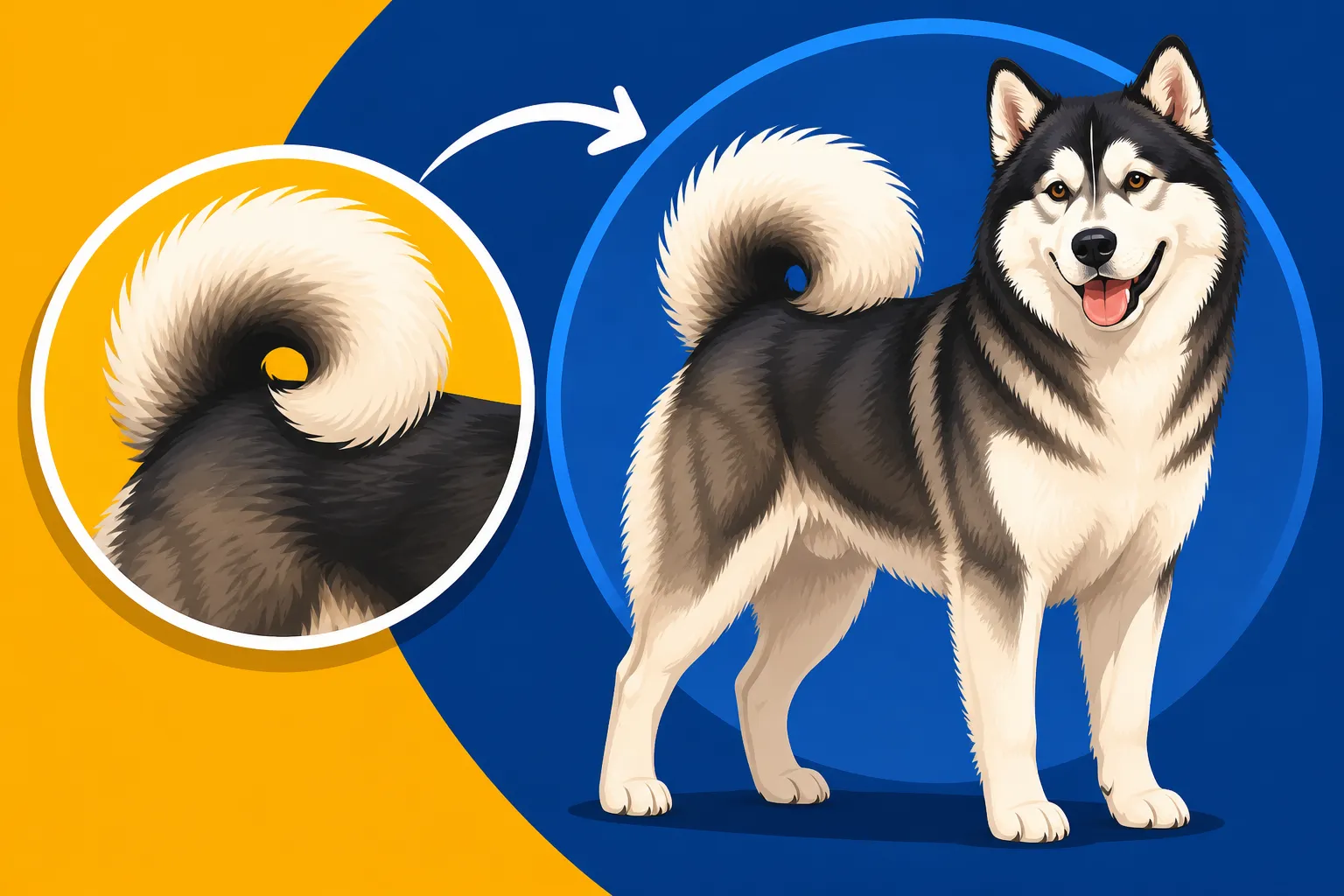
A Malamute’s tail often curves over its back, especially when the dog is alert or moving—but it should not look like a tightly wound ring. If you are trying to tell normal tail carriage from an unusual shape, the key is to look at the whole dog, notice how the tail changes with mood and movement, and watch for signs of pain or sudden change.
What a Malamute’s tail normally looks like
The characteristic plume and curve
The Alaskan Malamute is known for a full, plumed tail that is carried over the back. The curve is a familiar part of the breed’s outline: when a Malamute is standing comfortably or paying attention to something, its tail may rise and sweep over the back rather than hang straight down. It is usually a soft-looking arc, not a small, rigid curl pressed tightly against the body.
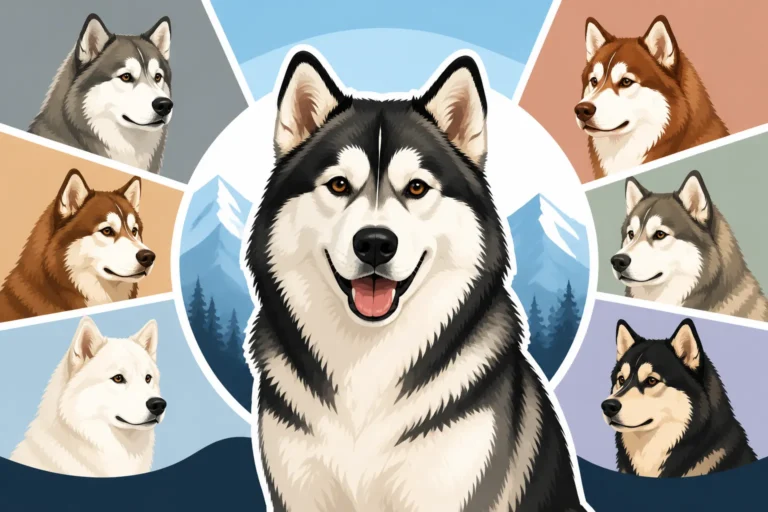
The coat adds to the impression. Long, thick hair can make the tail look larger and more curled than its underlying shape really is. A puppy with a short coat may show the curve less dramatically, while a mature Malamute in full coat can look as if it is carrying a big feathered plume. If you are curious about the coat itself, Whether a Malamute's Tail Should Be a Plume looks at the shape and coat features that contribute to that characteristic appearance.
Think of the tail as part of the dog’s silhouette, not a rigid accessory that must stay in one exact position. A Malamute may carry it high when alert, let it relax when resting, or shift its position as it walks and turns. That variation is normal. A photograph captures one instant; it cannot show whether the dog’s tail changes naturally from one situation to another.
Tail carriage changes with mood and activity
A tail held over the back can be more noticeable when a dog is excited, curious, or moving with confidence. If your Malamute spots a familiar person, hears a sound at the gate, or steps outside into a snowy yard, its tail may lift and curve. When it is dozing or relaxed indoors, the tail may drop or rest in a different position.
That is why a tail seen hanging down in one moment does not automatically mean something is wrong, and a high tail does not by itself indicate a problem. Compare what you see across ordinary situations: standing, walking, resting, greeting people, and playing. A tail that moves freely and changes position with the dog’s activity is generally less concerning than one that appears fixed, painful, or suddenly different from its usual carriage.
Tail position is also only one piece of body language. A raised tail does not tell you by itself whether a Malamute is friendly, worried, or ready to approach. Look at the whole body, including facial expression, posture, movement, and whether the dog is loose or tense. For broader context on the breed’s build and proportions, What an Alaskan Malamute Actually Weighs may help put the tail in perspective as one feature of a large, heavily coated dog.
A curve is not the same as a tight ring
People sometimes use “curled tail” to describe several different shapes. A Malamute’s typical tail carriage is a plume sweeping over the back, but individual dogs can differ in how high they carry it and how much it curves. The fur can obscure the base and make it difficult to judge the actual shape underneath.
A very tight ring, a sharply kinked appearance, or a tail that seems unable to move is not the same thing as a relaxed plume carried over the back. Those features are worth discussing with a veterinarian, particularly if they are new, accompanied by sensitivity, or present alongside changes in walking, sitting, or toileting. A breeder or knowledgeable breed professional can help describe appearance, but a veterinarian is the right person to assess a suspected health issue.
| What you notice | What it may suggest | What to do |
|---|---|---|
| A soft curve over the back when alert | Typical breed-related tail carriage | Observe how it changes with mood and movement |
| Tail lower while resting | A relaxed posture or a momentary change | Compare with the dog’s usual behavior |
| A tail that is suddenly held low or stiff | Possible discomfort, injury, or another change | Contact a veterinarian if it persists or comes with other symptoms |
| A tight ring, visible kink, or restricted movement | A shape that merits closer assessment | Ask a veterinarian or experienced breed professional |
| Pain when the tail or its base is touched | Possible injury or pain | Avoid repeated handling and seek veterinary advice |
Why the tail can look different from one Malamute to another
Coat, age, and individual build
A Malamute’s tail can look quite different depending on coat length and fullness. The long hair may spread out, lift in a breeze, or lie close to the tail, changing the apparent curve from one day to the next. During coat changes, the tail may look less full; after the coat grows back in, it can appear more dramatic again. That change in appearance does not necessarily mean the tail itself has changed shape.
Age also affects what you see. A young dog may not yet have the mature coat and overall proportions that make the adult outline recognizable. A senior dog may carry its tail differently when tired or stiff, just as its posture and activity level may change. If a change is gradual, consider it alongside the dog’s general comfort and mobility rather than judging the tail in isolation.
There is also natural variation among individual dogs. Some tails form a more visible arc; others look looser or sit at a different angle. Coat texture, body shape, posture, and the exact moment you observe the dog all influence the impression. The breed’s history and working build provide useful background, but no single tail photograph can tell you everything about a dog’s health or temperament. For more on the breed’s background, see The Household an Alaskan Malamute Was Built For.
Breed resemblance does not mean every tail is identical
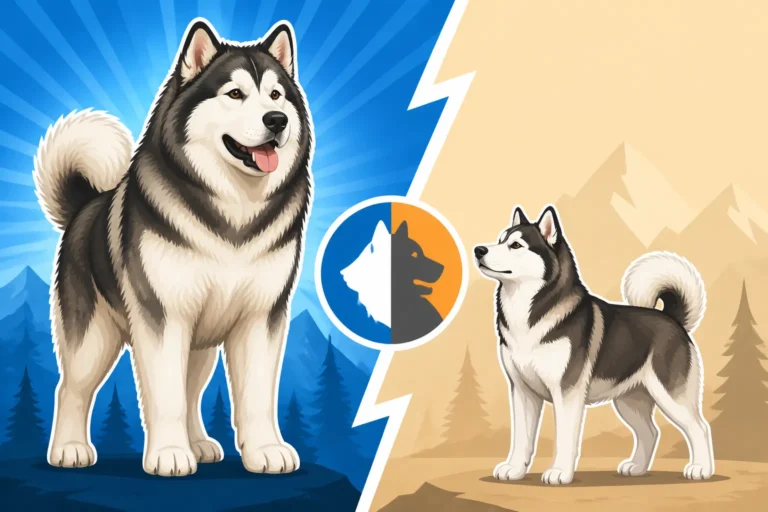
People often compare Malamutes with Siberian Huskies because both are northern breeds with thick coats and expressive tails. Their general appearance can overlap, but they are distinct breeds, and an individual dog’s tail carriage should be considered in the context of the dog’s whole structure—not as a simple breed-identification test. A curved tail alone cannot confirm that a dog is a purebred Malamute.
If you are trying to identify a dog, look at multiple features, such as overall size, proportions, coat, head shape, and movement. Even then, appearance can be misleading, especially in mixed-breed dogs. A pedigree or appropriately interpreted DNA information may provide more useful clues than relying on one visible feature. You can explore the broader comparison in The Alaskan Malamute Against the Siberian Husky.
It is also easy to overinterpret a tail as a sign of ancestry or behavior. A Malamute’s tail shape does not prove that it is “wolf-like,” and a tail held over the back does not mean the dog is dominant or aggressive. Breed traits are best understood as part of a larger picture that includes structure, behavior, history, and the individual dog. Whether the Malamute Is Closer to the Wolf Than Other Breeds offers more context for that common question.
When a tail change deserves attention
Watch for sudden changes and signs of pain
A Malamute’s usual tail carriage is less important than a noticeable change in that particular dog. If a tail that normally lifts over the back suddenly stays tucked or low, the dog may be uncomfortable, frightened, tired, or unwell. A single brief change after an unusual event may not be meaningful, but a persistent change deserves attention—especially if the dog reacts when the area around the tail is approached.
Other signs to take seriously include swelling, an unusual bend, bleeding, a wound, repeated licking or chewing, trouble sitting, or a change in walking. A dog that avoids having its hindquarters touched may be communicating discomfort. Do not repeatedly lift or pull the tail to inspect it; that can increase pain or make a frightened dog defensive. If the dog seems hurt, give it space and contact a veterinarian for guidance.
A tail change can have several possible explanations, and it is not possible to diagnose the cause by appearance alone. For example, a dog may hold its tail differently because of pain elsewhere, stress, or a temporary change in activity. The practical point is to notice what is different, when it began, and whether anything else has changed. If you are concerned, write down those details before speaking with the veterinary team.
Routine observation without overhandling
You do not need to inspect your Malamute’s tail constantly. During normal grooming or petting, simply notice whether the dog is comfortable and whether the tail moves as it usually does. If thick fur makes the area hard to see, parting the coat gently may help you notice surface irritation, but stop if your dog seems uncomfortable.
For grooming supplies, an ordinary brush suited to a dense double coat may be easier to find through a pet retailer such as Chewy; choose tools based on your dog’s coat and comfort rather than assuming the tail needs a special shape or treatment. A grooming session should not turn into a struggle to force the tail into a position. If mats, skin irritation, or discomfort are present, ask a groomer or veterinarian how to handle them safely.
If you are comparing your dog with breed photographs, remember that staged photos often show an alert dog standing in a particular pose. Your Malamute may carry its tail lower while tired, distracted, or relaxed and still have entirely ordinary movement. For owners planning daily life around the breed’s needs, Whether an Alaskan Malamute Suits a Rural Property offers related context on the kind of environment and routine people often consider.
Questions to ask a veterinarian or breeder
If the tail’s shape or movement worries you, describe what you have noticed rather than relying only on words such as “curled” or “crooked.” Is the tail different from last week? Does it move when the dog walks? Does the dog react to gentle touch near its base? Are there changes in appetite, energy, gait, or willingness to sit? Specific observations are more useful than a single label.
A veterinarian can assess pain, injury, skin problems, or other medical concerns. If the question is about appearance in a puppy or how a tail compares with breed type, the breeder or an experienced breed mentor may be able to discuss normal variation. Keep those roles distinct: a discussion about show appearance is not a substitute for a medical examination when the dog seems uncomfortable.
If shopping for basic grooming items or a comfortable everyday collar, Chewy may be one place to browse, but the item itself should fit properly and should not restrict the tail or hindquarters. For a dog with pain, a wound, or sudden loss of normal movement, buying a grooming product is not the next step—contact a veterinarian. That simple distinction can prevent a minor-looking concern from being ignored.
Common questions about Malamute tails
Should a Malamute’s tail always curl over its back?
No. A Malamute is known for carrying its plumed tail over the back, but it does not have to remain in that position every minute. Resting, walking, turning, or responding to a change in the environment can all affect how the tail sits. The useful question is whether the tail moves comfortably and whether its position is typical for that dog in that situation.
A tail hanging lower during a quiet moment is not enough on its own to suggest illness. On the other hand, if your dog normally carries its tail high and suddenly will not, or seems sore when moving it, pay attention to the change. The dog’s normal pattern and comfort matter more than a single snapshot.
Does a tail over the back mean the dog is happy?
Not necessarily. Tail position can contribute to body language, but it cannot be read on its own. Consider the dog’s overall posture, facial expression, movement, and the situation. A relaxed, loose body is different from a rigid posture, even if the tail is held at a similar height.
This matters when meeting unfamiliar dogs, too. Do not assume a Malamute wants to be approached simply because its tail curves over its back. Give the dog room, ask the handler before approaching, and let the dog’s behavior—not one physical feature—guide the interaction.
Can I reshape or train the tail to curl more?
No. Do not pull, bend, wrap, or otherwise try to force a tail into a particular position. Tail carriage is an anatomical and behavioral feature, not a pose to train through pressure. Attempts to manipulate it can cause pain or make the dog wary of being handled.
If you have a puppy and are unsure whether its tail shape is typical, ask the breeder what they observe as the puppy grows and have your veterinarian check it during routine care. If you have an adult dog and notice a sudden change, focus on comfort and movement rather than trying to restore a particular look. Chewy can be useful for routine pet supplies, but no product should be used to hold a tail in place or treat unexplained pain.
Is a Malamute’s tail a reliable way to identify the breed?
No. Tail carriage is one visible trait, not proof of breed. A dog’s coat, size, proportions, and other features can add context, but mixed-breed dogs may share many of those characteristics. If identification matters, use reliable background information rather than making a decision from the tail alone.
For day-to-day care, the exact label matters less than understanding the dog in front of you. Notice whether it is comfortable, how it communicates, and what kind of exercise and routine it needs. A Malamute’s distinctive plume is memorable, but its well-being is not measured by how perfectly that plume curves over its back.
Disclaimer
This article is for general informational purposes only and does not constitute professional advice. Laws, prices and regulations vary by location and change over time. Consult a qualified professional for guidance on your specific situation.