Whether a Malamute Has a Woolly Coat Fault
A Malamute with a long, soft, fluffy coat may look especially striking, but that appearance can raise questions about whether the dog has a woolly coat fault. The answer matters most to people considering showing or breeding a Malamute, though it also affects everyday grooming. Here’s how to recognize the coat, understand what the fault means, and care for the dog without damaging its protective double coat.
What a woolly coat fault looks like
The difference between a woolly coat and a normal Malamute coat
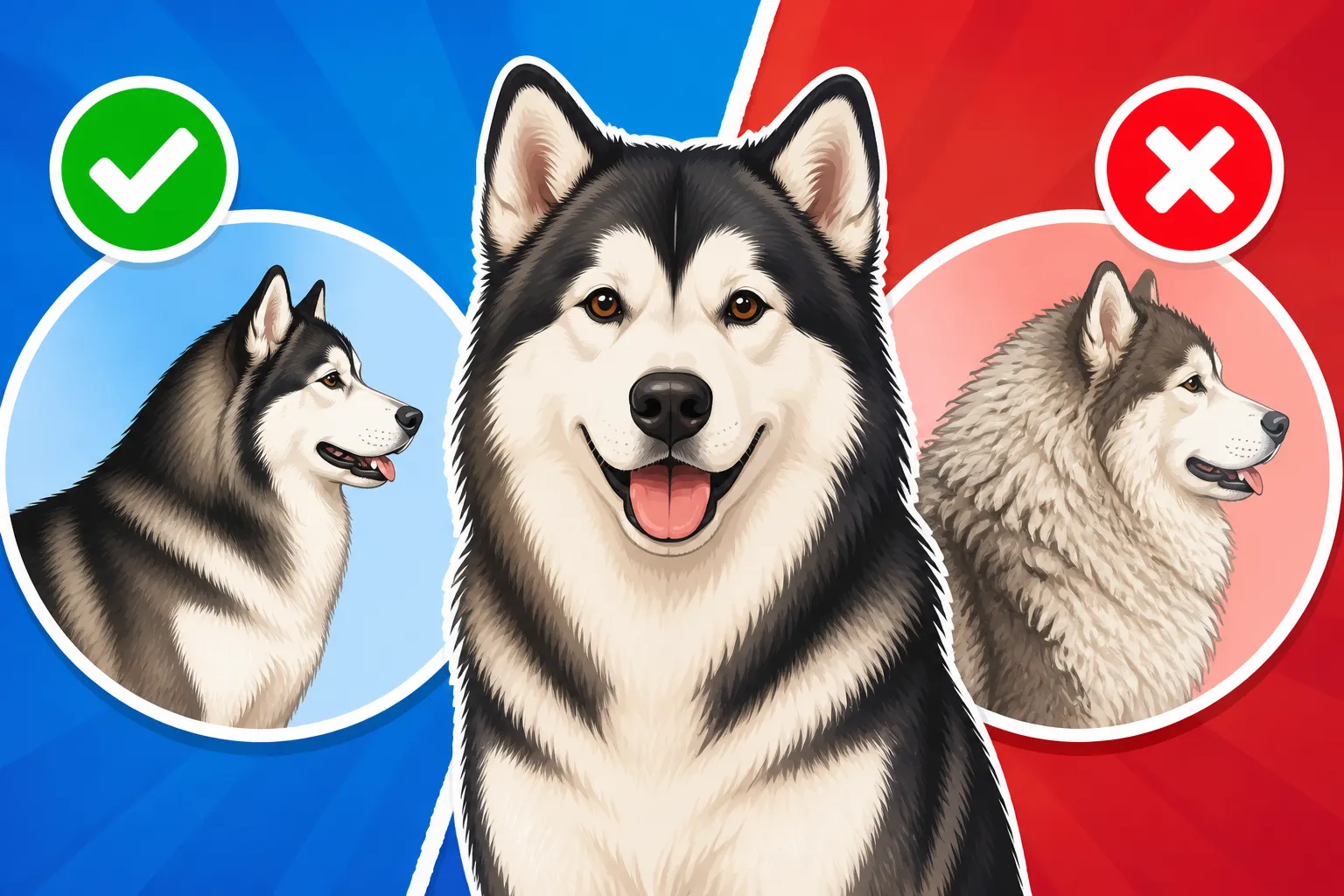
An Alaskan Malamute has a dense double coat: a soft, insulating undercoat beneath a coarse outer coat, often called the guard coat. The outer hairs help protect the dog from weather and dirt, while the undercoat provides much of the insulation. Coat length naturally varies around the body. It is often shorter along the sides and longer around areas such as the shoulders, neck, back, breeches, and tail.
A woolly-coated Malamute usually has a noticeably longer, softer, or more open-looking outer coat than the breed standard calls for. The fur may form longer wisps, especially around the legs and tail, and can look more flowing than the firm, weather-resistant coat people expect in the breed. Owners and breeders may also call this a long coat. The terms are often used informally, so appearance alone is not a formal diagnosis.
A thick undercoat does not automatically mean a dog has a woolly coat fault. A Malamute can look dramatically plush during coat blow, when large amounts of undercoat loosen and come away. Puppy coats can also look softer and fluffier than adult coats. If you’re unsure, look at the outer coat’s texture and length after the coat has settled, rather than judging from a photograph taken during shedding season.
What the breed standard means by a coat fault
The Malamute’s breed standard calls for a thick, coarse outer coat over a dense undercoat. A coat that is unusually long or soft does not fit that description. In conformation showing, it is generally treated as a fault because it departs from the coat type expected for the breed. That is different from saying the dog is sick or cannot be a much-loved companion.
A coat fault is a judgment about how closely a dog matches a written breed standard. It does not determine the dog’s temperament, affection, intelligence, or suitability as a family pet. A woolly-coated Malamute may be active and healthy, and may enjoy hiking, pulling, or simply sprawling across the kitchen floor like any other Malamute.
The practical distinction is that a show judge evaluates the dog against the standard, while a veterinarian evaluates health and welfare. If you’re interested in showing, ask a knowledgeable breed mentor or a conformation judge to assess the dog in person. For broader context on Malamute type and appearance, see The Colors an Alaskan Malamute Comes In and Whether a Long Coat Malamute Can Be Shown.
Why a Malamute may have a long or soft coat
Coat length can run in families
Coat texture and length are influenced by inherited traits, so a woolly coat may appear in a family line even when the parents have coats closer to the standard. A breeder may be able to tell you whether longer coats have appeared in related dogs, but a pedigree cannot always predict exactly what a puppy’s adult coat will look like.
Be cautious about claims that a single test or a simple pedigree check can guarantee a particular coat. Genetic testing for coat traits depends on what a particular test actually assesses, and a result should be interpreted in the context of the breed and the dog’s family history. If a breeder makes a strong claim about a coat test, ask which test was used, what it measures, and whether the result applies to Malamutes.
Coat length can also be hard to judge when a puppy is young. A fluffy puppy may develop a more typical-looking adult coat, while a coat that seems ordinary early on can become more noticeably long as the dog matures. If coat type is important to you, discuss adult relatives and previous litters with the breeder rather than relying on a puppy’s baby coat.
A woolly coat is not the same as poor coat condition
A long coat may be a natural inherited trait. A dull, greasy, patchy, or tangled coat can instead signal a grooming problem or a health issue. Skin irritation, parasites, infection, allergies, or nutritional concerns can affect coat quality, and those problems should not be dismissed as a breed fault.
Pay attention to changes, not just appearance. If a Malamute’s coat suddenly becomes brittle, sheds unevenly, develops bald patches, smells unpleasant, or is accompanied by itching or sore skin, arrange a veterinary check. A coat that has always been long and soft is a different situation from a coat that changes unexpectedly.
It is also easy to confuse a woolly coat with matting. Long hair can hide compacted tangles close to the skin, especially behind the ears, under the collar, in the breeches, and between the legs. If you’re trying to work out whether a coat is naturally long or simply tangled, Whether an Alaskan Malamute Mats explains why regular checks matter.
Caring for a woolly-coated Malamute
Brush for the coat you have
A long coat may need more patient grooming than a standard-length coat because loose undercoat can become trapped in longer outer hair. Work in small sections, separating the fur so you can reach the undercoat without scraping the skin. A routine that includes a thorough check of friction points is more useful than a quick brush over the top.
A slicker brush, comb, or undercoat tool may be useful, but the best choice depends on the dog’s coat and how it responds to grooming. Use gentle pressure and stop if the skin becomes red or the dog shows discomfort. Pulling hard at a mat can hurt, and cutting close to the skin with scissors can be risky because skin may be caught inside the tangle. For help choosing tools and setting a routine, see Which Brush Gets Through a Malamute's Undercoat and How Often an Alaskan Malamute Needs Brushing.
Some owners browse retailers such as Chewy for combs, brushes, and grooming supplies, then choose tools based on the dog’s coat and comfort rather than buying a large kit all at once. A professional groomer familiar with double-coated breeds can also demonstrate a safe technique, especially if you are dealing with dense tangles or a heavy coat blow.
Do not shave the coat just because it is long
Shaving a woolly coat may seem like an easy way to reduce shedding or help the dog stay cool, but it does not change the inherited coat type. It can also remove the outer coat that helps protect the skin from sun, dirt, and weather. The coat may grow back unevenly or with a different texture, and regrowth can be unpredictable.
A veterinarian may recommend clipping for a medical reason, such as treating a wound or preparing a specific area for care. That is different from shaving a healthy dog for convenience. If the coat is difficult to manage, ask a groomer experienced with Malamutes about thorough brushing and bathing rather than assuming a close clip is the answer. Read Why an Alaskan Malamute Must Never Be Shaved before making that decision.
Chewy may be one place to look for coat-care supplies, but no brush or shampoo can turn a naturally long coat into a standard one. Products should be selected for safe grooming and the dog’s skin needs, not advertised promises to change coat texture. If your dog has recurring skin irritation or unusual shedding, get veterinary advice before trying medicated products.
| What you notice | What it may mean | A sensible next step |
|---|---|---|
| Long, soft outer hair that has been present as the dog matured | Possible woolly or long coat type | Ask a knowledgeable Malamute breeder or judge for an in-person assessment |
| Large amounts of loose fur during seasonal shedding | Normal coat blow may be contributing to a fluffy appearance | Brush in sections and recheck the coat after shedding settles |
| Tight tangles near the skin | Matting, which can cause discomfort and hide irritated skin | Gently work out small tangles or ask an experienced groomer for help |
| Sudden bald patches, sores, odor, or persistent itching | A possible skin or health problem, not simply a coat fault | Arrange a veterinary examination |
| A coat that seems too warm in summer | The dog may need safer cooling and adjusted activity, not an automatic shave | Offer shade, water, and a cool resting area; ask your vet about concerns |
Chewy can also be a convenient place to compare basic grooming tools, but the important part is how the tool is used. A gentle, consistent routine and an occasional professional check are often more helpful than buying increasingly aggressive deshedding equipment.
Showing, breeding, and living with the coat
Showing a Malamute with a woolly coat
A woolly coat can affect a dog’s evaluation in conformation because the coat is part of the breed’s appearance and function. A judge is assessing whether the dog matches the standard, not whether the coat is attractive in an everyday sense. Long, soft hair may be appealing to an owner while still being considered a fault in the show ring.
If you plan to show a Malamute, talk to someone experienced with the breed before entering. They can help distinguish coat texture from grooming presentation and explain how the dog may be evaluated. Do not try to disguise the coat with trimming or products; show rules and ethical presentation matter, and grooming cannot change the underlying coat type.
For a pet owner, the show-ring label need not define the relationship with the dog. A coat fault is not a reason to assume a Malamute is unhealthy or less deserving of care. It is simply useful information if you are choosing a puppy for conformation showing or considering breeding decisions.
Breeding decisions require more than coat appearance
If a Malamute has a woolly coat, it is sensible to tell a breeder or breeding mentor and consider the dog’s full health, temperament, structure, and family background. Coat type should not be the only factor in a breeding decision. Nor should an attractive appearance be treated as evidence that a dog is a good breeding candidate.
Responsible breeders consider how a proposed pairing may affect the puppies and the breed, and they are open about relevant traits in their lines. Ask about the coats of parents, siblings, and earlier litters, and about the health evaluations relevant to the dogs. For a wider look at how Malamute lines developed, see The Kotzebue and M'Loot Lines Behind Every Modern Malamute.
If you are adopting an adult dog, its coat may already be easy to assess, but ask about grooming tolerance, skin history, and any previous clipping. A rescue dog with mats may look much woollier than it will once the coat is clean and detangled. Conversely, brushing may reveal that the coat is genuinely long rather than merely overgrown with loose undercoat.
Living well with a woolly coat
A woolly-coated Malamute can enjoy a full, comfortable life with ordinary attention to grooming and temperature. The double coat does not make a dog immune to heat, and a long coat does not mean that shaving is automatically safer. Use common-sense precautions: provide water and shade, avoid strenuous exercise during hot parts of the day, and watch for heavy panting, weakness, confusion, or other signs of overheating.
Set a routine that fits your dog. Check the skin and coat regularly, especially during heavy shedding, and pay extra attention to areas where friction and moisture can encourage tangles. If you’re unsure whether your dog’s coat is behaving normally, take clear photos and notes about when the change began, then discuss them with a veterinarian or experienced groomer.
A woolly coat may be a fault in the conformation sense, but it is not a verdict on the dog. Understanding the difference helps you make informed choices about grooming, showing, and breeding—without treating a natural variation as a medical problem. For more on coat maintenance, see Whether an Alaskan Malamute's Coat Is Self Cleaning and How Long a Malamute's Coat Blow Lasts.
Disclaimer
This article is for general informational purposes only and does not constitute professional advice. Laws, prices and regulations vary by location and change over time. Consult a qualified professional for guidance on your specific situation.