Whether a Greenland Dog Is the Same as a Malamute
A Greenland Dog and an Alaskan Malamute can look remarkably alike: both are powerful, thick-coated Arctic dogs built for hard work. That resemblance often leads people to assume they are the same breed, or that one is simply a regional version of the other. They are distinct breeds with different histories, standards, and working traditions, though they share many traits.
Greenland Dog and Alaskan Malamute Are Different Breeds
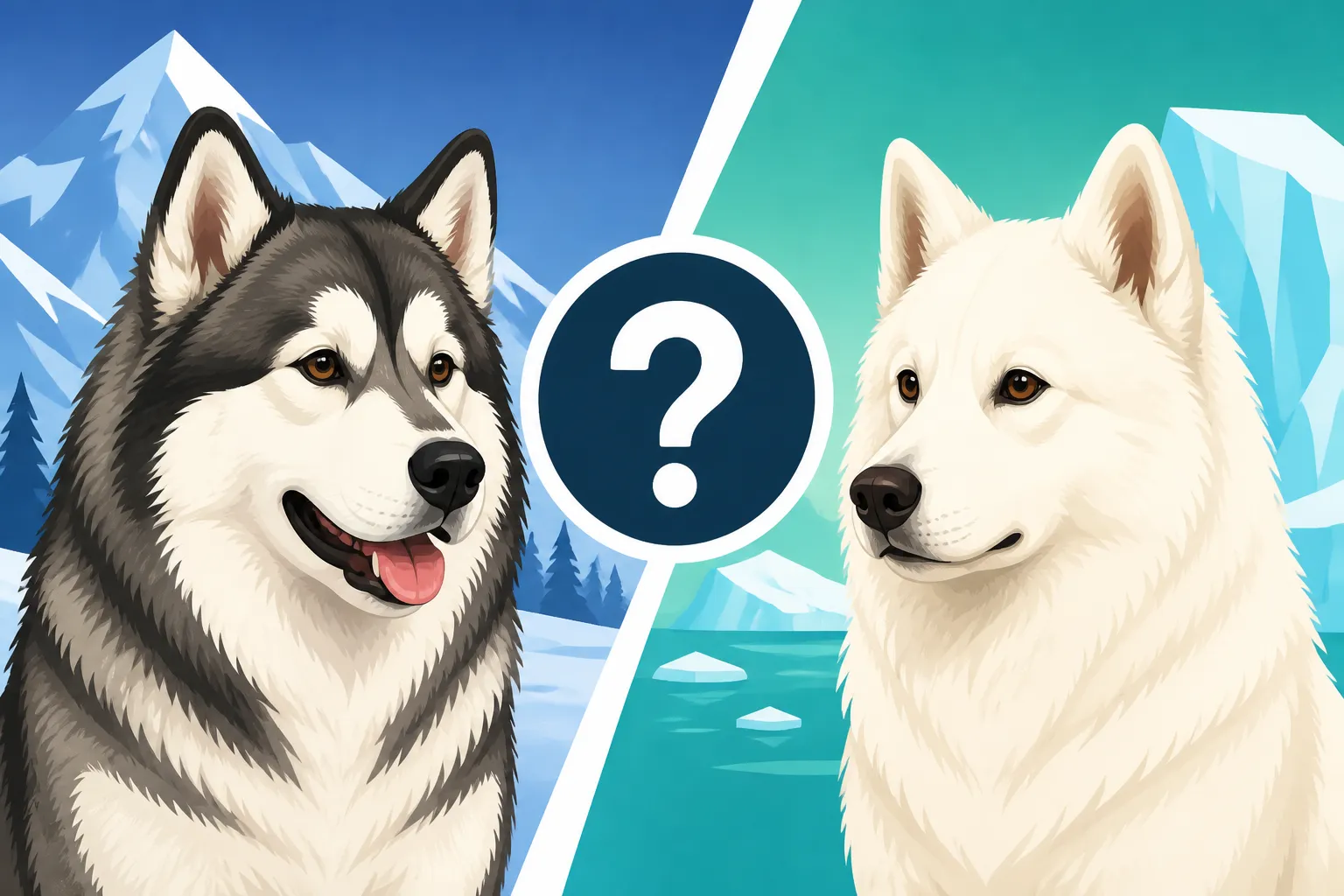
The short answer is no: a Greenland Dog is not an Alaskan Malamute. They are separate Arctic sled-dog breeds, shaped by different communities and environments. Their similarities reflect a shared history of life and work in cold northern regions, not a single interchangeable breed identity.
Where the Greenland Dog comes from
The Greenland Dog is an Arctic working dog associated with Greenland and the Inuit communities who developed and used dogs for travel, hauling, and hunting in demanding conditions. It has a long-standing role as a practical sled dog: a strong, resilient animal expected to work as part of a team across difficult terrain.
The breed’s history is closely connected to Greenland’s settlements and hunting traditions. A dog bred for that life needed endurance, a protective coat, and the ability to work with other dogs and people. Those are functional qualities, not just features that make the breed look striking in a photograph.
Where the Alaskan Malamute comes from
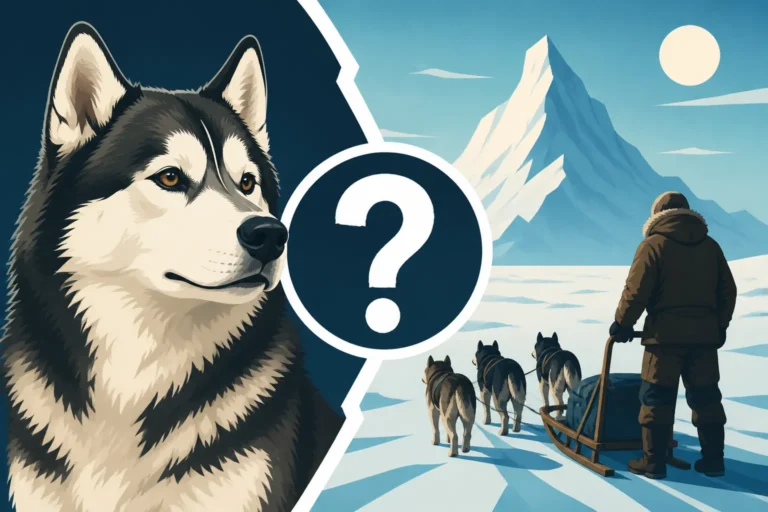
The Alaskan Malamute developed in Alaska, particularly in connection with the Mahlemut people of the Kotzebue Sound region. It was valued for hauling heavy freight over long distances rather than for racing at speed. Its job called for strength, stamina, and the ability to keep working in harsh conditions.
That history is one reason the Malamute is often described as a freighting dog. The breed’s background is explored in The Mahlemut of Kotzebue Sound Bred the Alaskan Malamute and Freight, Not Speed: What Separates a Malamute From a Racing Dog. The historical lineages behind today’s dogs are also discussed in The Kotzebue and M'Loot Lines Behind Every Modern Malamute.
Shared Arctic ancestry does not make them the same breed
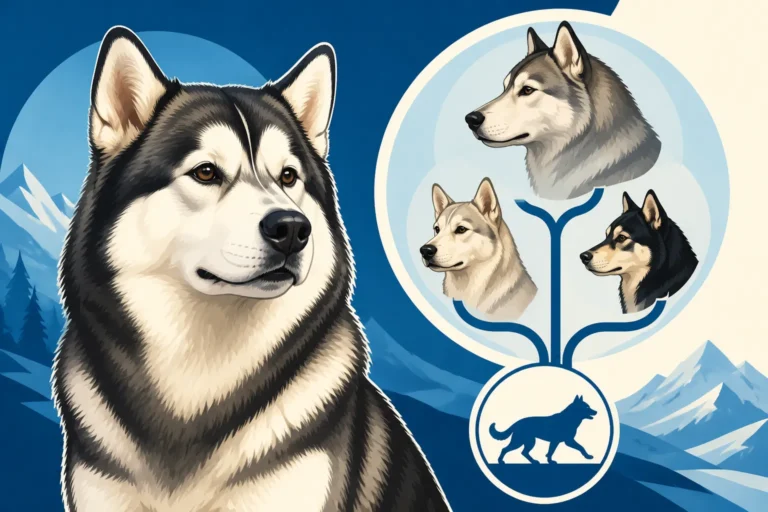
Greenland Dogs and Malamutes belong to a broader family of northern dogs developed for work in cold climates. Their dense coats, sturdy bodies, and independent temperaments make the resemblance easy to understand. But those shared traits do not mean one is simply a Malamute with a different name.
Breed identity involves more than appearance. History, breeding populations, working traditions, and the standards used by kennel organizations all matter. Many Arctic breeds share broad ancestry and similar jobs while remaining distinct. For more background on that bigger picture, see Whether Malamutes Descend From Siberian Dogs and Whether Malamute DNA Shows Ancient Arctic Ancestry.
How to Tell a Greenland Dog From a Malamute
There is no single visual feature that reliably separates every Greenland Dog from every Malamute. Both breeds vary, and individual dogs may fall outside the look people expect. To make a sensible comparison, consider the dog’s proportions, head and coat, documented lineage, and working background together.
| Feature | Greenland Dog | Alaskan Malamute |
|---|---|---|
| Breed identity | A distinct Greenlandic Arctic sled-dog breed | A distinct Alaskan freighting breed |
| Traditional work | Sled travel, hauling, and other practical work in Greenland | Hauling heavy loads over distance |
| General appearance | Strong, thick-coated, and often more rangy in impression | Strong, substantial, and often broad in build |
| Coat and color | Dense double coat; appearance varies | Dense double coat; appearance varies |
| Temperament | Independent, energetic, and accustomed to working with other dogs | Independent, energetic, and often strongly motivated by work |
| Best way to confirm identity | Reliable pedigree and breed documentation | Reliable pedigree and breed documentation |
Build and proportions can offer clues, not proof
Malamutes are often recognized for a substantial, powerful outline. Greenland Dogs may look somewhat more rangy or lean to some observers, particularly when the dogs are working fit. But this is a general impression, not a dependable identification test. Individual dogs, sex, age, conditioning, and breeding lines all affect appearance.
A thick coat can make any northern dog look larger than it is. It can also hide differences in body condition. If you are comparing dogs in person, look at the structure under the coat: proportions, movement, and overall balance. Even then, appearance can suggest a breed type but cannot establish a dog’s pedigree.
Coat color and facial markings overlap
Both breeds can have a dense double coat, and both may appear in a range of colors and markings. A dark mask, pale face, or wolf-like expression is not enough to identify a Greenland Dog or a Malamute. Coat color is especially unreliable because people often associate a particular look with one breed even when similar coloring can occur in another.
Photos make this confusion worse. A dog photographed in winter coat may look broader and heavier than it does after shedding. Lighting can also change how coat colors appear. If a seller or online listing identifies a dog based only on its appearance, ask for documentation rather than relying on a visual guess.
Pedigree and registration matter more than a label
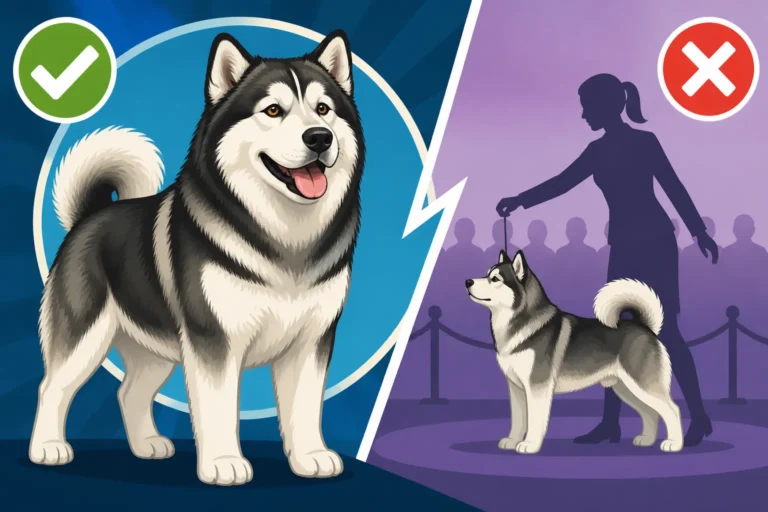
When breed identity matters—for example, when choosing a puppy, entering a breed-specific event, or researching health history—ask for pedigree documents and the name of the registry. Registration systems differ between countries, and the routes available for a Greenland Dog may not be as familiar or accessible to a buyer in the United States as those for an Alaskan Malamute.
A DNA test may help explore ancestry, but it does not replace a verified pedigree or automatically settle a registry question. Results depend on the test’s reference populations and what the company can distinguish. If a dog’s background is uncertain, describe it as an Arctic-type dog or a possible mix until you have better evidence.
Similarities in Temperament, Exercise, and Care
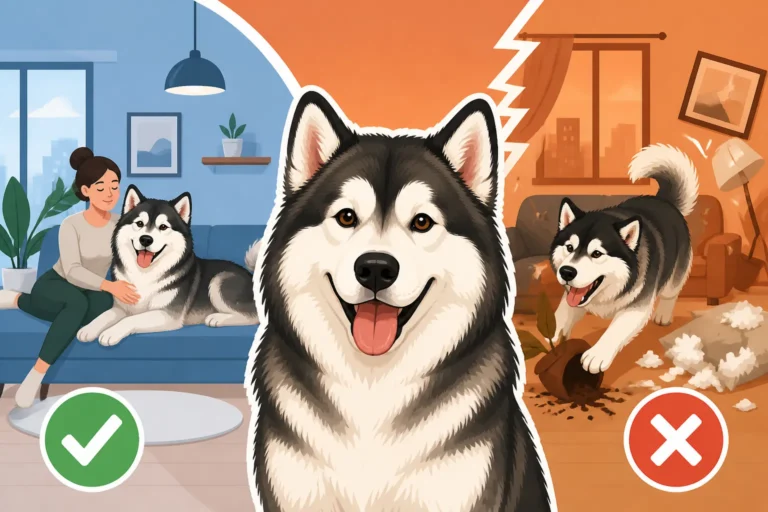
The breeds share practical needs that can surprise people who are drawn in by their appearance. Both were developed as working dogs, and both can be independent, physically powerful, and highly motivated to explore. A snowy coat does not mean a dog will automatically be easy to manage in a modern household.
Both need meaningful activity and secure handling
A Greenland Dog or Malamute may enjoy hiking, pulling activities, and long outdoor outings, but exercise should match the individual dog’s age, health, fitness, and training. A young dog still growing should not be treated like a conditioned adult working dog. Start gradually and get veterinary guidance before beginning strenuous pulling or long-distance work.
Secure handling matters just as much as exercise. These dogs can be strong on leash, and their instincts may draw them toward wildlife or unfamiliar dogs. A fenced yard should be planned with a determined, athletic dog in mind; supervision and consistent training remain important even with sturdy fencing. The Malamute’s working background is covered in What the Mahlemut Used Their Malamutes For, but the same general lesson applies to northern working breeds: a job-bred dog needs more than a quick walk around the block.
Independence is not the same as being untrainable
People sometimes interpret an independent dog as stubborn or unintelligent. In reality, a dog bred to work in a team and make decisions in difficult conditions may not respond like a breed developed to wait for constant direction. Training usually works best when it is consistent, rewarding, and built around short, clear lessons that fit into everyday life.
Reliable recall can be a particular challenge for dogs with strong curiosity or prey interest. For safety, practise in enclosed areas and use a leash or long line in places where a loose dog could reach roads, wildlife, or other animals. Do not assume that a dog will return simply because it has learned the cue at home.
Their coats need care, but their needs are not identical
Both breeds have thick coats that require regular attention, especially when the undercoat is shedding. Brush through the coat rather than focusing only on the visible top layer, and check areas where mats can form. A dog’s coat should not be shaved simply because the weather is warm; ask a veterinarian or experienced groomer about the safest care for that individual dog.
Shopping for a brush or other grooming supplies does not require guessing from a breed name. If you are comparing listings on Chewy, check the tool’s description and measurements against your dog’s coat and size. Chewy product listings may use broad labels such as “large dog,” but coat density and grooming needs vary even among large northern breeds. The same practical approach applies when checking Chewy for a harness: measure the dog and confirm the fit rather than assuming a Malamute-sized product will suit every Greenland Dog.
Choosing Between a Greenland Dog and an Alaskan Malamute
The right question is not which breed looks more impressive. It is whether the dog’s needs, background, and working style fit your home and routine. If you are considering either breed, learn about the actual dog in front of you rather than relying on a general breed description.
Ask what work the dog is bred to do
A Greenland Dog from a working background may have different experience and expectations from a companion-bred Malamute. Likewise, Malamutes vary depending on their breeding and the lives they have led. Ask whether the dog has worked in harness, how it behaves around other dogs, what kind of exercise it is used to, and how it responds to handling.
Do not assume that a dog needs snow to be fulfilled. Many activities can provide useful outlets, but they still need to be suitable for the dog’s physical condition and temperament. A structured pulling activity, scent games, hiking, or training may be options, but safety and gradual conditioning should come first.
Check health history and everyday fit
Ask for available veterinary records, information about the parents when relevant, and a clear account of any known health concerns. A seller should be willing to explain what is documented and what is unknown. Breed-specific health testing and screening recommendations can vary, so discuss the particular dog and its background with a veterinarian.
Think through the ordinary parts of life, too. Can you safely manage a powerful dog on leash? Is your fencing secure? Do you have a plan for shedding, hot weather, and periods when the dog cannot exercise as much? The answers matter more than whether a dog looks like the breed you pictured.
Be careful with vague or exaggerated breed claims
Terms such as “rare Malamute,” “Greenland-style Malamute,” or “purebred Greenland Dog” should prompt follow-up questions, not automatic trust. Ask which registry issued the papers, see the documentation, and find out whether the dog’s parents can be identified. A confident label without supporting records is not proof.
If you are browsing supplies while preparing for a dog, Chewy can be one place to compare basic items, but a product category is not a breed assessment. Read measurements, fit guidance, and care instructions carefully. When you are unsure whether a harness, brush, or other item is suitable, ask a veterinarian, qualified trainer, or experienced groomer who can consider the dog’s actual build and behavior.
What the Difference Means for Owners
A Greenland Dog is not another name for an Alaskan Malamute. The breeds share Arctic working roots and can resemble one another, but their histories and breed identities are distinct. For owners, the useful takeaway is to choose based on documented background, individual temperament, and realistic care needs—not coat color or a quick look at a photograph.
If you are comparing a dog’s supplies on Chewy, use the dog’s measurements and specific needs rather than relying on a breed label alone. That small habit is helpful with harnesses, grooming tools, and other everyday gear, especially when a dog’s identity or adult size is still uncertain.
Disclaimer
This article is for general informational purposes only and does not constitute professional advice. Laws, prices and regulations vary by location and change over time. Consult a qualified professional for guidance on your specific situation.