Whether Both Malamute Parents Must Carry Polyneuropathy
One of the most heart-wrenching concerns for any Alaskan Malamute owner, or someone considering bringing one of these magnificent dogs into their home, is the possibility of inherited health conditions. The worry that your beloved companion might develop a debilitating disease, often with no cure, is a heavy burden. This guide aims to clear up a common question about Inherited Polyneuropathy in Alaskan Malamutes: specifically, whether both parents must carry the gene for their puppies to be affected, giving you the knowledge to make informed decisions for your furry family member.
Understanding Inherited Polyneuropathy in Alaskan Malamutes
When we talk about Inherited Polyneuropathy in Alaskan Malamutes, it's important to understand just what this condition entails. This isn't just a minor ailment; it's a serious neurological disorder that can significantly impact a Malamute's quality of life. Imagine your robust, energetic Malamute, a breed known for its strength and endurance, suddenly struggling with basic movements. That's the cruel reality of polyneuropathy.
This disease is characterized by a progressive degeneration of the peripheral nerves, which are the nerves outside of the brain and spinal cord. These nerves are responsible for transmitting signals between the central nervous system and the rest of the body, controlling muscle movement and sensory perception. When they start to fail, the dog's ability to coordinate its limbs and even breathe properly can be severely compromised. Typically, the signs of this condition begin to manifest in young adult Malamutes, often between 1 and 2 years of age, though it can appear earlier or later. You might notice your Malamute starting to stumble, experiencing weakness in their hind limbs that gradually progresses forward. It's not just a clumsy phase; it's a profound and disheartening loss of coordination.
The initial symptoms can be subtle, easily mistaken for general puppy awkwardness or a minor injury. Perhaps your Malamute starts to trip over its own feet more often, or seems a bit wobbly after exercise. As the disease advances, you'll see more pronounced signs: a high-stepping gait as they try to compensate for weakness, a distinct lack of muscle mass, especially in the hindquarters, and eventually, profound difficulty in standing, walking, and even eating. One of the more distressing symptoms often observed is a change in their vocalization. A Malamute's unique "woo" might become hoarse or weak, a stark contrast to their usual expressive sounds. This is due to the impact on the laryngeal nerves controlling the voice box. The respiratory system can also be affected, leading to labored breathing, which can be life-threatening in severe cases. Understanding What Inherited Polyneuropathy Does to a Malamute can help owners recognize these critical early signs. It’s a progressive condition, meaning it generally gets worse over time, causing significant distress for both the dog and their human companions.
The Recessive Gene and Carrier Status
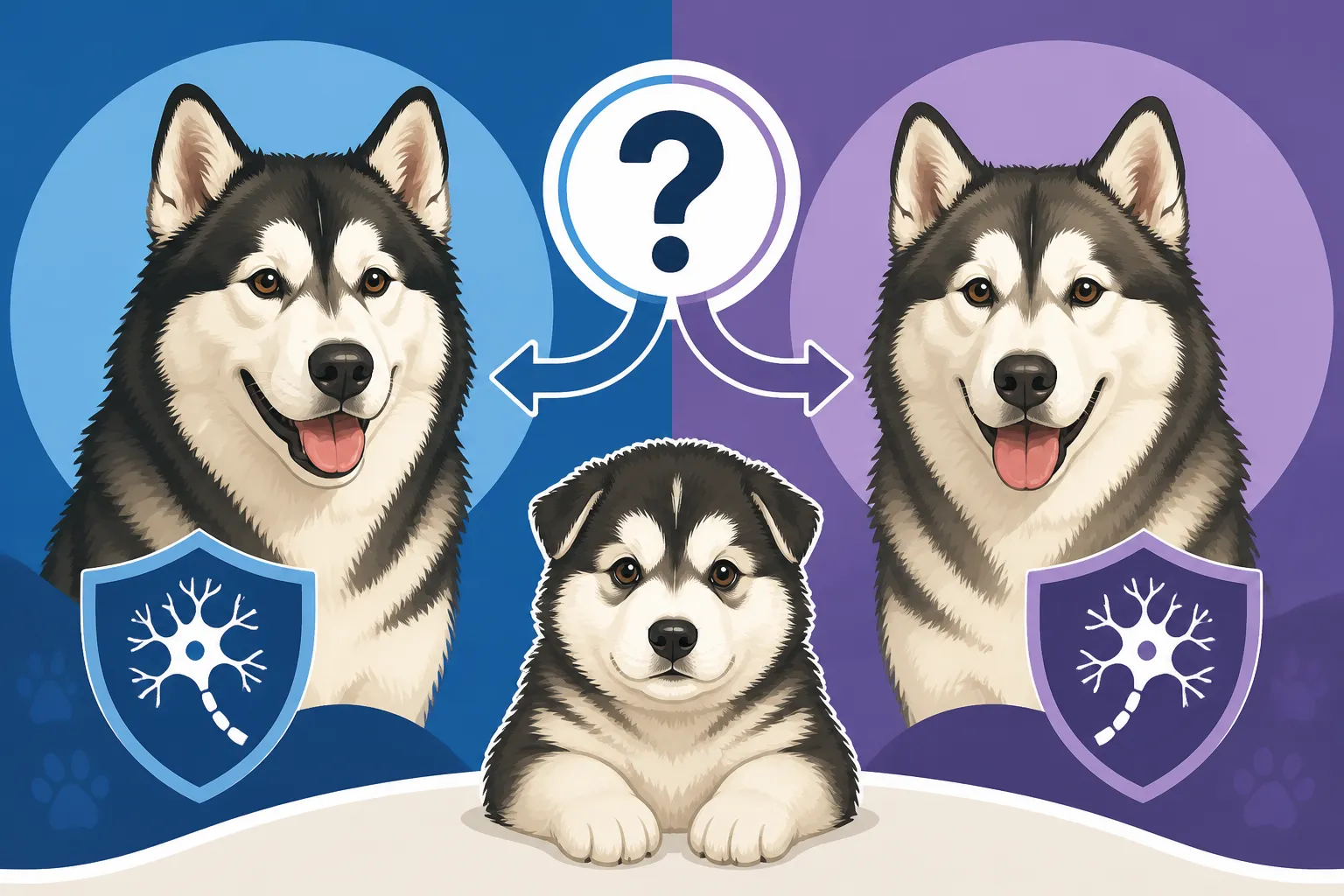
Now, let's get to the crux of your question: the genetics behind Inherited Polyneuropathy. This condition is inherited in an autosomal recessive manner. This might sound like a mouthful of scientific jargon, but it's actually quite straightforward when you break it down. What it means is that for a Malamute to actually develop polyneuropathy, it must inherit two copies of the defective gene – one from its mother and one from its father.
Think of it like this: every gene comes in pairs, one from each parent. For polyneuropathy, there's a "normal" gene (let's call it 'N') and a "defective" gene (let's call it 'P').
- A Malamute that inherits two normal genes (NN) is "clear." They will not get the disease and cannot pass the defective gene on.
- A Malamute that inherits one normal gene and one defective gene (NP) is a "carrier." This dog does not express the disease itself, meaning they show no symptoms of polyneuropathy. They live a normal, healthy life. However, they can pass on that defective 'P' gene to their offspring. This is why a carrier Malamute does not show any signs of the disease, making genetic testing absolutely vital.
- A Malamute that inherits two defective genes (PP) is "affected." This is the dog that will develop Inherited Polyneuropathy.
So, to directly answer your question: yes, both Malamute parents must contribute a copy of the defective gene for a puppy to be affected by Inherited Polyneuropathy. If only one parent is a carrier and the other is clear, none of the puppies will be affected, though some may be carriers themselves. This genetic mechanism highlights the critical importance of knowing the genetic status of both breeding dogs. Without this knowledge, you're essentially breeding blind, risking the heartbreak of producing affected puppies and perpetuating a preventable disease within the breed. The age polyneuropathy appears in a Malamute can be quite young, often before their first birthday, which makes early detection through genetic screening even more imperative.
Here’s a table illustrating the possible genetic outcomes when breeding Malamutes for polyneuropathy, assuming 'N' is the normal gene and 'P' is the polyneuropathy gene:
| Dam's Genetic Status | Sire's Genetic Status | Possible Offspring Genotypes | Phenotype (Disease Status) |
|---|---|---|---|
| Clear (NN) | Clear (NN) | 100% NN | 100% Clear |
| Clear (NN) | Carrier (NP) | 50% NN, 50% NP | 50% Clear, 50% Carrier |
| Clear (NN) | Affected (PP) | 100% NP | 100% Carrier |
| Carrier (NP) | Carrier (NP) | 25% NN, 50% NP, 25% PP | 25% Clear, 50% Carrier, 25% Affected |
| Carrier (NP) | Affected (PP) | 50% NP, 50% PP | 50% Carrier, 50% Affected |
| Affected (PP) | Affected (PP) | 100% PP | 100% Affected |
As you can see from the table, the only scenario where an affected puppy (PP) can be born is if at least one parent is a carrier (NP) and the other is also a carrier (NP) or affected (PP). Responsible breeding practices focus on avoiding any pairings that could result in affected puppies.
The Importance of DNA Testing for Polyneuropathy
Given the recessive nature of Inherited Polyneuropathy, DNA testing isn't just a good idea; it's an absolute necessity for anyone involved in breeding Alaskan Malamutes. Without this simple test, breeders are playing a dangerous game of genetic roulette, potentially producing puppies destined for a short life of increasing neurological dysfunction. The heartbreak of seeing a young, otherwise vibrant Malamute succumb to this condition is immense, and it's entirely preventable through responsible screening.
The good news is that there is a reliable DNA test available that can definitively identify if a Malamute is clear, a carrier, or affected by polyneuropathy. This test requires a simple cheek swab or blood sample, which is then sent to a specialized laboratory. For example, labs like those often partnered with the American Kennel Club or private genetic testing companies such as Embark and Paw Print Genetics offer panels that include the polyneuropathy test. Knowing Which Lab Runs the Malamute Polyneuropathy Test can guide owners and breeders to reliable resources. This test is a game-changer, giving breeders the power to make informed decisions that safeguard the health of future generations.
Responsible breeders will test all their breeding stock before considering any mating. If a dog tests as a carrier (NP), it doesn't necessarily mean they can't be bred, but it absolutely dictates who they can be bred with. A carrier Malamute should only be bred to a Malamute that has tested as "clear" (NN). In this pairing, while 50% of the puppies might still be carriers, none will be affected by the disease. This strategy allows valuable genetic diversity to be maintained within the breed while effectively preventing affected puppies from being born. Breeding two carriers together, or a carrier with an affected dog, is a clear sign of an irresponsible breeding program, as it carries a high risk of producing affected puppies.
By implementing mandatory DNA testing, the Alaskan Malamute community is actively working towards reducing and eventually eliminating this devastating disease. It's a testament to the dedication of ethical breeders who prioritize health over profit. While you might consider robust pet insurance like Healthy Paws to cover unexpected veterinary emergencies throughout your Malamute's life, relying solely on insurance for preventable genetic diseases like polyneuropathy misses the larger point of responsible breeding. The goal is to prevent the disease from ever occurring in the first place, saving families from the emotional and financial toll of managing such a severe condition. This proactive approach ensures that Malamutes live long, healthy lives, free from the burdens of inherited diseases. The ongoing efforts mean Whether Malamute Polyneuropathy Is Being Bred Out is increasingly becoming a hopeful reality.
Responsible Breeding Practices and Buyer Awareness
For prospective Malamute owners, understanding the genetic aspect of Inherited Polyneuropathy isn't just academic; it's a critical part of choosing a healthy puppy and supporting ethical breeding. When you’re looking for a Malamute puppy, the absolute first thing you should do, even before falling in love with a fluffy face, is to inquire about the health testing of both parents. Any reputable breeder will not only be happy to discuss this but will also provide verifiable documentation.
Don't be shy about asking for proof. A breeder should be able to show you the DNA test results for both the dam (mother) and the sire (father) of the litter. These results should clearly state their genetic status for polyneuropathy (clear, carrier, or affected). If a breeder hesitates, makes excuses, or claims that their lines are "clear by parentage" without showing parent test results, consider that a major red flag. "Clear by parentage" is only valid if both parents of the breeding pair were themselves tested and found to be clear. If a puppy's grandparents were tested, but its own parents weren't, the "clear by parentage" claim loses its validity for that puppy. For buyers, knowing Whether a Malamute Buyer Can See the Breeder's Results is a fundamental right that helps ensure you're getting a healthy puppy.
An ethical breeder will only breed a carrier to a clear dog, or two clear dogs together, effectively guaranteeing that no puppy in their litter will ever be affected by polyneuropathy. If a litter has been produced from a carrier x carrier pairing, even if the puppies themselves are not currently showing symptoms, there's a 25% chance that any given puppy in that litter will be affected. This is simply not a risk worth taking, and it strongly suggests a breeder who is not prioritizing the health and welfare of their dogs. Choosing Whether an Untested Alaskan Malamute Litter Is Worth Buying always carries a significant risk that could lead to immense heartache and veterinary expenses down the road.
Beyond genetic testing, responsible breeders also perform a battery of other health screenings relevant to the breed, such as hip and elbow evaluations, and eye clearances. These The Health Tests Both Alaskan Malamute Parents Should Have collectively ensure that you are bringing home a puppy with the best possible start in life. Even with the most diligent screening and responsible breeding practices, life can still throw curveballs. That's why having a robust pet insurance plan, like those offered by Healthy Paws, can offer tremendous peace of mind. While it won't prevent genetic diseases if proper screening isn't done, it can certainly help manage the costs of unforeseen accidents, illnesses, or other health issues that might arise, ensuring your Malamute gets the care they need without financial strain. Being prepared for all possibilities, both preventable and unpredictable, is truly the mark of a dedicated Malamute owner. Some health guarantees from breeders may even explicitly state Whether a Malamute Health Guarantee Covers Polyneuropathy, offering an extra layer of protection, though prevention through testing is always paramount.
Disclaimer
Please remember that the information provided in this article is for educational and informational purposes only, and does not constitute veterinary advice. Always consult with a qualified veterinarian for any health concerns or before making any decisions about your pet's care. Genetic testing results should always be interpreted by a veterinary professional or certified genetic counselor.