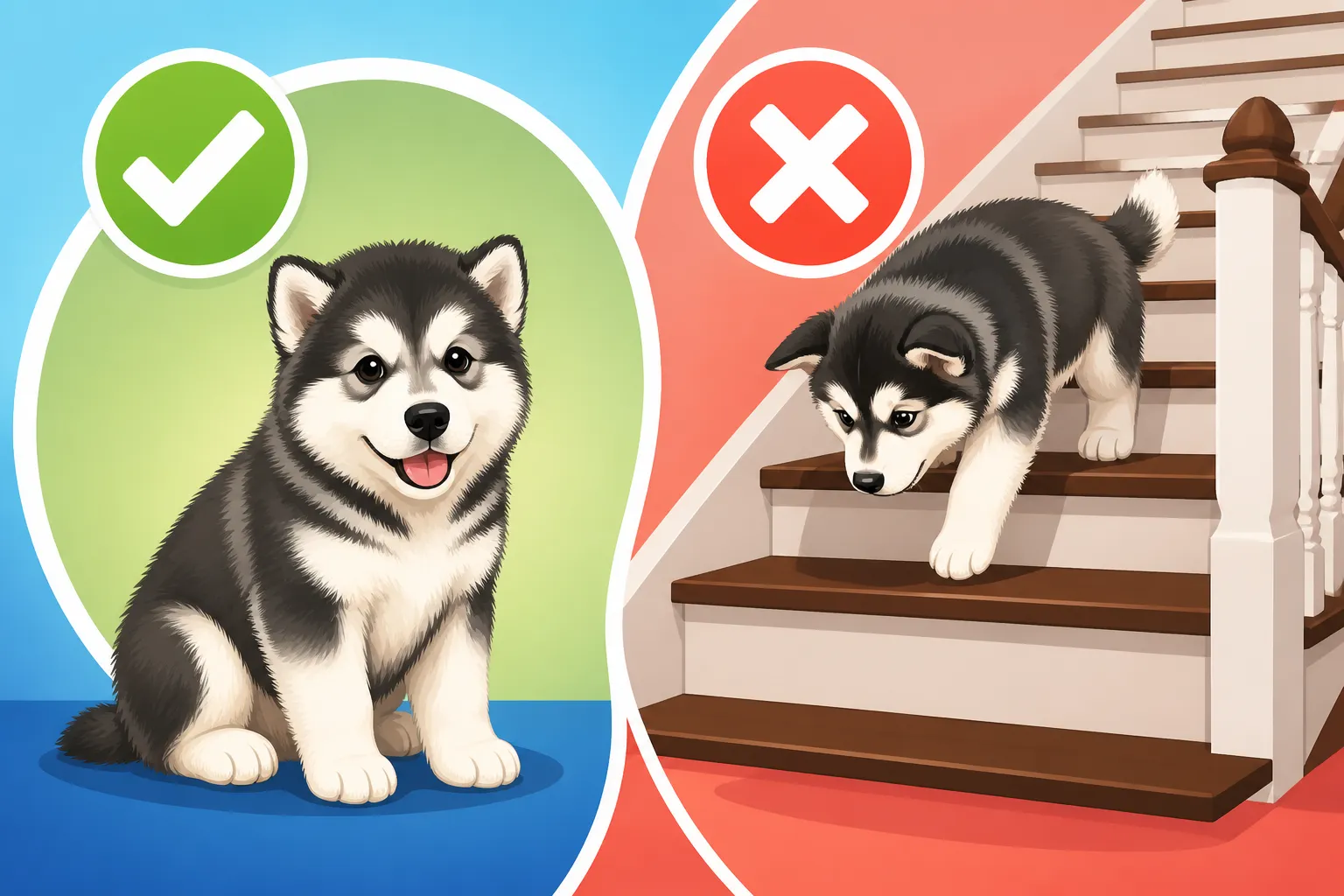
Whether a Malamute Puppy Should Be Kept Off Stairs
Bringing home a rambunctious Alaskan Malamute puppy is an exciting time, but it also comes with a lot of questions about how to best protect their developing bodies. One common concern that weighs heavily on new owners, especially those with multi-level homes, is whether their growing Malamute puppy should be kept off stairs. It’s a valid worry, born from a desire to safeguard those precious joints, and this guide will dive deep into why this question is so important for our magnificent, fast-growing companions and what you can do about it.
Understanding the Developing Malamute Skeleton
When you look at a Malamute puppy, it's hard to imagine they'll soon be a powerful, 80-100+ pound freighting dog. This rapid growth spurt, while impressive, makes their skeletal system particularly vulnerable. Unlike adult dogs whose bones are fully fused and robust, puppies have delicate structures that need careful protection.
Growth Plates and Their Vulnerability
At the ends of a puppy's long bones—think the bones in their legs—are areas known as growth plates. These are essentially cartilage plates where new bone tissue is generated, allowing the bones to lengthen as the puppy grows. Imagine them as soft, cartilaginous areas, like sponges, rather than solid, rigid bone. They are significantly weaker than the surrounding bone and the ligaments and tendons that attach to them.
Because Malamutes are a large breed, they experience a prolonged period of rapid growth, meaning their growth plates remain open and vulnerable for longer than smaller breeds. Any excessive impact, twisting, or repetitive stress on these open growth plates can cause damage. A growth plate injury can lead to abnormal bone growth, pain, and even permanent lameness if not managed properly. This isn't just about a one-time tumble; it's about the cumulative stress from activities like repeatedly bounding up and down stairs, especially when they're still uncoordinated.
The Risk of Joint Injuries in Young Malamutes
Beyond growth plates, a Malamute puppy's joints themselves are also undergoing massive development. Their ligaments and tendons are strengthening, and the cartilage cushioning their joints is maturing. High-impact activities or awkward landings can put undue strain on these developing structures. Picture a clumsy Malamute puppy, all paws and enthusiasm, trying to navigate a steep flight of stairs. They're prone to missteps, slips, and falls.
Repeated jarring motions, like those experienced from jumping off the last step or skidding down a polished staircase, can contribute to microtraumas in the joint cartilage. Over time, these small injuries can exacerbate or even contribute to the development of serious orthopedic conditions. We often hear about issues like Hip Dysplasia in an Alaskan Malamute or elbow dysplasia in large breeds, and while genetics play a significant role, environmental factors during their formative months, such as inappropriate exercise or stair navigation, can absolutely worsen an existing predisposition or bring on symptoms earlier. It's a heavy thought for owners, but it underscores why being proactive about their physical environment is so crucial.
Genetic Predispositions and Environmental Factors
It’s important to acknowledge that some orthopedic conditions, such as hip and elbow dysplasia, have a strong genetic component. Reputable breeders will always screen their breeding stock for these inherited conditions, and you should always inquire about The Health Tests Both Alaskan Malamute Parents Should Have. However, even a puppy from impeccably screened parents isn't entirely immune if their environment isn't supportive of healthy development.
Environmental factors, including diet and exercise, play a crucial role in how genetic predispositions manifest. For example, a puppy genetically predisposed to hip dysplasia might develop more severe symptoms if subjected to excessive stress on its joints during its critical growth period. Stairs fall squarely into this category. While not the sole cause, consistent, uncontrolled stair use can be a significant contributing factor, especially if the puppy is slipping, jumping, or constantly rushing up and down. Think of it as adding extra bricks to a wall that’s already a bit wobbly; you're just increasing the chance of it falling.
Practical Strategies for Managing Stairs and Your Malamute Puppy
So, if stairs can be risky, what's a Malamute owner to do? Most of us don't live in single-story homes, and stairs are just a part of daily life. The key isn't necessarily to forbid stairs entirely forever, but to manage access and teach safe habits during their vulnerable growth period.
Limiting Access and Supervision
For the youngest puppies, especially up to around 4-6 months, completely limiting unassisted stair access is often the safest bet. This means installing sturdy baby gates at the top and bottom of staircases. Look for pressure-mounted gates if you're not keen on drilling into walls, but ensure they're robust enough to withstand a determined Malamute pup. For particularly clever or strong pups, a hardware-mounted gate might be a better investment.
When stair access is necessary, always supervise your puppy closely. This might mean carrying smaller, lighter puppies up and down, especially if the stairs are steep, narrow, or have slippery surfaces. For heavier pups, guide them slowly, one step at a time, keeping them on a leash if necessary to prevent them from bolting. The goal is to avoid any sudden jumps, slips, or uncontrolled descents. Remember, they're not just learning how to use stairs, but how to use them safely and without injury.
Safe Stair Training Techniques
If your home has stairs that your Malamute will eventually need to navigate, it's far better to teach them how to do it properly than to let them learn by trial and error, potentially injuring themselves. Start with short, wide, carpeted stairs if possible, as these offer better traction and less impact.
Begin with just one or two steps. Lure your puppy up with a high-value treat, praising them calmly for each successful step. Once they're comfortable going up, teach them to go down with the same patience. Keep their pace slow and controlled. You can use a leash and harness to gently guide them, ensuring they don't rush. Break the training into very short, positive sessions – maybe just a few minutes, a couple of times a day. The focus should always be on control, not speed. You want them to learn to take their time, placing each paw deliberately, especially when descending. This methodical approach will pay dividends in protecting their joints as they grow.
Alternatives to Stairs
Sometimes, the best solution is to simply avoid the stairs altogether for a period. If you have a very young puppy or one recovering from an injury, creating a "safe zone" on a single level of your home can be incredibly helpful. This might mean setting up their crate, food, water, and play area on the ground floor, or even partitioning off a specific room with baby gates.
For heavier puppies or those for whom carrying is no longer an option, consider investing in a dog ramp. Ramps can be excellent for getting dogs into and out of vehicles, but they can also be used to bypass stairs, especially if you only have one or two steps that are problematic. Just ensure the ramp is stable, has good traction, and is at a gentle enough incline for your puppy to use comfortably. Remember, the goal is to reduce impact and strain, and a ramp can be a fantastic tool to achieve that, buying you time until their skeletal system is more mature.
Supporting Your Malamute Puppy's Overall Joint Health
Managing stair access is just one piece of the puzzle when it comes to safeguarding your Malamute puppy's joint health. A holistic approach that includes proper nutrition, appropriate exercise, and regular veterinary care will set them up for a lifetime of comfortable movement.
Balanced Nutrition and Controlled Growth
One of the biggest mistakes well-meaning owners make is overfeeding their large breed puppies, hoping to make them grow bigger, faster. This is actually detrimental to their joint health. Rapid growth puts immense stress on developing bones and joints, increasing the risk of orthopedic problems. It's why many breeders and vets emphasize that a Malamute puppy should grow slowly.
Always feed a high-quality, large-breed puppy formula that is specifically designed for controlled growth. These foods have a carefully balanced calcium-to-phosphorus ratio and appropriate calorie levels to support steady development without encouraging excessive weight gain or accelerated bone growth. Avoid supplementing with extra calcium unless directed by your vet, as this can throw off delicate mineral balances. Keep your puppy lean; you should be able to feel their ribs easily, but not see them prominently. An overweight puppy, even if only by a few pounds, puts extra strain on their still-forming joints.
Appropriate Exercise and Play
While Malamutes are known for their incredible energy and desire to work, excessive or inappropriate exercise can be just as damaging as too little, especially for a puppy. High-impact activities like prolonged running on hard surfaces, jumping off furniture, or intense, uncontrolled play sessions with adult dogs should be avoided when their The Age a Malamute's Growth Plates Close are still open.
Focus on short, frequent play sessions on soft surfaces like grass. Think supervised romps in the yard, gentle leash walks, and puzzle toys that engage their minds without overworking their bodies. A good rule of thumb is generally 5 minutes of structured exercise per month of age, twice a day. So, a 4-month-old puppy might get two 20-minute walks per day. As they mature, you can gradually increase duration and intensity. The aim is to build muscle and stamina without putting undue stress on their vulnerable joints. Remember, their future as a powerful working dog depends on careful conditioning now.
Regular Vet Check-ups and Monitoring
Consistent veterinary care is paramount throughout your Malamute puppy's development. Your vet can monitor their growth rate, assess their gait, and answer any concerns you have about their physical activity. They can also advise on specific supplements if needed, although generally, a balanced diet is sufficient for most healthy puppies.
It's crucial to be observant. Watch for any signs of lameness, stiffness, reluctance to play, or changes in how your puppy moves. Don't dismiss a limp as "just growing pains." Mention any concerns to your veterinarian promptly. Early intervention can make a significant difference in managing or mitigating potential joint issues. While hopefully your Malamute will lead a long, healthy life, considering pet insurance like Healthy Paws from a young age can also provide invaluable peace of mind, helping to cover unexpected veterinary costs, including those related to joint issues, should they arise. Being proactive and having open communication with your vet is the best way to ensure your Malamute puppy grows into a healthy, robust adult.
Here’s a quick overview of staircase safety for your Malamute puppy:
| Age Range | Recommendation | Rationale |
|---|---|---|
| 8-16 Weeks | Strictly limit/avoid. Carry if possible. Use gates. | Growth plates extremely vulnerable. High risk of falls and injury. |
| 4-6 Months | Supervised use only. Teach slow, controlled steps. | Growth plates still open. Building coordination. Reduce impact and slips. |
| 6-12 Months | Continue supervision. Encourage deliberate movement. | Growth plates begin to close, but still not fully mature. Avoid rough play on stairs. |
| 12-18+ Months | Generally safe. Continue to discourage rushing/jumping. | Growth plates mostly closed. Bones and joints are much stronger. |
Disclaimer
This article is for general informational purposes only and does not constitute professional advice. Laws, prices and regulations vary by location and change over time. Consult a qualified professional for guidance on your specific situation.