Whether Chain Link Holds an Alaskan Malamute
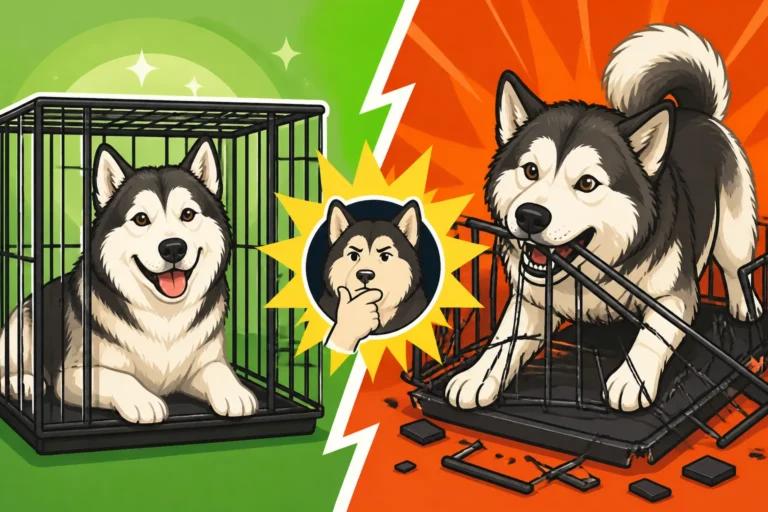
Oh, the age-old question that keeps many an Alaskan Malamute owner up at night: "Will this fence actually hold my Malamute?" It's a frustrating thought, especially when you've invested in what looks like a sturdy barrier, only to find your resourceful furry escape artist giving you a knowing look from the other side. This guide is here to realistically assess whether chain link fencing can truly stand up to the unique challenges an Alaskan Malamute presents, and what you might need to do to make it work.
Understanding the Alaskan Malamute's Houdini Tendencies
Before we even begin to talk about fences, we need to talk about what makes an Alaskan Malamute such a formidable escape artist. These aren't your average backyard pups content with a simple boundary. They are powerful, intelligent, and driven by instincts honed over centuries of working in vast, open, and often harsh environments. Expecting them to conform to a flimsy barrier is like asking a fish not to swim.
The Malamute's Drive to Explore and Hunt
Your Malamute carries the genetic memory of ancestors who covered miles of territory in search of food or to pull heavy loads across the frozen tundra. They are bred for endurance and independence, which translates directly into a powerful desire to explore their surroundings. If there’s an interesting scent, a squirrel, or another dog just beyond your fence line, their drive to investigate can be overwhelming. This isn't disobedience; it's instinct. It’s why you often hear the hard truth that Why a Malamute's Recall Cannot Be Trusted once they've decided to go on an adventure. They see the world as their oyster, and a fence is merely a suggestion.
What might seem like a simple stroll for us is a complex sensory experience for a Malamute. Every rustle in the bushes, every faint scent on the wind, triggers an ancestral call to action. They aren't trying to be "bad" when they push against a boundary; they are simply responding to thousands of years of selective breeding for a specific purpose. A loose Alaskan Malamute isn't just taking a quick jaunt around the block; they can and will travel significant distances, often unaware of the dangers, and it's a terrifying prospect for any owner. This is precisely why understanding How Far a Loose Alaskan Malamute Travels is crucial.
Digging and Climbing Prowess
If there's one thing an Alaskan Malamute loves almost as much as pulling, it's digging. They were bred to dig for dens, to find cool spots in summer, and perhaps even to unearth small prey. This instinct is deeply ingrained, and for a Malamute facing a fence, it's often the first line of attack. They don't just scratch at the ground; they methodically excavate, using their powerful front paws to move earth with surprising speed and efficiency. How Far Down a Malamute Will Dig can truly shock an unprepared owner – often far deeper than you'd imagine.
Beyond digging, many Malamutes are surprisingly adept climbers. Their sturdy frames and powerful legs, combined with their thick coats providing a bit of traction, allow them to scale fences that seem too high for a dog their size. They can use the horizontal members of a chain link fence as a ladder, or even "spider-man" their way up and over if there's enough grip. The idea that a fence simply needs to be "tall enough" can be a grave misconception when dealing with a determined Malamute who has decided that the grass is indeed greener on the other side. Understanding How a Malamute Climbs a Fence is eye-opening and essential for any potential fence design.
Strength and Determination
An Alaskan Malamute is a powerhouse. They are built for strength and endurance, not speed, and this strength translates into a remarkable ability to test physical barriers. A flimsy fence post or a weak gate latch is no match for a Malamute who has set their mind on escape. They will lean, push, jump, and lunge, constantly evaluating the weak points in any enclosure. Their sheer size and weight, combined with their dense muscle, means they can bend wire, snap weak wood, and rattle gates until the weakest link gives way.
Their determination is perhaps their most defining trait. Unlike some breeds that might give up after a few failed attempts, a Malamute will often persist. If they can't dig under, they'll try to climb over. If they can't climb over, they'll look for a gap or a loose section. They learn quickly, too, observing how latches work or where a fence post is wobbly. This relentless problem-solving, while admirable in a working dog, can be an absolute nightmare for a homeowner trying to secure their yard. They are, in essence, canine engineers of escape.
The Realities of Chain Link Fencing
So, with all that in mind, can chain link fencing actually hold an Alaskan Malamute? The short answer is: it depends. A standard, residential-grade chain link fence, often seen in suburban yards, is likely to be completely insufficient on its own. However, with significant modifications and upgrades, it can be made more secure.
The 'Standard' Chain Link Fence
Let's be honest, the typical chain link fence you see is rarely designed with a formidable breed like the Alaskan Malamute in mind. These fences usually stand around four to six feet tall and are constructed with a relatively thin wire gauge. While they might contain a smaller, less driven dog, they present a number of immediate vulnerabilities when faced with a Malamute. Firstly, the standard height is often insufficient; a motivated Malamute can easily jump or climb a four-foot fence, and even a six-foot fence isn't entirely secure if they have something to push off or enough purchase.
Secondly, the wire gauge of most residential chain link is relatively thin. This means the individual wires can be bent, stretched, or even chewed through by a determined Malamute, especially if there's a loose section or a poorly installed panel. The flexible nature of chain link, while good for absorbing impact, also means it can be pushed outward to create a gap, or downward to create an easier climb. Furthermore, the typical installation rarely accounts for a dog's digging instincts, leaving a wide-open invitation for subterranean escape routes. It’s simply not built for the brute force and relentless strategy of a Malamute.
The Importance of Gauge and Height
To even begin considering chain link for an Alaskan Malamute, you need to think "heavy-duty." This means opting for a much thicker wire gauge than the residential norm. While standard chain link might be 11 or 12 gauge, for a Malamute, you'd want something closer to 9 gauge, or even heavier if you can find it. The thicker wire is far more resistant to bending, tearing, and chewing, making it much harder for your Malamute to deform the fence. Think of it as the difference between flimsy craft wire and strong industrial cable; one bends with ease, the other requires significant effort.
Height is equally crucial. A six-foot fence should be considered the absolute minimum, and even then, smart Malamutes can find a way over. An eight-foot fence offers significantly more deterrence, especially if it's combined with anti-climb features. The goal is to make the fence so tall and sturdy that scaling it seems like an impossible task, even for the most ambitious climber. Remember, a Malamute's long legs and powerful hindquarters give them impressive jumping ability, so every extra foot of height matters. You might find heavy-duty options for various pet containment solutions on sites like Chewy, which can give you an idea of the kind of robust materials you should be looking for.
Digging Underneath – The Achilles Heel
Even with the thickest gauge and tallest height, a chain link fence has a critical weakness when it comes to an Alaskan Malamute: what lies beneath. Most chain link fences are simply installed by sinking posts into the ground and stretching the mesh between them, often leaving a gap or simply a few inches of mesh buried at the bottom. For a Malamute, this is practically an open invitation to freedom. Their instinct to dig is so strong that they will quickly find this weak point and tunnel their way out.
Leaving the bottom of the fence vulnerable to digging is arguably the biggest oversight when using chain link for a Malamute. They don't need much space to start; once they get their nose under and begin to excavate, they can disappear remarkably quickly. It's a task they are built for, and they find immense satisfaction in it. This is why addressing the subterranean element is non-negotiable. Without a robust solution to prevent digging, even the most expensive and well-built chain link fence is little more than a temporary inconvenience for a determined Malamute.
Fortifying Chain Link Against a Malamute's Escapades
Given the Malamute's impressive suite of escape tactics, a basic chain link fence simply won't cut it. However, if chain link is your chosen material, or if you're looking to upgrade an existing one, there are specific, often labor-intensive, fortifications you can add to significantly increase its security. Think of it less as building a fence, and more as constructing a maximum-security enclosure.
Burying the Fence Line (or Adding Aprons)
To thwart a Malamute's digging ambitions, you absolutely must address the ground level of your fence. One of the most effective methods is to bury a layer of heavy-gauge wire mesh (often called "hardware cloth" or "welded wire") horizontally along the inside perimeter of the fence, extending outward by at least 18-24 inches. This creates an "L-footer" or "apron" that prevents your Malamute from digging directly down at the fence line. When they try to dig, they hit the buried mesh, which discourages them from continuing. You can also pour concrete footings or a concrete curb along the entire fence line, effectively creating an impenetrable barrier underground. This solution, while more costly and labor-intensive, is incredibly effective. This level of investment is what leads to questions like What Concrete Footings for a Malamute Fence Cost.
Another option is to bury the bottom of the chain link fence itself. This means trenching a foot or two deep and burying the mesh directly, perhaps even bending the bottom 6-12 inches outwards underground to create a small deterrent apron. However, wire mesh aprons are generally more reliable as they provide a wider, more consistent barrier. Whichever method you choose, the key is to ensure there's no way for your Malamute to start a tunnel that doesn't immediately hit a solid, unyielding obstacle.
Adding Height and Anti-Climb Measures
Even an eight-foot fence might not be enough for a truly dedicated climber. To make scaling nearly impossible, consider adding outward-leaning extensions to the top of the fence. These can be angled arms that hold an additional foot or two of chain link or smooth wire, making it physically difficult for a Malamute to get a grip and pull themselves over. The idea is to create an overhang that they can't clear, even with a powerful jump. Think of the kind of security fencing seen in commercial or industrial settings.
Another effective, though less common for residential, anti-climb measure is a "coyote roller" system. These are smooth, round bars installed along the very top of the fence. If your Malamute tries to get a paw over the top, the roller spins, preventing them from getting purchase and pulling themselves up. While more complex to install, they are incredibly effective against climbers. For less extreme but still helpful measures, ensure there are no nearby trees, sheds, or other objects that your Malamute could use as a launchpad or stepping stone to clear the fence. Every potential point of leverage must be eliminated.
Reinforcing the Structure
A Malamute's sheer power means that a chain link fence needs to be incredibly robust. This isn't just about the mesh itself, but the entire supporting structure. Use heavy-duty, properly set posts spaced closer together than typical residential installations. Every post should be anchored in concrete to prevent leaning or bending. The gate, often the weakest point, needs to be particularly strong and secure. Invest in heavy-gauge gate frames and multiple, secure latching mechanisms that your clever Malamute can't figure out. A simple hook-and-eye latch is a joke to these dogs. Consider slide bolts, snap hooks, or even padlocks for extra security.
Beyond the posts and gates, ensure the chain link mesh itself is tightly stretched and secured to the top, bottom, and middle rails with heavy-duty ties. Any slack in the fence is an invitation for your Malamute to push, pull, and exploit weaknesses. Regularly inspect the entire fence line for any signs of wear, rust, loose ties, or areas where the mesh might be stretching or separating. A proactive approach is essential because once a Malamute finds a weak spot, they will remember it and exploit it repeatedly.
Alternative and Complementary Containment Strategies
While fortifying your chain link fence is vital, relying solely on physical barriers is rarely enough for an Alaskan Malamute. Their intelligence, drive, and determination mean you need a multi-faceted approach to containment, combining robust physical security with mental and physical stimulation, and essential backup plans.
Beyond Fences – The Importance of Training and Stimulation
No fence, however tall or deep, can fully replace the need for proper training and adequate enrichment for an Alaskan Malamute. A bored Malamute is a destructive Malamute, and an underexercised Malamute is a determined escape artist. These dogs need a job, and if you don't provide one, they will find their own, which often involves testing boundaries. Regular, vigorous exercise is paramount. This means more than a walk around the block; it means activities that engage their working instincts, such as weight pulling, sledding, or skijoring. Why a Pet Malamute Still Needs to Pull is a fundamental truth for keeping these dogs happy and contained.
Mental stimulation is equally important. Puzzle toys, training sessions that challenge their minds, and consistent boundaries reinforced with positive methods can make a huge difference. A Malamute that is physically tired and mentally engaged is far less likely to feel the overwhelming urge to escape. Without this crucial foundation, even a perfect fence will eventually be breached by a resourceful dog seeking adventure or relief from boredom. Remember, How Much Exercise an Alaskan Malamute Needs is often far more than new owners anticipate, and insufficient exercise can exacerbate escape behaviors.
Double Fencing and Secure Kennel Runs
For ultimate security, especially if your Malamute has a high prey drive or a strong history of escape, a double-fencing system is often recommended. This involves building a second fence, perhaps three to five feet inside your main perimeter. This creates a buffer zone, so if your Malamute manages to breach the first fence, they are still contained within the second. This also helps prevent them from interacting directly with anything outside the main fence, reducing their motivation to escape. While a significant investment, it provides an unparalleled level of security.
Alternatively, many Malamute owners opt for a dedicated, secure kennel run. This isn't just a chain link box; it's a reinforced, roofed structure with solid concrete footings or a concrete slab floor to prevent digging, and heavy-gauge wire or solid panels. A well-built kennel run offers a secure, designated space where your Malamute can be safely left when unsupervised, providing peace of mind. Investing in What a Kennel Run for a Malamute Costs to Build and ensuring Whether a Malamute Needs a Roofed Run are considerations that highlight the serious nature of containing these dogs. While they still need plenty of time outside this run with their family, it’s an invaluable tool for secure containment.
GPS Tracking and Microchipping
Even with the most robust fence and dedicated training, accidents can happen. A gate might be left open by a visitor, a tree might fall on the fence during a storm, or a Malamute might simply find a momentary lapse in your otherwise perfect system. This is why having backup measures in place is absolutely non-negotiable. Microchipping your Malamute is the first, simplest, and most vital step. Ensure your contact information is always up to date with the microchip registry. This greatly increases the chances of being reunited if your dog ever gets lost.
Beyond microchipping, a GPS tracking collar is an invaluable tool for any Malamute owner. These devices allow you to track your dog's location in real-time, providing an immediate advantage if they do manage to get out. Given their tendency to travel long distances, as discussed earlier, a GPS tracker can literally be a lifesaver. This is why many experienced owners consider Whether a Tracking Collar Is Mandatory for a Malamute. And, in the unfortunate event that your Malamute does get injured while on an unexpected adventure, having robust pet insurance like that offered by Healthy Paws can provide immense relief from unexpected veterinary bills. Preparing for the worst, even while hoping for the best, is a crucial part of responsible Malamute ownership.
Chain Link Fence Comparison for Alaskan Malamutes
| Feature | Standard Residential Chain Link | Malamute-Proofed Chain Link |
|---|---|---|
| Wire Gauge | 11-12 gauge (thinner, more flexible) | 9 gauge or thicker (much stronger, harder to bend/cut) |
| Height | 4-6 feet (easily jumped/climbed by Malamutes) | 6-8 feet minimum, often with outward-leaning extensions |
| Ground Security | Often surface-level or shallow burial (easy to dig under) | Buried wire mesh apron (18-24" out) or concrete footings |
| Structural Posts | Lighter gauge, wider spacing, basic anchoring | Heavy-duty posts, closer spacing, deeply set in concrete |
| Gate Security | Simple latches, lighter frame (easily breached) | Heavy-gauge frame, multiple secure latches (padlocks recommended) |
| Climb Prevention | None | Outward-angled extensions, coyote rollers, no nearby climbing aids |
| Overall Durability | Prone to bending, sagging, and easy breaches | Highly robust, resistant to physical force and digging |
| Cost (Relative) | Lower initial cost | Significantly higher due to materials and installation |
Disclaimer
This article is for general informational purposes only and does not constitute professional advice. Laws, prices and regulations vary by location and change over time. Consult a qualified professional for guidance on your specific situation.