How an Alaskan Malamute Tests Authority
It's incredibly frustrating, isn't it? You spend hours training your Alaskan Malamute, you believe you've built a strong bond, and then suddenly, it's as if they've developed selective hearing or a sudden memory lapse about every command they ever learned. This isn't usually outright defiance, but rather your clever, independent Malamute checking the boundaries, seeing if the rules still apply, or if there's a new, more beneficial arrangement to be made. This guide is all about understanding why your Malamute tests your authority, recognizing the signs, and equipping you with the realistic strategies to navigate these challenges with grace and consistency, transforming moments of perceived rebellion into opportunities to strengthen your unique partnership.
Understanding the Malamute Mindset: More Partner, Less Servant
When you welcome an Alaskan Malamute into your home, you're not just getting a dog; you're inviting a creature shaped by thousands of years of working alongside humans as an equal partner, not a subordinate. This historical context is absolutely crucial to understanding why they "test" authority in ways that other breeds might not.
The Legacy of Independence and Self-Preservation
Imagine for a moment the harsh, unforgiving environment of the Arctic where the Mahlemut people and their dogs, the ancestors of our modern Malamutes, thrived. These dogs weren't simply told what to do; they had to make critical decisions on their own to survive and to ensure the survival of their human companions. A Malamute out on a freighting journey couldn't afford to wait for a human to dictate every single step, especially in a whiteout or on treacherous ice. They had to assess conditions, read the terrain, and sometimes even override a human's judgment if it meant their lives or the success of the mission. This deep-seated need for independence and self-preservation is hardwired into their DNA.
When your Malamute pauses, looks at you, and then decides not to come when called, it's not always a personal affront. Often, they're weighing the pros and cons in their own mind: "Is coming to you more rewarding than sniffing that interesting smell?" or "Is the immediate comfort of staying here worth the delayed consequence?" They evaluate the situation through the lens of their ancient heritage – a heritage that valued smart, independent thinking over blind obedience. It's a fundamental difference from many other breeds, where the goal was often strict compliance. With a Malamute, it's a collaboration. If you're interested in their origins, learning about The Mahlemut of Kotzebue Sound Bred the Alaskan Malamute provides fantastic context. This independence also explains why Freight, Not Speed: What Separates a Malamute From a Racing Dog is such a defining characteristic of the breed.
The Pack Dynamic and Your Role
While modern dog training has moved away from harsh "alpha" theories, the concept of a consistent and fair leader is still incredibly important for a Malamute. They are pack animals, and in any pack, there needs to be a clear, predictable structure. Your Malamute isn't necessarily trying to "dominate" you in a malicious way, but they are constantly observing. They want to know who is in charge of resources, who makes the decisions, and most importantly, who is reliable and consistent.
If they perceive inconsistency in your rules or responses, they will naturally step in to fill that void. This isn't a challenge; it's a natural instinct to establish order. Think of it like this: if a human leader in their ancestral pack was indecisive or unreliable, the dogs might have taken matters into their own paws to ensure the group's safety and well-being. So, when your Malamute tries to push past you first through a door or hogs the entire bed, they're not being rude; they're simply testing the boundaries of who gets what and when. Understanding their inherent social structure, particularly how their ancestors managed relationships, can shed light on many behaviors, even something like How Two Male Malamutes Work Out Rank in a multi-dog household. While we're not mimicking wild pack dynamics, recognizing their need for clear, fair leadership helps guide our approach.
When Does the "Testing" Begin? The Adolescent Malamute
Just like human teenagers, Alaskan Malamutes go through a phase where they start to question everything. It's a completely normal part of their development, but it can certainly feel like they're trying to push your buttons!
The Age of Rebellion: Around Fourteen Months
For many Malamute owners, the age of rebellion often kicks in around 12 to 18 months, with some dogs starting even earlier, around The Adolescent Malamute That Rewrites the Rules at Fourteen Months. This is a time when they are no longer clumsy puppies but haven't quite matured into stable adults. Their bodies are mostly grown, hormones are raging, and their brains are rapidly developing, leading to a period of intense exploration and boundary-pushing. It’s akin to a human teenager testing their parents’ rules, not necessarily out of malice, but out of a natural desire for more independence and to understand the limits of their world.
During this phase, you might notice a sharp decline in their responsiveness to commands they once knew perfectly. A solid "sit-stay" might suddenly become a "sit for two seconds then bolt," or their once-reliable recall might turn into a game of "catch me if you can." This isn't typically a sign that your training failed, but rather that your Malamute is re-evaluating the perceived value of compliance now that they are older and more confident. It's important not to take it personally, as hard as that can be. This period of growth is when The Age an Alaskan Malamute Tests Its Owner most intensely.
Redefining Boundaries and Expectations
When your Malamute enters this adolescent phase, they're essentially trying to redefine the rules of engagement. They might test how much they can get away with, how far they can push before there's a consequence, and whether those consequences are actually consistent. For instance, if you sometimes allow them on the furniture and sometimes don't, they'll seize upon that inconsistency. They might jump on the couch, look at you as if to say, "What now?" and then only move if you enforce the rule with absolute clarity and conviction.
This re-evaluation extends to everything. Walks might become a tug-of-war as they assert their desire to lead. Playtime might turn into roughhousing where they push physical limits with you. It’s their way of checking: "Are these rules still valid? Or can I renegotiate?" They might also seem to forget established cues, making you wonder Whether an Adolescent Malamute Stops Listening. In reality, they are simply weighing their options. This isn't just about ignoring you; it's about seeing Whether a Malamute Tests Every New Rule you've set, even the ones you thought were set in stone. Your response during this time is crucial in establishing the long-term dynamic of your relationship.
Common Scenarios Where Malamutes "Test" Authority
Alaskan Malamutes are masters of subtle, and sometimes not-so-subtle, challenges to authority. Recognizing these scenarios for what they are – not just bad behavior, but a form of communication – is the first step in addressing them effectively.
Selective Hearing and the "Do I Really Have To?" Question
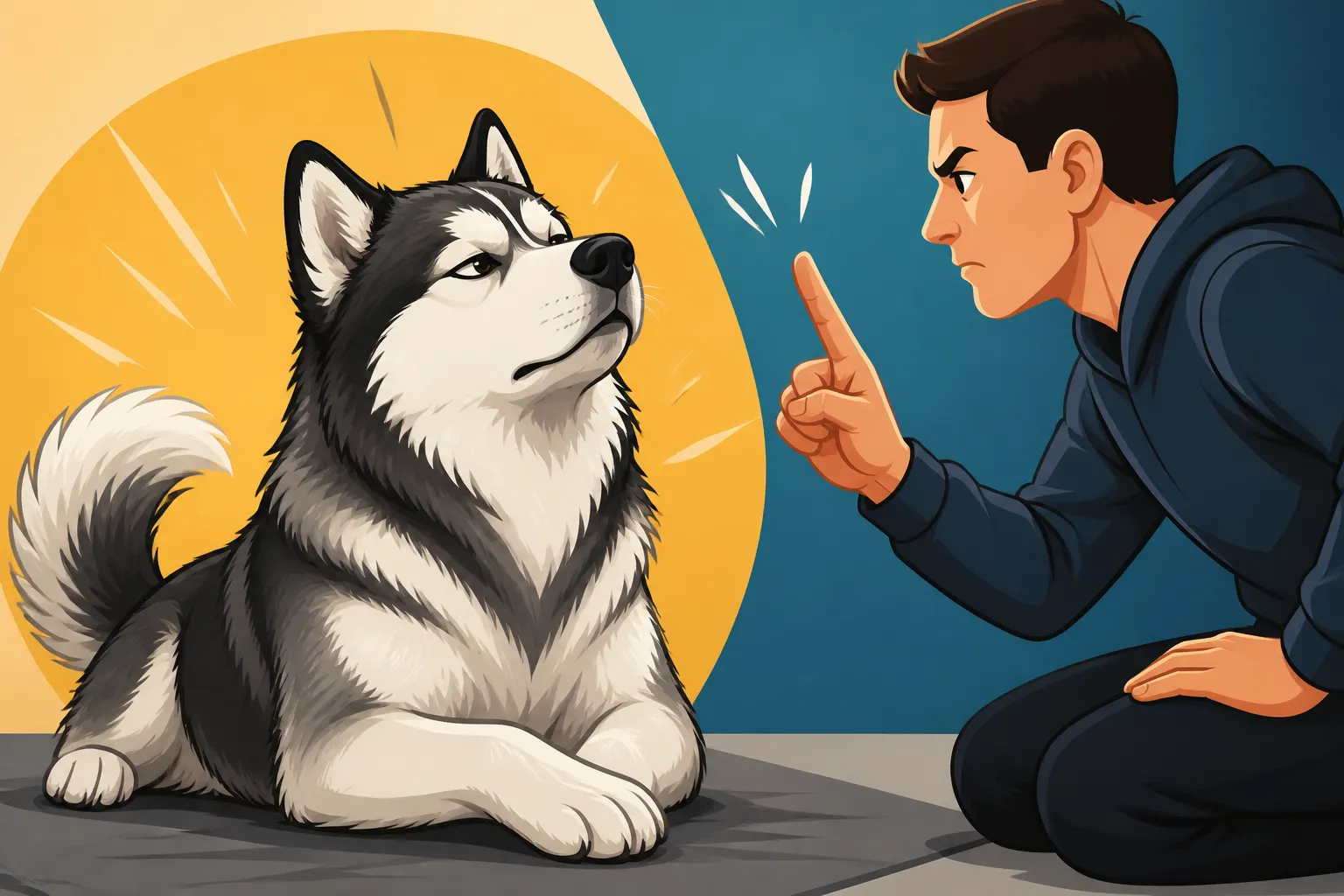
This is perhaps one of the most common and infuriating behaviors of an Alaskan Malamute. You call their name, they glance at you, and then deliberately turn their head back to whatever fascinating smell or object has captured their attention. Or you ask for a "drop it," and they might chew even harder on the forbidden item, giving you the classic "make me" stare. This isn't because they don't understand the command; it's because they're asking, "Is there something better for me if I comply, or can I get away with ignoring you?"
For a Malamute, compliance is often a negotiation. If coming when called means being immediately leashed and taken away from an exciting sniffing expedition, they might decide it's not worth it. This is why Why an Alaskan Malamute Will Never Have a Reliable Recall is a common refrain among owners. Their natural independence means they prioritize their own perceived interests. Using a long line, easily found on Amazon, can be a game-changer here, allowing you to practice recall in a safe, controlled way without letting them "win" the game of avoidance. Similarly, if they have something they shouldn't, a quick trade for a much higher value treat is often more effective than trying to wrestle it away. The key is to consistently prove to them that listening to you always results in something positive for them. The moment they realize Why a Loose Alaskan Malamute Does Not Come Back on their own is often a hard lesson learned.
Pushing Physical Boundaries: Leash Manners and Space
Another common way Malamutes test authority is through physical presence and boundaries. They are big, strong dogs, and they know it. Leash pulling is a prime example. While some pulling is instinctual for a breed designed to pull sleds and freight, excessive pulling often comes down to a Malamute deciding they dictate the pace and direction of the walk. They lead, you follow. It's a subtle assertion of control. If they consistently get to pull you where they want to go, they learn that pulling works. This directly ties into their heritage, as Pulling Is the Only Job an Alaskan Malamute Really Wants, but it needs to be channeled appropriately.
Beyond the leash, they might lean on you constantly, nudge your hand for attention, or sprawl across the entire sofa, making it difficult for you to sit. These aren't necessarily aggressive acts, but they are tests of space and privilege. "Whose space is this? Who moves for whom?" They are assessing who controls the immediate environment. A Malamute might also physically block your path, making you step around them, again, subtly reinforcing their presence and control. Remembering What an Alaskan Malamute Was Bred to Hunt and their size helps frame these behaviors as an expression of their physical power and historical role, which needs gentle but firm guidance in a domestic setting.
Effective Strategies for Navigating Malamute Challenges
Dealing with a Malamute who is testing your authority requires patience, consistency, and a deep understanding of their unique personality. Forceful methods rarely work and can often backfire.
Consistency and Clear Communication
The single most important tool in your Malamute toolkit is consistency. Malamutes are incredibly smart and will quickly pick up on any loopholes or inconsistencies in your rules. If "off the couch" means "sometimes off the couch," then to your Malamute, the rule is "sometimes on the couch." Every member of the household must be on the same page, consistently applying the same rules and commands every single time. This means if one person lets them pull on the leash and another doesn't, the Malamute learns that pulling works sometimes, and they'll keep trying it.
Clear communication goes beyond just verbal commands. It includes your body language, tone of voice, and the predictability of your actions. A Malamute needs to know what to expect from you. If you are calm and assertive, they will trust your leadership. If you are erratic or easily frustrated, they will learn that your reactions are unpredictable, and they will be more likely to test you. Establishing routines and predictable responses helps them feel secure and understand their place in the household. Remember, Why Force Fails on an Alaskan Malamute is often because it breaks that trust and predictability.
Positive Reinforcement and High-Value Rewards
Malamutes are intelligent, independent thinkers, and they operate on a "what's in it for me?" principle. Therefore, positive reinforcement is not just a preference; it's practically a necessity. They need to understand that complying with your requests leads to something they genuinely value. For some Malamutes, this might be a particularly stinky treat; for others, it might be a game of tug or a short burst of their favorite activity. Generic praise like "good dog" might not be enough to motivate them when they're truly invested in another activity.
Always have high-value treats on hand – think cooked chicken, cheese, or specialized training treats. The higher the distraction, the higher the value of the reward needs to be. When they do comply, reward them immediately and generously. This reinforces the idea that listening to you is always worth their while. Consider exploring online resources like BAXTER & Bella, which often offer comprehensive puppy and dog training programs heavily focused on positive reinforcement, helping you build this reward-based relationship. Many useful training aids, from clickers to treat pouches, are readily available on Amazon to help you stay prepared. Ultimately, understanding What an Alaskan Malamute Will Work For is key to successful training.
Management and Prevention Over Correction
Given their intelligence and stubborn streak, it's often far easier to prevent an unwanted behavior than to correct it after it's started. This is where good management comes in. For example, if your Malamute is prone to counter-surfing, don't leave tempting food on the counter within reach. If they chew furniture when left alone, ensure they are in a secure crate or a puppy-proofed area with appropriate chew toys.
Fencing is another critical management tool. An Alaskan Malamute’s strong prey drive and desire to roam mean that a standard fence might not be enough. They are champion diggers and climbers. Investing in a secure perimeter, perhaps with fence extenders or concrete footings, is essential. Fencing a Yard Against a Malamute That Was Bred to Dig is not just a recommendation; it's often a requirement for their safety and your peace of mind. Similarly, for those times when you need them contained, having What a Crate a Malamute Cannot Break Costs can save you from constantly replacing flimsy alternatives. Management means setting your Malamute up for success, reducing opportunities for them to practice unwanted behaviors, and thereby reducing the need for frustrating corrections.
Building a Partnership, Not a Dictatorship
The relationship with an Alaskan Malamute is truly a partnership. You're not aiming for a subservient dog, but a willing, respectful companion who chooses to work with you. This takes time, effort, and a specific approach.
Earning Respect Through Fairness and Leadership
Earning your Malamute's respect isn't about dominance or force; it's about being a consistent, fair, and reliable leader. They observe everything. If you are erratic, unfair, or allow rules to be broken sometimes but not others, they will see you as an inconsistent leader. This doesn't mean they'll stop loving you, but they will be more likely to challenge your authority because they haven't learned that your commands are consistently worth following.
A true leader provides security, guidance, and predictable boundaries. Your Malamute needs to know that you're capable of making good decisions for the "pack," keeping them safe, and providing for their needs. This builds trust, and trust is the foundation of respect for a Malamute. When they respect you, they are more inclined to listen, not because they fear punishment, but because they believe in your leadership. Distinguishing between a genuinely stubborn streak and their inherent independence is important for a successful relationship, as exploring Telling a Stubborn Malamute From an Independent One can help you understand. Some Malamutes will defer to one person more naturally, and understanding Whether a Malamute Respects One Person Only can help household members adjust their approach.
The Long Game: Patience and Persistence
Raising and training an Alaskan Malamute is a marathon, not a sprint. Their testing behaviors often don't disappear overnight, and you might even see regressions in training. These moments can be incredibly disheartening, making you question your methods or your dog's intelligence. But remember, this is a breed that retains its independent spirit throughout its life.
Patience is your greatest virtue. Every time your Malamute tests a boundary and you calmly and consistently redirect them, you are reinforcing your role as the leader. Every time they choose to comply and are generously rewarded, you are strengthening the positive association with listening to you. There will be days when you feel like you've taken ten steps back, but those small, consistent efforts over weeks, months, and even years will add up. Celebrate the small victories, learn from the setbacks, and remember that building a deep, trusting relationship with an Alaskan Malamute is one of the most rewarding experiences you can have.
Navigating Malamute Authority Tests: Behaviors & Responses
To help you navigate these interactions, here's a quick overview of common "testing" behaviors and how to respond in a way that reinforces your leadership effectively.
| Behavior | Malamute's Possible Internal Question | Ineffective Response | Effective Response |
|---|---|---|---|
| Ignores Recall | "Is coming back worth giving up this fun?" | Chasing, yelling, punishing | Use long line, high-value reward for success, consistency |
| Pulling on Leash | "Can I lead this walk?" | Yelling, yanking, letting them pull anyway | Stop walking until slack, consistent loose-leash training |
| Counter Surfing | "Is this food mine for the taking?" | Punishing after the fact, leaving food accessible | Management (no food on counters), redirect with appropriate chew |
| Jumping on Guests | "Will I get attention if I jump?" | Inconsistent reactions (sometimes tolerate, sometimes scold) | Consistent "four on the floor" rule, reward calm greetings |
| Mouthing/Nipping in Play | "How far can I push this play?" | Yelling, harsh physical correction, continuing rough play | Immediate "yelp" or end of play, redirection to appropriate toy |
| Digging in Yard | "Can I make my own fun/cool spot here?" | Punishing the hole after the fact | Provide a designated digging pit, increase exercise/mental stimulation |
| Stealing Items | "Will they chase me for this?" | Chasing, wrestling item away | "Trade" for a high-value item, teach "drop it" with positive reinforcement |
| Guarding Space (couch, bed) | "Is this space mine, or shared?" | Forcing them off, giving up the space | Consistent rules about furniture, use a "place" command, reward compliance |
Disclaimer
This article is for general informational purposes only and does not constitute professional advice. Laws, prices and regulations vary by location and change over time. Consult a qualified professional for guidance on your specific situation.