How a Malamute Found Seals for the Mahlemut
Many new Alaskan Malamute owners quickly discover that their furry companions possess an ancient intelligence and a deeply ingrained set of instincts that go far beyond fetching a ball or learning basic commands. It’s easy to look at these magnificent dogs and see only a pet, but to truly understand them, we must look back at their original purpose. This guide delves into the fascinating historical role of the Alaskan Malamute, specifically focusing on how they partnered with the Mahlemut people of the Arctic to hunt seals, an incredible feat that highlights their remarkable senses and cooperative spirit, and ultimately shapes the Malamute we know and love today.
The Mahlemut People and Their Arctic Survival
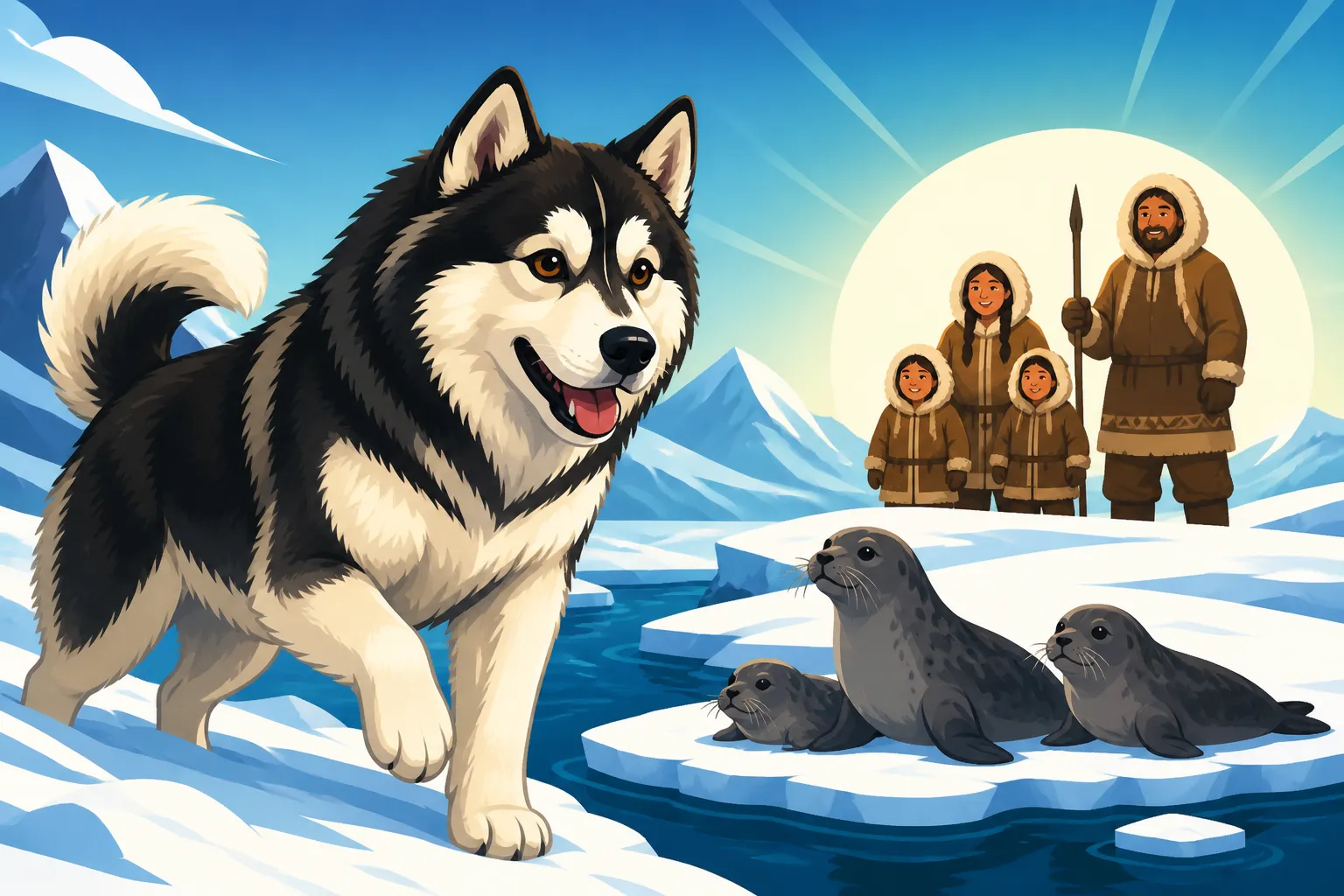
Imagine living in a place where survival is a daily challenge, where the landscape is dominated by ice, snow, and bone-chilling cold for much of the year. This was the reality for the Mahlemut people, an Inuit group indigenous to the Kotzebue Sound region of northwestern Alaska. For generations, their very existence depended on a profound understanding of their environment and the invaluable partnership with their dogs – the ancestors of our modern Alaskan Malamutes.
Life in Kotzebue Sound
The Kotzebue Sound is a harsh, unforgiving environment, but also one rich in marine life. Seals, whales, and fish were not just food sources; they were fundamental to survival, providing sustenance, blubber for fuel, and skins for clothing and shelter. Hunting these animals, especially seals, was an incredibly complex and dangerous undertaking, requiring immense skill, patience, and a deep connection to nature. The Mahlemut people developed intricate hunting techniques over centuries, relying on traditional knowledge passed down through generations. They understood the movements of ice, the behavior of marine mammals, and critically, how to leverage the unique abilities of their dogs. It was a symbiotic relationship, where humans provided guidance and tools, and the dogs offered their unparalleled senses and endurance.
The Dog's Role in a Harsh Landscape
In such an extreme climate, dogs were not merely companions; they were indispensable working partners. They pulled sleds laden with vital supplies and freshly hunted game, making travel across vast, frozen expanses possible. But their contributions extended far beyond brute strength. They were integral to the hunt itself, especially for seals, which often meant finding elusive breathing holes under thick layers of ice and snow. Without the keen senses of their dogs, many hunting expeditions would have been fruitless, potentially leading to hardship and even starvation for the community. The dogs provided an extra layer of sensory perception that humans simply couldn't replicate, bridging a critical gap in the struggle for survival. This historical context illuminates why these dogs are often described in terms of their purpose – What the Mahlemut Used Their Malamutes For went far beyond what most modern pet owners imagine.
A Malamute's Specialized Senses and Instincts for Hunting
The Alaskan Malamute, as we know it today, is a testament to selective breeding driven by the absolute necessity of survival. The Mahlemut people didn't breed for beauty or temperament alone, but for traits that ensured their dogs could perform specific, life-saving tasks in the most challenging conditions imaginable. Their ability to find seals wasn't accidental; it was the culmination of generations of innate talent honed for a singular purpose.
Unparalleled Sense of Smell
Imagine miles of frozen tundra, covered in snow, with winds whipping across the ice. How do you find a seal, an animal that spends most of its life underwater, with only tiny breathing holes connecting it to the surface? This is where the Malamute’s extraordinary sense of smell came into play. Their noses are incredibly powerful, capable of detecting the faintest scent trails, even those that have been masked by wind, snow, or the sheer cold. A seal’s breath, its bodily odors, or even residual scent left around a breathing hole would be discernible to a highly trained Malamute, even when completely undetectable to a human. This olfactory superpower allowed them to locate potential hunting spots that would otherwise remain hidden beneath the vast, white expanse, giving their human partners a crucial advantage in the hunt. This specialized sense is one reason why modern Malamutes excel at activities like scent work, often using products you might find on Amazon to engage their natural abilities.
Keen Hearing and Observation
Beyond smell, Malamutes possess remarkably acute hearing. They could detect subtle sounds that might indicate the presence of a seal beneath the ice – the soft scraping of claws, the gentle whoosh of breath, or the distant movements of marine life. This wasn't just about hearing; it was about interpreting those sounds within the silent, vast wilderness. Furthermore, Malamutes are highly observant animals. They would watch their human partners for cues, and in turn, their humans learned to read the subtle shifts in their dog’s posture, the twitch of an ear, or the intense focus in their eyes. This silent communication, built on mutual trust and understanding, was vital during a hunt where a single misstep could mean losing the target or, worse, risking injury. The cooperation between human and dog was paramount, and it's a bond that continues to define the breed.
The Partnership: Man and Dog in the Hunt
The seal hunt was never a solo endeavor for either human or dog; it was a testament to collaboration. The Mahlemut hunter, armed with knowledge of ice conditions and seal behavior, would guide the dog across the ice. The Malamute, for its part, would actively search, nose to the ground, ears swiveling, constantly evaluating the environment. When a promising scent or sound was detected, the dog would often signal its findings to the hunter, perhaps by stopping abruptly, sniffing intently at a specific spot, or giving a soft "woo" or whine. What sounds an Alaskan Malamute makes can be quite varied, and these subtle vocalizations or body language signals were part of their ancient hunting vocabulary. This partnership wasn't about dominance or submission; it was about two different species, each bringing their unique strengths to bear on a shared, critical goal – survival.
The Art of Seal Hunting: Malamutes in Action
To truly grasp the Malamute's genius, it helps to visualize the actual hunting process. It wasn't a chaotic chase, but a methodical, patient endeavor that showcased the dogs' incredible training, instinct, and the deep trust between them and their Mahlemut companions.
Locating the Breathing Hole
The primary role of the Malamute in seal hunting was locating the aglu, the breathing holes that seals maintain in the ice throughout the long winter. These holes are often small and can be covered by a fresh layer of snow, making them nearly impossible for humans to spot.
A Mahlemut hunter would often travel with several dogs, allowing them to spread out and cover more ground. The dogs, driven by instinct and years of inherited knowledge, would systematically scan the ice. When a Malamute picked up the scent of a seal or heard the tell-tale gurgle beneath the ice, it would immediately become alert. It might stiffen, lower its head, and begin to sniff intensely at a particular spot. This wasn't just a casual sniff; it was a focused, almost surgical investigation, often involving pawing at the snow or circling the area to pinpoint the exact location of the aglu. This behavior is a powerful echo of What an Alaskan Malamute Was Bred to Hunt. The dog wasn't just searching; it was actively problem-solving, using its senses to map the unseen world beneath the frozen surface.
Alerting the Hunter
Once a Malamute had successfully located a breathing hole, its next crucial step was to alert its human partner. This communication needed to be clear, unambiguous, and, importantly, silent enough not to spook the seal. The dog wouldn't bark loudly – that would defeat the purpose. Instead, it might stand completely still, tail perhaps quivering slightly, nose pressed to the ice, looking back at its hunter with an intense, focused gaze. Sometimes, a subtle paw scrape on the snow, or a low, rumbling growl, a "woo," or a gentle nudge would be the signal. The hunter, observing their dog’s body language, would then move quietly to the spot. They would confirm the dog's discovery, often by testing the snow and ice for subtle signs of warmer air or melted areas around the hole. This silent, non-verbal exchange of information speaks volumes about the sophisticated relationship between the Mahlemut people and their dogs. Training methods, even in modern times, emphasize reading a dog's subtle cues, something BAXTER & Bella emphasizes in their positive reinforcement programs.
Beyond the Find: Other Contributions
While finding the breathing hole was arguably the Malamute's most critical contribution to seal hunting, their role didn't end there. After the seal was caught, these powerful dogs were essential for hauling the heavy carcass back to camp. Imagine dragging a several-hundred-pound seal across miles of snow and ice – a monumental task for humans alone. The Malamutes, with their incredible strength and endurance, would be harnessed to sleds, turning a difficult trek into a manageable journey. Their ability to pull heavy loads, a defining characteristic that gives us Pulling Is the Only Job an Alaskan Malamute Really Wants, was as vital for transporting the bounty as it was for finding it. This dual role of hunter and hauler made them truly indispensable for the Mahlemut's survival in the harsh Arctic landscape.
Enduring Traits and Modern Echoes
The history of the Alaskan Malamute is not just a tale from the past; it's a living legacy that profoundly influences the dogs we share our homes with today. Those ancient instincts, honed over centuries of cooperation with the Mahlemut people, still ripple through their behaviors and personalities.
The Legacy in Today's Malamute
When your Malamute seems to sniff every blade of grass with surgical precision, or stares intently at a rustle in the bushes, you're witnessing the echoes of their ancestors' seal-hunting prowess. Their keen senses, particularly their powerful noses, are still very much intact. This is why many Malamutes have a strong prey drive – The Risk an Alaskan Malamute Poses to Cats and other small animals can be directly traced back to their history as hunters, even though they hunted alongside humans rather than solely for themselves. The drive to explore, to follow scent trails, and to engage their minds in a "job" remains a fundamental part of their being. They were bred to be active, intelligent, and resourceful, and those traits don't simply vanish because they now live in a suburban home. Ignoring these deep-seated instincts can lead to frustration for both dog and owner.
Channeling Instincts: Modern Activities
Understanding this history is key to providing a fulfilling life for a modern Malamute. Since they no longer need to find seals for your dinner, how can you channel those powerful instincts? Scent work, for instance, is an excellent way to engage their incredible noses and provide mental stimulation. You can hide treats or specific target scents around your home or yard, turning their natural sniffing into a fun and rewarding game. There are many kits available on Amazon for beginners to advanced scent work. Similarly, their hauling instinct can be fulfilled through activities like dog scootering, canicross, or even formal weight pulling, using specialized equipment designed to let them safely do what they were bred for. Teaching them to pull a cart or a sled (even if it's just you on rollerblades!) provides a fantastic physical and mental outlet. Whether a Malamute Needs a Job Every Day is a question rooted in their ancient purpose.
| Trait | Historical Role in Seal Hunting | Modern Echoes & Fulfillment |
|---|---|---|
| Sense of Smell | Locating seal breathing holes under snow and ice. | Intense sniffing on walks, excellent for scent work, tracking, or nose games. |
| Hearing | Detecting subtle sounds of seals beneath the ice. | Alertness to distant sounds, can be easily distracted by noises outdoors, good for alert commands. |
| Observation | Reading hunter's cues, subtle environmental changes. | Highly responsive to body language, can be stubborn if not engaged, learns through observation. |
| Endurance | Traveling vast distances over ice and snow for hunts. | Needs significant daily exercise, thrives on long hikes, running, or pulling activities. |
| Strength | Hauling heavy seal carcasses back to camp. | Excellent for weight pulling, sledding, dog scootering, or carrying backpacks. |
| Cooperation | Working in tandem with humans, silent communication. | Bonds deeply with family, intelligent but independent, responds best to positive, consistent training. |
Understanding Their Nature: The Importance of Breed-Specific Knowledge
Many of the "frustrating" behaviors Malamute owners encounter – the digging, the independent streak, the vocalizations that aren't quite barks, and the seemingly endless energy – make perfect sense when viewed through the lens of their history. Why a Malamute Wooes Instead of Barking is a perfect example of a trait linked to their specific communication needs during hunting. They were not bred to be easily controlled, but to think for themselves and make critical decisions in life-or-death situations. This independence can be misinterpreted as stubbornness. By understanding their ancestral drive, we can approach their training and daily lives with greater empathy and effectiveness. Instead of trying to suppress these instincts, a knowledgeable owner seeks to redirect and fulfill them appropriately. This appreciation for their heritage not only enriches the dog's life but also strengthens the bond with their human family. The more we learn about The Mahlemut of Kotzebue Sound Bred the Alaskan Malamute, the better we can care for these incredible dogs.
Disclaimer
This article is for general informational purposes only and does not constitute professional advice. Laws, prices and regulations vary by location and change over time. Consult a qualified professional for guidance on your specific situation.