Why a Malamute Turns on a Dog It Has Lived With
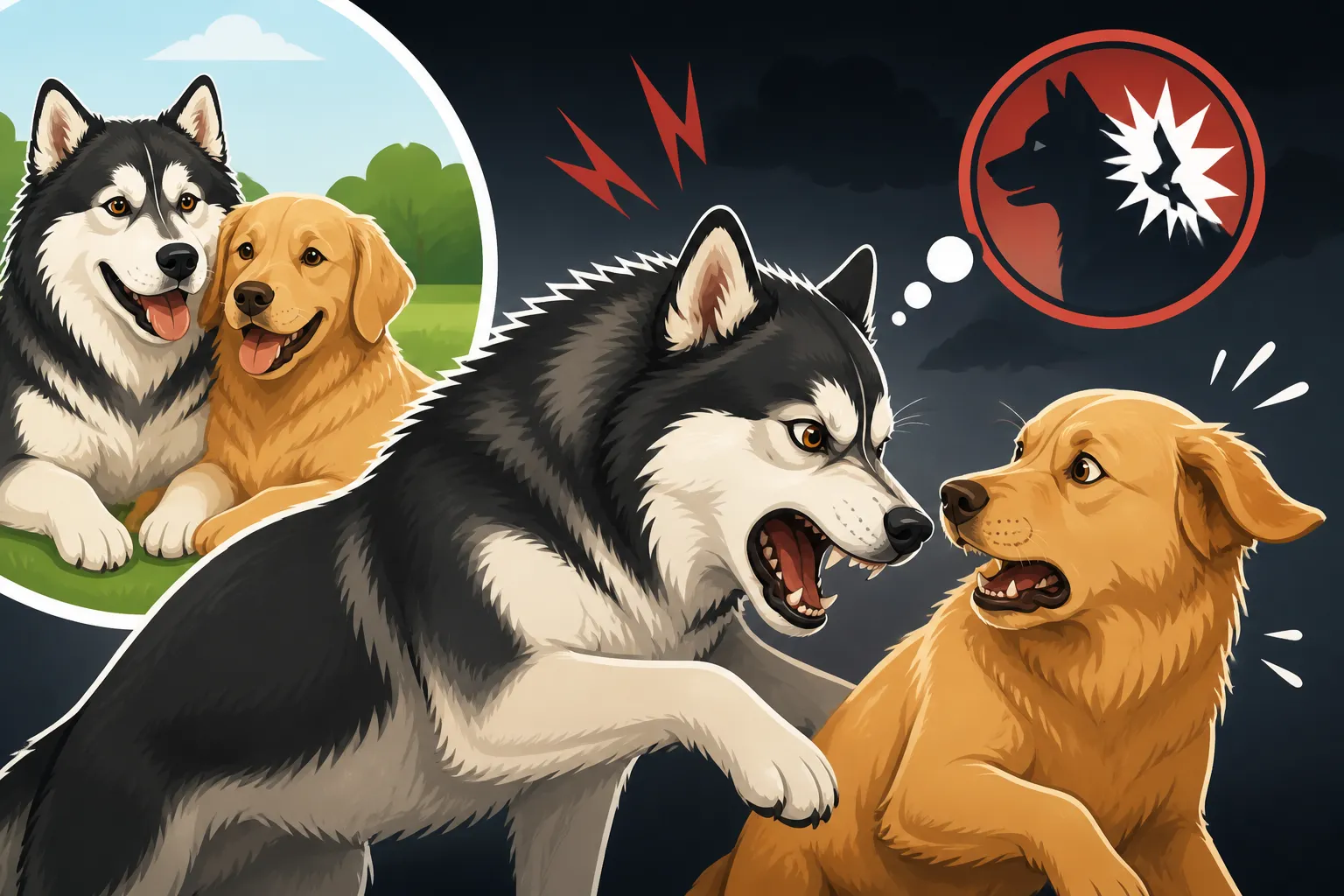
It can be absolutely heartbreaking and incredibly frustrating when two Alaskan Malamutes, or even a Malamute and another breed, who have shared your home peacefully for months or even years, suddenly turn on each other. One day they're napping nose-to-nose, the next they're engaged in a full-blown altercation, leaving you wondering what went wrong and how to fix it. This guide will delve into the complex reasons why a Malamute might suddenly exhibit aggression towards a canine housemate and explore practical strategies to understand, manage, and prevent such painful conflicts.
Understanding Malamute Social Dynamics
Alaskan Malamutes are magnificent, powerful dogs, and they carry a deeply ingrained heritage of working in packs. This pack mentality, while often leading to strong bonds, also comes with a nuanced and sometimes challenging social structure that can manifest as conflict within a household. It’s not about "dominance" in the outdated sense, but rather a complex interplay of individual personalities, resource value, and perceived social standing.
The Instinctive Drive for Hierarchy
Malamutes, by their very nature, are predisposed to understand and navigate social hierarchies. In a multi-dog household, this can mean a constant, subtle re-evaluation of who holds what "privileges" – whether it's access to a favorite sleeping spot, a prime chew toy, or even your undivided attention. It's rarely a violent quest for "alpha" status, but rather a constant, often quiet, negotiation of boundaries and perceived value. When one dog feels their position is challenged, or a previously stable social order is disrupted, tension can rise. This natural drive means that even a long-established truce between two housemates can be suddenly, and seemingly inexplicably, upended if one dog decides to test the waters or the other is no longer willing to yield.
It's not that your Malamutes are inherently "bad"; it's that they are operating on instincts honed over generations of living and working in closely-knit groups. They are constantly reading body language, subtle cues, and perceived threats to their comfort and resources. What might appear as a sudden "turn" to us could be the culmination of weeks or months of suppressed tension that finally boils over, often because a threshold has been crossed that we, as humans, might not even perceive. This is why it's crucial to understand How Common Dog Aggression Is in Alaskan Malamutes and acknowledge this inherent predisposition.
Same-Sex Aggression: A Malamute Trait
One of the most common and challenging forms of aggression seen in Alaskan Malamutes, particularly when they "turn" on a housemate, is same-sex aggression. This isn't unique to Malamutes, but it's certainly a pronounced trait in the breed. Two male Malamutes, or two female Malamutes, sharing a home can often live peacefully for years before reaching a point where their hormones, personalities, or even minor changes in the household environment trigger serious conflict. This often begins to surface as they mature, particularly around the 18 to 36-month mark, though it can appear earlier or later.
The underlying reasons for same-sex aggression are complex, often stemming from competition over resources, perceived status, or simply a clash of personalities. With male Malamutes, it can often revolve around chest-thumping displays and tests of wills, while with females, it can sometimes be more subtle, building over time with simmering tension before erupting. When you have two intact males, the testosterone can amplify this, but even neutered males or spayed females can exhibit intense same-sex aggression. Owners frequently find themselves asking Why Malamutes Fight Dogs of the Same Sex as these dynamics unfold, and it’s an important question to address proactively. Many experienced Malamute owners find that Why a Male and Female Malamute Pair Better is often the preferred and more stable option for a multi-dog household with this breed.
Maturity and Shifting Social Structures
The sudden onset of aggression often coincides with a Malamute's maturity. While they might be physically large by 8-12 months, their mental and social maturity often lags behind, peaking between 18 months and 3 years of age. During this period, their personality solidifies, and their perception of their place in the household, and their relationship with other dogs, can undergo significant changes. A younger dog that was previously submissive might begin to challenge an older, established housemate. An older dog might become less tolerant of a younger dog's antics as they age and perhaps become less patient or even experience discomfort from underlying health issues.
This adolescent phase, or even later maturity, can be a particularly volatile time. A dog that was once happy to share toys or space might suddenly start resource guarding and possession aggression as their sense of self and ownership develops. What was acceptable play at one point might now be perceived as a challenge, leading to growling, snapping, or even a full-blown fight. It’s a bit like when The Adolescent Malamute That Rewrites the Rules at Fourteen Months starts pushing boundaries with you; they're also testing boundaries with their canine companions, and sometimes those tests escalate beyond playful sparring.
Triggers and Warning Signs of Conflict
It's incredibly difficult to catch every single cue, especially when you're busy with life, but learning to recognize the subtle signals that precede a dog fight can be crucial. Malamutes are often stoic, and their early signs of discomfort or escalating tension can be easily missed by the untrained eye.
Resource Guarding and Possession Aggression
One of the most frequent triggers for conflict between housemate dogs, especially Malamutes, is resource guarding. This is when a dog exhibits aggressive behaviors to prevent others from approaching or taking a valued item, whether it's food, toys, sleeping spots, or even human attention. It might start subtly: a quick glare, a stiffening of the body, or a low growl when another dog approaches their chew. Over time, if not addressed, these warnings can escalate into snaps or full-blown fights.
Imagine a scenario: your Malamutes, Thor and Luna, have always shared a home. One evening, you give Thor a new, high-value chew toy you bought from Amazon. Luna approaches, tail wagging, perhaps just curious. Thor, however, tenses up, freezes, and gives a hard stare, maybe even a low rumble deep in his chest. Luna, perhaps not reading the cues effectively or choosing to ignore them, continues to approach, and suddenly Thor lunges. This wasn't a sudden "turn" out of nowhere; it was an escalation of resource guarding that had been building. It’s a common scenario that often leads owners to wonder What a Malamute Fight Does to the Other Dog.
Environmental Stressors and Changes
Changes in the household environment, no matter how minor they seem to us, can be significant stressors for dogs and trigger aggression. A new baby, a visitor, a change in routine, moving furniture, or even another pet joining (or leaving) the household can upset the delicate social balance. Malamutes thrive on routine and clear expectations, and disruptions can lead to anxiety, which in turn can lower their tolerance for their housemates. Even something as simple as a new dog walking past the window repeatedly can heighten tension between two resident dogs.
Consider a family where the kids have gone back to school after summer break. The dogs, used to constant human presence, now find themselves alone for longer periods. The resulting boredom or anxiety can manifest as increased irritability between them. Another example might be renovation work in the house, causing noise and disruption, making the dogs more on edge. When their perceived safety and comfort are compromised, their threshold for conflict can drastically drop.
Subtle Cues Before a Blow-Up
Malamutes communicate extensively through body language, and often, conflicts don't just "erupt" without warning. There are usually a series of subtle cues that escalate before a full-blown fight. These can include:
- Stiffening: A dog's body becomes rigid, often pausing in motion.
- Hard Stares: Direct, unblinking eye contact, often accompanied by a lowered head.
- Lip Licks/Yawning: Often displacement behaviors indicating stress or discomfort, not always sleepiness.
- Growls/Rumbles: Low, guttural sounds, often a primary warning.
- Whale Eye: The whites of the eyes are visible, indicating stress or fear.
- Tail Carriage: A stiff tail held high, or tucked low and rigid, rather than a relaxed wag.
- Hiding/Avoiding: One dog might actively try to avoid the other, leading to increased tension if they can't escape.
Learning to read these signs is vital. Many owners are surprised by a fight, but looking back, often realize the signs were there. Paying close attention to how your Malamutes interact during routine activities, especially around valued resources, can provide early warnings.
| Sign of Escalation | Description | Early Warning | High Alert |
|---|---|---|---|
| Stiffening Body | Muscles tense, dog may freeze movement. | Yes | Yes |
| Hard Stare | Unblinking, direct eye contact with a fixed gaze. | Yes | Yes |
| Lip Licking/Yawn | Quick flick of the tongue or exaggerated yawn, out of context. | Yes | Sometimes |
| Low Growl/Rumble | Guttural sound, often deep in the chest. | Yes | Yes |
| Whale Eye | Whites of eyes visible at the sides, often with dilated pupils. | Yes | Yes |
| Pinned Ears | Ears flattened back against the head, or stiffly forward. | Yes | Yes |
| Stiff Tail | Tail held rigidly, either high or tucked, with minimal movement. | Yes | Yes |
| Freezing | Dog suddenly stops all movement, appearing motionless. | Yes | Yes |
| Blocking | Dog positions itself between another dog and a resource (e.g., you, food). | Yes | Sometimes |
| Snapping/Air Bite | Quick, open-mouthed lunge without making contact. | Sometimes | Yes (imminent) |
Managing and Preventing Aggression in the Home
Once aggression has occurred, it's a serious matter that requires immediate and consistent intervention. Simply hoping it won't happen again is not a viable strategy. Your goal should be to prevent future incidents and create a safe environment for all your dogs.
Crate and Rotate Strategies
For households experiencing ongoing inter-dog aggression, a "crate and rotate" system is often a necessary, albeit challenging, management strategy. This involves ensuring the dogs are never together unsupervised, and often involves keeping them physically separate at all times, with structured "together time" only under direct, vigilant supervision. This isn't a long-term solution to the underlying issues, but it's a crucial management tool to prevent fights and ensure safety.
This might mean one dog is crated while the other is free-roaming, or they are kept in separate rooms divided by sturdy baby gates. For walks, they go separately. When feeding, they are in separate, secure locations. This can feel like a logistical nightmare, especially with large, active breeds like Malamutes, but it prevents serious injuries. You might need to invest in durable crates and gates. Platforms like Amazon offer a wide variety of options for extra-strong crates and taller gates to keep your determined Malamutes safely separated. This detailed approach is explored further in How Crate and Rotate Works With Two Malamutes.
Consistent Training and Structure
A well-structured environment with clear rules and consistent training can significantly reduce tension in a multi-dog household. Both Malamutes need to understand their boundaries and what is expected of them. This means reinforcing positive behaviors and consistently redirecting or managing undesirable ones. Every interaction, every meal, every walk is an opportunity to reinforce that you are the consistent provider of safety and resources, reducing the need for them to compete.
Utilize positive reinforcement training methods; harsh corrections tend to backfire on independent breeds like Malamutes and can actually increase anxiety and reactive behaviors. Focus on teaching both dogs to "settle," "stay," and "go to place" commands, which can be invaluable for managing interactions. Consider online resources like BAXTER & Bella for structured training programs that can help you establish clear communication and build a solid foundation of obedience for all your dogs. Remember, ignoring a cue it knows (Whether an Alaskan Malamute Ignores a Cue It Knows) is often a sign of insufficient motivation or inconsistent training, which needs to be addressed.
Environmental Management and Enrichment
Beyond crating and rotating, managing the environment itself plays a huge role. Identify and remove common triggers. If resource guarding is an issue, feed dogs separately and remove all high-value toys or chews when they are together. Ensure there are enough beds, water bowls, and safe spaces for each dog, so they don't have to compete. Provide ample mental and physical exercise individually to reduce frustration and boredom. A bored Malamute is a destructive and potentially reactive Malamute.
Engage them with puzzle toys, interactive feeders, or individual training sessions to burn off energy. Long walks, runs, or even Pulling Is the Only Job an Alaskan Malamute Really Wants activities, done individually, can help. This extensive enrichment can reduce stress and make them less likely to pick fights with their housemates. Make sure both dogs are getting enough individual attention and exercise, so they don't feel neglected or feel the need to compete for your affection.
When to Seek Professional Help
Dealing with inter-dog aggression is complex and emotionally draining. It's not a sign of failure to seek professional help; it's a responsible and often necessary step to ensure the safety and well-being of all involved.
The Role of a Certified Professional Dog Trainer or Behaviorist
If aggression has escalated beyond minor squabbles, or if you feel overwhelmed, bringing in a certified professional dog trainer or a veterinary behaviorist is crucial. These professionals have the expertise to assess the specific dynamics in your household, identify triggers, and develop a tailored management and modification plan. They can teach you how to read your dogs' body language more effectively, implement safe separation techniques, and guide you through behavior modification exercises.
A good behaviorist will work with you to understand the root cause of the aggression, which could range from anxiety to pain, and help you implement positive, humane strategies. They can guide you on everything from implementing a safe Crate and Rotate Works With Two Malamutes system to teaching specific counter-conditioning exercises. Don't delay seeking help; the longer the aggressive behavior persists, the more entrenched it can become. You might find resources through organizations that certify trainers or behaviorists, or even consider if Whether a Malamute Owner Needs a Professional Trainer is a question you need to answer with a definitive "yes" for your unique situation.
Medical Factors to Rule Out
Sometimes, a sudden change in a dog's behavior, including increased aggression, can be linked to an underlying medical condition. Pain, vision or hearing loss, hormonal imbalances (like thyroid issues), or even neurological problems can make a dog more irritable, anxious, or less tolerant of others. A dog that is in discomfort might snap at a housemate simply because it was bumped in a painful area.
Before embarking on an extensive behavioral modification plan, it is highly recommended to have both dogs thoroughly checked by a veterinarian. This comprehensive vet visit should include blood work, a physical examination, and potentially other diagnostic tests, especially if the aggression has come on suddenly in an older dog. Ruling out medical causes is an essential first step. For example, if your Malamute is suddenly irritable, it's worth considering if they are experiencing any chronic pain or discomfort that could be lowering their tolerance.
Disclaimer
This article is for general informational purposes only and does not constitute professional advice. Laws, prices and regulations vary by location and change over time. Consult a qualified professional for guidance on your specific situation.