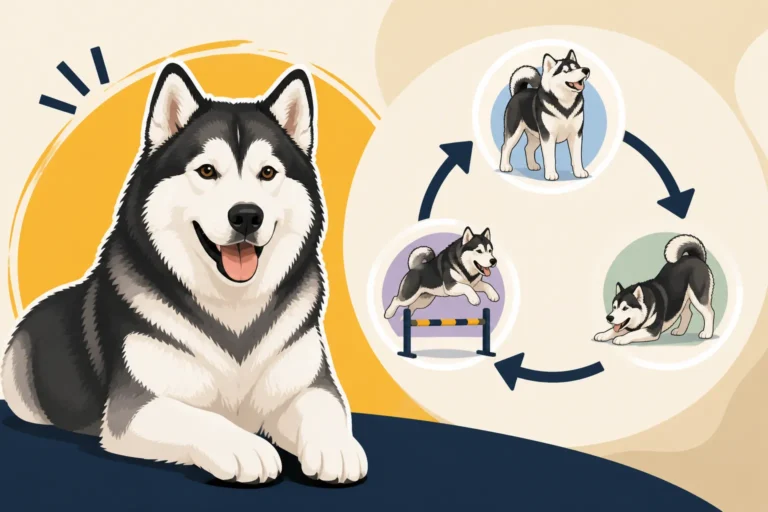
Whether a Malamute Needs a Job Every Day
One of the most common worries new Alaskan Malamute owners share with me is the feeling that they need to constantly entertain their giant fluffball, wondering if their Malamute truly needs a specific "job" every single day to be a well-adjusted companion. It's a valid concern, born from their strong working heritage, and this guide aims to clarify what "having a job" really means for a Malamute in a modern home and how you can meet those deep-seated needs without turning your life into a full-time Malamute entertainment agency.
Understanding the Malamute's Innate Drive for Purpose
When you bring an Alaskan Malamute into your home, you're not just getting a dog; you're adopting a piece of living history, a direct descendant of the powerful, independent dogs that worked tirelessly with the Mahlemut people in the harsh Arctic. Their entire being, from their robust build to their intelligent eyes, was forged by generations of freighting, hunting, and surviving in extreme conditions. This isn't just a quaint historical fact; it's fundamental to understanding their daily needs.
More Than Just Exercise: The Mental Component
It’s easy to think that a long walk or a vigorous play session is enough for such an active breed. While physical exercise is absolutely crucial, and we'll dive into that later, a Malamute's need for a "job" goes beyond simply burning calories. Their ancestors were problem-solvers; they navigated treacherous terrain, worked cooperatively in teams, and made decisions in challenging environments. This means their brains are wired for more than just following commands. They need to think, to engage, to feel like their efforts contribute to something. Without this mental stimulation, even a physically exhausted Malamute can become destructive, anxious, or just plain bored. It's like asking a brilliant engineer to spend all day running laps – they might be tired, but they’ll still be utterly unfulfilled. Many owners struggle to understand that even when tired, their Malamute can still be a handful if their mind isn't challenged. This breed has a stubborn streak, and that independence often gets mistaken for naughtiness when it's really just an unchanneled drive for purpose.
A History of Hard Work and Teamwork
The Alaskan Malamute was primarily a freighting dog, meant to pull heavy loads over long distances at a steady pace. This required immense stamina, but also a strong will and the ability to work alongside both humans and other dogs in a cohesive team. This inherent desire for teamwork and contribution still runs deep. Think about it: a dog bred to pull a sled carrying vital supplies for survival isn't going to be content just watching TV all day. They want to be part of the action, to feel useful. This is why many Malamutes thrive when given tasks, even seemingly simple ones, that mimic their historical roles. They don’t just want to coexist; they want to participate. Ignoring this fundamental aspect can lead to a dog that feels disconnected and, frankly, a bit lost in a world that doesn't seem to have a place for their incredible talents. It's often said that Why a Malamute Shows Nothing Until It Cannot Work, but this applies to their mental health just as much as their physical.
What Happens When a Malamute Lacks Daily Engagement?
The consequences of an under-stimulated Malamute are not trivial; they are often the primary reasons these magnificent dogs end up in shelters. Owners, through no fault of their own, sometimes underestimate the sheer drive and intelligence packed into that fluffy body. They assume a big yard or occasional walks are sufficient, only to be met with a whirlwind of frustrating behaviors.
The Rise of Destructive Behaviors
A bored Malamute is a destructive Malamute. It's a simple, albeit often painful, truth. When their powerful jaws and keen minds aren't given appropriate outlets, they will find their own jobs. And those jobs usually involve remodeling your house, garden, or prized possessions. This can manifest in:
- Chewing: Furniture legs, baseboards, doors, shoes, remote controls – nothing is safe. They're not being malicious; they're exploring, seeking sensory input, and attempting to relieve boredom or stress. It's their way of saying, "I need something to do!" If you've ever come home to a shredded sofa, you know the particular brand of despair a Malamute can inflict. The cost of replacing items can quickly add up, and it's a direct symptom of their unmet needs. Whether a Bored Malamute Destroys the House is a question many owners ask, and the answer is a resounding yes if their needs aren't met.
- Digging: This isn't just a pastime for a Malamute; it's an instinct woven into their DNA. Their ancestors dug dens for warmth, hunted burrowing animals, and even created cool hollows in the snow. In a backyard, this translates to craters in your lawn, excavated flowerbeds, and attempts to tunnel under fences. It's a highly self-reinforcing behavior, and once they start, it's incredibly hard to stop without providing an appropriate alternative. A Malamute's Digging Is Not a Problem, It Is the Breed and it's intensified by boredom.
- Vocalization: While Malamutes aren't typically excessive barkers, a bored or lonely one will "woo" or howl, often loudly and persistently. This can be endearing at first, but it quickly becomes a nuisance for neighbors. They're trying to communicate their displeasure and their need for interaction. This isn't just about making noise; it’s an expression of deep-seated frustration.
Escapism and the Call of the Wild
Another significant consequence of a lack of engagement is the Malamute's notorious tendency to escape. These dogs were bred to travel vast distances, to endure, and to explore. A securely fenced yard is a good start, but a bored Malamute will view it as a challenge to overcome. If they aren't mentally and physically satisfied, they will become canine Houdinis, scaling fences, digging under them, or even figuring out gate latches. The allure of the unknown, the chance to "hunt" and explore, is incredibly strong.
Once out, their strong prey drive kicks in, making them a danger to local wildlife, cats, and even small dogs. They can cover miles in a short amount of time, making retrieval difficult and dangerous. Why an Alaskan Malamute Will Never Have a Reliable Recall is a harsh reality for most owners, and combined with their wanderlust, it means an escaped Malamute is a serious concern. This is why responsible Malamute ownership often involves double-fencing, secure kennel runs, and constant vigilance, because an unstimulated Malamute will always be looking for their next adventure, even if it's not the one you had in mind.
Practical Ways to Provide Daily "Jobs" for Your Malamute
So, if a Malamute needs a job every day, what does that actually look like in a typical suburban or rural home? It doesn't mean you need to buy a sled and a team of dogs (though if you do, more power to you!). It means integrating purposeful activities into their daily lives that tap into their natural instincts.
Structured Exercise and Outdoor Adventures
Physical activity is non-negotiable for an Alaskan Malamute. But it needs to be structured and challenging, not just a leisurely stroll around the block.
- Long, Brisk Walks/Hikes: These should be a daily staple. Aim for at least one to two hours of brisk walking, preferably spread across multiple outings. Vary your routes, introduce new smells, and let them explore safely on a leash. Think of it as their daily patrol. Incorporating hills or varied terrain is even better. Remember, How Much Exercise an Alaskan Malamute Needs is often more than what many people initially expect.
- Canine Sports: Malamutes excel at activities that mimic their ancestral duties. Weight pulling, skijoring, bikejoring, or even simple backpacking during hikes are fantastic ways to give them a "job." Even if you never compete, the act of pulling or carrying a load can be incredibly satisfying for them. Pulling Is the Only Job an Alaskan Malamute Really Wants is a strong statement, but it highlights a core truth about their breed specific drives.
- "Sniffari" Walks: Dedicate time for walks where the primary goal is sniffing. Let your Malamute follow interesting scents, explore bushes, and engage their powerful noses. This is mentally stimulating and fulfilling, as it taps into their hunting and tracking instincts. They are reading the "news" of the neighborhood through their nose.
- Play Sessions: Intense play with durable toys, especially those that encourage chasing, tugging, or "hunting," can be excellent. Rope toys or tough rubber toys from brands available on Amazon can withstand their powerful jaws and provide a great outlet for their energy. Just be mindful of their joints, especially when they're young.
Mental Stimulation and Training
Physical exercise alone is rarely enough. Their intelligent minds need to be worked too.
- Obedience and Advanced Training: Malamutes are smart, but can be independent. Consistent, positive reinforcement training is key. Work on basic obedience daily, but also consider teaching them more complex tricks or tasks. Even 10-15 minutes of focused training a day can be incredibly stimulating. This builds a stronger bond and gives them a sense of accomplishment. Look into online resources like BAXTER & Bella for structured puppy and dog training programs that can help you understand how to best engage their minds. The Adolescent Malamute That Rewrites the Rules at Fourteen Months will certainly test your training skills, so consistency is vital.
- Puzzle Toys and Food Dispensing Toys: These are excellent tools for mental enrichment. Instead of just putting their food in a bowl, make them work for it. Kongs stuffed with treats, slow feeders, or interactive puzzle toys force them to problem-solve. This slows down eating, prevents boredom, and taps into their foraging instincts.
- Scent Work/Nose Work: This is a fantastic "job" for any dog, and Malamutes, with their incredible noses, often excel at it. Hide treats around the house or yard and encourage them to find them. This engages their natural hunting drive in a safe and controlled environment.
- Novelty and Exploration: Regularly expose your Malamute to new environments, sounds, and experiences. A trip to a new park, a dog-friendly store, or even just a different route for your walk can provide a wealth of new sensory input and prevent boredom.
Involving Your Malamute in Household Routines
Believe it or not, your daily chores can become your Malamute's "job." They love to feel included and useful.
- "Help" with Chores: Teach your Malamute to carry light items, like a bag of groceries from the car or a soft toy to its bed. If you have a yard, they can "help" you carry small bundles of sticks (under supervision, of course!). This taps into their packing and carrying instincts.
- Being a "Greeter": If you have visitors, teach your Malamute polite greeting behavior. Their job is to greet people calmly and appropriately, rather than jumping. This gives them a specific role in social interactions.
- Routine Responsibility: Assign them a specific place to "wait" while you prepare meals, or a spot to lie down while you clean. This reinforces structure and gives them a predictable role in the household rhythm. They thrive on routine, and knowing their place within it provides security.
The Balance: What "Every Day" Really Means
The idea that a Malamute needs a "job" every single day can feel overwhelming, especially for busy owners. It's important to understand this concept with a dose of realism and flexibility.
Flexibility and Adaptation
While the core principle is consistent daily engagement, "every day" doesn't mean exactly the same high-intensity activity every 24 hours. There will be days when life gets in the way, or your Malamute simply isn't feeling 100%. The key is to provide some form of meaningful engagement daily, whether it's a vigorous hike, a focused training session, or a series of challenging puzzle toys.
Think of it as a spectrum of activity. On a high-energy day, you might do a long hike and a training session. On a lower-energy day (perhaps due to weather or your own schedule), it might be a shorter walk combined with extensive nose work games indoors and a challenging chew. The goal is to always provide an outlet for their physical and mental needs, even if the specific "job" changes. What an Alaskan Malamute Needs Every Day is varied, but consistent.
Senior Malamutes and Modified Activities
As Malamutes age, their physical capabilities naturally decline, but their need for purpose doesn't vanish. Caring for an Old Alaskan Malamute means adapting their "jobs." Long, strenuous hikes might need to be replaced with shorter, more frequent, gentle walks. High-impact play can shift to more relaxed scent games or puzzle toys that don't put strain on their joints.
The mental component becomes even more important for seniors. Keeping their minds active can help stave off cognitive decline and keep them feeling engaged and valuable. Simple, familiar training exercises, gentle grooming sessions (which can be a "job" of patient cooperation), and plenty of opportunities for gentle exploration of their environment are all excellent ways to continue providing purpose for your aging companion. Just because their body slows down doesn't mean their desire for a meaningful role in your life does.
Ultimately, your Alaskan Malamute doesn't need to be pulling a sled through the tundra every day. But they absolutely need to feel like they have a role, a purpose, and that their incredible minds and bodies are being utilized. Providing these "jobs" consistently, with love and understanding, is the secret to a happy, well-adjusted Malamute and a peaceful home.
Disclaimer
This article is for general informational purposes only and does not constitute professional advice. Laws, prices and regulations vary by location and change over time. Consult a qualified professional for guidance on your specific situation.