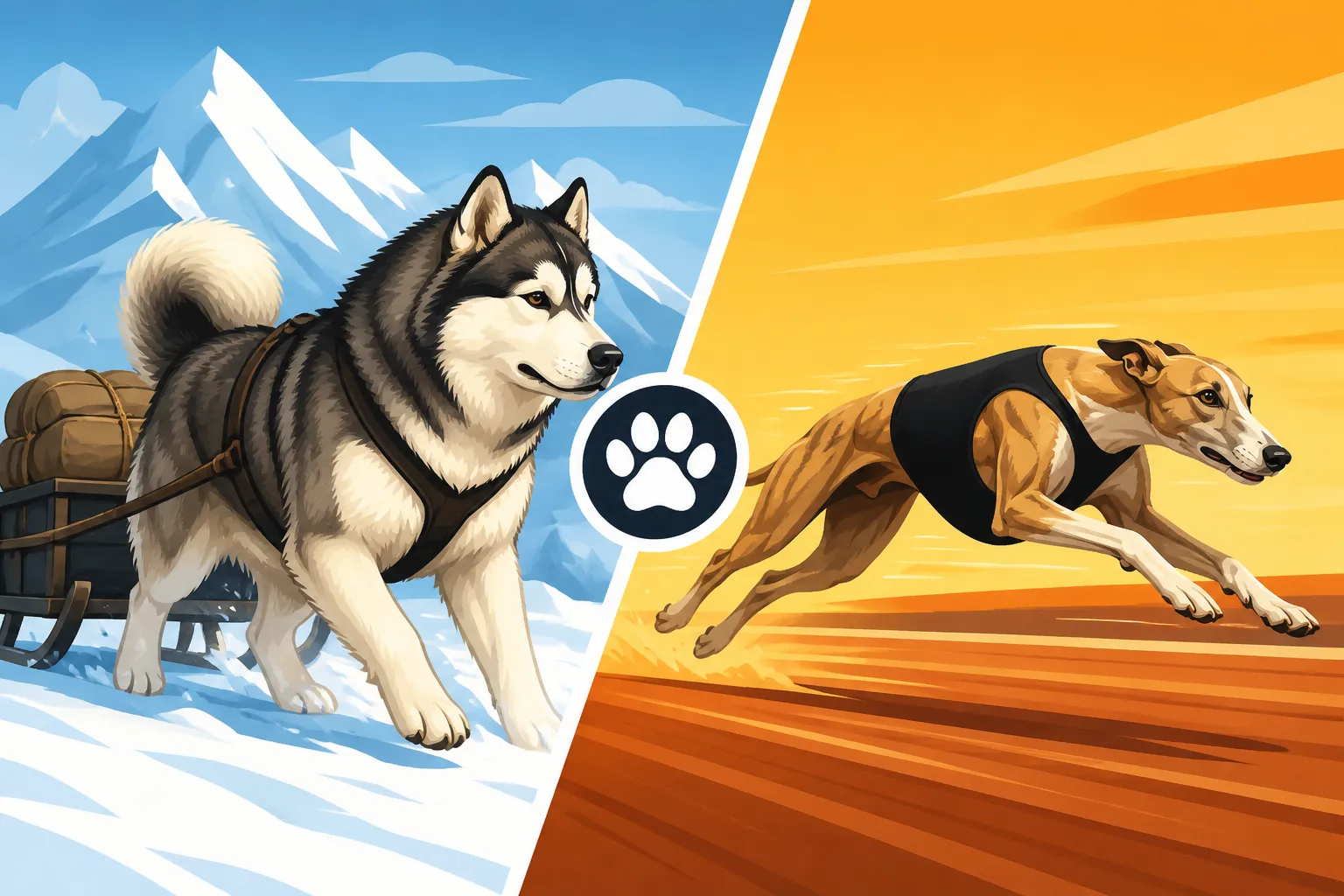
Freight, Not Speed: What Separates a Malamute From a Racing Dog
It’s a common sight: someone sees an Alaskan Malamute and immediately asks if they're a sled dog, picturing a blur of fur flying across snow at breakneck speed. While Malamutes are undeniably incredible sled dogs, their strength lies not in racing against the clock, but in their unwavering ability to pull heavy loads over vast distances. This guide will take a deep dive into what truly sets the Alaskan Malamute apart from traditional racing breeds, revealing their unique purpose and the incredible legacy of freighting that shaped them.
The Ancestral Purpose: Heavy Haulers of the Arctic
To truly understand an Alaskan Malamute, you have to look back to their roots, forged in the harsh, unforgiving landscapes of the Arctic. These aren't dogs bred for a sprint around a track or a short, fast dash. They were vital partners in survival, bred by indigenous peoples for a purpose far more profound than speed: to move heavy freight, reliably and without fail, across frozen expanses where life itself depended on their endurance.
The Mahlemut and Their Way of Life
Imagine living in a place like Kotzebue Sound, where the Mahlemut people thrived for centuries. Their existence was intrinsically linked to the land and its resources, and their dogs were an extension of their ability to survive. These weren't pets in the modern sense; they were working animals, cherished companions, and absolutely essential to daily life. The Mahlemut relied on their dogs to hunt large game, haul supplies, and transport families and their possessions from one seasonal camp to another. This wasn't about covering ten miles in an hour; it was about covering hundreds of miles over weeks or months, through blizzards and over treacherous terrain, with precious cargo in tow. The dogs needed to be strong, resilient, and intelligent problem-solvers. They needed to conserve energy and keep moving, day after day. This historical context illuminates why The Mahlemut of Kotzebue Sound Bred the Alaskan Malamute specifically for power and stamina.
The Mahlemut selectively bred dogs that could withstand extreme cold, had immense physical strength, and possessed a temperament that allowed them to work harmoniously in a team, often without direct supervision. They were looking for fortitude, not flash. They chose dogs with thick coats, broad chests, and powerful legs – traits that scream "heavy hauler" rather than "sprinter." Their lives depended on these dogs, meaning there was no room for traits that didn't directly contribute to their ultimate purpose of freighting.
A Dog Built for Survival, Not Sprinting
When you look at a Malamute today, you're essentially seeing a blueprint for survival. Every physical and mental trait has been honed over generations for the specific task of pulling heavy loads. They possess an efficient metabolism that allows them to extract maximum energy from their food, crucial when rations might be scarce during long expeditions. This efficient metabolism also means they generally eat less than you might expect for their size, which can be quite surprising to new owners. Their dense double coat isn't just for show; it's a critical piece of insulation that allows them to thrive in sub-zero temperatures, often choosing to sleep curled up on the snow rather than in a shelter.
Their gait is another tell-tale sign of their purpose. A Malamute moves with a powerful, rhythmic stride, designed for steady, sustained effort rather than bursts of speed. It's a ground-covering, economical movement that allows them to maintain momentum with a heavy sled behind them. They aren't built for the quick acceleration and high top speeds you see in lighter, leaner racing breeds. Instead, they excel at moving massive amounts of weight slowly but surely, covering long distances with unflagging resolve. This deep-seated drive to pull is so ingrained that many pet Malamutes still exhibit a strong desire to pull anything from a wagon to their owner on a leash – it's just who they are. Pulling Is the Only Job an Alaskan Malamute Really Wants is not an exaggeration for this magnificent breed.
Physical Design: Built for Power, Not Pace
The physical characteristics of an Alaskan Malamute are a testament to their heritage as freighting dogs. Every aspect, from their bone structure to their coat, is designed for strength, endurance, and resilience in the face of extreme conditions, not for aerodynamic speed.
Sturdy Bones and Deep Chests
Take a moment to truly observe a Malamute. They are large, powerfully built dogs, typically weighing significantly more than a racing sled dog. What an Alaskan Malamute Actually Weighs often comes as a surprise to those unfamiliar with the breed, often ranging from 75 to over 100 pounds for males, and a bit less for females. Their bones are thick and dense, providing a strong framework for powerful muscles. This heavy bone structure adds to their overall mass and stability, allowing them to anchor themselves and move substantial weight without buckling. They are, in essence, canine powerhouses.
Their chests are deep and broad, housing large lungs and a strong heart. This anatomical design provides the capacity for excellent cardiovascular endurance, essential for prolonged physical exertion. A deep chest doesn't just look impressive; it's a functional adaptation for taking in large volumes of air with each breath, fueling their muscles as they pull for hours on end. Compare this to the sleek, more angular build of a sprint racer, whose body is designed for minimal drag and maximum acceleration. The Malamute's robust build is about maximum traction and sustained force. They truly embody the phrase "built like a tank," and that's precisely what was needed for their original job.
The Insulating Power of Their Double Coat
Their coat is another defining feature, perfectly engineered for survival in sub-zero temperatures. An Alaskan Malamute boasts a dense double coat: a soft, woolly undercoat that acts like a thermal blanket, and a coarser, guard-hair outer coat that is water-repellent and protects against snow, ice, and wind. This combination creates an incredibly effective insulation system, allowing them to maintain their body temperature even when temperatures plummet far below freezing.
This remarkable coat, while beautiful, requires significant care, especially during their infamous "coat blows" when they shed huge amounts of undercoat, sometimes twice a year. If you've never experienced a Malamute shedding, you're in for a surprise – it's an event! You'll find yourself reaching for deshedding tools and perhaps even browsing Chewy for industrial-strength vacuums. The Months an Alaskan Malamute Blows Its Coat are a well-known phenomenon among owners. This shedding cycle is part of their natural adaptation, allowing them to regulate their warmth between seasons. This thick, insulating coat is wonderful for keeping warm, but it's not ideal for dissipating heat quickly, making them highly susceptible to overheating in warmer climates or during intense, high-speed exertion.
Temperament and Drive: The Independent Work Ethic
Beyond their physical attributes, the Malamute's temperament and innate drives further distinguish them from racing dogs. They possess a unique blend of independence, intelligence, and an enduring desire to work, all geared towards their historic role as freighting animals.
Steadfast Determination and Stamina
A Malamute's work ethic isn't about immediate gratification or a mad dash to the finish line. It's about a deep-seated determination to keep moving, regardless of obstacles. When pulling a heavy sled, they demonstrate incredible stamina and a methodical pace. They understand that the goal is not speed, but consistent forward momentum. This means they are less likely to burn themselves out in a burst of energy and more likely to conserve their strength for the long haul. This steadfastness is a hallmark of the breed, a quiet resolve that underpins their working spirit.
This enduring stamina translates into a need for consistent, meaningful exercise in a pet home. A quick romp in the yard isn't enough for a Malamute. They need outlets that engage both their bodies and minds, ideally activities that involve pulling or long-distance movement. Think long hikes, backpacking (carrying their own gear!), or recreational sledding or carting. If their need for work isn't met, they can become bored and destructive, channeling that powerful drive into less desirable activities, like digging up your prize-winning roses or remodeling your furniture. Providing constructive outlets for their natural inclinations is key to a happy, well-adjusted Malamute.
The Independent Thinker of the Trail
Another crucial aspect of the Malamute temperament is their intelligence and independent thinking. When negotiating treacherous ice or deep snow with a heavy load, the lead dog couldn't always wait for a command from the musher. They needed to make quick, sensible decisions to keep the team and the cargo safe. This has bred a dog that thinks for itself, which can sometimes be mistaken for stubbornness by owners expecting instant obedience. They're not being disobedient; they're often evaluating whether your command is the most efficient or logical course of action from their perspective!
This independent streak means that training a Malamute requires patience, consistency, and a clear understanding of their motivations. Forceful methods are often counterproductive, as a Malamute will simply shut down or become defiant. Positive reinforcement, engaging their intelligence with varied tasks, and building a strong, respectful partnership are far more effective. They thrive on having a job, even if that job is simply carrying a pack on a hike or participating in a weight pull competition. Understanding this ingrained independence is vital for any Malamute owner, as it’s a core part of what makes them such fascinating and capable companions.
Comparing Them to Racing Breeds: The Fundamental Differences
To fully appreciate the Alaskan Malamute's unique role, it's helpful to compare them directly to the archetypal racing sled dogs, like the Siberian Husky, and understand where their paths diverge significantly in terms of purpose and physical design.
Malamute vs. Siberian Husky: A Tale of Two Jobs
When people picture a sled dog, they often conjure an image that blends the Malamute and the Siberian Husky. While both are Arctic breeds with ancient working histories, their specific jobs couldn't be more different. The Siberian Husky was bred for speed and endurance over light loads, often in relay races where quickness was paramount. They are typically smaller, lighter-boned, and more agile, with a sleek, athletic build designed for covering ground rapidly. Their energy level is often higher, and they can be incredibly fast over short to medium distances. The Malamute, on the other hand, is the marathon runner of the sled dog world, built for pulling immense weight over vast, grueling distances at a steady, unwavering pace.
| Feature | Alaskan Malamute | Siberian Husky |
|---|---|---|
| Primary Job | Heavy freight hauling, endurance | Light load racing, speed, stamina |
| Build | Large, heavy-boned, powerful | Medium-sized, lighter-boned, athletic |
| Weight | Typically 75-100+ lbs (male) | Typically 45-60 lbs (male) |
| Pace | Steady, methodical, powerful | Fast, agile, high-energy |
| Musculature | Broad, deep chest; thick, strong muscle | Lean, well-defined, built for speed |
| Energy | Sustained, long-duration effort | High, bursts of speed, often restless |
| Gait | Ground-covering, efficient stride | Quick, fluid, sometimes bouncy |
| Coat | Very dense, insulating double coat | Dense double coat, slightly less bulky |
| Eyes | Always brown (breed standard) | Blue, brown, bi-colored (common) |
This table clearly illustrates the divergent evolutionary paths of these two magnificent breeds. While both are resilient and powerful, their physical and psychological toolkits are specialized for entirely different challenges. Understanding The Alaskan Malamute Against the Siberian Husky highlights the unique genius of each breed for its intended purpose.
The Speed vs. Strength Equation
It boils down to a fundamental equation: speed versus strength. A Malamute prioritizes strength. Their massive bone structure, deep chest, and robust musculature are all optimized for the mechanics of pulling heavy loads. They can generate incredible power, allowing them to break free from frozen ground and maintain traction with hundreds of pounds behind them. They might not win a sprint race, but they can move mountains, metaphorically speaking, given enough time and motivation.
Racing dogs, conversely, prioritize speed and agility. Their lighter frames and longer legs allow for explosive starts and sustained high speeds. They're built for rapid bursts of energy and efficient glides over snow, covering ground quickly. While they can pull a sled, they aren't designed to move the same sheer volume of weight as a Malamute. It's like comparing a tractor to a sports car – both are powerful vehicles, but designed for entirely different tasks. The Malamute's design ethos is all about brute force and tireless effort, a true testament to the challenges of Arctic freighting. How Much Weight a Malamute Can Pull is astonishing when you see it in person, showcasing their unparalleled strength.
The Practical Implications for Owners: What This Means for Your Malamute
Understanding the Malamute's freighting heritage isn't just a history lesson; it has profound implications for how we care for and interact with these dogs in a modern home. Their needs are deeply rooted in their past, and acknowledging this is key to providing them with a fulfilling life.
Meeting Their Need for Work and Exercise
Because they were bred for such rigorous work, Alaskan Malamutes have an inherent need for physical and mental stimulation. Simply letting them out in a backyard for a few minutes isn't enough. They thrive on purposeful activity, especially anything that involves pulling or sustained effort. This doesn't mean you need to become a competitive musher, but it does mean getting creative with their exercise routine. Long, brisk walks, hikes (especially with a dog backpack for them to carry!), and activities like bikejoring or urban mushing with a cart can fulfill their innate desire to pull. Even a heavy-duty wagon can provide a satisfying "job."
Many owners find that joining local dog sports clubs or freighting groups provides an excellent outlet. The physical exertion isn't just about burning off energy; it's about engaging their minds and giving them a sense of purpose. A bored Malamute is often a destructive Malamute, and they are incredibly adept at finding ways to entertain themselves, often at the expense of your garden, furniture, or sanity. Consider robust toys and puzzles, maybe even finding some on Chewy, to keep them mentally stimulated when you can't be actively working with them. Remember, they have an Efficient Metabolism That Surprises Every New Malamute Owner, so while they need a lot of activity, they don't necessarily need an exorbitant amount of food compared to some other large breeds.
Understanding Their Pace on the Trail
When taking your Malamute out for walks or adventures, it's important to adjust your expectations regarding pace. If you're hoping for a fast-paced jogging partner, you might be surprised. Malamutes prefer a steady, powerful trot that they can maintain for hours, rather than a quick sprint. They're built for endurance, not speed. Trying to force a Malamute into a constant, fast pace can be frustrating for both of you and isn't aligned with their natural gait or physical capabilities. Embrace their methodical approach; it's a feature, not a bug!
Moreover, their thick coats, while perfect for winter, make them highly susceptible to overheating in warmer weather. This means adjusting their exercise schedule dramatically during summer months, opting for early morning or late evening walks when temperatures are cooler. Always carry plenty of water and be vigilant for signs of overheating. You'll quickly learn that a Malamute's pace is dictated by their heritage and their incredible adaptations to cold climates, not by a desire to win a race. Understanding and respecting this natural pace will lead to much more enjoyable and safer outings for both you and your powerful companion. For safety and peace of mind, especially with their strong prey drive and independent nature, they should always be on a leash or in a secure, Malamute-proofed area.
The Evolution of the Breed: From Freight to Family
The journey of the Alaskan Malamute from indispensable working dog in the Arctic to beloved family companion is a fascinating one, marked by challenges and dedicated efforts to preserve their unique qualities. Even as their primary roles have shifted, their foundational traits as freighting dogs remain.
The Gold Rush and Near Extinction
The late 19th and early 20th centuries brought significant changes to Alaska, particularly with the Gold Rush. Suddenly, there was an immense demand for sled dogs to transport prospectors, supplies, and gold. This created a tumultuous period for indigenous dog breeds, including the Malamute. Many of the native dogs were crossbred indiscriminately with other incoming breeds—everything from St. Bernards to German Shepherds—in attempts to create faster or stronger dogs for various purposes. The purity of the original Mahlemut dogs was severely threatened, and the breed teetered on the brink of extinction as distinct lines blurred.
Thankfully, some dedicated individuals recognized the unique and invaluable qualities of the pure Alaskan Malamute. They saw the potential loss of a truly magnificent working animal and began efforts to preserve the original type. These pioneers sought out the remaining pure specimens from remote villages and began careful breeding programs to restore the breed's integrity. How the Malamute Was Rebuilt After the Gold Rush is a testament to the passion of these early fanciers who understood the importance of maintaining the breed's distinct characteristics. This historical challenge underscores the resilience of the Malamute and the commitment of those who valued its unparalleled freighting capabilities.
Modern Day Malamutes: Still Built to Pull
Today's Alaskan Malamute, whether it’s a show dog, a working freight dog, or a cherished family pet, still carries the genetic blueprint of its ancestors. The physical and temperamental traits that made them exceptional freight haulers are still present and contribute to their unique charm and challenges. While most Malamutes may never pull a sled across the Alaskan wilderness, their desire to pull, their need for purposeful activity, and their robust build are undeniable.
Modern breeders, enthusiasts, and organizations like the Alaskan Malamute Club of America strive to maintain the breed standard, which emphasizes the characteristics of a freighting dog: a powerful, well-boned body, an enduring spirit, and a dense, protective coat. These dogs are celebrated for their strength, loyalty, and intelligence. For pet owners, this means embracing their Malamute's natural instincts. Providing opportunities for "work" – even if it's just a long walk with a heavy backpack you bought from Chewy, or participating in a recreational weight pull event – is crucial for their well-being. By understanding and honoring their heritage, we can provide these magnificent dogs with lives that truly reflect their impressive history and inherent capabilities, ensuring they continue to thrive as the ultimate freighting dogs.
Disclaimer
This article is for general informational purposes only and does not constitute professional advice. Laws, prices and regulations vary by location and change over time. Consult a qualified professional for guidance on your specific situation.