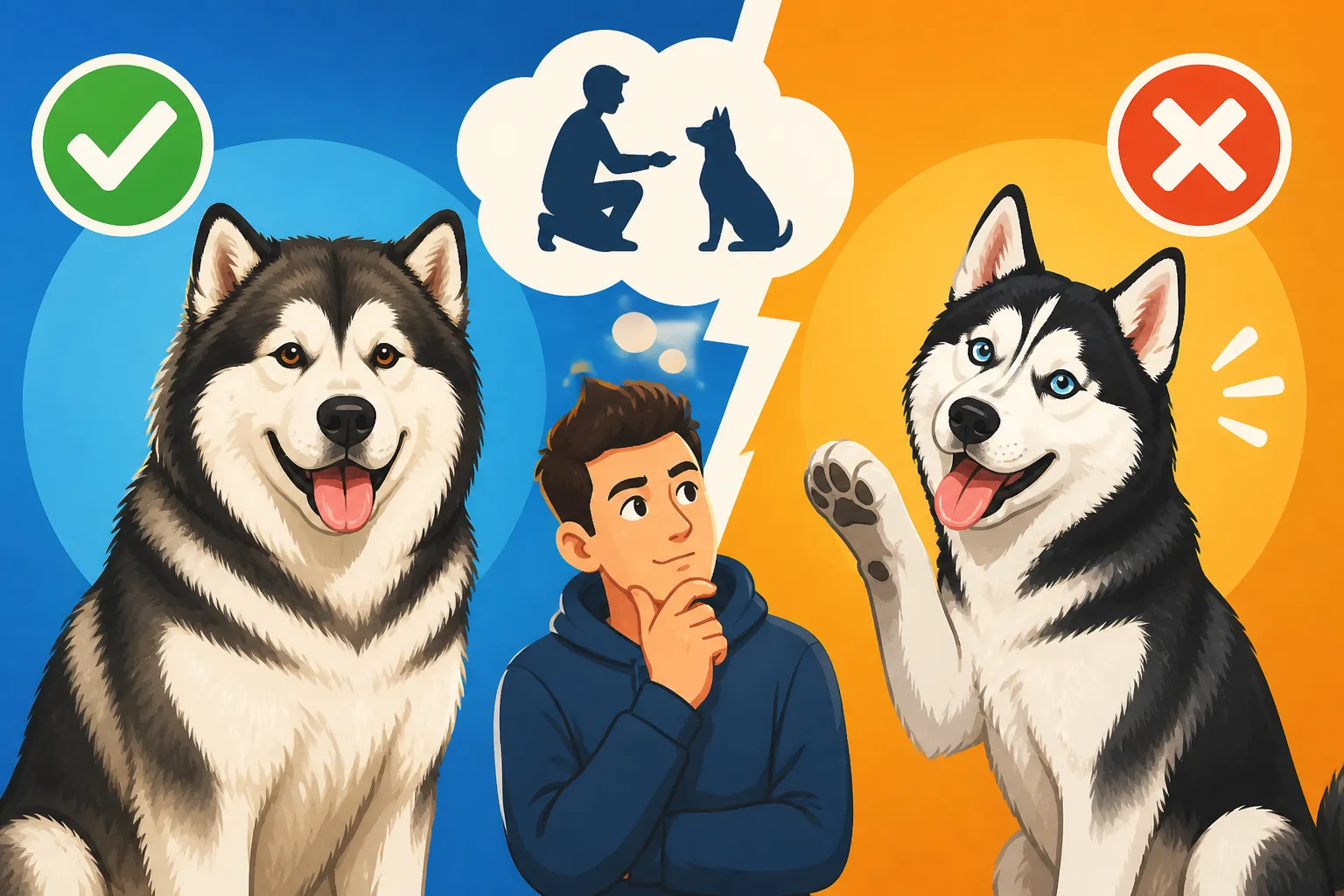
Whether a Malamute Is Easier to Train Than a Husky
A Malamute may learn a cue quickly and still decide that following it is optional; a Husky may do the same for entirely different reasons. That can make both breeds feel stubborn, especially when you’re comparing them as a first northern dog. This guide explains how their working instincts affect training, where each breed may feel easier, and how to set realistic expectations.
Is an Alaskan Malamute Easier to Train Than a Husky
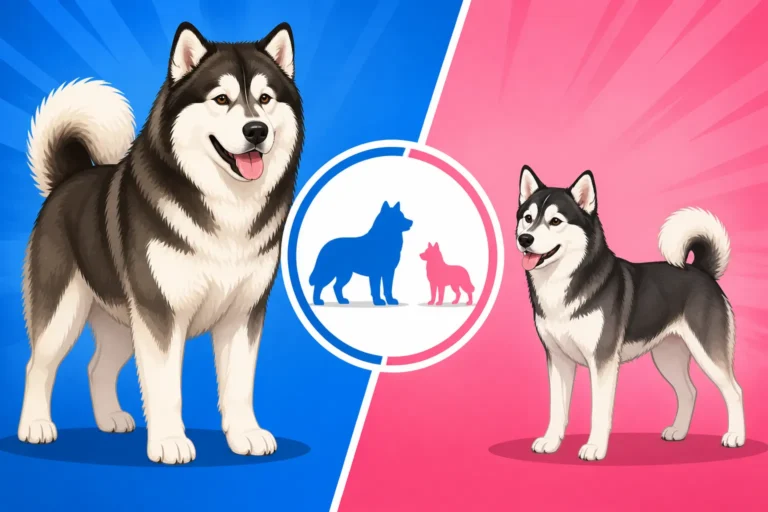
There isn’t a reliable one-word winner. Both breeds are intelligent, independent northern dogs bred to work with people, but not to respond to every instruction like a highly handler-focused breed. A Malamute may be easier for some owners to engage in steady, practical work; a Husky may be easier for others to motivate with movement and fast-paced games. The individual dog, the task, and the training setup matter more than the breed label alone.
It also helps to separate learning from obedience. A dog can understand “come” perfectly and still choose to keep sniffing, running, or investigating. Owners sometimes call that stubbornness, but it may be a mix of competing rewards, a weak training history, distraction, or a behavior that hasn’t yet been practiced in that setting.
What people mean by “easy to train”
When someone says a dog is easy to train, they might mean the dog learns new cues quickly, stays focused around distractions, enjoys repeating exercises, or responds reliably the first time. Those are different skills. A Malamute might catch on to a new household routine quickly but lose interest in repetitive drills. A Husky might happily learn a sequence of movement-based tasks while finding a quiet stay exercise less appealing.
So ask a more specific question: Easy to train for what? A dog that walks politely on a familiar route may still pull when it sees a squirrel. A dog that knows a cue in the kitchen may not understand that it applies at a busy park. Training is not just teaching the word; it is helping the dog learn what the word means in different places, with different distractions, and at different levels of excitement.
This is one reason breed comparisons can be frustrating. You may watch a friend’s Husky pick up a trick in minutes while your Malamute seems unimpressed, or hear that Malamutes are calm and then discover yours is a determined explorer. For a broader look at their different working backgrounds, see Freight, Not Speed: What Separates a Malamute From a Racing Dog and The Alaskan Malamute Against the Siberian Husky.
How their working backgrounds shape training
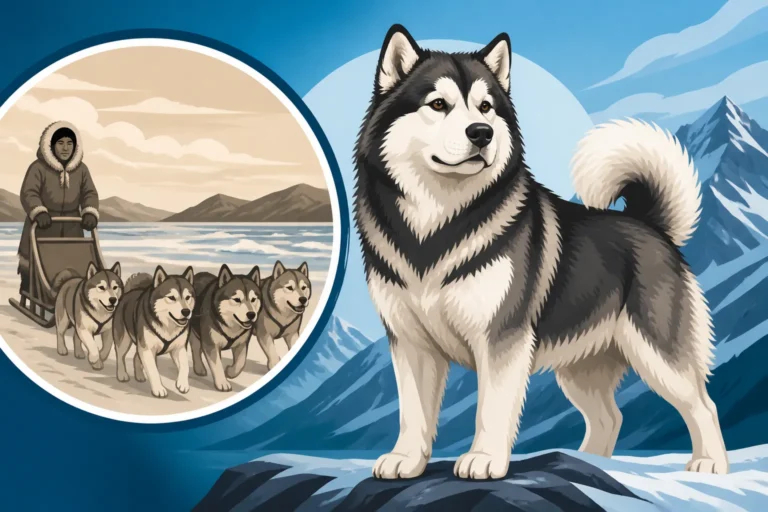
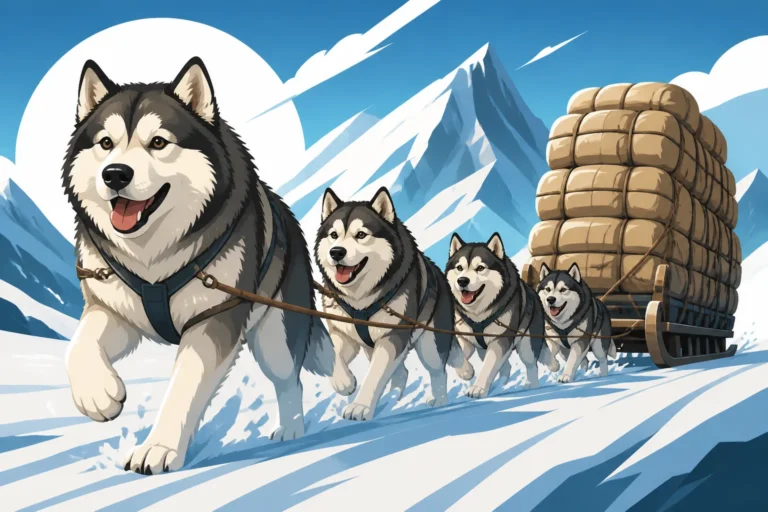
Malamutes were developed as powerful freight dogs, suited to pulling loads over distance and working alongside people. That history can show up as strength, stamina, and a preference for purposeful activity. Some Malamutes respond well when training has a practical feel: walking with a loose leash, carrying a suitable pack once mature and conditioned, or learning calm routines that make outings more manageable. Their size and strength can also make early leash habits especially important.
Siberian Huskies were developed for efficient travel and speed in a team. Many are highly energetic and may find movement itself rewarding. That can make running games, directional cues, or short training sessions with variety appealing. But energy is not the same thing as automatic cooperation. A Husky who is excited by the world may have a harder time disengaging from something interesting, even if the cue is familiar.
These are tendencies, not guarantees. A Malamute can be playful and quick, and a Husky can be thoughtful and steady. Neither breed’s history means you can skip training; it helps explain why a dog may prefer one kind of work over another. If you’re trying to choose between them, Alaskan Malamute or Siberian Husky for a First Sled Breed offers another useful angle on what day-to-day ownership can involve.
| Training challenge | Malamute tendencies | Husky tendencies | What helps either dog |
|---|---|---|---|
| Repetitive exercises | May lose interest if drills feel pointless | May disengage if there’s little variety | Keep sessions short and change the activity |
| Leash walking | Strength can make pulling difficult to manage | Forward energy can make pulling rewarding | Reinforce slack leash and practice before excitement peaks |
| Recall | May weigh the cue against a more appealing activity | May be strongly drawn to movement or exploration | Use a secure area and build recall gradually |
| Motivation | May enjoy practical tasks and valuable rewards | May respond well to movement, play, and variety | Find what your individual dog genuinely values |
| Working around distractions | Can focus on a goal but may persist toward it | Can be quick to notice and pursue activity | Start at an easy distance and increase difficulty slowly |
Which Breed May Feel Easier in Everyday Training
For many households, everyday training means more than teaching tricks. It includes walking without dragging a person down the sidewalk, settling when visitors arrive, waiting at a door, leaving food or wildlife alone, and coming back when called. A dog’s response depends on practice and environment, but the demands of these routines can feel different with a Malamute and a Husky.
Leash manners and pulling
Both breeds can pull, and both can become powerful enough that a poorly managed walk is stressful. A Malamute’s size and strength may make pulling particularly challenging for an owner who has not practiced leash skills from puppyhood. A Husky may pull because forward motion and exploring are intensely rewarding. In either case, equipment alone won’t teach the dog what you want.
Begin in a low-distraction place. Reward your dog when the leash is loose, even if you’re only taking a few steps at first. If the leash tightens, pause or calmly change direction rather than letting the dog reach the thing it is pulling toward. Keep practice brief enough that both of you can succeed. A front-clip harness may help some handlers manage a strong dog, but it should be paired with training and fitted appropriately.
If pulling is the activity your dog loves most, a safe, age-appropriate pulling sport may give that instinct a constructive outlet. It does not replace leash manners; a dog still needs to walk safely in places where pulling is not appropriate. For ideas about channeling this drive, see Why a Pet Malamute Still Needs to Pull and The Alaskan Malamute in Skijoring. Avoid strenuous pulling with a growing dog, and ask your veterinarian when your dog is ready for higher-impact work.
Recall and off-leash expectations
Recall is a common sore spot for owners of both breeds. A dog may come when called in a quiet room and ignore the same cue outdoors when a trail, animal, or moving object is more exciting. That doesn’t necessarily mean the dog has forgotten. It means the cue has not yet become reliable under that level of distraction—or that the competing reward is stronger.
Practice recall on a long line in a secure area. Call once in a cheerful voice, reward generously when your dog returns, and avoid calling repeatedly when you know the dog is unlikely to respond. Repeatedly saying the cue without follow-through can teach a dog that it is background noise. Start with easy wins and gradually practice around mild distractions before trying harder environments.
For both breeds, a fenced area or long line is often a more realistic choice than trusting off-leash recall in an unsecured place. A reliable response is built through repetition, but no amount of practice makes every environment risk-free. The detailed guides Why an Alaskan Malamute Will Never Have a Reliable Recall and Why an Alaskan Malamute Can Never Be Off Leash explain why owners should plan for management as well as training.
Focus around distractions
A dog can be attentive at home and scattered outdoors. New smells, dogs, wildlife, traffic, and open space can compete with your voice. The answer is not to demand a long session in the most exciting place you can find. Instead, make the task easier: increase your distance from the distraction, ask for a simple behavior, reward it, and leave before your dog is overwhelmed.
Think of a walk along a quiet residential street as a different training environment from a crowded park. If your dog can respond in the first setting but not the second, that is useful information—not proof that training has failed. You may need more distance, a better reward, shorter practice, or an easier starting point.
For reinforcement, some people use small food rewards, toys, or brief opportunities to sniff and move forward. A treat pouch or training supplies from a retailer such as Chewy may help keep rewards close at hand, but the important part is choosing something your dog actually values and delivering it promptly. If food is not motivating in a particular moment, reduce the distraction or try another reward rather than turning the session into a contest.
How to Train Either Breed More Successfully
A good plan works with the dog in front of you. If your Malamute is most interested in sniffing, use that as a reward after a brief check-in. If your Husky loves a chase-style game, use play thoughtfully and safely. Training tends to feel less like a battle when the reward fits the dog and the exercise has a clear purpose.
Use short, useful sessions
Northern breeds often do better with training that is engaging and varied than with long stretches of repeated commands. A few minutes of practice can be enough to teach a new skill or refresh an old one. Finish while your dog is still interested, and return to the exercise later rather than pushing until attention falls apart.
Build useful behaviors into ordinary routines. Ask for a pause before opening the door. Reward a check-in during a walk. Practice settling on a mat while you prepare dinner. These small repetitions help the dog learn that cues matter in real life, not only when a training pouch appears. If you are working on a difficult behavior, break it into manageable pieces. For example, reward a calm look toward another dog at a distance before expecting your dog to walk past one.
You can use a treat pouch, a toy, or another reward that is easy to deliver consistently. Chewy may be one place owners look for everyday training supplies, but don’t assume a particular tool or treat will work for every dog. Introduce new treats gradually, especially if your dog has a sensitive stomach or a prescribed diet. Keep reward pieces small enough that they don’t crowd out meals.
Make the right behavior worthwhile
“Be more obedient” is too vague to train. Decide what you want the dog to do instead. If your dog jumps on visitors, practice keeping four paws on the floor and reward that. If the leash goes tight, reinforce walking beside you with slack in the line. If your dog bolts through the door, teach a pause at the threshold and manage access while the behavior is still developing.
Reward timing matters. If your dog comes back after you call, deliver the reward when the dog reaches you, not after a long delay. If you are teaching a settle, reward calm behavior while it is happening. Small, clear rewards help the dog connect the behavior with the outcome. Avoid punishing a dog for finally returning after a slow recall; you want coming back to remain a good choice.
Consistency across the household matters too. If one person lets the dog pull toward every smell and another stops whenever the leash tightens, the dog receives mixed information. Agree on a few cues and household rules, then practice them the same way. A dog does not need every family member to be a professional trainer, but predictable responses make learning easier.
Manage the setting while the skill develops
Training is not only about asking for behavior; it is also about arranging the environment so the dog can succeed. Use a secure fence, leash, or long line when needed. Put food out of reach. Create a quiet resting space. If your dog struggles around other dogs, choose a wider path or a quieter time for practice rather than insisting on a close pass.
Management is especially useful with young dogs and adolescents, whose impulse control is still developing. A puppy that can reach the open front door is being asked to resist a tempting opportunity before the behavior is reliable. A leash or gate prevents a dangerous mistake while you teach the desired routine. This is not “giving up” on training; it is protecting the dog and giving the lesson time to take hold.
If a behavior feels unsafe or keeps getting worse, work with a qualified, reward-based trainer who has experience with strong, independent breeds. Help is particularly valuable for leash reactivity, resource guarding, or conflict between household dogs. For broader expectations around temperament and ownership, What Alaskan Malamute Owners Wish They Had Known is worth reading alongside training guidance.
Choosing Between a Malamute and a Husky for Training
The better match is usually the dog whose needs and working style fit your household, not the breed that supposedly learns fastest. Ask what training will look like on an ordinary Tuesday: who handles the walk, how you will secure the yard, what exercise is realistic, and whether you enjoy repeating small lessons patiently. A breed may be clever and still need a great deal of structure.
Questions to ask about your own lifestyle
Consider your physical ability to manage a strong dog, your access to safe exercise, and the amount of time you can spend on daily training. If you live somewhere with many loose cats or wildlife, management and a secure leash plan matter. If your household expects a dog to come when called in an open park, both breeds may require a rethink of that expectation.
Think about what motivates you as much as what motivates the dog. Some people enjoy structured walks, gear, and purposeful outdoor activities. Others prefer training games and frequent variety. Neither is automatically better, but a mismatch can make everyday practice feel exhausting. A dog who needs meaningful activity will not become easy to live with simply because the owner hoped for a laid-back companion.
If possible, meet adult dogs and talk with knowledgeable owners or breeders about the specific lines and individuals you are considering. Ask what the dogs are like at home, how they behave on leash, and what kinds of training have worked for them. Puppy temperament can offer clues, but it cannot promise a particular adult personality or level of responsiveness.
A practical bottom line
A Malamute is not universally easier to train than a Husky, and a Husky is not automatically more difficult. A Malamute may suit an owner who can provide patient, practical training and manage substantial strength. A Husky may suit someone who enjoys energetic, varied activities and can consistently manage a dog drawn to movement and exploration. Either may be rewarding; either may also test your patience.
Before deciding, picture the least glamorous parts: practicing leash skills in the rain, using a long line instead of unclipping it, reinforcing the same door routine repeatedly, and adjusting plans when your dog is too excited to focus. That is where successful training is built. The dog that feels “easier” is often the one whose needs you understand and whose training you can sustain.
Disclaimer
This article is for general informational purposes only and does not constitute professional advice. Laws, prices and regulations vary by location and change over time. Consult a qualified professional for guidance on your specific situation.