Why Force Fails on an Alaskan Malamute
Many Alaskan Malamute owners find themselves utterly baffled and often frustrated when traditional, force-based training methods simply don't work, or worse, backfire spectacularly. It's a common struggle, leaving dedicated owners feeling like they're hitting a brick wall with a dog that seems to delight in ignoring them. This comprehensive guide is here to shed light on precisely why force fails with these magnificent, ancient dogs and to offer a path toward more effective, positive, and relationship-building training approaches that truly resonate with the Malamute spirit.
The Malamute Psyche: An Independent Thinker, Not a Subordinate
To understand why force-based training falls flat with an Alaskan Malamute, you first have to appreciate the core of their being. These aren't your typical "eager to please" retrieving breeds; they come from a long line of dogs bred to make independent decisions in life-or-death situations, often miles from human oversight. Their intelligence is immense, but it's coupled with a profound sense of self-preservation and a natural skepticism towards being told what to do without a clear "what's in it for me?"
Built for Partnership, Not Obedience
The Mahlemut people of the Arctic, who originally developed the Alaskan Malamute, didn't breed for strict obedience in the military sense. They needed partners: dogs capable of navigating treacherous terrain, finding caches of food, and pulling heavy loads for days on end, sometimes without direct human command. A dog that unquestioningly followed every instruction, even when that instruction might lead to danger, wouldn't have survived the harsh environment of The Mahlemut of Kotzebue Sound Bred the Alaskan Malamute.
This historical role cemented a genetic predisposition for partnership rather than blind servitude. When you try to force a Malamute into compliance, it clashes fundamentally with their genetic code. They perceive it as an infringement on their autonomy, not a directive to follow. They don't rebel out of spite; they rebel out of instinct, thinking "Why should I?" or "This doesn't make sense." Trying to dominate a Malamute often leads to a standoff, where their inherent strength of will meets yours, and trust erodes in the process.
The Cost of Breaking Trust
Force-based methods often rely on startling corrections, physical manipulation, or intimidation. While these might elicit a temporary cessation of unwanted behavior in some breeds, with a Malamute, they typically breed resentment and fear, not respect. A Malamute thrives on a relationship built on mutual understanding and positive reinforcement. If they perceive you as a threat or as unpredictable, their trust in you will shatter.
Imagine working with someone who constantly yells at you or physically pushes you into doing things. You might do them, but you won't like it, and you certainly won't trust that person or want to work with them. The same applies to Malamutes. Once that trust is broken, it's incredibly difficult to regain, and without it, your Malamute will become less responsive, more evasive, and potentially more prone to shutting down or developing defensive behaviors. This can be particularly heartbreaking for owners who simply want a well-behaved companion but inadvertently undermine their relationship with harsh methods.
Intelligence and Selective Deafness
Malamutes are incredibly intelligent. They learn quickly, but they also learn you quickly. They understand patterns, anticipate consequences, and are masters of selective hearing. When a Malamute appears to be "stubborn" or "ignoring" you, it's often not because they don't understand the command; it's because they've weighed the command against their current desires or perceived benefits and decided it's not worth their effort at that moment. This is where the common phrase "Malamute deafness" comes from.
If a force-based method is employed, they might learn to avoid the punishment, but they rarely learn to perform the desired behavior willingly. Instead, they might become adept at avoiding situations where they might be corrected, or they might simply shut down, offering no behavior at all. Their intelligence makes them resistant to crude methods, as they quickly discern the true motivation behind the action (fear avoidance) rather than internalizing the desired behavior as something inherently valuable or rewarding. This is a critical distinction, as surface-level compliance achieved through fear is fragile and does not build a truly trained or happy dog.
A History Forged in Collaboration, Not Coercion
Understanding the deep historical roots of the Alaskan Malamute is paramount to grasping why force-based training is so ill-suited for them. These dogs weren't bred to heel perfectly on a leash in a suburban park; they were bred for survival in one of the most unforgiving environments on Earth, alongside humans who relied on their judgment and strength.
Ancient Origins and Working Ethos
The Alaskan Malamute's lineage traces back thousands of years to the Arctic, where they partnered with the Mahlemut Inuit people. Their primary role was to pull heavy sleds laden with supplies, often for long distances and over challenging terrain, assisting in hunts, and generally being integral to the survival of the community. This wasn't a master-slave dynamic; it was a collaborative effort between human and dog. The Mahlemut people respected their dogs' abilities and understood that a dog that could think for itself was often the difference between life and death.
This ancient working ethos is embedded in their DNA. They thrive on having a job, feeling useful, and engaging their powerful bodies and minds. Trying to suppress these instincts with force is like trying to change the tide with a spoon; it's futile and frustrating for everyone involved. Instead, successful training taps into this working drive, redirecting it into productive and enjoyable activities. Pulling Is the Only Job an Alaskan Malamute Really Wants highlights this innate need, showing that if you ignore this, you're fighting against a powerful natural instinct.
Survival Demanded Independence
Imagine a team of Malamutes navigating a blizzard, pulling a sled with crucial supplies. If the lead dog blindly followed a command that would lead them over a hidden crevasse, the entire team and their human companions would perish. Therefore, dogs that could assess the situation, make independent decisions, and even challenge a human's judgment when necessary were prized. This fostered a breed characterized by self-reliance and a strong will.
This isn't stubbornness for the sake of it; it's a survival mechanism refined over millennia. When a Malamute resists a command, it's often because their instincts tell them something different, or they don't see the immediate value. Force can suppress this independence, but it doesn't eliminate it, and in doing so, it strips the Malamute of one of its most defining and admirable traits. It can also make them less resilient in genuinely challenging situations where their innate judgment might be beneficial.
The Modern Malamute's Genetic Blueprint
Even today, far removed from the frozen tundra, the genetic blueprint of the ancient freight dog persists in our modern Alaskan Malamutes. They are still powerful, intelligent, and independent problem-solvers. They are not designed to be robotic followers. This means that an owner expecting instant, unquestioning obedience will be perpetually disappointed if they rely on force.
Instead, a Malamute owner must learn to appreciate this unique temperament. It's about working with your Malamute, understanding their motivations, and making training a mutually rewarding experience. Techniques that leverage their intelligence and desire for activity, like The Alaskan Malamute in Skijoring or Whether a Malamute Can Carry a Backpack, are far more effective than trying to "break" their will. Failing to acknowledge this inherent nature is a disservice to the breed and sets the stage for training difficulties.
The Problem with Punishment-Based Training
When we talk about "force" in dog training, we're generally referring to methods that employ aversive stimuli to suppress unwanted behaviors. These can range from harsh verbal corrections and leash pops to more severe tools like prong collars or electronic collars (e-collars) used in a correctional manner. While proponents often claim these methods are quick and effective, they carry significant risks, especially with a breed as sensitive and independent as the Malamute.
Fear, Aversion, and Shutdown
The primary mechanism behind punishment-based training is fear. The dog performs (or ceases to perform) a behavior to avoid an unpleasant consequence. With a Malamute, this fear rarely translates into eager compliance. Instead, it often leads to aversion – they learn to dislike the training process, the tools, and sometimes even the handler. They might become reluctant to engage, or they might try to escape the situation entirely.
A Malamute who is constantly corrected or intimidated will often become a fearful dog. Fearful dogs are not confident, happy companions. They might display subtle signs of stress like lip licking, yawning, or averting their gaze, or they might become completely shut down, appearing unresponsive or disengaged. This "shutdown" can be mistaken for obedience, but it's actually a state of learned helplessness, where the dog has given up trying to understand or respond because any attempt might lead to punishment. This is particularly concerning, as a shut-down dog is not truly trained and can be unpredictable under stress.
The Fight, Flight, or Freeze Response
When faced with fear or perceived threats, all animals (including dogs and humans) instinctively resort to one of the "three Fs": fight, flight, or freeze. With Malamutes, force-based training can trigger any of these responses, none of which are conducive to effective learning or a healthy relationship.
- Fight: A Malamute, being a powerful and self-reliant breed, might choose to fight back against perceived aggression or pain. This can manifest as growling, snapping, or even biting, especially if they feel trapped or have a history of successful defense. This is a dangerous outcome that can lead to aggression.
- Flight: More commonly, a Malamute will attempt to escape the uncomfortable situation. This can mean bolting from a yard, pulling frantically on the leash, or simply avoiding the handler. This is a major factor in Why an Alaskan Malamute Will Never Have a Reliable Recall and why so many end up in rescues.
- Freeze: As mentioned, the "freeze" or "shutdown" response is a common Malamute reaction to overwhelming force. They might simply stop moving, become unresponsive, or appear completely detached. While this might seem like compliance, it's a sign of extreme stress and a complete breakdown of communication.
None of these responses contribute to a dog that is willingly learning or a relationship built on trust and cooperation.
Surface Compliance vs. True Understanding
Perhaps the most insidious problem with punishment-based training for Malamutes is that it often achieves surface compliance without true understanding. The dog learns to avoid the punishment in that specific context with that specific handler using that specific tool, but they haven't learned the desired behavior itself as something inherently valuable.
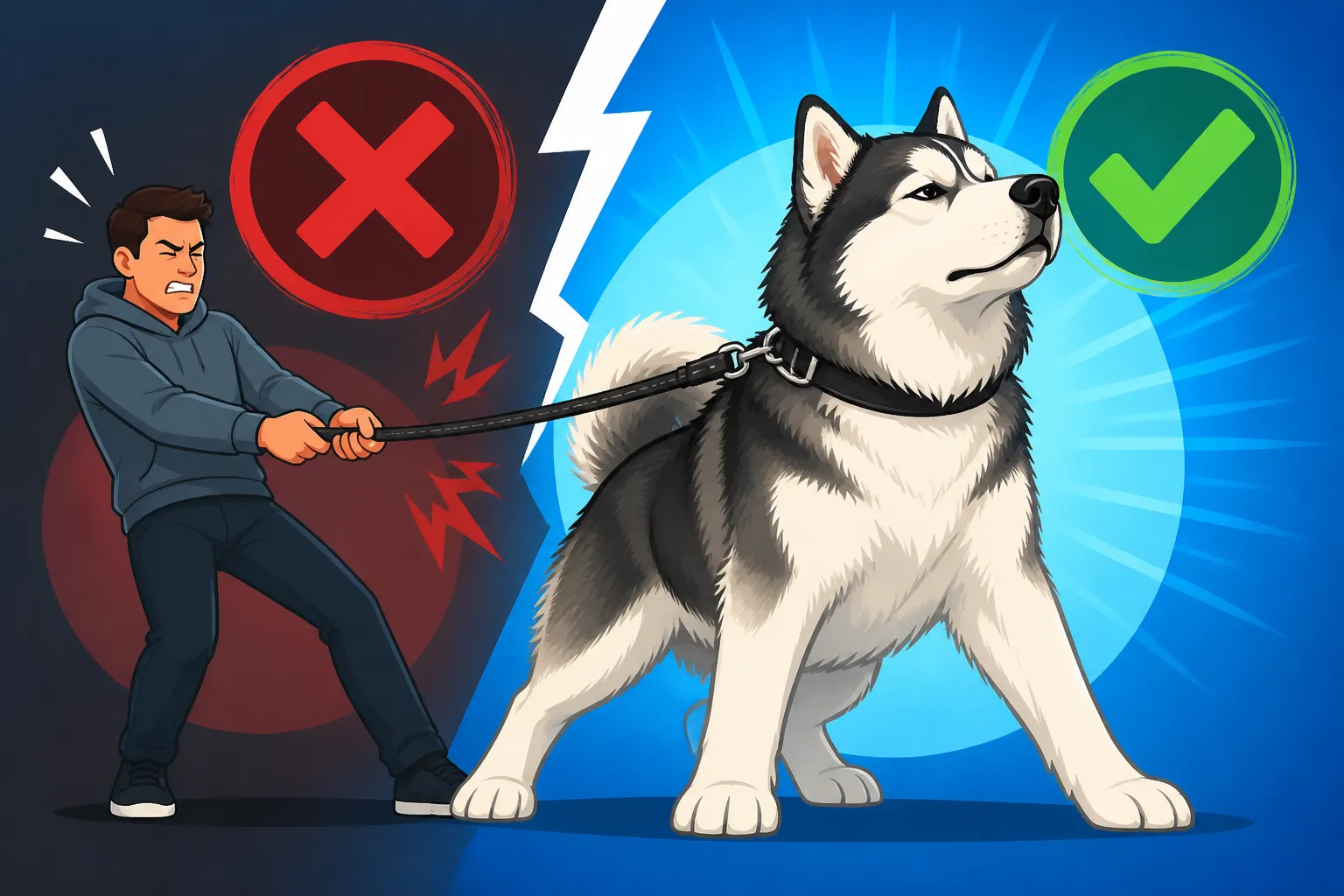
For example, a Malamute might stop pulling on a leash when a prong collar is on, because they associate pulling with discomfort. But take the prong collar off, or change the environment, and the pulling often returns with a vengeance. They haven't learned how to walk politely; they've only learned to avoid pain. This lack of true understanding means behaviors are often fragile, context-dependent, and prone to breaking down under distraction or stress. It's a far cry from a dog who chooses to offer a desired behavior because they've been positively reinforced for it and understand the reward.
How Malamutes Respond to Force
The specific ways Malamutes react to forceful training are often misunderstood, leading to a frustrating cycle for owners. Their responses are deeply rooted in their breed characteristics and historical purpose. It's not about being "bad" dogs; it's about being Malamutes.
Escalation of Stubbornness
Many owners mistake a Malamute's resistance to force as "stubbornness," and then feel compelled to escalate their own methods, inadvertently creating a vicious cycle. When a Malamute is pushed with force, their natural independence often kicks in, and they will dig in their heels, sometimes quite literally. They're not being malicious; they're asserting their autonomy. The harder you push, the harder they resist.
Think of it like trying to force a large, heavy object to move. If you push gently, it might budge. If you push aggressively, it often feels like it pushes back with equal force. Malamutes are built to resist external pressures (like pulling heavy loads), and this translates into their mental fortitude as well. A "battle of wills" with a Malamute is a battle you are unlikely to win in a way that builds a positive relationship. Instead, it will teach them to mistrust you and become even more resolute in their own decisions, which is why Why Harsh Handling Backfires on a Malamute is such an important topic.
Resource Guarding and Defensive Aggression
In some cases, prolonged or severe force can lead to more serious behavioral issues, such as resource guarding or defensive aggression. If a Malamute consistently feels threatened or perceives their safety (or even their food, toys, or space) as being at risk due to forceful interventions, they may learn to defend themselves or their possessions aggressively. This is particularly true if they feel cornered or have no other escape route.
A Malamute who snaps or growls when corrected might be labeled "aggressive," but often, it's a desperate attempt to create distance and stop the perceived threat. This is a critical point where training can go dangerously wrong. Instead of teaching, force can inadvertently create dangerous reactivity, making the dog less safe and harder to manage. This is a common concern that can spiral if not addressed with understanding and positive methods.
The Art of Shutting Down
On the other end of the spectrum from escalation is the Malamute's tendency to completely shut down. This is particularly common in sensitive individuals or those who have been repeatedly subjected to overwhelming pressure. A dog in shutdown will appear unresponsive, withdrawn, and may avoid eye contact. They might lie down and refuse to move, or simply stand still, looking detached.
While this might seem like the Malamute has finally "given in," it's a deeply concerning state. The dog isn't learning; they're simply enduring. They have effectively checked out emotionally and mentally. A shut-down Malamute is not a happy Malamute, nor are they truly learning the lessons you're trying to teach. This can also lead to a dog who is less likely to alert you to danger or engage in activities, essentially dimming their personality. This is often an owner's worst nightmare, as they want an engaged companion, not a shell.
| Training Method | Malamute Response | Outcome |
|---|---|---|
| Force/Aversion | Resistance, escalation, fear, resentment, shutdown | Broken trust, defensive aggression, learned helplessness |
| Positive Reinforcement | Engagement, willingness, focus, joyful cooperation | Strong bond, eager learner, confident behavior |
| Inconsistency | Confusion, selective hearing, testing boundaries | Unreliable behavior, frustration for owner |
| Lack of Mental/Physical Exercise | Destructive behavior, escape attempts, vocalizations | Boredom, anxiety, unwanted behaviors |
Building a Foundation of Trust and Respect
So, if force doesn't work, what does? The answer lies in building a relationship based on trust, respect, and positive reinforcement. This approach aligns perfectly with the Malamute's independent, intelligent, and partnership-oriented nature.
Positive Reinforcement: The Malamute's Language
Positive reinforcement is simply adding something desirable to increase the likelihood of a behavior repeating. For a Malamute, this means using things they genuinely value – high-value treats, praise, toys, access to favorite activities, or even a good run in the snow – to reward desired behaviors. When a Malamute performs an action and gets a reward, they are much more likely to repeat it, not out of fear, but out of a desire for that reward.
This method transforms training from a confrontation into a game, making learning enjoyable for both you and your Malamute. It fosters a dog that is eager to try new things and looks to you for guidance because positive things happen when they engage with you. This is the "what's in it for me?" that Malamutes inherently seek. For example, if you want your Malamute to come when called, lavish them with praise and a fantastic treat every single time they do, especially in distracting environments. Over time, they will associate coming to you with incredibly good things.
Understanding Their Motivators
Successful positive reinforcement hinges on truly understanding what motivates your individual Malamute. While food is often a great starting point, not all treats are created equal. Some Malamutes might go wild for a piece of boiled chicken, while others might prefer a specific squeaky toy or a quick game of tug. Beyond tangible rewards, consider what activities your Malamute loves. Do they adore sniffing? Use that as a reward. Do they live for a run? Let that be the payoff for a job well done.
This personalized approach is vital because Malamutes are not easily fooled. They won't work hard for something they don't truly value. Experiment with different rewards to find their "jackpot." This means being attentive and observant of your dog's preferences. It’s also crucial to remember that their motivation can change based on the environment or their current needs. A Malamute might ignore a dry biscuit in a busy park but work diligently for a piece of hot dog. What an Alaskan Malamute Will Work For delves deeper into these motivators.
Consistency and Patience Are Paramount
Consistency is the bedrock of all successful dog training, and it's doubly important for intelligent, independent Malamutes. If rules or expectations change, or if certain behaviors are sometimes allowed and sometimes not, your Malamute will quickly learn to test boundaries and exploit inconsistencies. Every member of the household needs to be on the same page regarding commands, rewards, and expectations.
Patience, dear friend, is a virtue when owning a Malamute. They are not known for their lightning-fast obedience or eager-to-please nature. There will be days when it feels like you're making no progress, or when your Malamute seems to have forgotten everything they've learned. This is normal. Frustration on your part will only hinder progress. Take a break, come back later, or simplify the task. Remember, you're building a relationship with a thinking, feeling being, not programming a robot. Celebrate the small victories, and understand that mastery takes time, especially with a breed designed for independent thought. You might find resources like BAXTER & Bella helpful for structured, consistent positive training programs.
Effective Training Strategies for Your Malamute
Beyond basic obedience, specific strategies are needed to channel the Alaskan Malamute's unique drives and prevent common behavioral challenges. These dogs require more than just a few commands; they need a lifestyle that fulfills their innate needs.
Harnessing Their Drive to Pull
Perhaps the most defining characteristic of an Alaskan Malamute is their inherent drive to pull. Ignoring this is like asking a bird not to fly. Instead, embrace it! Introduce your Malamute to formal pulling activities like weight pull, sledding, canicross, or bikejoring. Even if you're not in an area with snow, dryland mushing or carting can provide an incredible outlet for their strength and mental energy.
Starting with a proper harness and basic directional commands can turn an otherwise frustrating walk into a purposeful activity. A Malamute that is allowed to pull, even a human on foot, often feels more fulfilled and is therefore more likely to be a calm and cooperative companion at home. This also creates a wonderful bond, as you are working together towards a shared goal. How Much a Malamute Can Pull and The Age a Malamute Can Start Pulling offer great insights into appropriate pulling activities.
Engagement and Game-Based Learning
Malamutes get bored easily with repetitive drills. Their intelligence requires mental stimulation as much as physical exercise. Turn training into a game! Hide-and-seek, fetch, scent work, or even complex puzzle toys can engage their minds and make learning fun. Teach them tricks not just for novelty, but to build communication and problem-solving skills.
Use training sessions as opportunities to reinforce your bond, not just to drill commands. Keep sessions short, positive, and end on a high note before your Malamute gets bored or frustrated. Vary your locations and distractions to help them generalize commands, but always set them up for success. This approach keeps them engaged and eager to participate, rather than seeing training as a chore. Whether an Alaskan Malamute Can Compete in Obedience or Whether a Malamute Takes to Scent Work can give you ideas for engaging activities.
Management and Environmental Control
While training is crucial, management is equally vital, especially during a Malamute's adolescent phase when they tend to test boundaries intensely. The Adolescent Malamute That Rewrites the Rules at Fourteen Months is a prime example of this. Management means controlling the environment to prevent unwanted behaviors from occurring in the first place, thus preventing them from being self-reinforcing.
For example, a secure, dig-proof yard is non-negotiable for a breed like the Malamute that was bred to dig and wander. If your Malamute tends to jump on guests, keep them on a leash when company arrives until they've learned an alternative behavior. Crate training can be an excellent management tool for preventing destructive chewing when unsupervised. By managing the environment, you reduce opportunities for your Malamute to practice unwanted behaviors, giving you time to teach them appropriate alternatives through positive reinforcement. This proactive approach saves a lot of frustration and ensures the safety of your Malamute and your belongings.
Tools and Resources for Success
Navigating the unique world of Malamute ownership and training means having the right tools and support system. It's not just about the methods, but also the practical items and knowledge to implement them effectively.
Choosing the Right Gear
Forget anything that relies on pain or aversion. When it comes to gear for your Malamute, think comfort, security, and functionality.
- Harnesses: A well-fitting, comfortable harness is essential. For walks, a front-clip harness can help gently redirect a pulling Malamute without causing discomfort to their throat. For actual pulling activities like sledding or canicross, a specialized pulling harness is a must, designed to distribute weight evenly and prevent injury. You can find a wide variety of harnesses on platforms like Amazon.
- Leashes: A sturdy, six-foot leash made of durable material is your best friend. Avoid retractable leashes, which offer little control and can be dangerous with a powerful Malamute.
- Enrichment Toys: Durable chew toys (like KONGs or Nylabones) are vital for mental stimulation and to redirect chewing away from your furniture. Puzzle feeders are also fantastic for making mealtime a brain game, engaging their problem-solving skills.
- Crates: A heavy-duty metal crate can be a safe den for your Malamute, preventing destructive behaviors when you can't supervise directly. Ensure it's escape-proof and large enough for them to stand, turn around, and lie down comfortably.
Professional Guidance and Community Support
Even experienced dog owners can benefit from professional guidance when it comes to Malamutes. Look for trainers who specialize in positive reinforcement and have experience with independent, northern breeds. Avoid anyone who advocates for "alpha rolls," "pack leadership" through force, or relies heavily on aversive tools. A good trainer will help you understand your Malamute's behavior and tailor a plan that builds confidence and strengthens your bond.
Connecting with other Malamute owners, either through local breed clubs or online communities, can be an invaluable source of support and shared wisdom. These are the people who truly understand the unique joys and challenges of living with these dogs. They can offer advice on everything from managing the notorious The Malamute Coat Blow That Fills a Vacuum in an Afternoon to effective strategies for A Malamute's Digging Is Not a Problem, It Is the Breed.
Online Learning Platforms
For many, especially those in areas without access to specialized trainers, online learning platforms have become a fantastic resource. Services like BAXTER & Bella offer comprehensive, positive reinforcement-based training programs that can be followed from the comfort of your home. These programs often break down complex behaviors into simple steps, provide video demonstrations, and offer support, making it easier to implement consistent training strategies.
The flexibility of online resources means you can learn at your own pace and revisit lessons as needed. They can be particularly useful for navigating common Malamute behaviors such as Why an Alaskan Malamute Will Never Have a Reliable Recall or understanding the nuances of their communication. Investing in quality online education can empower you with the knowledge and techniques to foster a well-behaved and happy Malamute companion.
Disclaimer
This article is for general informational purposes only and does not constitute professional advice. Laws, prices and regulations vary by location and change over time. Consult a qualified professional for guidance on your specific situation.