Why a Malamute’s Bark Changes With Polyneuropathy
Inherited Polyneuropathy damages laryngeal nerves in Alaskan Malamutes, causing progressive voice changes and muscle weakness.
Know what to watch for.
Breed-specific conditions, screening and DNA tests, what surgery actually costs, and the daily habits that stretch a healthy lifespan.
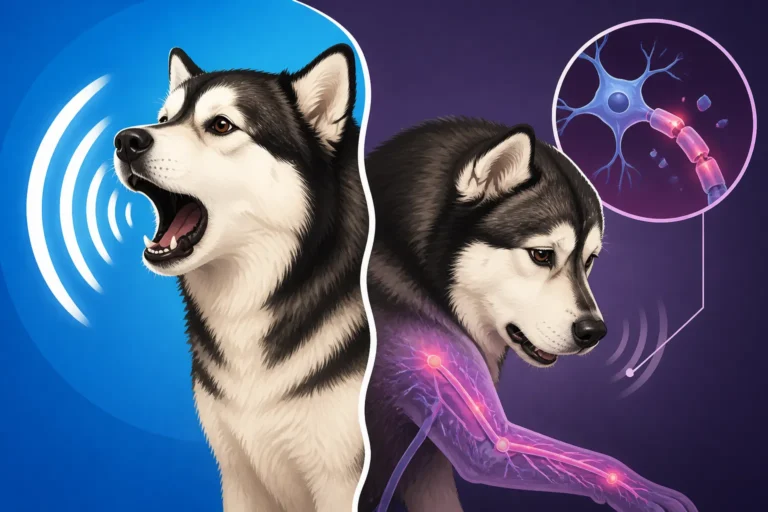
Inherited Polyneuropathy damages laryngeal nerves in Alaskan Malamutes, causing progressive voice changes and muscle weakness.
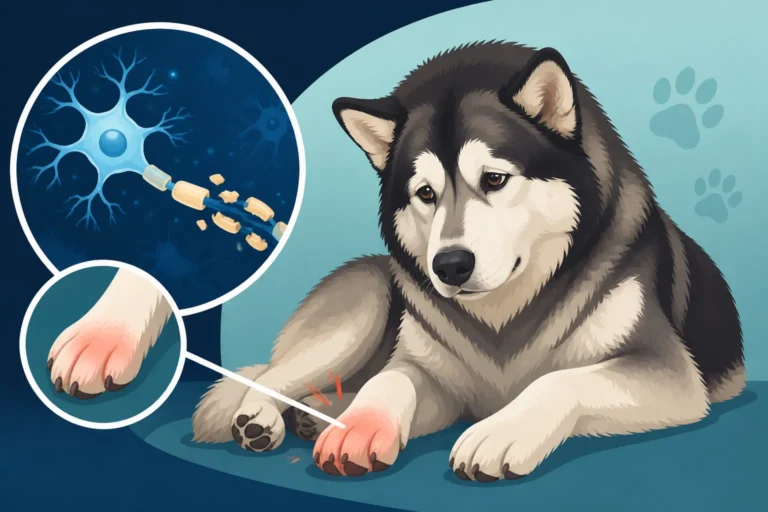
Alaskan Malamute inherited polyneuropathy symptoms typically emerge between one and three years of age, causing hind limb weakness and stumbling.
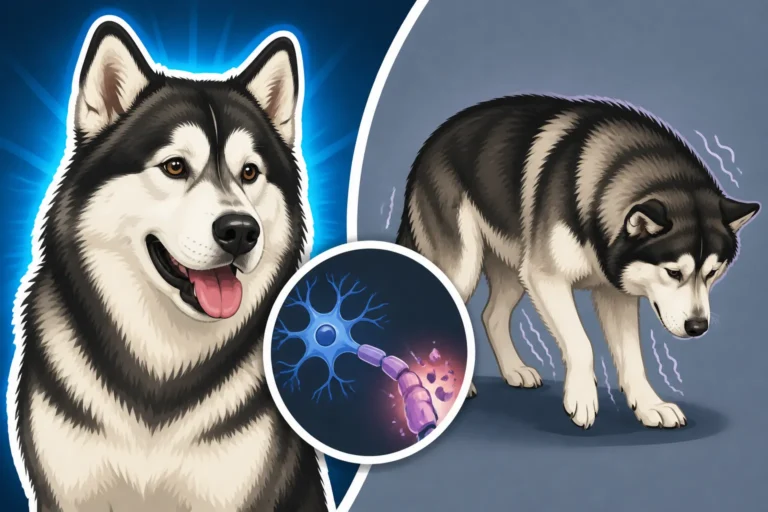
Inherited polyneuropathy in Alaskan Malamutes causes nerve damage, progressive weakness, and voice changes, presenting between one and three years of age.

Breeding a carrier Alaskan Malamute requires understanding genetic testing, recessive inheritance risks, and ethical responsibilities.
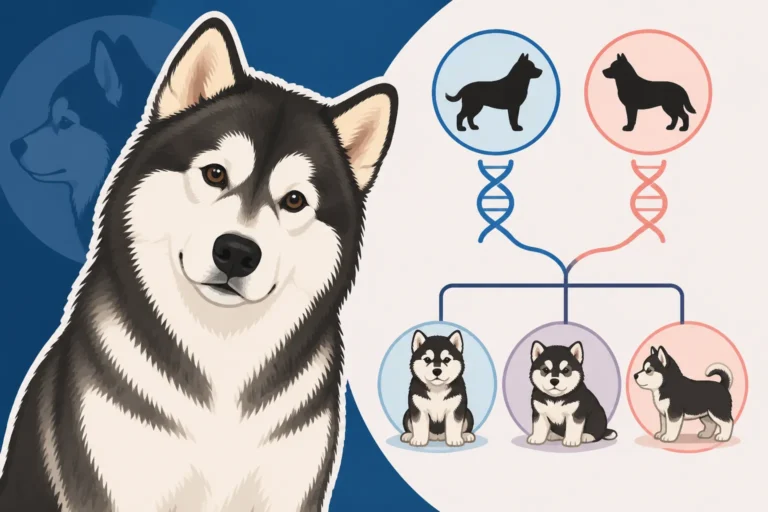
Malamute chondrodysplasia is a recessive genetic disorder requiring two mutated gene copies to cause disproportionately short limbs.

Alaskan Malamute chondrodysplasia typically becomes visible between four and twelve weeks of age through shortened, bowed front legs.
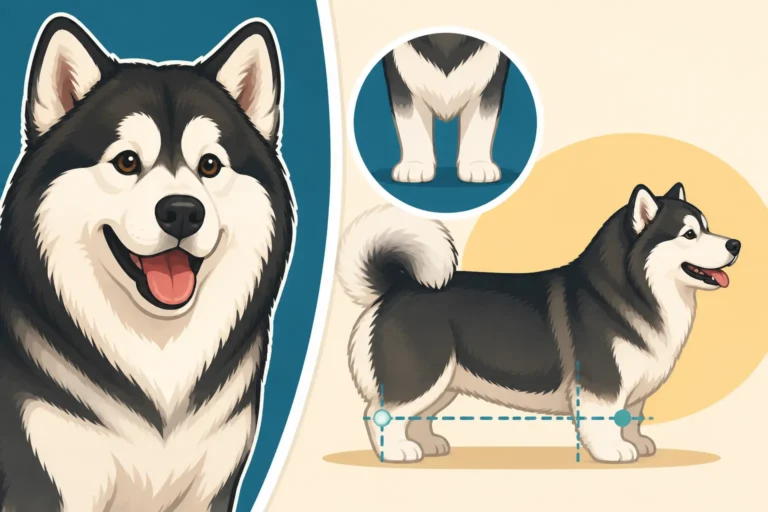
Dwarf Alaskan Malamute leg length usually matures to fifteen to eighteen inches, which is half to two-thirds normal size.
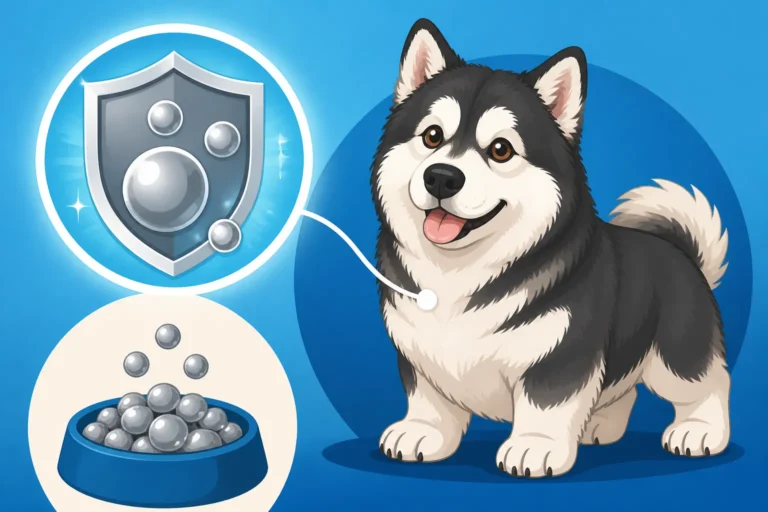
Chondrodysplastic Alaskan Malamutes absorb a quarter of their zinc compared to healthy dogs, requiring tailored nutritional care and monitoring.
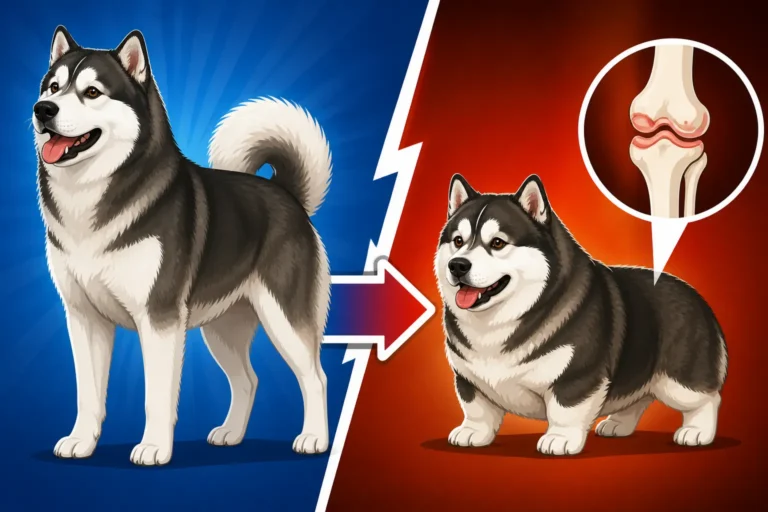
Chondrodysplasia in Alaskan Malamutes causes genetic dwarfism, skeletal deformities, and mobility issues that require careful lifelong health management.
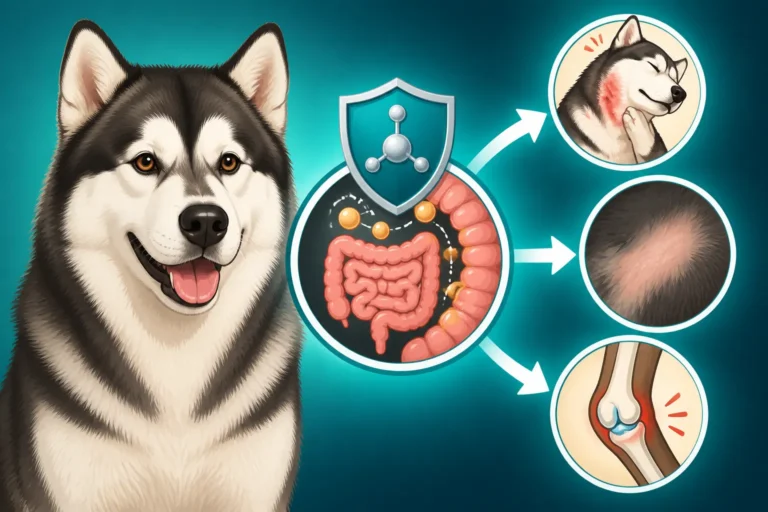
Poor zinc absorption in Alaskan Malamutes links three disorders: zinc responsive dermatosis, chondrodysplasia, and inherited polyneuropathy.