The Age an Alaskan Malamute Counts as a Senior
Alaskan Malamutes reach senior status around six years of age, explaining the physical signs, lifespan, and aging process.
Know what to watch for.
Breed-specific conditions, screening and DNA tests, what surgery actually costs, and the daily habits that stretch a healthy lifespan.

Alaskan Malamutes reach senior status around six years of age, explaining the physical signs, lifespan, and aging process.
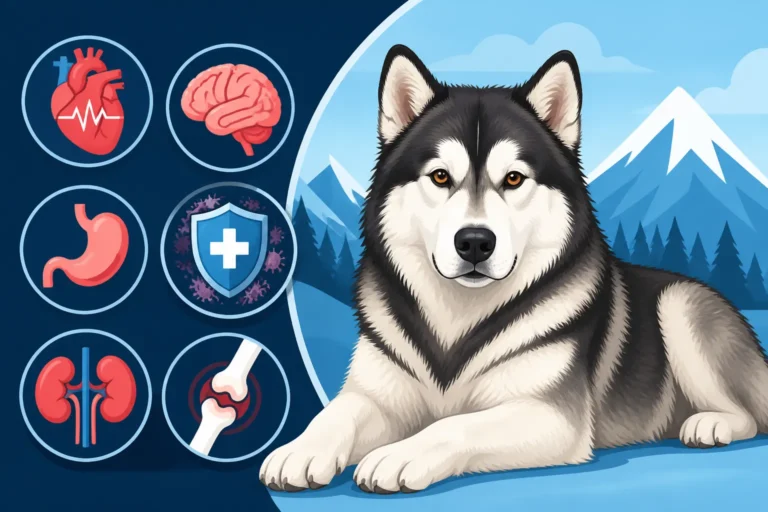
Alaskan Malamute health risks include cancer, organ failure, inherited polyneuropathy, and hip dysplasia, explaining what causes their death.

Alaskan Malamutes face specific cancers like lymphoma and osteosarcoma, showing warning signs such as lumps and persistent lameness.

Cataracts in Alaskan Malamutes can cause cloudy eyes and vision loss. Learn how veterinarians diagnose and treat this condition.

Hypothyroidism in Alaskan Malamutes involves thyroid hormone deficiency, causing metabolic slowdown, weight gain, and skin and coat changes.

Gastropexy prevents fatal stomach twisting in Alaskan Malamutes by permanently attaching the stomach wall to the abdominal wall.
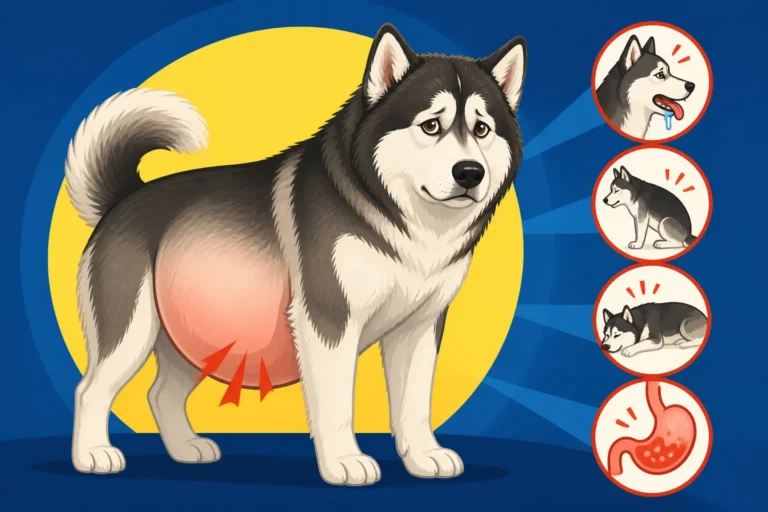
Alaskan Malamute bloat symptoms include restlessness, unproductive retching, excessive salivation, and a hard, distended abdomen requiring emergency care.
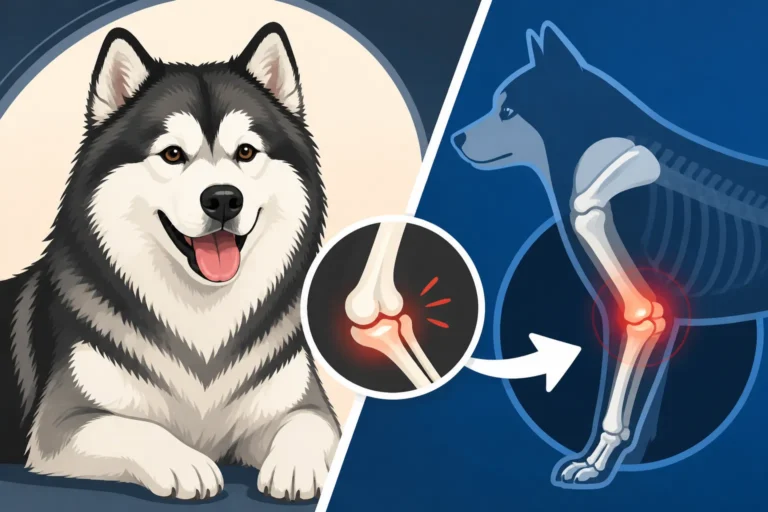
Alaskan Malamute elbow dysplasia causes joint pain and stiffness, explaining early symptoms, veterinary diagnoses, and surgical treatments.

Alaskan Malamute hip and elbow OFA certification requires dogs to reach a minimum age of twenty four months for final joint health evaluations.
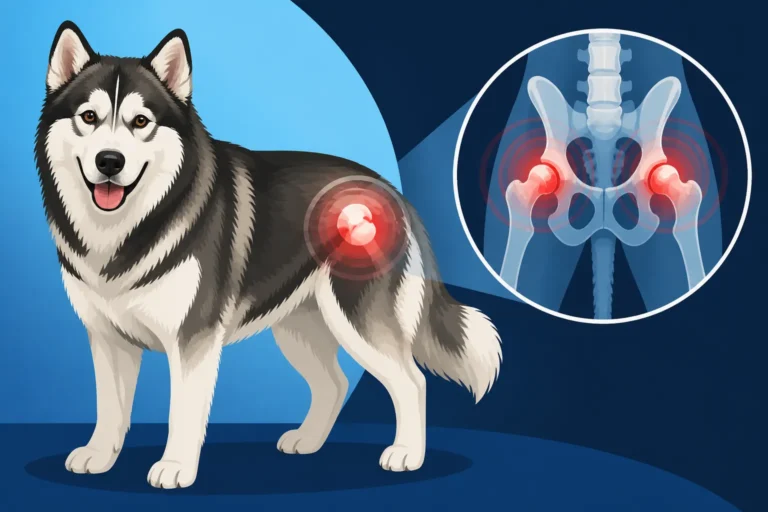
Hip dysplasia causes joint pain in Alaskan Malamutes. This explains symptoms, veterinary X-rays, and management options.