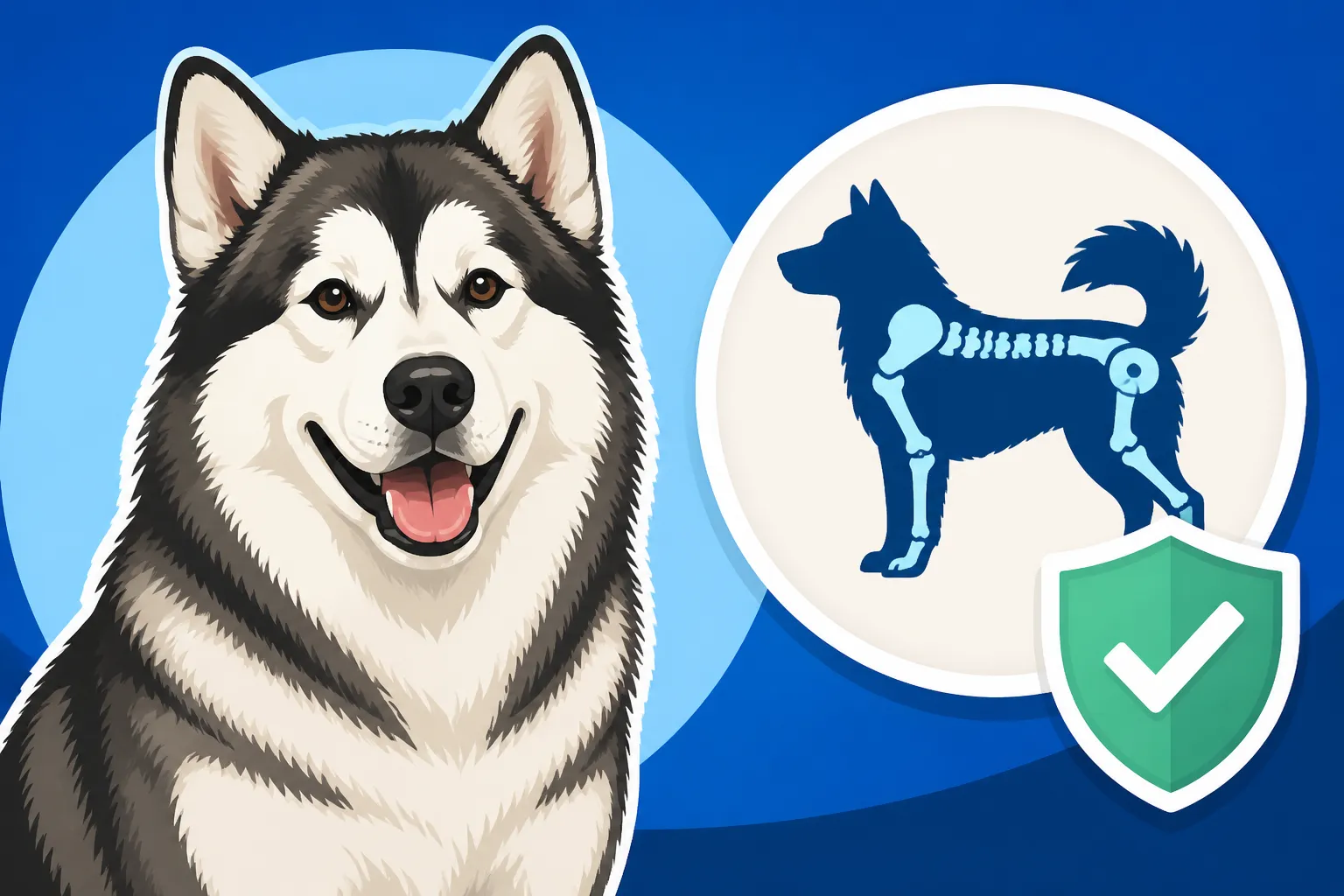
The Age a Malamute Is Certified by OFA
It can feel like a long and often confusing wait when you're looking forward to getting your beloved Alaskan Malamute officially certified for hip and elbow health. Many owners wonder exactly when this crucial step can be taken, and what factors might influence the timing. This guide will walk you through the specifics of the Orthopedic Foundation for Animals (OFA) certification process, particularly the critical age requirements, to help you navigate this important aspect of your Malamute's health journey.
Understanding OFA Certification for Alaskan Malamutes
For Alaskan Malamute owners, the mention of OFA often brings to mind hips and elbows – and for good reason. Hip and elbow dysplasia are unfortunately common orthopedic conditions across many large breeds, and Malamutes are no exception. The Orthopedic Foundation for Animals (OFA) is a non-profit organization dedicated to promoting the health and welfare of companion animals through orthopedic and genetic disease control. Their certification process is the gold standard for evaluating joint health in breeding dogs, aiming to reduce the incidence of these debilitating conditions in future generations.
The goal isn't just for breeders, though. Understanding OFA certification helps all Malamute owners appreciate the importance of sound genetics and joint health. It's about ensuring our furry family members can live long, active lives without the pain and limitations that hip or elbow issues can bring. When you bring home an Alaskan Malamute puppy, knowing the health clearances of its parents, particularly their OFA certifications, can provide immense peace of mind. Without such rigorous screening, the chances of dealing with significant orthopedic problems later in life increase dramatically. This is why dedicated breeders go through the time and expense to have their dogs certified, contributing to the overall health of the breed.
Why Joint Health is Paramount for a Malamute
Alaskan Malamutes are built for endurance and power. They are freighting dogs, designed to pull heavy loads over vast, often uneven, snowy terrains. This demanding work puts immense stress on their joints, especially their hips and elbows. A Malamute with compromised joint health simply cannot perform its historical job, nor can it comfortably enjoy the active life it needs as a companion animal. Imagine a dog bred for strength and stamina struggling to get up after a nap or limping after a short walk; it's a heartbreaking scenario that responsible breeding practices aim to avoid.
Beyond their working heritage, Malamutes as pets still require a significant amount of exercise. Whether it's hiking, pulling a cart, or just vigorous playtime in the yard, their bodies are meant to move. Good joint health is the foundation for this active lifestyle. Early detection of potential issues through screenings like those offered by OFA, even if only preliminary, can also allow owners to implement management strategies sooner, potentially delaying the onset or severity of arthritis that often accompanies dysplasia. This proactive approach can make a world of difference in your Malamute's quality of life. Understanding topics like Hip Dysplasia in an Alaskan Malamute can help you grasp the full picture of these conditions.
Common Joint Issues Faced by the Breed
While hip and elbow dysplasia are the most widely recognized, Malamutes can also be susceptible to other joint-related issues. Hip dysplasia is a malformation of the hip joint, where the ball and socket don't fit together properly, leading to grinding, pain, and eventually arthritis. Elbow dysplasia is a more complex condition encompassing several developmental abnormalities of the elbow joint, resulting in lameness and discomfort. Both conditions are primarily genetic, though environmental factors like rapid growth, excessive exercise as a puppy, and nutrition can influence their expression.
Beyond dysplasia, other concerns like osteochondritis dissecans (OCD), a condition where cartilage doesn't develop properly in the joints, can also occur, though less frequently evaluated by OFA's standard certifications. Cruciate ligament tears are also a risk, especially in active dogs, though these are typically traumatic injuries rather than inherited developmental issues. The focus on OFA hip and elbow certifications directly addresses the most prevalent and impactful inherited orthopedic conditions for the breed, providing breeders and owners with essential information to make informed decisions for their dogs' health and the future of the breed.
The Minimum Age Requirement for OFA Evaluations
This is often the million-dollar question for Malamute owners and breeders alike: When can my dog finally get its official OFA certification? The answer, specifically for hip and elbow evaluations, is a firm 24 months of age, or two full years. This isn't an arbitrary number; it's based on scientific understanding of canine skeletal development. The OFA requires dogs to be fully mature, with their growth plates closed, before issuing a final certification.
Attempting to certify a dog younger than 24 months for hips and elbows will result in the X-rays being considered "preliminary" by the OFA. While preliminary evaluations can be very useful for early insights (which we'll discuss next), they are not considered final certifications and cannot be used for breeding decisions in the same way a final clearance can. This waiting period can feel excruciatingly long, especially for breeders eager to assess their future breeding stock, but it's a crucial safeguard to ensure accurate and reliable results.
The Reasoning Behind the 24-Month Rule
The primary reason for the 24-month age requirement is the maturation of the skeletal system. Dogs, especially large breeds like Alaskan Malamutes, continue to grow and develop well past their first birthday. Their growth plates – areas of cartilage at the ends of long bones that facilitate growth – typically don't close until around 12 to 18 months of age, and sometimes even later for very large or slow-maturing individuals. Evaluating joints before these plates are fully fused and the skeleton has reached its adult configuration can lead to inaccurate readings.
For example, a young dog's hips might appear lax on X-rays due to immature ligaments or incomplete joint development, only to tighten up as the dog fully matures. Conversely, a subtle sign of dysplasia might be missed in a still-growing joint. The 24-month mark provides a standardized point when the vast majority of dogs are skeletally mature, offering the most accurate snapshot of their permanent joint structure. It’s about ensuring consistency and reliability in the evaluation process, so breeders and owners can trust the results. For more on this, you might find it helpful to read about The Age a Malamute's Growth Plates Close.
Implications for Breeding Programs and Owners
For breeders, the 24-month rule means careful planning and patience. They cannot use a dog for breeding (responsibly, that is) until it has reached this age and received its final OFA certifications. This waiting period influences breeding timelines, potentially delaying the introduction of valuable genetics into a program. It's a commitment that speaks volumes about a breeder's dedication to health. It also means that a puppy buyer won't find parents with "final" OFA hip and elbow clearances younger than two years old. Any breeder claiming otherwise is either misinformed or not following established health protocols.
For pet owners, understanding this rule helps you interpret health claims from breeders. If a breeder shows you OFA preliminary clearances for a 1-year-old dog, that's good, but it's essential to know that final clearances are still needed. It also emphasizes the importance of managing your Malamute's growth and exercise during its critical first two years. Over-exercising a growing puppy, especially with high-impact activities, can put undue stress on developing joints, even in a genetically sound dog. Patience and proper care during this developmental period are key to fostering strong, healthy joints that will (hopefully) pass their final OFA evaluation with flying colors.
Why Early Screening and Preliminary Evaluations Matter
While the final OFA certifications for hips and elbows require a dog to be at least 24 months old, that doesn't mean you have to wait two full years before ever looking at your Malamute's joints. In fact, many proactive owners and breeders opt for "preliminary" OFA evaluations. These preliminary X-rays can be taken as early as four months of age, though they are more commonly done between 12 and 18 months.
Preliminary evaluations provide an early indication of hip and elbow quality. While not a guarantee of future final scores, they can be highly predictive, especially for moderate to severe dysplasia. For a breeder, this early insight is invaluable as it helps them make informed decisions about whether a young dog shows promising joint health for future breeding or if there are concerns that might lead them to reconsider. For pet owners, a preliminary report can guide management strategies, such as diet and exercise modifications, if potential issues are noted.
What Preliminary X-rays Offer
Preliminary OFA evaluations involve the same X-ray procedure as the final certification, but they are performed on a younger dog. These X-rays are then submitted to the OFA, where they are reviewed by a panel of three independent, board-certified veterinary radiologists. The radiologists provide a consensus opinion on the dog's hip and elbow conformation at that specific age, categorizing hips as excellent, good, fair, borderline, or dysplastic, and elbows as normal or dysplastic (grades I, II, or III).
The key benefit here is early detection. If a young Malamute shows clear signs of hip or elbow dysplasia on preliminary X-rays, the owner and breeder have time to intervene. This might involve consulting with an orthopedic specialist, implementing physical therapy, adjusting diet for joint support, or even discussing preventative surgical options if recommended by a vet. For breeders, it provides crucial data to prevent breeding dogs that are likely to develop significant joint problems, thus protecting the integrity and health of their lines. While not definitive, a "preliminary excellent" is a great indicator, and a "preliminary dysplastic" is a strong warning.
Limitations and How Predictive They Are
It's vital to understand that preliminary OFA evaluations are not infallible. While they are highly accurate, particularly for healthy hips and those with severe dysplasia, there's always a chance that a preliminary "fair" or "borderline" might improve or worsen by the time the dog reaches 24 months. Studies have shown that preliminary hip evaluations have a high reliability rate, often above 90% for dogs graded "normal" (Excellent, Good, Fair) or "severely dysplastic." However, the predictive value can be slightly lower for those in the "borderline" category.
| OFA Hip Grade (Preliminary) | Likelihood of Same Grade at Final (approx.) | Potential for Improvement | Potential for Worsening |
|---|---|---|---|
| Excellent / Good | 95%+ | Minimal | Low |
| Fair | 80-90% | Moderate | Moderate |
| Borderline | 50-60% | Significant | Significant |
| Mild Dysplasia | 90%+ | Minimal | Low |
| Moderate/Severe Dysplasia | 98%+ | Very Low | Very Low |
This table illustrates why preliminary results are a guide, not a final verdict. For pet owners, a preliminary "normal" is reassuring. For breeders, a "borderline" often warrants a re-evaluation at 24 months before making any final breeding decisions. It's a tool for ongoing assessment, not a one-and-done solution until the dog is fully mature.
The OFA Process: From X-rays to Final Certification
Getting your Alaskan Malamute OFA certified involves a specific process that starts with your veterinarian and ends with the OFA issuing a public certificate. It’s more than just snapping a few pictures; proper positioning and sedation are critical to obtaining diagnostic quality radiographs. Understanding each step ensures a smooth process and accurate results for your beloved companion.
The process typically begins with scheduling an appointment with your trusted veterinarian. Ideally, this should be a vet experienced with OFA positioning, as improper technique can lead to rejection of the radiographs or inaccurate readings. Many vets routinely perform these X-rays, but it never hurts to ask about their experience. Once the X-rays are taken and approved by your vet for quality, they are then submitted to the OFA for evaluation.
Preparing Your Malamute for X-rays
Proper preparation is crucial for accurate OFA X-rays. First and foremost, your Malamute will need to be sedated or anesthetized. This isn't optional; it's necessary to achieve the precise positioning required without causing stress or discomfort to the dog. A fully relaxed dog allows for the hips and elbows to be manipulated into the correct extension and rotation, ensuring the joints are perfectly aligned for evaluation. Without sedation, muscle tension can obscure the true joint laxity or conformation.
Before the appointment, your vet will likely ask you to fast your Malamute for 8-12 hours, depending on the type of sedation used. This reduces the risk of vomiting during or after anesthesia. You'll also want to discuss your Malamute's general health, any medications it's on, or any previous reactions to sedation. Your vet might recommend pre-anesthetic blood work to ensure your dog is healthy enough for the procedure. It's a short, generally safe procedure, but careful planning always helps.
The Radiographic Procedure and Submission
Once sedated, your Malamute will be carefully positioned on the X-ray table. For hips, the standard view (VD extended) requires the dog to be on its back, with hind legs fully extended and rotated internally so the kneecaps point straight up. This view allows the radiologists to assess the femoral heads within the acetabulum (hip socket). For elbows, specific flexed and extended views are taken to evaluate the joint for any signs of dysplasia. The technician will take multiple shots to ensure optimal clarity and positioning.
After the X-rays are taken, your vet will review them for quality and accuracy. If they meet the OFA’s stringent standards, the images, along with the necessary forms and fees, are then submitted electronically or via mail to the OFA. The OFA uses a panel of three independent, board-certified veterinary radiologists to evaluate the X-rays. Each radiologist scores the joints, and a consensus grade is then issued. This multi-reader system minimizes subjective bias and provides a highly reliable evaluation of your Malamute's joint health.
Interpreting OFA Results and What They Mean for Your Malamute
Once the OFA radiologists have reviewed your Malamute's X-rays, you'll receive a report detailing the findings for both hips and elbows. Understanding these results is key to knowing your dog's joint health status, whether you're a breeder or a pet owner. The OFA provides clear grading systems, but knowing what each grade truly signifies can empower you to make the best decisions for your dog.
It's worth noting that OFA results are made public in a searchable database. This transparency is a cornerstone of the OFA program, allowing prospective puppy buyers to verify the health clearances of parent dogs. Reputable breeders will openly share their dogs' OFA registration numbers so you can easily look up their certifications. This commitment to openness is a sign of a breeder who prioritizes health and ethical practices. For insights into common outcomes, you might want to review What Percentage of Malamutes Fail OFA Hips.
Decoding Hip and Elbow Grades
For hips, OFA uses seven categories: Excellent, Good, Fair (all considered "normal"), Borderline, Mild Dysplasia, Moderate Dysplasia, and Severe Dysplasia.
- Excellent: Superior hip conformation, deep sockets, tightly fitting femoral heads.
- Good: Well-formed hips, slight room for improvement but still excellent.
- Fair: Passable hip conformation, some minor irregularities, but still within normal limits.
- Borderline: Not clearly normal or dysplastic; usually warrants a re-evaluation later.
- Mild Dysplasia: Minor changes indicating hip dysplasia, such as slight laxity or remodeling.
- Moderate Dysplasia: More significant changes, noticeable subluxation, flattened sockets.
- Severe Dysplasia: Pronounced dysplastic changes, severe laxity, significant remodeling.
For elbows, the grading is simpler: Normal (Grade 0), Grade I Dysplasia, Grade II Dysplasia, and Grade III Dysplasia. Any grade other than Normal is considered dysplastic. Grade I is the mildest, while Grade III indicates severe dysplasia. These grades provide a clear picture of the condition of your Malamute's joints.
The Significance of a Public Database
The OFA maintains a public database of all certified animals. This isn't just a list; it's a vital resource for anyone interested in the health of the Alaskan Malamute breed. By entering a dog's registered name or OFA number, you can access its hip, elbow, and other health clearances. This transparency holds breeders accountable and allows potential puppy buyers to perform their due diligence. If a breeder claims their dogs are OFA certified but cannot provide the OFA registration numbers or show you how to find them in the public database, that's a red flag.
The database also allows researchers to track trends in orthopedic health across breeds, providing valuable data for genetic studies aimed at reducing inherited diseases. For example, if you're considering a puppy from a particular line, you can research not just the parents but also their siblings and previous offspring to get a broader understanding of the genetic health prevalent in that lineage. This collective knowledge helps to improve the overall health outcomes for future generations of Alaskan Malamutes.
Beyond OFA: Comprehensive Joint Health for Your Malamute
While OFA certification is an incredibly important tool for assessing inherited joint health, it's just one piece of the puzzle. The health of your Alaskan Malamute's joints throughout its life is also profoundly influenced by lifestyle, nutrition, and overall care. A dog with excellent OFA scores can still develop joint issues if not cared for properly, and conversely, a dog with less-than-perfect scores can often lead a comfortable life with appropriate management. It's about a holistic approach to their well-being.
As your Malamute ages, the wear and tear on joints are inevitable. While you can't stop the aging process, you can certainly mitigate its effects. Proactive care, a watchful eye for any signs of discomfort, and a willingness to adapt their routine are all part of being a responsible Malamute owner. Remember, these magnificent dogs are built for activity, and keeping them moving safely is crucial for their physical and mental health.
Lifestyle Factors Affecting Joint Health
An Alaskan Malamute's lifestyle plays a massive role in its long-term joint health. During puppyhood, controlled exercise is paramount. Over-exercising a growing puppy, especially with high-impact activities like jumping or prolonged running on hard surfaces, can damage developing joints, regardless of genetic predisposition. Instead, focus on short, frequent play sessions and walks on softer ground. As they mature, consistent, moderate exercise like pulling a sled, hiking, or swimming builds strong muscles to support the joints. Engaging in activities that are appropriate for How Much Weight a Malamute Can Safely Pull can also be beneficial without overstressing them.
Maintaining a healthy weight is another critical factor. Every extra pound your Malamute carries puts additional strain on its joints, accelerating wear and tear and exacerbating any underlying orthopedic conditions. Regular body condition scoring and appropriate portion control are essential. Also, providing comfortable, orthopedic bedding can alleviate pressure on joints, especially for older Malamutes.
Nutritional Support and Supplements
Nutrition is fundamental to joint health. A high-quality diet provides the building blocks for healthy cartilage and bone. For large breeds like Malamutes, look for foods that support slow, steady growth in puppies, avoiding excessive protein or calcium which can contribute to orthopedic problems. Your veterinarian can guide you on the best nutritional plan for your Malamute's age and activity level.
For adult Malamutes, particularly those that are highly active or showing early signs of joint stiffness, supplements can be beneficial. Ingredients like glucosamine, chondroitin, MSM, and Omega-3 fatty acids (like those found in fish oil) are commonly recommended for joint support. Brands like Healthy Paws often cover the cost of prescribed medications and therapies, including supplements, if they're part of a veterinary-recommended treatment plan for a covered condition. Always consult your vet before adding any supplements to your dog's diet, as they can advise on appropriate dosages and potential interactions. Finding the right Joint Supplements for an Alaskan Malamute can significantly aid in their mobility and comfort.
The Role of Veterinary Care and Insurance
Regular veterinary check-ups are essential throughout your Malamute's life. Your vet can monitor their gait, discuss any changes you've noticed, and recommend further diagnostics if needed. For Malamutes with known joint issues, they can help develop a management plan that might include pain medication, anti-inflammatory drugs, physical therapy, or even surgical options in severe cases. Early intervention and consistent care can significantly improve the prognosis for many joint conditions.
Pet insurance, such as that offered by Healthy Paws, can be an invaluable investment for Malamute owners. These majestic dogs can be prone to various health issues, and unexpected vet bills for things like emergency surgeries or chronic condition management can quickly add up. A good pet insurance policy can help offset the cost of diagnostics, treatments, and even ongoing care for orthopedic conditions, allowing you to make medical decisions based on what's best for your Malamute, not just your wallet. When choosing a policy, review the details to understand what's covered, especially regarding genetic and hereditary conditions like hip and elbow dysplasia, as some policies may have waiting periods or specific exclusions. Healthy Paws is known for comprehensive coverage, so it’s worth researching what they offer for potential orthopedic challenges in your Malamute's future.
Disclaimer
The information provided in this article is for educational purposes only and is not intended to replace professional veterinary advice. Always consult with a qualified veterinarian regarding your Alaskan Malamute's health, diagnosis, and treatment. Genetic health testing recommendations and interpretations should be discussed directly with your breeding mentor, breed club, and veterinarian.