How Long a Malamute Coat Blow Takes to Brush Out
If you've ever owned an Alaskan Malamute, you know that "shedding season" is less a season and more a full-blown event, a furry blizzard that descends upon your home with the force of an actual Arctic storm. The question isn't if your Malamute will blow their coat, but how long you'll be brushing through the mountains of undercoat. It can feel like an endless battle against a never-ending supply of fluff, leaving you wondering if you'll ever see the bottom of that brush. This guide is here to give you a realistic roadmap for navigating the infamous Malamute coat blow and estimate how long you'll truly be brushing.
Understanding the Alaskan Malamute's Double Coat and the "Blow" Phenomenon
Before we dive into the nitty-gritty of brushing times, it's really important to understand why your Malamute sheds so much. It's not just a genetic quirk; it's a testament to their heritage, a masterful adaptation to some of the harshest environments on Earth. Knowing this helps to reframe the frustration into appreciation for their incredible design.
The Anatomy of a Malamute's Legendary Coat
Your Malamute's coat isn't just one layer; it's a sophisticated, dual-layer system designed for extreme insulation. Imagine trying to stay warm in sub-zero temperatures with only a t-shirt – that's what a single-coated dog would face. Your Malamute, however, is essentially wearing a high-performance winter jacket, custom-made by nature itself. This "jacket" consists of two distinct parts: the harsh outer guard hairs and the incredibly dense undercoat.
The outer layer is made up of coarse, stiff guard hairs. These aren't just for show; they're like a waterproof, windproof shell. They protect against snow, ice, and biting winds, preventing moisture from reaching the skin and shedding debris easily. These hairs are remarkably durable and are what give the Malamute its characteristic rugged appearance. They lay flat, forming a barrier that repels the elements, much like shingles on a roof.
Beneath this protective outer shell lies the true powerhouse of their insulation: the undercoat. This layer is unbelievably soft, dense, and woolly, often several inches thick when fully grown in. It traps a layer of air close to the body, which then warms up and acts as an insulating barrier, preventing heat loss. It's this undercoat that makes a Malamute feel like a giant, cuddly wool blanket – and it's this undercoat that becomes the source of all your coat blow adventures. The sheer volume of this undercoat is something you truly have to experience to believe; it’s far beyond what most people anticipate when they first bring a Malamute home.
When and Why Malamutes "Blow" Their Coat
The "coat blow" is essentially your Malamute shedding their entire insulating undercoat to adapt to changing temperatures. Think of it like swapping out your heavy winter duvet for a lighter summer one. While it's often described as a seasonal event, typically happening in spring as temperatures rise and again in the fall to make way for a new winter coat, the reality can be a bit more nuanced for dogs living in our modern homes. Hormonal influences also play a significant role; intact dogs, particularly females, often have more distinct, heavier, and predictable coat blows tied to their heat cycles.
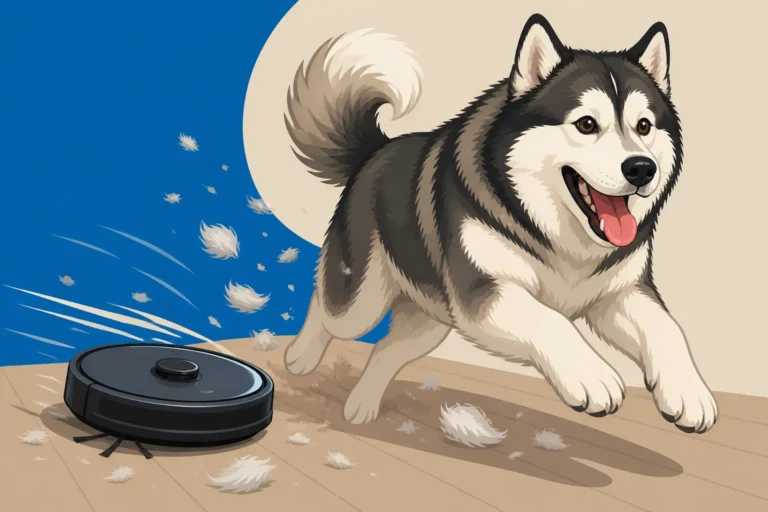
For many Malamutes living indoors, with climate control maintaining relatively consistent temperatures year-round, the traditional "seasonal" blow can become less distinct. Instead of two massive, intense blows, some Malamutes might shed more consistently throughout the year, with a couple of periods of slightly heavier shedding. This can be frustrating because you never truly feel like you're "done" with the shedding. It just dials up and down. The Malamute Coat Blow That Fills a Vacuum in an Afternoon is a very real experience for many of us!
This process is deeply ingrained in their genetics, harkening back to their ancestors who absolutely needed to adapt to the brutal shifts between Arctic winters and brief, relatively warmer summers. Their survival depended on growing a massive undercoat for winter and then shedding it completely to avoid overheating in the summer. Even though our modern Malamutes aren't pulling sleds across the tundra every day, their bodies still operate on this ancient biological clock, dictating when and how much they need to shed. It's a natural, vital process, albeit a messy one for us humans.
The Realistic Timeline of a Malamute Coat Blow and Brushing Efforts
Alright, let's get down to the brass tacks: how long does this fluffy odyssey actually take? While every Malamute is an individual, and factors like climate, diet, and genetics can influence the exact timeline, we can sketch out a general progression. Be prepared, because it's rarely a quick fix.
The Initial Deluge: Weeks 1-2
When a Malamute truly starts to "blow," you'll know it. It begins gradually, a few more tumbleweeds of fur than usual, and then within a few days, it escalates dramatically. This first phase, typically lasting one to two weeks, is the absolute heaviest shedding period. This is when the dense, woolly undercoat starts to detach in earnest, coming out in massive clumps. You might find yourself pulling handfuls of fur off your dog with minimal effort, and your house will likely resemble a yeti's playground.
During this initial deluge, daily brushing is not just recommended, it's practically mandatory if you want to keep up and prevent painful matting. Some dedicated owners even brush twice a day during the peak of this phase. Imagine spending 30-60 minutes each session, systematically working through your Malamute's coat, filling a large grocery bag or even a small trash bag with loose fur. This is also when your specialized tools, like undercoat rakes and deshedding tools, become your best friends. Failing to brush frequently during this stage leads to an overwhelming mess and uncomfortable, matted fur for your dog. For many, this feels like an uphill battle where you brush and brush, and they still look just as fluffy and full of loose hair.
The Tapering Phase: Weeks 3-4 (and Beyond)
After the initial onslaught, you'll start to notice a slight decrease in the sheer volume of fur coming off. This is the tapering phase, and it typically lasts for another two to three weeks, though it can certainly extend longer. The good news is that you're no longer battling the "fur avalanche" that characterized the first stage. The bad news is that you're still very much in the thick of it, just with a slightly less overwhelming output. How Long a Malamute's Coat Blow Lasts really depends on your diligence and their specific shedding cycle.
During this period, you might be able to reduce brushing frequency to every other day, or even two to three times a week, depending on your Malamute and how much loose fur you're still finding. Each brushing session might still yield a substantial amount of fur, but you'll start to see a bit more skin, and their coat will begin to lie flatter and look less "fluffy" from all the dead undercoat. It’s a marathon, not a sprint, and patience is your most valuable asset here. Even after the main blow, you'll still have a certain level of maintenance brushing. It's truly a year-round commitment, but the intensity peaks during these defined periods. Owners who feed high-quality diets from brands like Ollie sometimes report a healthier coat that might release dead fur more easily, making the entire process slightly more manageable.
Factors Influencing the Duration and Intensity
The duration and intensity of your Malamute's coat blow aren't set in stone; several factors can heavily influence how long and how difficult the process will be. Understanding these can help you anticipate and prepare for what's ahead.
First, your Malamute's overall diet and health play a colossal role. A dog receiving proper nutrition, with a diet rich in omega fatty acids and high-quality protein, will generally have a healthier coat that sheds more efficiently. Think of it this way: a healthy tree drops its leaves cleanly in the fall, while a sickly one might hold onto brittle leaves or shed them unevenly. Similarly, a well-nourished Malamute's undercoat tends to release more readily, making brushing more effective. Conversely, a poor diet or underlying health issues can lead to a dull, brittle coat that sheds poorly or excessively. Feeding an Alaskan Malamute for Zinc It Cannot Absorb can be critical, as zinc deficiency can cause skin and coat issues that complicate shedding.
Climate is another major influencer. While Malamutes are built for cold, many live in warmer climates. In consistently warm environments, a Malamute might not grow as dense a winter coat, or they might shed more frequently throughout the year in smaller amounts, rather than experiencing two dramatic, distinct "blows." This perpetual, lighter shedding can be just as frustrating in its own way, as you never get a true break from the fur. Conversely, a Malamute living in a region with clear seasonal changes will likely have very pronounced, heavy coat blows.
Finally, your regular grooming routine outside of coat blow season can impact the intensity. If you're consistent with weekly brushing throughout the year, removing loose fur and preventing matts, the "blow" might feel slightly less overwhelming when it hits. A well-maintained coat is simply easier to manage. Similarly, if your Malamute is spayed or neutered, their coat blows might be less hormonally driven and therefore less extreme or more frequent but lighter. Intact dogs, particularly females, often have very distinct, heavy blows linked to their reproductive cycles.
Essential Tools and Techniques for Surviving the Coat Blow
Surviving a Malamute coat blow isn't about brute force; it's about smart strategy and having the right equipment. Going into this battle without the proper tools is like trying to shovel snow with a spoon – frustrating and ultimately ineffective. Invest in your arsenal, and you'll make life easier for both you and your furry companion.
The Right Arsenal of Brushes
You're going to need more than just one brush for a Malamute. Think of it as a specialized toolkit, each piece designed for a particular job. The MVP of your arsenal will be a good quality undercoat rake. These come in various styles, with different tooth lengths and spacing. For the initial heavy blow, a rake with widely spaced, long teeth can help pull out massive amounts of loose undercoat without pulling at the healthy guard hairs. As the blow progresses, a rake with finer, closer-set teeth might be more effective for getting remaining dead fur. Brands available on Amazon or Chewy offer a wide range of these rakes.
Beyond the rake, a sturdy slicker brush is excellent for working on smaller, more sensitive areas and for finishing touches, smoothing the coat and removing surface tangles. A pin brush can also be useful for longer guard hairs and general maintenance brushing between blows. But perhaps the most underrated, yet utterly indispensable, tool is a high-velocity force dryer, also known as a pet blaster. This isn't just a hairdryer; it’s specifically designed to blast air at high speed, effectively blowing out loose undercoat from deep within the dense fur, drying your dog after baths, and dramatically reducing manual brushing time. Which Brush Gets Through a Malamute's Undercoat is a question many new owners grapple with, and the answer is usually multiple brushes.
Effective Brushing Techniques
Having the tools is one thing; knowing how to use them effectively is another. Simply running a brush over the top of your Malamute's coat won't cut it. You need to employ systematic techniques to ensure you're reaching the dense undercoat and removing all the dead fur. The most effective method is often "line brushing." This involves parting the coat horizontally, layer by layer, starting from the bottom (typically the legs or flank) and working your way up. You hold the upper portion of the coat back and brush the exposed undercoat upwards and outwards until it's clear, then release a small section of the next layer and repeat.
Sectioning the dog is also key. Break down the grooming into manageable parts: start with one side, move to the other, then tackle the back, neck, and finally the tail. This prevents you from getting overwhelmed and ensures you don't miss any spots, especially around the "feathering" on the legs and tail where mats can easily form. Always brush in the direction of hair growth to avoid discomfort. Make brushing a positive experience for your Malamute by using treats, praise, and short, frequent sessions, especially when they are puppies. This builds a positive association and makes future blow-outs much easier to manage. If you encounter a mat, don't just pull at it; gently try to tease it apart with your fingers or the wider teeth of a comb before attempting to brush it out.
The Power of the Force Dryer
If you don't own a force dryer and you have a Malamute, seriously consider getting one. It is a game-changer. As mentioned, it's not just for drying; its primary superpower during a coat blow is its ability to literally blast the loose undercoat out of your dog's dense fur. Imagine all those individual hairs being held in by static and tiny tangles – the force dryer just blows them free. What a Force Dryer Does for a Malamute's Coat Blow is truly remarkable; it can remove a shocking amount of fur in a fraction of the time it would take to brush it out manually.
To use it effectively, position the nozzle close to the skin, pointing the airflow in the direction of hair growth. Work in sections, just like with brushing, lifting the topcoat to get the air down to the undercoat. You'll see clouds of fur fly off your dog – it's incredibly satisfying, if a little messy. This process significantly reduces the amount of manual brushing you'll need to do and helps prevent mats, which are painful for your dog. If your Malamute isn't accustomed to the dryer, introduce it gradually with positive reinforcement, starting with low settings and short bursts, slowly increasing duration and power. It's an investment that pays dividends in reduced brushing time and a happier, healthier-coated dog.
Beyond Brushing: Managing the Mess and Maintaining Coat Health
Even with the most rigorous brushing routine, a Malamute coat blow is going to generate a substantial amount of fur. It's simply unavoidable. Therefore, managing the inevitable mess and proactively supporting your Malamute's coat health are crucial aspects of surviving this biannual (or semi-annual, or year-round!) event.
Keeping Your Home (Relatively) Fur-Free
Let's be realistic: a completely fur-free home during a Malamute coat blow is a myth, a beautiful dream that will never materialize. However, you can manage the situation to keep the fur from completely taking over your life. First and foremost, a good, powerful vacuum cleaner is your daily companion. Forget those flimsy stick vacuums; you'll need something robust designed to handle pet hair. Frequent vacuuming, sometimes even twice a day during peak shedding, is essential. Focus on areas where your Malamute spends the most time.
Lint rollers become your fashion accessory, always within reach to de-fur yourself before leaving the house. Designate "Malamute zones" for lounging if possible, areas with easy-to-clean surfaces like hardwood or tile, or use washable throws on furniture. Consider investing in an air purifier; while it won't eliminate all the fur, it can help filter out airborne dander and some of the lighter hairs. Embrace the fact that fur will be a part of your life. It's the price of admission for loving these magnificent, fluffy creatures. Think of it as glitter – it gets everywhere, but it's part of the magic. How Much Undercoat a Malamute Puts Into a House is truly astonishing!
Nutritional Support for a Healthy Coat
A healthy coat starts from within, and nutrition plays a critical role in minimizing shedding and ensuring that the fur that does shed comes out easily. A high-quality diet, rich in essential fatty acids (especially omega-3s and omega-6s), vitamins, and minerals, is fundamental. These nutrients contribute to skin integrity and hair follicle health, resulting in a stronger, shinier coat that sheds more efficiently when it's time for the blow.
Look for dog foods that list real meat as the first ingredient and contain healthy fats. Many owners find that adding fish oil or flaxseed oil supplements to their Malamute's diet year-round makes a noticeable difference in coat quality and can even help with the ease of shedding during a blow. Brands like Ollie, which focuses on fresh, whole ingredients, often boast recipes designed to support overall health, including skin and coat. Before adding any supplements, however, it's always wise to consult with your veterinarian to ensure they are appropriate for your specific dog's needs. Remember, a healthy coat sheds, but a very unhealthy coat might shed excessively or unevenly.
Professional Grooming vs. DIY During a Coat Blow
Deciding whether to tackle the coat blow yourself or enlist professional help is a common dilemma. Many Malamute owners fall somewhere in the middle, doing daily maintenance but bringing their dog to a groomer for a thorough "deshed" service a couple of times a year. Professional groomers have specialized tools, powerful force dryers, and vast experience with double-coated breeds. They can often accomplish in a single session what might take you several days of dedicated home grooming. What Grooming an Alaskan Malamute Costs can vary, but for many, it's an expense well worth it to alleviate some of the intensity of the blow.
However, professional grooming isn't a magic bullet that negates all home effort. It's a supplement. You'll still need to brush your Malamute regularly, especially during the peak blow, to prevent mats and keep on top of the shedding. If your Malamute is prone to matting, or if you simply can't keep up with the volume of fur, a professional deshedding treatment can provide immense relief for both you and your dog. They can get deep into the coat, ensuring all the dead undercoat is removed, allowing new, healthy fur to grow in. Some owners swear by getting a professional deshedding bath right at the beginning of the coat blow to kickstart the process. Just remember, a Malamute should never be shaved, as this can permanently damage their unique double coat and compromise their ability to regulate temperature. Why an Alaskan Malamute Must Never Be Shaved is a crucial piece of knowledge for any Malamute owner.
Disclaimer
This article is for general informational purposes only and does not constitute professional advice. Laws, prices and regulations vary by location and change over time. Consult a qualified professional for guidance on your specific situation.