Whether a Harness Mats an Alaskan Malamute
It’s a frustratingly common sight for any Alaskan Malamute owner: you take off your beloved floof’s harness after a great walk or a solid pulling session, only to find a stubborn, tangled mess underneath. That beautiful, majestic coat, specifically designed by nature to protect them from harsh Arctic elements, seems to rebel against the very tools we use for their safety and training. The truth is, harnesses can indeed cause matting in an Alaskan Malamute's glorious double coat, and it’s not just an aesthetic issue; it can lead to discomfort, skin irritation, and even more serious health problems if not addressed promptly. This guide will delve into why this happens and, more importantly, how you can minimize and prevent those troublesome mats while keeping your Malamute happy and healthy.
Understanding the Alaskan Malamute's Unique Coat
To truly grasp why harnesses can cause such a headache for Malamute owners, we first need to appreciate the incredible complexity and function of their coat. It's not just fur; it's a meticulously engineered system.
The Double Coat's Design and Function
An Alaskan Malamute's coat is a marvel of natural engineering, perfectly adapted to withstand extreme cold. It's a "double coat," meaning it consists of two distinct layers, each with its own crucial job. The outer layer is made of coarse, straight, and somewhat stiff "guard hairs." These hairs are water-resistant and act as a protective barrier, shedding snow and ice and shielding the dense undercoat beneath. Think of them as the outer shell of a high-performance winter jacket.
Beneath this protective outer layer lies the "undercoat." This is where the magic happens for insulation. The undercoat is incredibly dense, soft, and woolly, providing an insulating layer that traps air close to the dog's body, keeping them warm in freezing temperatures. It's often compared to down feathers in its insulating power. This combination allows Malamutes to thrive in conditions that would send most other dogs shivering indoors. However, this very design, while brilliant for survival in the wild, creates a predisposition for matting, especially when external factors like harnesses are introduced.
Why Matting is a Bigger Problem for Malamutes
Because of this unique double coat, Malamutes are particularly susceptible to matting compared to many other breeds. The undercoat is constantly shedding, especially during their massive "coat blow" periods, which happen at least twice a year. If this loose, woolly hair isn't brushed out regularly, it easily tangles with the living undercoat and guard hairs. When friction is added to this equation – from collars, harnesses, or even just rolling around – these tangles compact into dense, felt-like mats.
Imagine trying to untangle a ball of wool that has been repeatedly compressed and rubbed. That's essentially what happens with a Malamute's coat. The guard hairs, designed to be protective, can actually help "hold" the mat in place, making it even harder to brush out. These mats aren't just unsightly; they pull on the skin, causing pain and discomfort. They can also trap moisture, leading to skin infections and hot spots, which is why Reading a Malamute's Skin Before the Crusts Appear is so vital. It's a constant battle, but with the right knowledge and tools, it's a battle you can absolutely win.
How Harnesses Contribute to Matting
Now that we understand the Malamute's coat, let's zero in on how harnesses, despite their benefits, can become a silent culprit in the matting nightmare. It's usually not the harness itself that's "bad," but rather the interaction between the harness, the coat, and the activities your dog does while wearing it.
Friction and Pressure Points
The primary way a harness contributes to matting is through friction. Every time your Malamute moves, walks, or pulls, the straps of the harness rub against their coat. This friction, especially on areas with high movement like the chest, shoulders, and particularly behind the front legs (the armpits), causes the undercoat to compact and tangle. It’s like repeatedly rubbing a piece of wool – eventually, it felts.
These pressure points are where the coat is most compressed and agitated. For Malamutes who love to pull, this effect is amplified. The sustained pressure and movement of the harness digging into their fur can quickly turn loose undercoat into stubborn mats. Even a perfectly fitted harness will cause some degree of friction, so it’s something every Malamute owner needs to be vigilant about. It's not a flaw in the harness, but rather an inevitable consequence of using a tool on a dog with such a magnificent, dense coat.
Trapped Shedding Hair
Another major factor is trapped shedding hair. Malamutes shed, and they shed a lot – it's a rite of passage for owners during the infamous The Malamute Coat Blow That Fills a Vacuum in an Afternoon. During these periods, huge amounts of fine, woolly undercoat come loose. If your Malamute is wearing a harness, this loose hair gets caught and held against their body by the straps. Instead of falling out naturally or being easily brushed away, it gets pressed into the remaining coat.
This trapped hair then intertwines with the active undercoat and outer guard hairs, forming incredibly dense and painful mats. Think of it like a clogged drain: once enough hair gets stuck, it quickly creates a solid blockage. The longer the loose hair remains trapped under the harness, the more severe the mat becomes. This is particularly noticeable if you're using a harness during the peak shedding season, making regular grooming even more non-negotiable.
Moisture and Dirt Accumulation
Beyond just friction and trapped hair, harnesses can inadvertently create an environment ripe for matting and skin issues by trapping moisture and dirt. If your Malamute has been out in the rain, played in the snow, or even just had a sweaty exercise session, the harness straps can prevent the fur underneath from drying properly.
Damp fur, especially the dense undercoat, is far more prone to matting. The moisture causes the hairs to clump together, and any friction on this damp coat will quickly create tangles. Furthermore, harnesses can trap dirt, dust, and debris against the skin. This combination of moisture, warmth (from the dog's body), and dirt creates a perfect breeding ground for bacteria and yeast, which can lead to skin irritation, rashes, and infections if left unaddressed. Not only does this worsen existing mats, but it can also cause new ones to form as the skin becomes inflamed and the fur around it gets sticky. This is why paying attention to Whether a Malamute's Skin Smells When Infected can be an early warning sign.
Preventing Harness-Induced Matting
The good news is that while harnesses can cause matting, there are many proactive steps you can take to prevent it. It's all about thoughtful choices and consistent routines tailored to your Malamute's unique needs.
Choosing the Right Harness Type
One of the most impactful prevention strategies starts with the harness itself. Not all harnesses are created equal when it comes to a Malamute's coat.
Material Considerations: Smooth vs. Coarse
When selecting a harness, pay close attention to the material. Smooth, soft, and breathable fabrics are generally preferred over rough or coarse materials. Nylon is a common material, but some types can be quite abrasive. Look for harnesses with a smooth lining or padded straps, especially in the armpit and chest areas. Neoprene-lined harnesses or those made with soft, moisture-wicking materials can be excellent choices. These smoother surfaces reduce friction against the delicate undercoat, minimizing tangles. Brands available on platforms like Chewy or Amazon often offer a variety of material options, so take your time to read descriptions and reviews.
The Importance of Proper Fit
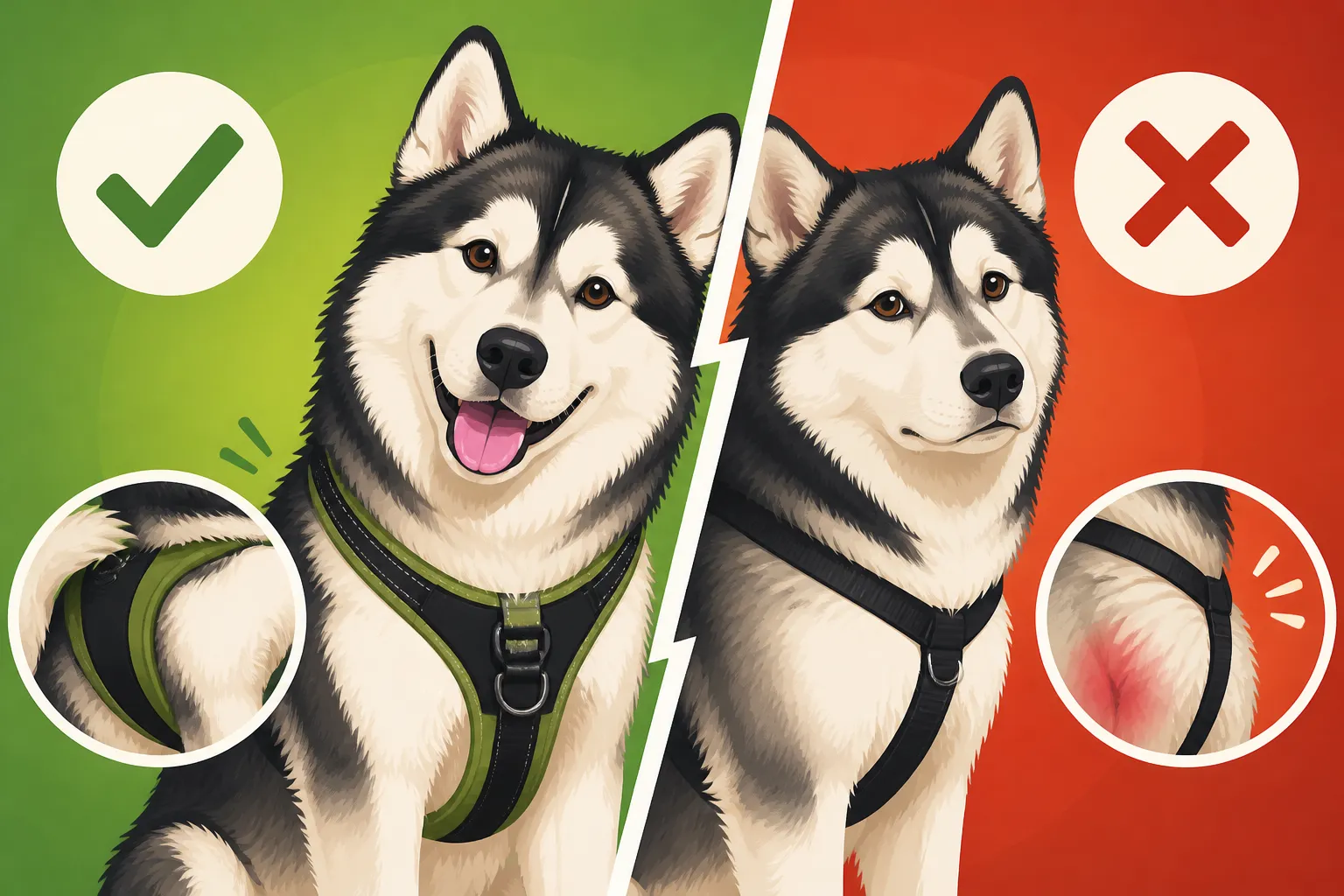
An ill-fitting harness is a matting machine. If it's too loose, it slides around more, increasing friction. If it's too tight, it digs into the coat and skin, compacting fur and potentially causing chafing. You want a snug fit that allows for two fingers to comfortably slide under the straps, but no more. The harness should not restrict shoulder movement, nor should it rub directly into the armpits.
Measure your Malamute carefully according to the manufacturer's guide. Pay attention to their chest girth and neck circumference. Remember that Malamutes can have deep chests, so what fits around the chest might be too loose or tight around the neck. A harness that sits too far back can also rub on the softer fur of the abdomen. Take the time to adjust all straps to ensure an even, comfortable, and stable fit that minimizes movement against the fur.
Harness Design: Minimizing Contact Points
The design of the harness also plays a crucial role. A Y-front harness, which has a strap running between the front legs and up the chest to meet the neck strap, often distributes pressure more evenly and keeps straps away from the sensitive armpit area better than an H-back style (which has a horizontal strap across the chest). Wider straps can also be beneficial, as they distribute pressure over a larger surface area, reducing the intensity of friction on any one spot. Some harnesses feature padding or fleece lining precisely where the straps contact the body, which can significantly reduce matting. Consider designs that minimize the number of straps or buckles that sit directly on dense fur areas.
Grooming Practices for Harness Wearers
Even with the perfect harness, consistent grooming is your best defense against matting. For a Malamute, grooming isn't just about looking good; it's about comfort and health.
Brushing Before and After Each Use
This might sound like a lot, but it’s truly the golden rule for harness-wearing Malamutes. Before putting the harness on, give your Malamute a quick brush, focusing on the areas where the harness will sit. This helps remove any loose undercoat that would otherwise get trapped. After taking the harness off, immediately brush those same areas again. This is your chance to untangle any small knots that may have started to form before they become full-blown mats.
A good slicker brush or an undercoat rake are your best friends here. Which Brush Gets Through a Malamute's Undercoat is key to effective grooming. By doing this regularly, you're preventing the buildup of loose hair and addressing tangles before they can compound. This simple habit can save you a lot of headache and your dog a lot of discomfort.
Targeted Brushing in Matting Zones
The chest, shoulders, and armpits are the prime suspects for harness-induced mats. Make these areas a priority during your regular grooming sessions. Use an undercoat rake to gently pull out dead undercoat, followed by a slicker brush to smooth out the guard hairs and check for any remaining tangles. Be extra gentle in the armpit area, as the skin there is thin and sensitive.
If you find a small tangle, don't just pull at it. Hold the fur closest to the skin with one hand and gently work the tangle out with the other using a wide-toothed comb or a mat splitter. A little cornstarch or detangling spray can also help loosen knots. Remember, consistency is key; a few minutes daily in these high-friction areas can prevent hours of painstaking mat removal. This builds on the general advice in How Often an Alaskan Malamute Needs Brushing.
Bathing and Drying Best Practices
When it's bath time, ensure you thoroughly wash and, more importantly, dry your Malamute's coat, especially if they're a regular harness wearer. A damp coat, when compressed by a harness, mats much more easily. After bathing, use high-velocity dryer, like those found on Amazon or Chewy, to blow out as much water as possible. This also helps to blow out loose undercoat. Make sure the coat is completely dry before putting a harness back on, or before any activity where the harness will be worn for an extended period. This is especially crucial for thick-coated breeds like Malamutes, as their undercoat can hold moisture for a long time. What a Force Dryer Does for a Malamute's Coat Blow goes into more detail about the benefits of proper drying.
Minimizing Harness Wear
While harnesses are essential for safety and control, especially for a strong, independent Malamute, you don't necessarily need them on 24/7.
Strategic Harness Removal
Consider removing the harness when it's not strictly necessary. If your Malamute is safe and secure in your fenced yard, or relaxing inside the house, take the harness off. This gives their coat a break, allows air to circulate, and reduces continuous friction on those sensitive spots. It’s a small change that can make a big difference in preventing constant coat compression. Of course, safety first – if there's any risk of escape or a need for immediate control, the harness should stay on. But for periods of rest, let that glorious fur breathe! This is part of What an Alaskan Malamute Needs Every Day.
Alternative Walking Gear for Specific Situations
For certain situations, you might consider alternatives. For training purposes, a head halter can offer excellent control without putting pressure on the chest and shoulders, though these require specific training to use comfortably. For quick potty breaks in a secure area, a wide, flat collar might suffice if your Malamute has impeccable leash manners and no tendency to pull or slip out. However, for serious walks, hikes, or any activity where pulling power is a factor, a well-fitted harness is usually the safest and most humane option for your Malamute's neck and throat. Always weigh the pros and cons for your specific dog and activity.
Dealing with Existing Mats and Skin Irritation
Despite your best efforts, sometimes mats happen. It’s not the end of the world, but addressing them promptly and correctly is crucial for your Malamute’s comfort and health.
Safe Mat Removal Techniques
Finding a mat can be disheartening, but resist the urge to just cut it out with scissors. You risk cutting your dog's skin, which is often pulled up into the mat. Instead, gather your tools: a wide-toothed comb, a mat splitter or dematting rake, a slicker brush, cornstarch or detangling spray (many pet stores, including Chewy, carry these), and a lot of patience.
First, apply cornstarch or a pet-safe detangling spray directly to the mat. Gently work it in with your fingers. This helps to lubricate the hairs and make them easier to separate. Next, using a mat splitter or a dematting rake, carefully slice through the mat (never cut parallel to the skin). This breaks the large mat into smaller, more manageable sections. Once the mat is split, use a wide-toothed comb, starting from the outermost edge of the mat and working your way in, always combing away from the skin. Hold the fur closest to the skin to minimize pulling. Once the comb can pass through, follow up with a slicker brush. This process is slow, and your Malamute will likely need breaks. Make it a positive experience with plenty of treats and praise. If a mat is too tight or large, do not hesitate to contact a professional groomer.
Recognizing and Addressing Skin Issues
Mats don't just pull hair; they can cause significant skin problems. Because they trap moisture, dirt, and reduce air circulation, the skin underneath a mat can become red, inflamed, irritated, or even develop sores and infections. These are sometimes called "hot spots" – areas of acute moist dermatitis that can be incredibly painful and spread rapidly.
Regularly check your Malamute's skin, especially in common matting zones. If you notice any redness, oozing, foul odor, or scabs beneath a mat, it's time for a vet visit. Your veterinarian can diagnose any skin infections, prescribe appropriate medications (like antibiotics or topical treatments), and ensure your Malamute isn't in pain. Prompt attention to these issues is vital to prevent them from worsening. This is why paying attention to Whether a Malamute's Crusty Skin Means Zinc Deficiency and other skin issues is so important.
Long-Term Coat Health Strategies
Beyond immediate mat prevention and removal, consider long-term strategies for overall coat health. A healthy coat is often less prone to matting.
Nutrition's Role in Coat Quality
A high-quality diet provides the essential nutrients for a healthy skin and coat. Look for foods rich in omega fatty acids, which contribute to skin hydration and a glossy coat. Some Malamutes, due to genetics, have difficulty absorbing zinc, which can manifest as skin and coat issues like dull fur or hair loss. Ensuring adequate zinc in their diet, either through their food (like premium kibbles or fresh food services like Ollie) or supplements, can make a difference. However, always consult your vet before adding supplements, especially zinc, as too much can be harmful. For more information, you can explore articles like Zinc Responsive Dermatosis in an Alaskan Malamute and Whether a Malamute Needs Zinc for Its Whole Life.
Establishing a Consistent Grooming Schedule
Regular grooming is non-negotiable for a Malamute. Beyond the before-and-after harness brushing, establish a weekly or bi-weekly full-body grooming session. During heavy coat blows, this might need to be daily. Use the right tools – undercoat rakes, slicker brushes, and a good comb. Consistency will keep the undercoat managed, minimize shedding around the house (saving your vacuum cleaner's life!), and drastically reduce matting potential. Don't forget that How Often an Alaskan Malamute Needs Brushing really varies depending on the season.
Professional Grooming as a Valuable Resource
Don't underestimate the power of a professional groomer, especially one experienced with double-coated breeds like Malamutes. They have specialized tools and techniques, including high-velocity dryers, that can effectively remove loose undercoat and even tackle stubborn mats that you might struggle with at home. Regular deshedding appointments with a professional, particularly during coat blows, can make home maintenance much easier. They can also advise on the best products and tools for your specific dog. It's an investment, but it can save you time, stress, and potential vet bills from untreated skin issues. For an idea of the costs, you can read What Grooming an Alaskan Malamute Costs and Whether a Groomer Will Take a Malamute in Coat Blow.
Disclaimer
This article is for general informational purposes only and does not constitute professional advice. Laws, prices and regulations vary by location and change over time. Consult a qualified professional for guidance on your specific situation.