Whether a Limping Malamute Puppy Needs X Rays
Finding your sweet, clumsy Alaskan Malamute puppy suddenly limping can send a jolt of panic through any dog owner. One moment they’re romping, full of boundless energy, and the next they’re holding up a paw or favoring a leg, leaving you wondering if it’s just a minor bump or something far more serious. This guide is here to walk you through the various reasons a Malamute puppy might limp, what steps you should take, and when those crucial X-rays become an absolute necessity.
Understanding Puppy Limping in Alaskan Malamutes
Alaskan Malamutes are magnificent dogs, known for their strength, stamina, and often, their somewhat boisterous puppy antics. Their growth is rapid, their bodies are heavy, and they are, unfortunately, predisposed to certain orthopedic conditions that can manifest during puppyhood. This combination means that a limp in a Malamute puppy is rarely something to just "wait and see" about for too long.
Common Causes of Puppy Lameness
When a Malamute puppy starts limping, the causes can range from incredibly minor to quite serious. On the less severe end, a puppy might have simply stepped on something sharp, gotten a thorn in its paw, or bruised a pad during an enthusiastic play session. These sorts of minor, acute injuries often resolve quickly with a bit of rest and typically don't involve swelling or intense pain. You might notice them favoring a paw for a short while, then seem perfectly fine a few hours later.
However, lameness can also stem from more significant issues. Growing pains, often referred to as panosteitis, can cause shifting lameness in young, fast-growing large breed dogs, including Malamutes. This condition, though painful, is usually self-limiting, meaning it resolves on its own as the puppy matures. On the more concerning side, conditions like fractures, dislocations, ligament tears, or infections can cause severe, persistent lameness. Sometimes, even seemingly innocuous limping can be a precursor to something like osteochondrosis dissecans (OCD) in joints like the shoulder or elbow, or early signs of a serious developmental orthopedic disease.
The Malamute's Unique Growth Challenges
Alaskan Malamutes are a giant breed, which means their skeletal system undergoes incredible changes in a relatively short period. Their growth plates, the areas of cartilage at the ends of long bones where growth occurs, remain open longer than in smaller breeds and are vulnerable to injury. Any trauma or unusual stress during this critical development phase can have lasting consequences.
Furthermore, Malamutes are genetically predisposed to certain conditions that impact their joints and bones. The most well-known is Hip Dysplasia in an Alaskan Malamute, where the hip joint doesn't form correctly, leading to looseness and eventually arthritis. While definitive diagnosis for breeding certification typically waits until The Age a Malamute Is Certified by OFA, early signs of hip dysplasia, or even elbow dysplasia, can appear as limping in puppies. Their heavy build also puts extra stress on developing joints, making them more susceptible to problems if their diet isn't balanced for slow, steady growth, or if they're over-exercised at a young age. It's a delicate balance during those formative months.
When to Worry and When to Watch
It's natural to want to avoid an unnecessary vet trip, but with a Malamute puppy, vigilance is key. Differentiating between a fleeting discomfort and a serious problem can be tough, but certain indicators should always push you towards seeking professional advice without delay.
Signs That Warrant Immediate Veterinary Attention
If your Malamute puppy is limping, don't hesitate to contact your veterinarian if you observe any of the following:
- Acute and Severe Pain: Your puppy cries out when touched, doesn't want to put any weight on the leg, or actively guards the affected limb.
- Swelling or Deformity: Any noticeable swelling around a joint or bone, or an unnatural angle to a limb, demands immediate attention. This could indicate a fracture, dislocation, or severe soft tissue injury.
- Persistent Limping: If the limp doesn't improve within a few hours of rest, or if it worsens, it's a red flag. A minor sprain might resolve quickly, but anything longer-lasting warrants a vet visit.
- Inability to Bear Weight: If your puppy cannot put any weight on the affected leg at all, or struggles intensely to do so, don't delay.
- Lethargy or Fever: If the limping is accompanied by other signs of illness, such as a lack of energy, loss of appetite, or a fever, there could be an underlying infection or systemic issue at play.
- Known Trauma: If you saw your puppy fall, get hit, or collide with something, even if the limping seems mild initially, a vet check is wise to rule out hidden damage.
In these situations, it's always better to err on the side of caution. A quick vet check can either reassure you or lead to early intervention, which is often critical for better outcomes.
Observation Period and Home Care
For very mild, intermittent limping without any other concerning signs, you might opt for a short observation period. This usually means a day or two of strict rest. Crate rest is often the best approach to ensure they don't exacerbate any potential injury. Avoid stairs, jumping, and any vigorous play.
During this time, pay close attention to:
- Weight Bearing: Is your puppy putting any weight on the leg, or is it completely off the ground?
- Pain Level: Do they react when you gently touch the limb? Does the pain seem to increase or decrease?
- Swelling/Heat: Carefully feel the limb for any warmth or swelling compared to the opposite leg.
- Appetite and Activity: Are they still eating and drinking normally? Are they otherwise behaving like themselves, just with a limp?
- Consistency: Does the limp come and go, or is it constant? Is it worse after rest or after exercise?
You can also gently examine their paw pads for foreign objects, cuts, or broken nails. Sometimes, simply removing a pebble or trimming a torn nail can resolve the issue. If the limp shows no improvement or worsens after 24-48 hours of strict rest, or if any of the "worry" signs appear, it's time to call the vet. Remember, a Malamute puppy is growing fast, and delaying diagnosis can sometimes lead to more complicated or permanent problems.
The Role of X-Rays in Diagnosing Malamute Puppy Lameness
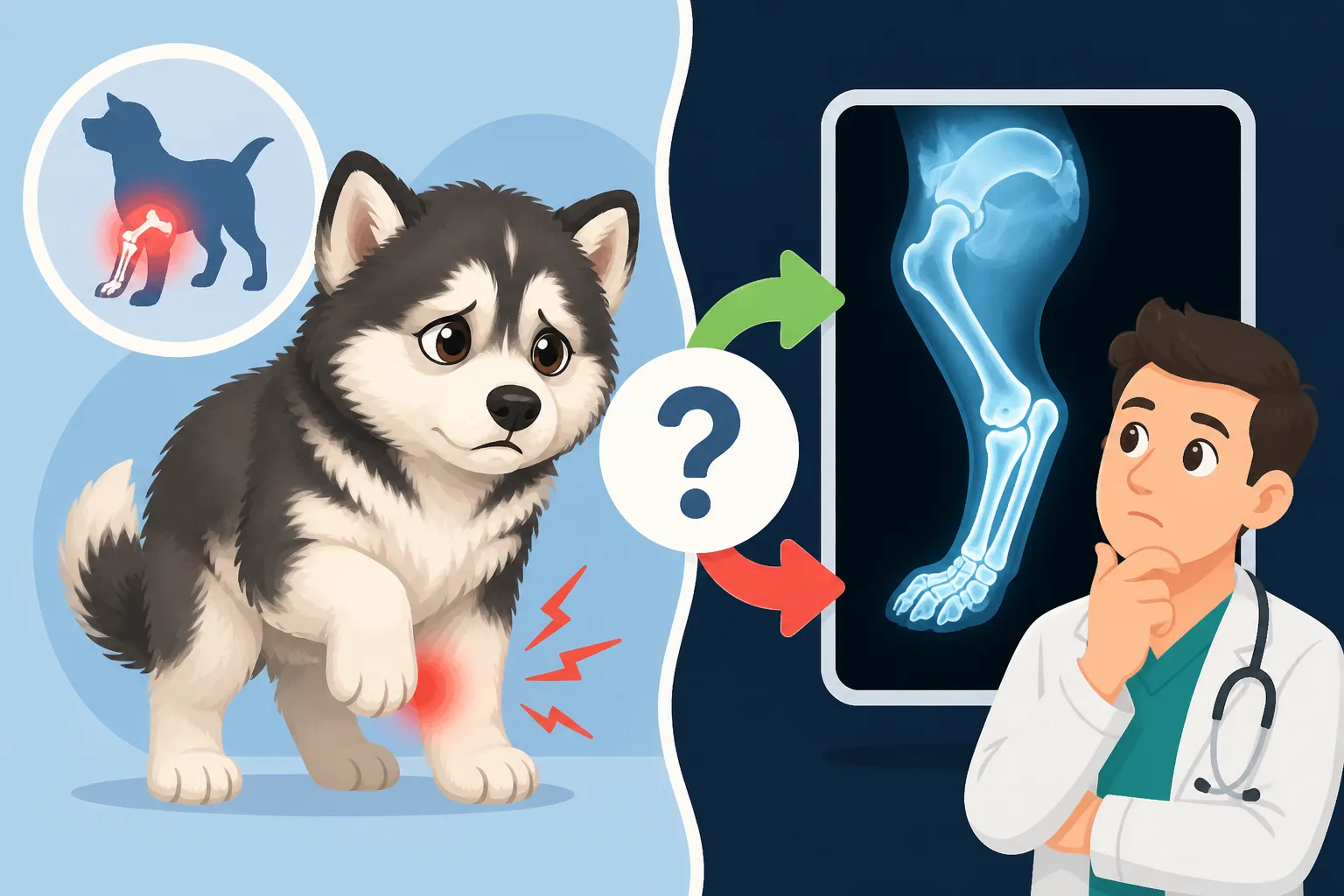
When your Malamute puppy comes into the veterinary clinic with a limp, one of the primary diagnostic tools your vet will consider are X-rays. These images provide invaluable insight into the skeletal structure, which is often the source of lameness in a rapidly growing, heavy breed like the Malamute.
What X-Rays Can Reveal
X-rays, or radiographs, use electromagnetic radiation to create images of the inside of your puppy's body, primarily bones. For a limping Malamute puppy, X-rays are crucial because they can unveil a multitude of underlying issues:
- Fractures: Clearly show broken bones, from hairline cracks to complete breaks. This is critical for immediate pain relief and proper healing.
- Dislocations: Reveal if a bone has been displaced from a joint, such as a dislocated hip or elbow.
- Growth Plate Injuries: Highlight damage to the epiphyseal plates, which are still open in puppies. Injuries here can impact future bone growth and development.
- Osteochondrosis (OCD): Early signs of this condition, where cartilage doesn't properly ossify and can flap free within a joint, can be seen. This often affects the shoulder, elbow, or stifle (knee).
- Early Signs of Dysplasia: While definitive evaluations for hip or elbow dysplasia often wait until the puppy is older, X-rays can sometimes reveal subtle changes or excessive joint laxity that are indicative of early-onset Hip Dysplasia in an Alaskan Malamute or elbow dysplasia.
- Bone Infections or Tumors: Though less common in young puppies, X-rays can sometimes show changes in bone density or structure that suggest these more serious pathologies.
- Foreign Objects: Occasionally, a foreign object embedded deeply in the paw or limb that isn't visible externally might be spotted.
X-rays give your vet a clear picture of the bone structure, helping to pinpoint the exact source of your puppy's pain and guiding the most appropriate treatment plan.
When X-Rays Are Typically Recommended
Your veterinarian will typically recommend X-rays for your Malamute puppy if:
- The Limping is Persistent or Severe: If your puppy has been limping for more than 24-48 hours with no improvement, or if the limp is pronounced and causes significant pain, X-rays are usually the next step after a physical examination.
- Physical Examination Reveals Specific Concerns: During palpation, your vet might feel swelling, hear crepitus (a crunching sound), or detect instability in a joint, which would strongly indicate the need for imaging.
- There's a History of Trauma: Even if the limping seems minor after a fall or accident, X-rays can rule out hidden fractures or soft tissue damage that might not be immediately obvious.
- Pain is Localized to a Specific Area: If your puppy reacts strongly when a particular joint or bone is manipulated, X-rays can target that area specifically.
- Breeding or Genetic Predispositions: Knowing that Malamutes are prone to conditions like hip and elbow dysplasia means that even subtle signs of lameness in a puppy might prompt earlier imaging to catch developmental issues.
It's important to remember that X-rays are a snapshot in time. Sometimes, early changes of conditions like OCD or dysplasia might not be immediately obvious, and your vet might recommend follow-up imaging or further diagnostics if clinical signs persist.
Preparing Your Puppy for X-Rays
Getting a large, wiggly Malamute puppy to lie perfectly still for X-rays can be quite a challenge, especially if they are in pain. For this reason, many veterinarians will recommend sedation for optimal quality images.
Sedation ensures that your puppy is relaxed and still, allowing the veterinary team to position them correctly without causing additional stress or pain. This is particularly important for getting clear, diagnostic images of joints like the hips and elbows, where specific positioning is required to evaluate joint integrity. Sedation also reduces the need for multiple attempts, minimizing radiation exposure and stress for your puppy.
Your vet will discuss the sedation process with you, including any fasting requirements beforehand and potential risks, though modern sedatives are generally very safe for young, healthy puppies. If your Malamute puppy is insured with a plan like Healthy Paws, it's worth checking what diagnostic costs, including X-rays and sedation, are covered. Understanding What an Emergency Vet Visit Costs for a Malamute and how your insurance might help can ease some financial stress during an already worrying time.
Beyond X-Rays: Other Diagnostic Tools and Treatments
While X-rays are often the first line of defense in diagnosing a Malamute puppy's limp, they're not always the final answer. Sometimes, the problem lies in soft tissues that X-rays can't visualize, or the initial images might indicate a need for more advanced investigation.
Advanced Imaging and Specialist Referrals
If X-rays don't provide a clear diagnosis, or if they suggest a complex issue, your veterinarian might recommend further advanced imaging or a referral to a veterinary orthopedic specialist.
- Computed Tomography (CT) Scans: CT scans provide highly detailed, cross-sectional images of bones and soft tissues. They are excellent for visualizing complex fractures, subtle bone lesions, or detailed assessment of joint surfaces, especially in areas like the elbow where discerning issues with X-rays alone can be challenging.
- Magnetic Resonance Imaging (MRI): MRI excels at visualizing soft tissues – muscles, tendons, ligaments, cartilage, and spinal cord. If your Malamute puppy's limp is suspected to be due to a ligament tear (like a cranial cruciate ligament injury) or a problem within the joint cartilage not visible on X-rays, an MRI can be invaluable.
- Arthroscopy: This is a minimally invasive surgical procedure where a tiny camera is inserted into a joint. It allows the specialist to directly visualize the inside of the joint, assess cartilage damage, and even perform repairs during the same procedure. This is often used for conditions like OCD or fragments within joints.
A referral to a board-certified veterinary orthopedic specialist is often crucial for complex cases. These specialists have advanced training and experience in diagnosing and treating bone and joint conditions, offering the best possible care for your Malamute puppy.
Treatment Options Based on Diagnosis
The treatment plan for your limping Malamute puppy will entirely depend on the underlying diagnosis.
- Rest and Conservative Management: For mild sprains, strains, or conditions like panosteitis, strict rest is often the primary treatment. This might involve crate rest, limited leash walks, and anti-inflammatory medications to manage pain. Joint Supplements for an Alaskan Malamute might also be recommended, especially for growing puppies with joint stress.
- Medication: Non-steroidal anti-inflammatory drugs (NSAIDs) are commonly prescribed to reduce pain and inflammation. In cases of infection, antibiotics would be necessary.
- Surgery: For fractures, dislocations, severe ligament tears (like a torn ACL), or advanced cases of hip or elbow dysplasia, surgery might be the most effective, or only, option. The type of surgery will vary greatly depending on the specific condition.
- Physical Therapy: Post-operative rehabilitation or physical therapy is becoming increasingly common and crucial for optimal recovery. This can include exercises, hydrotherapy, and therapeutic massage to rebuild strength, improve range of motion, and reduce pain.
Your vet will discuss all available options, including the pros, cons, and prognosis for each, helping you make an informed decision for your puppy's health.
The Importance of Early Intervention
For a growing Alaskan Malamute puppy, early diagnosis and intervention are paramount. Delaying treatment for orthopedic issues can lead to several problems:
- Worsening Condition: A minor injury can become a major one if not rested. Developmental conditions like dysplasia can progress, causing more irreversible damage to joints if not managed early.
- Compensatory Injuries: When a puppy favors one leg, it puts extra strain on the other limbs and the spine, potentially leading to new injuries or chronic pain in other areas of the body.
- Long-Term Pain and Arthritis: Untreated or improperly managed orthopedic issues in puppyhood often lead to premature and severe arthritis, significantly impacting a Malamute's quality of life and potentially shortening The Ten to Fourteen Years an Alaskan Malamute Lives.
- More Complex and Costly Treatments: Catching issues early can sometimes allow for less invasive and less expensive treatments. Waiting often means the condition has progressed to a point where more aggressive, and thus more costly, surgical interventions or lifelong management are required.
Investing in a thorough diagnostic workup, including X-rays when recommended, means investing in your Malamute puppy's future health and comfort. If you're concerned about costs, discussing pet insurance options like those from Healthy Paws before problems arise can be incredibly beneficial. Learning about Whether a Malamute Owner Should Buy Insurance and reviewing policies for how they handle inherited conditions can be critical, as some insurers might have stipulations around Whether an Insurer Excludes Malamute Inherited Disease.
| Condition / Symptom | Typical Onset Age (Malamute Puppy) | Key Signs | X-Ray Recommendation | Other Diagnostics / Actions |
|---|---|---|---|---|
| Minor Sprain/Strain | Any age | Mild, intermittent limp, often resolves with rest within 24 hours. No swelling, no acute pain when touched. | Usually not immediately, but if persistent (>24-48 hrs) or worsens. | Rest, observation, pain management. |
| Panosteitis ("Growing Pains") | 6-18 months | Shifting lameness (limping affects different legs at different times), pain on palpation of long bones, generally good appetite/energy otherwise. | Yes, to rule out other causes; often shows characteristic bone changes. | Pain management. |
| Fracture / Dislocation | Any age | Acute, severe non-weight-bearing lameness, swelling, deformity, intense pain. | Immediately and mandatory. | Surgical repair often required. |
| Hip/Elbow Dysplasia (Early Signs) | 4-12 months | Subtle limp, bunny hopping, reluctance to play/jump, difficulty rising, stiffness after rest, pain on extension/flexion of joint. Can be unilateral or bilateral. | Yes, for early detection and assessment of joint laxity/changes. | Potential CT/MRI, specialist referral, medical or surgical management. |
| Growth Plate Injury | Up to 12-18 months | Limp after trauma, pain and swelling around joint, potentially visible deformity. | Immediately and mandatory. | Surgical intervention, careful monitoring of growth. |
| Osteochondrosis (OCD) | 4-12 months | Persistent lameness (often in shoulder or elbow), stiffness, reduced range of motion, pain on joint manipulation. | Yes, to visualize cartilage flaps or subchondral bone lesions. | Potential CT/MRI, arthroscopy, surgical removal of fragments. |
| Foreign Object in Paw | Any age | Acute limping, licking paw, redness, swelling on paw, may or may not be visible. | If deeply embedded and not visible externally. | Manual removal, cleaning, antibiotics if infected. |
Disclaimer
The information provided in this article is for general educational purposes only and is not intended to be a substitute for professional veterinary advice, diagnosis, or treatment. Always seek the advice of your veterinarian or other qualified animal health provider with any questions you may have regarding a medical condition. Never disregard professional veterinary advice or delay in seeking it because of something you have read in this article.