Whether Pavement Burns an Alaskan Malamute’s Pads
The worry is real for any Malamute owner: that scorching summer pavement could literally burn your beloved dog's paws. It's a terrifying thought, especially when you know how much your Malamute thrives on activity, yet is so susceptible to heat. This guide will walk you through understanding the dangers of hot pavement, how to recognize the signs of burned pads, and crucially, how to keep your Alaskan Malamute's precious paws safe and healthy through every season.
The Unseen Danger: Why Pavement Gets So Hot
It’s easy to think, "If it's comfortable for my shoes, it's fine for my dog," but that couldn't be further from the truth. The surfaces we walk on absorb and retain heat in ways our own bodies, protected by shoes, simply don't register. Your Malamute's paw pads, while tough, are directly exposed to this intense surface temperature, which can be significantly higher than the ambient air temperature.
How Heat Transfers to Your Malamute's Paws
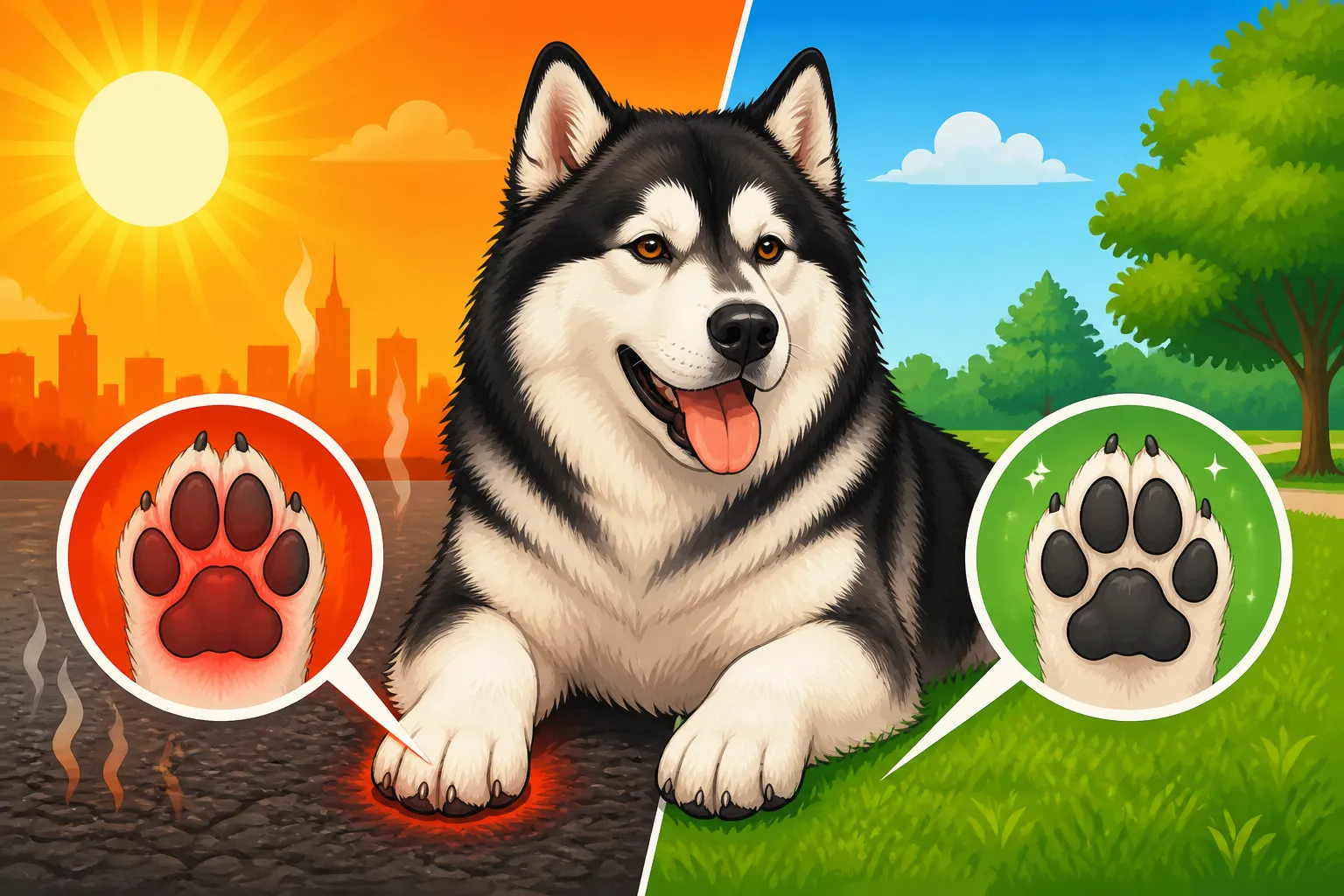
Imagine stepping barefoot onto black asphalt in direct sunlight on a 75-degree Fahrenheit day. It's probably uncomfortably warm, right? Now imagine that surface on a 90-degree day, or even higher. Asphalt, concrete, and even artificial turf can become incredibly hot, reaching temperatures that can literally cook an egg. This heat radiates upward and, more importantly, directly transfers into your Malamute's paw pads through prolonged contact. Unlike our feet, which we can quickly lift or protect with footwear, your dog’s paws are constantly in contact with this surface when walking.
The materials themselves play a huge role. Dark asphalt absorbs and retains heat far more efficiently than lighter concrete or natural grass. Artificial turf, a common sight in many suburban yards and dog parks, is notorious for getting alarmingly hot, often exceeding the temperature of natural grass by a significant margin. This isn't just about a quick sting; sustained contact can cause severe thermal burns, leading to pain, blistering, and even long-term damage.
The Tough, But Vulnerable, Malamute Paw Pad
Alaskan Malamutes are built for cold, harsh environments. Their paw pads are naturally thick, leathery, and rugged, evolved to provide traction and insulation on snow and ice, and to withstand rough terrain. This incredible natural armor allows them to pull heavy loads over vast distances in challenging conditions. You might think, given this resilience, that their pads are invincible.
However, this toughness comes with a specific design purpose: cold. It doesn't mean they are immune to extreme heat. In fact, their pads contain very few sweat glands – only between the pads themselves – meaning they can't effectively cool themselves through their feet like other parts of their body might try to do (like panting). Prolonged exposure to super-heated surfaces can quickly overwhelm their natural defenses, leading to burns. These burns can be deceptively slow to show, appearing as mild redness initially, but progressing to painful blisters and peeling skin within hours or even a day, much like a severe sunburn on human skin. It's a classic case of a tool being used outside its intended environment; their paws are amazing for ice, but not pavement that feels like a frying pan.
Recognizing the Red Flags: Signs of Burned Paw Pads
Catching a paw pad burn early can make a huge difference in your Malamute’s recovery and comfort. It's vital to be vigilant, especially during warmer months, and to know what to look for both during and after your walks.
Immediate Indicators During or After a Walk
When you're out and about, keep a close eye on your Malamute's behavior. If the pavement is too hot, they will often tell you in subtle, or not-so-subtle, ways. You might notice them:
- Limping or hopping: This is often one of the first and most obvious signs. They might favor one paw, or switch between paws.
- Lifting their paws off the ground: They might pick up their feet quickly, almost as if dancing, trying to minimize contact with the hot surface.
- Refusing to walk: Your normally enthusiastic Malamute might suddenly slow down, sit, or even lie down, digging in their heels and refusing to continue the walk. This isn't stubbornness; it's pain.
- Excessive licking or chewing at their paws: Once you stop or get home, they might immediately start licking their pads obsessively. This is a natural response to pain or discomfort.
- Pads appearing darker or redder: A quick check of their paw pads can reveal tell-tale signs. They might look unusually dark, inflamed, or reddened compared to their normal color.
- Blisters: In more severe cases, you might actually see blisters forming on the pads, similar to what you’d see on a human’s burned skin. These need immediate attention.
Remember that a Malamute, being a stoic breed, might not always vocalize their pain immediately. You need to read their body language and be proactive.
Longer-Term Symptoms and Complications
Sometimes, the full extent of a paw pad burn isn't immediately apparent. The initial discomfort might pass, only for more serious symptoms to emerge later. This delayed reaction can be especially frustrating for owners who thought their dog was fine.
- Peeling skin: A day or two after the incident, the burned outer layers of skin on the pads might start to peel away. This exposes the tender, sensitive skin underneath, making walking incredibly painful and increasing the risk of infection.
- Reluctance to put weight down days later: Your Malamute might be hesitant to stand, walk, or put full weight on their affected paws even when resting. They might spend more time lying down or shifting their weight frequently.
- Infections: Once the protective outer layer of skin is compromised, the pads become highly susceptible to bacterial infections. These can manifest as swelling, pus, foul odor, increased redness, and intensified pain. If you suspect an infection, immediate veterinary care is crucial. This is a common secondary issue with any skin integrity breach (see Whether a Malamute's Skin Infections Are Secondary).
- Scarring and sensitivity: Severe burns can lead to permanent scarring on the paw pads, which might make them more sensitive to future heat or cold, or change their texture. In the long run, this can impact your Malamute's ability to comfortably engage in activities they once loved.
Proactive Paw Protection: Keeping Your Malamute Safe
Prevention is always better than cure, especially when it comes to your Malamute’s paws. A few simple habits and the right gear can make all the difference in protecting them from scorching surfaces.
The "Five-Second Rule" and Timing Walks
This is the golden rule for summer walks: Place the back of your hand flat on the pavement for five seconds. If it's too hot for your hand to comfortably stay there, it's definitely too hot for your Malamute's paws. It's a simple, quick test that provides invaluable information. Don't skip it, even if the air feels mild.
The time of day you walk your Malamute is equally crucial. During summer, the pavement retains heat for hours after the sun begins to set. Aim for walks early in the morning before the sun has a chance to bake the ground. If you're an early riser, this is your prime window. Otherwise, wait until late in the evening, well after dusk, when surfaces have had ample time to cool down. Even on overcast days, pavement can heat up significantly. How early a Malamute should be walked in Summer and Why a Malamute Should Not Walk at Midday are not just suggestions, they're critical safety guidelines for breeds like Malamutes.
Essential Gear for Hot Weather Walks
Even with careful timing, sometimes you need extra protection. This is where paw balms and booties become indispensable tools in your Malamute care arsenal.
-
Paw Balms: These create a protective barrier on your dog’s pads, offering a layer of moisture and mild protection. While they aren't a substitute for avoiding dangerously hot surfaces, they can certainly help condition the pads and offer a small buffer against minor heat and irritation. Look for natural ingredients like beeswax, shea butter, and essential oils. Brands often found on Chewy or Amazon like Musher's Secret or natural paw balms can be a good start. Apply them regularly, especially before walks, to keep pads supple and resilient. Whether Paw Balm Helps an Alaskan Malamute delves deeper into their benefits.
-
Booties (Paw Protection): This is your Malamute's equivalent of shoes. For truly hot pavement, booties are the most effective way to protect against burns. They provide a physical barrier between the hot ground and your dog's pads. It might take some getting used to – your Malamute might do a funny high-step dance at first – but with patience and positive reinforcement, most dogs can learn to tolerate them. Look for durable, breathable booties with good grip and adjustable straps to ensure a secure fit. You might find a wide variety on Amazon, catering to different sizes and needs. Think of them not just for pulling in winter, but for daily walks in summer heat. Whether an Alaskan Malamute Needs Booties for Pulling is a good read if you're considering paw wear.
Choosing Cooler Walking Surfaces
Beyond timing and gear, consciously selecting where you walk can significantly reduce the risk of burns.
- Stick to natural surfaces: Grass, dirt trails, and shaded areas are your best friends in warm weather. These surfaces don't absorb and retain heat like asphalt or concrete. A walk through a local park on the grass, or a shaded nature trail, is a much safer bet than a stroll down a sunny sidewalk.
- Seek out shade: Even if you can't avoid pavement entirely, try to walk on the shady side of the street. The difference in surface temperature can be dramatic.
- Consider indoor options: On extremely hot days, sometimes the safest walk is no outdoor walk at all. Instead, consider indoor play, puzzle toys, or even a trip to a pet-friendly store with air conditioning. Your Malamute might prefer to lie in a cool spot inside than risk their paws on hot concrete. Remember, Summer Is the Season That Kills Alaskan Malamutes, so extreme caution is paramount.
| Air Temperature (Fahrenheit) | Asphalt Temperature (Fahrenheit) | Risk to Paw Pads |
|---|---|---|
| 77 | 125 | Potentially damaging after 60s |
| 86 | 135 | Painful after 30s |
| 90 | 143 | Causes burns in 1 minute |
| 95 | 150 | Causes burns in less than 1 minute |
| 102 | 160 | Immediate and severe burns |
Note: These are approximate values and can vary based on sunlight intensity, surface material, and humidity.
First Aid and Vet Care for Burned Paws
Even with the best precautions, accidents can happen. If you suspect your Malamute has burned paw pads, knowing what to do immediately and when to seek professional help is critical.
What to Do Immediately After a Suspected Burn
If you notice your Malamute limping, licking, or showing any signs of discomfort on their paws during or immediately after a walk on a hot surface, take these steps:
- Get off the hot surface immediately: Carry your Malamute if possible, or guide them to the nearest patch of grass or shade.
- Cool the paws: Gently rinse their paws with cool (not ice cold) water for several minutes. A hose on a gentle setting, a cool damp cloth, or even standing them in a shallow tray of cool water can help. The goal is to bring down the temperature of the pads and prevent further tissue damage. Do not use ice directly, as this can cause frostbite or further damage.
- Prevent licking: Once cooled, try to prevent your Malamute from licking or chewing their paws. Licking can introduce bacteria and worsen the injury. An Elizabethan collar (e-collar or "cone of shame") might be necessary if they are persistent.
- Examine the pads: Carefully inspect each paw pad. Look for redness, swelling, blisters, or any peeling skin. Take photos if you can, as this can be helpful for your vet.
- Comfort and rest: Keep your Malamute in a cool, comfortable environment and encourage them to rest. Avoid any further walking on hard or hot surfaces.
Remember that How to Cool an Overheated Alaskan Malamute contains broader advice, but applying cool water directly to paws is a great first step specifically for burns.
When to Seek Veterinary Attention
Not all paw pad injuries require an emergency vet visit, but it's always best to err on the side of caution. Here’s when you absolutely need to get your Malamute to a veterinarian:
- Presence of blisters: Any blisters, large or small, indicate a significant burn and need professional assessment to prevent infection and ensure proper healing.
- Deep redness, swelling, or peeling skin: If the pads are severely red, swollen, or if the skin is already peeling, this is a serious burn.
- Signs of severe pain: If your Malamute is continuously limping, refusing to put weight on a paw, crying, or showing obvious signs of distress, they need immediate veterinary care for pain management and wound treatment.
- Signs of infection: If you notice pus, a foul odor, increased swelling or redness days after the suspected burn, or if your Malamute develops a fever or lethargy, it’s likely an infection has set in. Untreated infections can lead to serious complications.
- Uncertainty: If you’re ever unsure about the severity of the burn or how to treat it, call your vet. They can guide you over the phone or advise you to bring your Malamute in.
A vet can properly assess the degree of the burn, clean the wound, prescribe antibiotics if infection is present or suspected, and provide pain relief. They might also apply special bandages to protect the pads and facilitate healing. Early intervention can significantly improve the outcome and prevent long-term issues for your Malamute’s precious feet.
Disclaimer
This article is for general informational purposes only and does not constitute professional advice. Laws, prices and regulations vary by location and change over time. Consult a qualified professional for guidance on your specific situation.