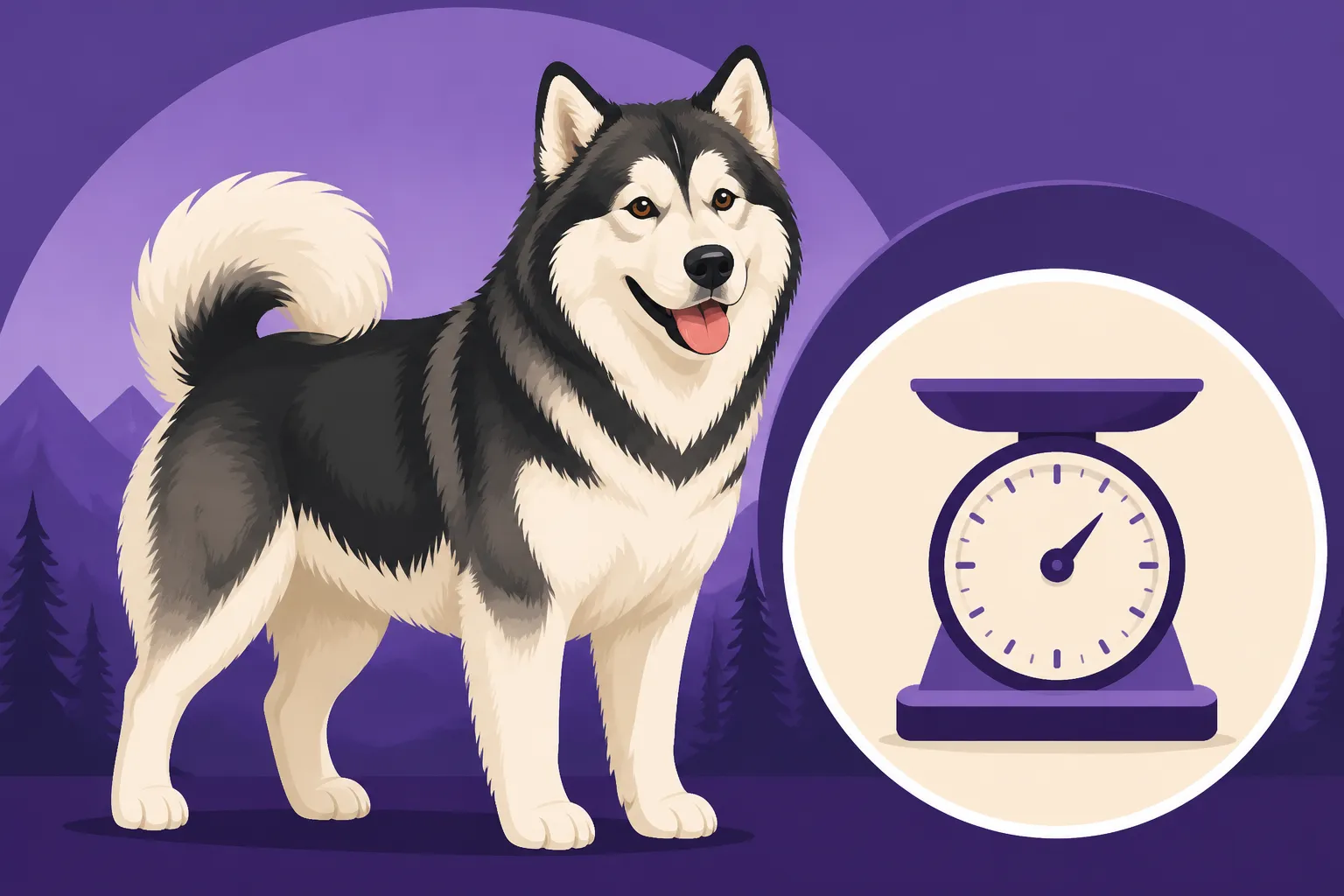
What an Adult Female Alaskan Malamute Weighs
One of the biggest head-scratchers for new Alaskan Malamute owners, and even some seasoned ones, is figuring out if their beloved female is at a healthy weight. The breed standard gives a range, but the reality on the ground, with all the variations in genetics, lifestyle, and individual metabolism, can leave you wondering if your girl is too slender, too hefty, or just right. This guide will walk you through what to expect, how to assess her condition, and why the scale isn't the only, or even the best, tool in your arsenal.
Understanding the Official Weight Standard for Female Alaskan Malamutes
When you first dive into researching the Alaskan Malamute breed, you'll inevitably stumble upon the breed standard. This is the blueprint for the ideal Malamute, set by kennel clubs, and it includes guidelines for height and weight. For an adult female Alaskan Malamute, the standard typically suggests a weight range of 50 to 75 pounds (approximately 23 to 34 kilograms). This might sound straightforward, but let me tell you, it's rarely that simple in real life.
The standard represents what’s considered the ideal working Malamute – a dog built for freighting, with power, endurance, and a robust but not overweight frame. It’s a vision of what the Mahlemut people sought in their dogs, designed for efficiency and strength over long distances. However, it's crucial to understand that this is an ideal, a target, not a strict pass-fail metric. Many perfectly healthy, well-conditioned female Malamutes will naturally fall outside this range, sometimes a bit under, sometimes a bit over, and that's often perfectly fine. The emphasis is on proportion and overall condition, reflecting their historical role.
Think of it like human height and weight charts; there’s an average, but a healthy person can be taller or shorter, heavier or lighter, than that average. What matters more is how that weight is carried, the muscle tone, and the energy levels. So, while the 50-75 pound range gives us a good starting point, don't let it become a source of anxiety if your female Malamute isn't precisely within those numbers. Your vet will often look at her body condition score first and foremost, rather than just the number on the scale.
The Many Factors Influencing a Female Malamute's Actual Weight
The official standard is one thing, but the reality of your individual Malamute’s weight is a complex interplay of several factors. It's why two female Malamutes of the exact same height can have vastly different weights and both still be perfectly healthy. It’s also why simply looking at a number on a scale can be misleading.
Genetic Lineage and Breeding
Just like with people, genetics play a huge role in determining an Alaskan Malamute's size and build. Historically, there were distinct lines, most notably the Kotzebue and M'Loot lines, and even within modern breeding, some breeders aim for a slightly larger, more robust Malamute, while others prefer a more compact, traditional freighting type. If your Malamute comes from a line known for producing larger females, she might naturally sit at the higher end or even slightly above the standard 75 pounds and still be lean and muscular. Conversely, a female from a more refined line might be closer to the 50-pound mark. The Kotzebue and M'Loot Lines Behind Every Modern Malamute Knowing a bit about your dog's ancestry, if possible, can give you clues about her potential adult size. This is purely genetic predisposition, not necessarily an indicator of health unless it leads to extreme deviations.
Diet, Nutrition, and Metabolism
What you feed your Malamute, how much, and how often, will directly impact her weight. Malamutes are known for having an incredibly efficient metabolism, a trait passed down from their ancestors who survived harsh Arctic conditions on sparse rations. This means they often require less food than you might expect for a dog of their size. The Efficient Metabolism That Surprises Every New Malamute Owner Overfeeding, even slightly, can quickly lead to weight gain because their bodies are so good at converting calories into energy and storing any excess.
The type of food also matters. A high-quality kibble formulated for large breeds or active dogs will provide dense nutrition, whereas a lower-quality food might require larger portions, potentially leading to overeating and weight gain. Many owners turn to platforms like Chewy or Ollie for specialized kibble or fresh food options that cater to their Malamute's nutritional needs, especially given their unique metabolism and tendency towards zinc deficiencies in some cases. It's about finding the right balance of protein, fat, and carbohydrates for her activity level. Feeding a Working Malamute Against a Pet One
Activity Level and Lifestyle
An Alaskan Malamute is, at its core, a working dog. They were bred to pull, to expend energy, and to be constantly active. A female Malamute who regularly engages in activities like weight pull, sledding, skijoring, or even long, strenuous hikes will naturally have more muscle mass and a leaner physique than a Malamute who primarily enjoys leisurely strolls around the block. Muscle weighs more than fat, so a highly conditioned working female might weigh more than a less active one, but appear much leaner.
The type and intensity of exercise directly influence her caloric needs. A dog that pulls heavy loads regularly needs more fuel than one whose main job is to keep the couch warm. Understanding this distinction is key to managing her weight. A sedentary Malamute who eats like a working Malamute will almost certainly become overweight. How Much Exercise an Alaskan Malamute Needs
Spay/Neuter Status and Age
The decision to spay a female Malamute, while offering many health benefits, can also impact her metabolism. Many spayed dogs experience a decrease in their metabolic rate, making them more prone to weight gain if their caloric intake isn't adjusted accordingly. How a Malamute's Appetite Changes After Neutering It's a common scenario where owners continue feeding the same amount of food post-spay, only to find their Malamute slowly putting on pounds.
Age also plays a significant role. A young female Malamute is still growing, often reaching her full height by 12-18 months but continuing to fill out in terms of muscle and chest depth until she's two to three years old. The Age an Alaskan Malamute Reaches Full Weight As she enters her senior years, typically around eight years old, her activity levels may decrease, and her metabolism might slow further, requiring another adjustment to her diet. Caring for an Old Alaskan Malamute
Monitoring Your Female Malamute's Weight for Optimal Health
Since relying solely on a number on a scale can be misleading, especially with a breed as diverse in build as the Alaskan Malamute, the most effective way to monitor your female’s weight is through regular body condition scoring. This involves using your hands and eyes to assess her fat reserves and muscle mass.
The "Hands-On" Body Condition Check
This is probably the single most important tool in your weight management arsenal. It’s what veterinarians use, and it's something you can easily do at home:
- Ribs: Gently run your hands along her sides, just behind her shoulders. You should be able to feel her ribs without having to press hard. They shouldn't be sticking out like a washboard (too thin), nor should you have to dig through a layer of fat to find them (too heavy). You want to feel a thin layer of fat over them, much like the back of your hand.
- Waistline: Stand above her and look down. You should see a noticeable "tuck" or waistline behind her rib cage, before her hips. If she looks like a straight line from her shoulders to her tail, she's likely overweight. If the tuck is overly pronounced, she might be too thin.
- Abdominal Tuck: When she's standing, look at her from the side. Her abdomen should tuck up slightly from her rib cage, not hang low or be straight across.
- Spine and Hip Bones: You should be able to feel her spine and hip bones with slight pressure, but they shouldn't be visually prominent or feel sharp to the touch.
Remember, the Malamute's dense double coat can be incredibly deceptive. What looks like a perfectly proportioned dog under all that fluff might actually be carrying extra pounds, or conversely, be a bit too lean. How to Spot a Heavy Malamute Under Its Coat This is why the hands-on check is so vital.
Regular Weigh-Ins and Their Limitations
While the body condition score is paramount, weighing your Malamute periodically can still be useful, especially to track trends. Most veterinary clinics have large scales that can accommodate an adult Malamute, and you can ask to pop in for a quick weigh-in between appointments. At home, a heavy-duty pet scale or even carefully weighing yourself, then weighing yourself holding your dog, can give you a rough idea.
The key is not to obsess over the exact number but to observe changes over time. Is she steadily gaining weight? Is she suddenly losing? These trends, combined with her body condition, are what warrant attention. A healthy adult female Malamute's weight should remain relatively stable once she's reached maturity.
| Body Condition | Ribs | Waistline | Abdominal Tuck | What it Means | Action |
|---|---|---|---|---|---|
| Too Thin | Easily visible, no fat cover, sharp | Extremely pronounced | Severely tucked | Insufficient fat and muscle, potentially unhealthy | Consult vet, increase quality food, monitor |
| Ideal | Easily felt with thin fat cover | Clearly visible | Noticeably tucked | Healthy, well-proportioned, good muscle mass | Maintain current diet and exercise |
| Overweight | Hard to feel through thick fat | Barely visible | Straight or sagging | Excess fat, potential health risks | Reduce food, increase exercise, consult vet |
| Obese | Cannot feel, significant fat deposits | None, rounded | Hanging, distended | Significant health risks, major lifestyle changes needed | Immediate vet consult, strict diet/exercise plan |
Diet Adjustments and Professional Guidance
If you find that your female Malamute is consistently carrying extra weight based on her body condition, it's time to make some adjustments. Start by evaluating her caloric intake. Are you feeding according to the guidelines on her food bag? Remember, these are often just starting points and your Malamute's efficient metabolism might mean she needs less. Consider measuring her food accurately with a scale, not just a scoop, to avoid accidental overfeeding. You can find durable measuring cups and dog-friendly scales on sites like Amazon.
You might need to switch to a lower-calorie food, reduce portion sizes, or increase her exercise. Don't make drastic changes overnight, as this can upset her digestive system. Gradual adjustments, combined with increased activity, are often most effective. If you’re unsure, or if your Malamute is significantly underweight or overweight, a visit to your veterinarian is crucial. They can rule out underlying medical conditions, such as Whether a Malamute Gets Hypothyroidism, and help you formulate a safe and effective weight management plan tailored to her specific needs. Whether a Malamute Should Be Screened Before Its First Season They can also guide you on appropriate food choices and supplementations.
Common Weight Misconceptions and Troubleshooting
There are several common myths and misunderstandings when it comes to an Alaskan Malamute's weight that can lead owners astray. Let's tackle some of them head-on.
The "Bigger is Better" Myth and "Giant Malamutes"
It’s easy to be impressed by a truly massive Malamute, but the idea that "bigger is better" is a misconception and often detrimental to the dog's health. The breed standard sets a reasonable size and weight for a reason: it's what allows them to perform their traditional work efficiently and healthily. Overly large or "giant" Malamutes, while impressive to look at, are often prone to a host of health issues, including joint problems like Hip Dysplasia in an Alaskan Malamute, increased strain on their cardiovascular system, and a potentially shorter lifespan. Whether a Giant Alaskan Malamute Is a Real Type Breeders who intentionally breed for exaggerated size are often prioritizing aesthetics over health and function. A healthy Malamute is a well-proportioned one, not necessarily the largest.
Malamutes vs. Huskies: Different Builds, Different Weights
One of the most frequent confusions, especially for those new to Northern breeds, is mistaking an Alaskan Malamute for a Siberian Husky, or assuming they should be similar in weight. They are distinctly different breeds with different purposes and builds. Siberian Huskies are built for speed and endurance, leaner and lighter, typically with females weighing between 35-50 pounds. Alaskan Malamutes, on the other hand, were bred for freighting – hauling heavy loads over long distances at a slower, steadier pace. This requires a heavier bone structure, more muscle, and a more robust frame. So, if your female Malamute weighs more than a friend's female Husky, that's not a sign she's overweight; it's simply a reflection of her breed's design. The Alaskan Malamute Against the Siberian Husky
The Deceptive Fluff: When Coat Hides Condition
As mentioned earlier, a Malamute's glorious double coat is a marvel of nature, providing insulation in extreme cold. It's also an excellent camouflage for weight fluctuations. Many an owner has been shocked at their Malamute's true shape after a thorough bathing and deshedding, or after a medical clipping. The thick undercoat and coarse guard hairs create an illusion of bulk that can easily hide both a too-thin frame and excess fat. This is precisely why the hands-on body condition check is so critical. You need to feel what's under all that fluff, not just see it. This is particularly true during their famous "coat blow" periods, where they shed massive amounts of undercoat, making them look significantly thinner temporarily. The Malamute Coat Blow That Fills a Vacuum in an Afternoon
"They Need to Be Heavy to Pull": A Myth Debunked
While Malamutes are powerful freighting dogs, the idea that they need to carry extra weight to pull effectively is incorrect. In fact, excess weight puts unnecessary strain on their joints, heart, and lungs, making them less efficient and increasing their risk of injury. A working Malamute should be lean, muscular, and well-conditioned, not heavy with fat. Elite freighting dogs are often the picture of athletic prowess: strong, powerful, and fit, with visible muscle definition and a healthy tuck. Whether a Working Malamute Is Leaner Than a Show One Their weight comes from bone and muscle, not stored fat. Providing them with a balanced diet and consistent, appropriate exercise is the best way to ensure they are at their optimal working weight, whether they are pulling a sled or just accompanying you on long walks.
Disclaimer
This article is for general informational purposes only and does not constitute professional advice. Laws, prices and regulations vary by location and change over time. Consult a qualified professional for guidance on your specific situation.