Whether a Shaved Alaskan Malamute Regrows Its Coat
It’s a common dilemma for Alaskan Malamute owners, especially when summer hits or a particularly epic coat blow commences. You look at that magnificent, dense fur, feel your own sweat, and wonder, "Would shaving my Malamute help them cool down? And if I do, will that beautiful coat ever grow back the same?" It’s a completely understandable thought, born from love and perhaps a little desperation. This guide is here to unravel the truth about shaving an Alaskan Malamute, what happens to their unique coat, and why reaching for those clippers might not be the solution you're hoping for.
The Magnificent Malamute Coat: A Masterpiece of Nature's Engineering
Before we even consider altering it, it’s vital to understand just how incredible and functional an Alaskan Malamute’s coat truly is. It's not just hair; it’s an intricate, purpose-built survival suit.
What Exactly Is a Double Coat? Guard Hairs and Undercoat
An Alaskan Malamute possesses what we call a "double coat," a marvel of natural insulation designed to thrive in extreme Arctic conditions. Think of it as a two-layer system, each with its own crucial job.
The outer layer consists of coarse, stiff guard hairs. These aren't just for show; they’re incredibly durable, weather-resistant, and somewhat water-repellent. They act like a protective shield, deflecting snow, rain, and dirt, and preventing moisture from penetrating to the skin. They're also essential for regulating temperature by allowing air to circulate. Beneath this protective layer lies the undercoat. This is where the real magic happens for warmth. It's a dense, soft, woolly layer of fine hair that traps air close to the Malamute's body. This trapped air creates an insulating barrier, keeping them warm in freezing temperatures. In fact, a thick, healthy undercoat can make it incredibly difficult for cold to reach their skin.
The Crucial Functions of the Malamute's Coat: Insulation and Protection
The Malamute's coat performs several life-sustaining functions, far beyond simply looking regal. Its primary role is insulation, working tirelessly year-round. In winter, as mentioned, the undercoat traps warm air, preventing hypothermia. But here's the kicker, and where many owners misunderstand: this same double coat also insulates them from heat.
In summer, the guard hairs stand away from the body, allowing air to circulate and creating a natural cooling system. The undercoat, while thinner in warmer months due to shedding, still provides a barrier against the sun's intense rays and helps maintain a stable body temperature. It’s like a thermos – keeping cold things cold and warm things warm. It protects against sunburn, insect bites, and minor scrapes, acting as a natural armor. Without these layers, a Malamute would be exposed to the elements, making them more susceptible to overheating and various skin issues.
Why It's So Perfect for Their Original Environment
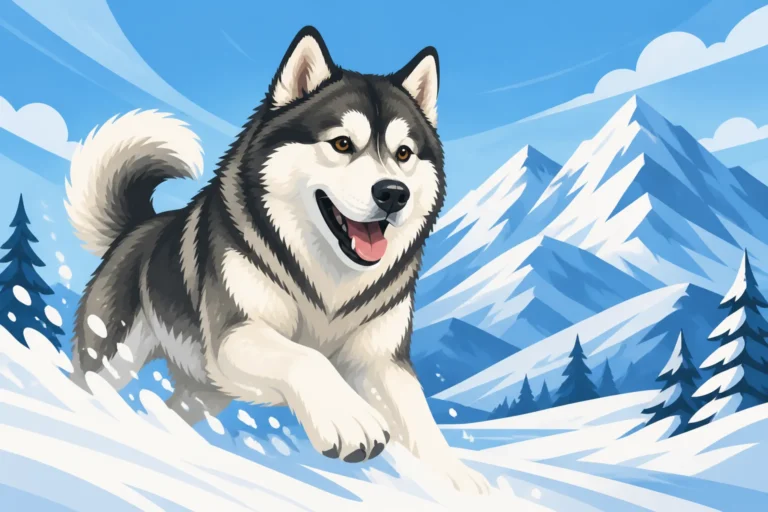
Imagine the harsh, unforgiving landscape of the Arctic, where the Mahlemut people developed this incredible breed. The temperatures plummet well below freezing, winds whip snow into blizzards, and the sun, when it does appear, can be surprisingly intense against the white landscape. The Malamute’s coat was literally a matter of survival. It allowed them to sleep comfortably in snowdrifts, pull heavy sleds for miles across frozen tundra, and withstand fierce storms, all while maintaining their core body temperature. It’s a testament to natural selection and purposeful breeding. This coat is not a fashion accessory; it is an evolutionary masterpiece. Removing it is akin to taking a deep-sea diver's dry suit away and expecting them to stay warm. You can learn more about their heritage in The Mahlemut of Kotzebue Sound Bred the Alaskan Malamute.
The Temptation to Shave: Why Owners Consider It
Despite understanding the natural genius of their Malamute’s coat, many owners still find themselves eyeing the clippers. The reasons are often rooted in a desire to help their beloved companion, or simply manage the realities of living with such a magnificent animal.
Misconception: Shaving for Heat Relief
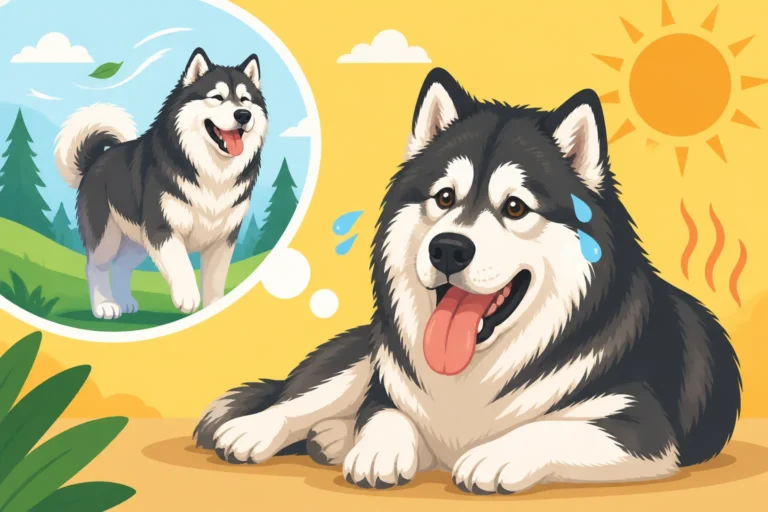
This is, by far, the most common reason people consider shaving a Malamute. We humans shed our clothes when we get hot, so it seems logical that a dog with a thick fur coat would benefit from a "haircut" in summer, right? Unfortunately, this is a dangerous misconception. As we discussed, the double coat actually helps to insulate them from the heat, much like how desert dwellers wear loose, layered clothing to protect themselves from the sun.
When you shave off that protective layer, you expose their skin directly to the sun's harsh UV rays. This not only increases the risk of sunburn, but it also means their body has to work harder to regulate its temperature. Without the natural air circulation provided by the guard hairs, a shaved Malamute can actually get hotter and struggle more with heatstroke. Many owners have shared stories of their shaved Malamutes panting more heavily and seeking shade even more frantically than before. It's truly counterproductive, and in extreme cases, can contribute to Summer Is the Season That Kills Alaskan Malamutes.
Practical Challenges: Extreme Shedding and Matting
Let's be real: living with an Alaskan Malamute means living with fur. A lot of fur. Twice a year, they experience what’s known as a "coat blow," where they shed their entire undercoat in preparation for the coming season. This can be absolutely overwhelming, making you feel like your house is perpetually coated in a layer of Malamute fluff. It’s during these times, when you’re constantly vacuuming and brushing, that the idea of just shaving it all off can feel incredibly tempting. The Malamute Coat Blow That Fills a Vacuum in an Afternoon is no exaggeration!
Additionally, if not regularly groomed, a Malamute’s dense coat can develop mats, especially behind the ears, under the legs, and around the tail. Mats can be painful, pulling on the skin, and can even lead to skin infections if left untended. Severe matting might necessitate shaving small areas, but some owners, faced with a severely matted dog, might consider a full shave as the easiest, albeit drastic, solution. The sheer volume of fur that comes off during a coat blow is astonishing, as described in How Much Undercoat Comes Off an Alaskan Malamute.
Aesthetic Reasons or Misunderstandings
Sometimes, the desire to shave comes from a place of simply wanting a tidier, "shorter-haired" dog, or perhaps an owner is simply unaware of the specific nature of a Malamute’s coat. They might see other breeds with short haircuts and assume it's a universal solution for all dogs. New owners, especially, might not fully grasp the implications or purpose of the double coat. There's also the rare instance where a Malamute owner might mistakenly believe their dog has a skin condition that requires shaving for treatment, when often, proper grooming and veterinary care can address these issues without resorting to clippers. Always consult a vet if you suspect a skin condition, as shaving can sometimes exacerbate problems rather than solve them. Reading a Malamute's Skin Before the Crusts Appear can help you catch issues early.
The Truth About Regrowth: What Really Happens When You Shave a Malamute
So, you’ve decided to shave your Malamute despite the warnings, or perhaps it was medically necessary for a specific procedure. What happens next? The coat will regrow, but it's crucial to understand that it often won't be the same as before.
The Shock of Initial Regrowth: Slow, Patchy, Different
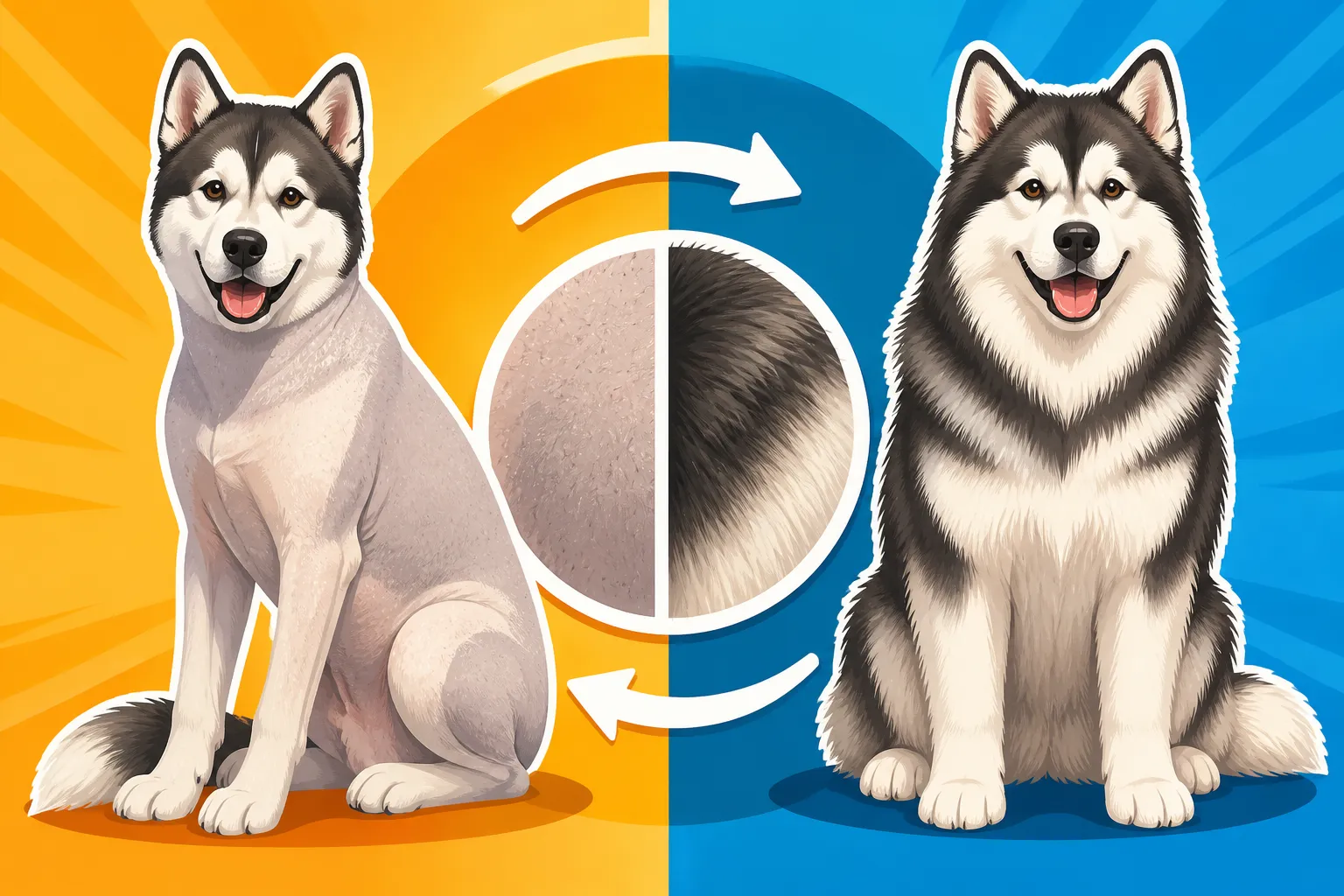
When a Malamute is shaved, the guard hairs and undercoat are cut down to the same length. This is where the trouble begins for uniform regrowth. The undercoat typically grows back much faster than the coarser guard hairs. This often results in a coat that is noticeably softer, fluffier, and sometimes even more prone to matting because the protective guard hairs are no longer there to shield the dense undercoat. It’s common for the regrowth to be patchy, with some areas appearing thicker or thinner than others. The texture can feel entirely different – almost cottony – which isn't the natural feel of a healthy Malamute coat.
This change in texture and density means the coat's natural ability to insulate and protect is severely compromised. It takes a long time for the guard hairs to catch up, sometimes years, and for some Malamutes, they never fully return to their original state. Owners might notice their dog looks perpetually disheveled, even after substantial regrowth.
Potential Permanent Changes to Coat Texture and Function
For many Malamutes, the effects of shaving can be long-lasting, sometimes even permanent. The follicles responsible for producing the distinct guard hairs and undercoat are deeply affected. The delicate balance and growth cycles can be disrupted, leading to a permanent alteration in the coat's structure.
The regrown coat might lack the characteristic stiffness and resilience of the original guard hairs, making it less effective at shedding water, repelling dirt, and protecting against UV radiation. It may become duller, thinner, or develop a tendency to mat more easily because the fluffy undercoat is no longer properly supported and protected by the robust guard hairs. This can trap heat rather than allowing air circulation, making your Malamute more uncomfortable in warm weather than if they had their natural, intact coat. It's a sad irony that an attempt to cool them down can actually make them feel hotter and look less like themselves in the long run.
The "Post-Clipping Alopecia" Phenomenon
While not every Malamute will experience this, a significant number can develop a condition known as "post-clipping alopecia," or simply "coat funk." This is a condition where, after being shaved, certain areas of the coat either fail to grow back at all, or grow back extremely slowly and sparsely. It often appears as bald patches or areas of very thin, unhealthy-looking fur.
The exact cause isn't fully understood, but it's believed that shaving can traumatize the hair follicles, interrupting their natural growth cycle. This condition is particularly common in double-coated breeds like Malamutes, Huskies, and Samoyeds. It can be incredibly frustrating for owners, as there’s no guaranteed treatment to reverse it, and the appearance of their dog can be significantly altered. Some dogs might regrow the fur after many months, or even a year or two, but others may have permanent bald spots or a perpetually sparse coat in the affected areas. This is one of the most compelling reasons Why an Alaskan Malamute Must Never Be Shaved.
The Hidden Dangers: More Reasons Not to Shave Your Malamute
Beyond the aesthetic changes and potential coat damage, shaving an Alaskan Malamute carries several health and welfare risks that every owner should be aware of.
Loss of Natural Insulation: Hotter in Summer, Colder in Winter
This point bears repeating because it's so critical: the double coat isn't just for warmth; it's an all-weather climate control system. Shaving removes both layers. In summer, you strip away the protective barrier that deflects sunlight and allows air to circulate, effectively trapping heat against the skin. This means your Malamute loses its primary defense against overheating. Instead of cooling them, you're making them more vulnerable to heatstroke, which can be life-threatening. Whether a Shaved Malamute Overheats Faster is a resounding yes, and it's a dangerous path to take.
Conversely, in winter, a shaved Malamute is stripped of its ability to retain body heat. They will get colder much faster, requiring more artificial warmth, more food to maintain body temperature, and significantly increasing their risk of hypothermia if exposed to cold weather. Their entire physiology is designed around having that dense, insulating coat.
Increased Risk of Sunburn and Skin Cancer
Just like humans, dogs can get sunburned, and prolonged exposure to harmful UV rays can lead to skin cancer. A Malamute’s skin, under its dense coat, is relatively pale and sensitive, not designed to be exposed to direct sunlight. When you shave the coat, you remove that natural sunscreen.
Within hours of shaving, especially on a sunny day, a Malamute’s exposed skin can become red, irritated, and blistered from sunburn. Over time, repeated sun exposure on unprotected skin significantly increases the risk of developing squamous cell carcinoma or other forms of skin cancer. This is a serious health concern that many owners don't consider when they contemplate shaving their furry friends.
Skin Irritation and Secondary Infections
The act of shaving itself can cause skin irritation, especially if done improperly or if the clippers are dull. Clipper burn, razor rash, and ingrown hairs are all possibilities. Furthermore, without the protective guard hairs, the skin is more vulnerable to environmental irritants, allergens, and insect bites.
Once the skin barrier is compromised, it becomes a prime breeding ground for bacteria and yeast, leading to secondary skin infections. These can manifest as hot spots, folliculitis, or generalized dermatitis, requiring veterinary intervention, antibiotics, or antifungal treatments. It's a painful and uncomfortable experience for your Malamute, and an added expense and worry for you. A Malamute's skin is surprisingly delicate when exposed, making Whether an Alaskan Malamute Gets Hot Spots Under Its Coat a real concern after shaving.
Impact on Grooming and Future Coat Health
Paradoxically, shaving can actually make future grooming harder. As the coat regrows with altered texture, it can become more prone to matting, tangling, and shedding in an irregular fashion. The soft, cottony undercoat can be incredibly difficult to brush through once it begins to grow longer, as it lacks the protective, separating action of the guard hairs.
This means you might find yourself needing to brush more frequently to prevent matting, not less. And if the coat texture has been permanently changed, you could be dealing with a perpetually unruly, shed-prone coat that never quite looks or feels right again. It's a long-term commitment to managing a damaged coat, all stemming from one decision.
Better Ways to Beat the Heat and Manage That Magnificent Mane
So, if shaving isn’t the answer, what is? Thankfully, there are many effective and Malamute-friendly strategies to keep your furry friend comfortable and manage their abundant coat, without compromising their health or the integrity of their magnificent fur.
Effective Cooling Strategies: Shade, Water, Indoor Temps
Instead of removing their natural cooling system, focus on providing ample opportunities for your Malamute to regulate their temperature safely.
- Shade and Shelter: Ensure your Malamute always has access to deep shade, whether from trees, a covered patio, or an insulated dog house positioned out of direct sun. A shaded spot with good airflow is crucial.
- Fresh Water: Always have plenty of fresh, cool water available. Consider adding ice cubes to their water bowl or using a large, spill-proof bowl that they can't easily knock over.
- Cooling Beds and Mats: Gel-filled cooling mats or elevated dog beds (like those from Chewy or Amazon) allow air to circulate beneath them, providing a cool spot without requiring refrigeration.
- Kiddie Pools: Many Malamutes adore splashing in a shallow kiddie pool filled with a few inches of water. It helps them cool their paws and belly, which are key areas for heat dissipation.
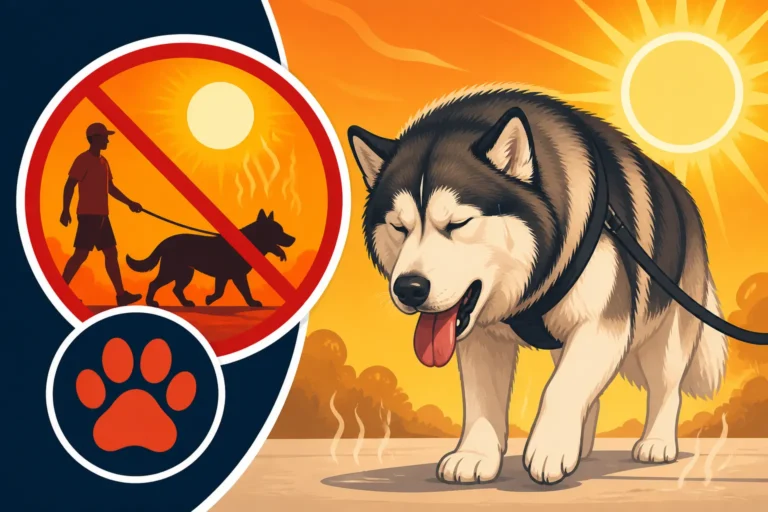
- Timing Exercise: Adjust your exercise schedule. Walk your Malamute early in the morning or late in the evening when temperatures are cooler. Avoid midday heat entirely.
- Indoor Comfort: If possible, provide access to an air-conditioned space during the hottest parts of the day. A fan can also help circulate air and provide some relief. How to Cool an Overheated Alaskan Malamute delves deeper into these methods.
Proper Grooming Techniques: Deshedding, Brushing, Professional Help
Regular and appropriate grooming is your Malamute’s best friend, especially during a coat blow. It helps them shed their old undercoat, allows air to circulate, and prevents matting, all while keeping their protective outer layer intact.
- Consistent Brushing: Aim for daily brushing, especially during shedding season. Use tools specifically designed for double coats, such as an undercoat rake and a pin brush. The goal is to remove dead undercoat, not to cut the guard hairs. This helps prevent matting and allows healthy air circulation close to the skin. How Often an Alaskan Malamute Needs Brushing can guide your routine.
- Deshedding Tools: Tools like a good quality undercoat rake can be incredibly effective at pulling out loose, dead undercoat without damaging the guard hairs. Be gentle and work in sections.
- Professional Grooming: A professional groomer experienced with double-coated breeds can be invaluable. They have high-velocity dryers that can literally blow out loose undercoat, which is incredibly effective and far safer than shaving. They also know how to give deshedding baths that help release the undercoat, as mentioned in Whether a Deshedding Bath Shortens a Malamute's Blow. Ask about de-shedding treatments, not shaving. Services like professional force drying can make a massive difference, as explained in What a Force Dryer Does for a Malamute's Coat Blow. You can find excellent grooming tools and supplies on Amazon or Chewy.
- Never Shave, Only Trim: If you must trim for hygiene around the paws or rear, use scissors carefully, and only trim small amounts. Never use clippers on the body.
Dietary Support for Coat Health
A healthy coat starts from within. Providing your Malamute with a high-quality, balanced diet supports strong hair follicles and skin health, making the coat more resilient and less prone to issues.
- Quality Food: Choose a premium dog food that lists real meat as the first ingredient and contains essential fatty acids like Omega-3 and Omega-6. These are vital for skin and coat health. Brands like Ollie focus on fresh, high-quality ingredients that can contribute to overall wellness, including a robust coat.
- Supplements: Consider adding fish oil supplements to their diet, which are rich in Omega-3s. These can improve skin moisture and coat luster. Always discuss supplements with your vet first.
- Hydration: Proper hydration isn't just for cooling; it's essential for healthy skin and hair. Ensure constant access to fresh water.
By understanding the intricate design of your Malamute's coat and employing sensible care and cooling strategies, you can keep them happy, healthy, and looking their majestic best, without ever having to reach for those clippers.
Disclaimer
This article is for general informational purposes only and does not constitute professional advice. Laws, prices and regulations vary by location and change over time. Consult a qualified professional for guidance on your specific situation.