Whether Gold Rush Prospectors Crossbred Malamutes
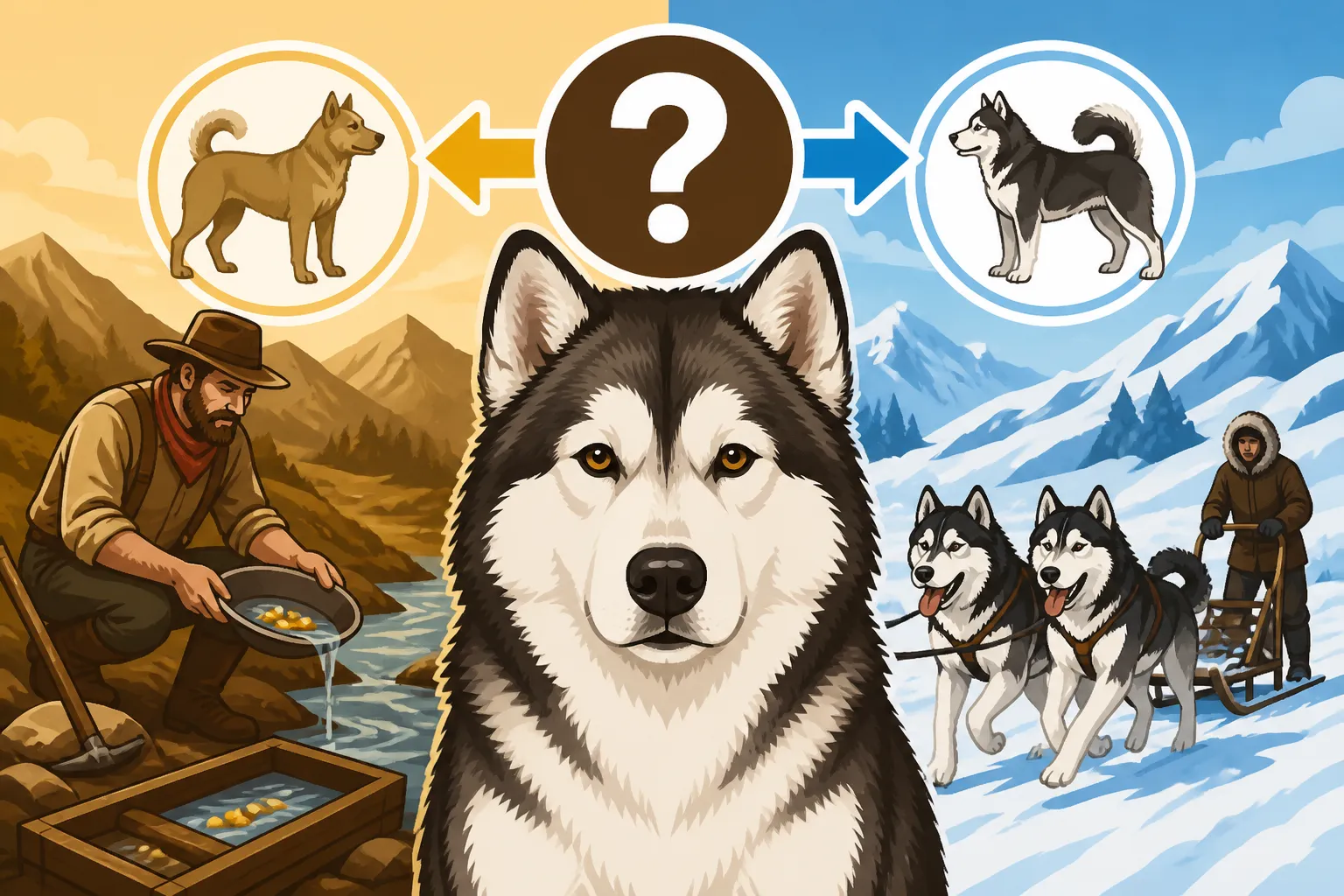
Many aspiring Alaskan Malamute owners, or even seasoned enthusiasts, often wonder about the breed's origins and how it navigated the tumultuous Gold Rush era. The influx of prospectors brought an unprecedented demand for working dogs, leading to a period of intense change and, yes, a fair bit of indiscriminate breeding that challenged the pure lineage of the Mahlemut's noble companion. This guide will delve into the historical pressures faced by the Alaskan Malamute during the Gold Rush and explore the extent to which crossbreeding impacted the breed we know and love today.
The Alaskan Malamute Before the Gold Rush: Purity and Purpose
Before the cries of "Gold!" echoed through the Alaskan wilderness, the ancestors of the Alaskan Malamute lived a life of profound purpose alongside the Mahlemut people of the Kotzebue Sound region. These magnificent dogs were not merely pets; they were integral members of the community, meticulously bred for specific, demanding tasks essential for survival in the harsh Arctic environment. Their primary role was freighting – hauling heavy loads over long distances at a steady, enduring pace. This wasn't about speed; it was about stamina, strength, and unwavering reliability. Freight, Not Speed: What Separates a Malamute From a Racing Dog delves deeper into this inherent characteristic, highlighting the dog's true calling.
The Mahlemut understood the value of preserving the traits that made their dogs so effective. They weren't just breeding for looks; they were breeding for survival. These dogs were adapted to hunt large game, like bears, and even assisted in finding seal blowholes, showcasing their keen senses and cooperative nature. What an Alaskan Malamute Was Bred to Hunt provides more context on their versatility. Each dog was a testament to generations of selective breeding, ensuring the continuation of traits like dense coats, powerful builds, and that independent yet loyal temperament. The idea of crossbreeding with unknown dogs for frivolous reasons would have been alien to a people whose lives depended on the consistent performance of their canine partners.
The lineage was kept relatively pure, isolated by geography and the cultural practices of the Mahlemut people. This purity wasn't a matter of vanity but practicality. Introducing outside bloodlines without careful consideration could dilute the very qualities that allowed both humans and dogs to thrive in such an unforgiving landscape. They were a carefully cultivated indigenous breed, honed by centuries of natural selection and intentional human stewardship. The Mahlemut of Kotzebue Sound Bred the Alaskan Malamute explains the origins of this remarkable partnership.
The Gold Rush Era: Demand, Chaos, and the Pressure to Adapt
Then came the Gold Rush. Starting in the late 19th century, particularly with the Klondike Gold Rush, Alaska and the Yukon exploded with a sudden, overwhelming influx of prospectors. These newcomers had one thing on their mind: gold. And to get to that gold, they needed to move supplies, equipment, and themselves across vast, often frozen, and treacherous terrain. Dogs, already the established mode of winter transport, became an invaluable commodity. The demand for strong, hardy sled dogs skyrocketed overnight.
Suddenly, the carefully managed breeding practices of the indigenous peoples were overwhelmed by sheer economic incentive and desperation. Prospectors, often unfamiliar with dog breeding or the nuances of working dogs, bought whatever could pull a sled. They needed dogs now, not well-bred puppies from generations of proven lines. This created a chaotic market where any dog that looked remotely capable was pressed into service. Dogs were brought in from all over, often mongrels, mixes, and other breeds that could survive the journey north. These "outside" dogs, varying wildly in size, temperament, and genetic background, inevitably came into contact with the existing Malamute-type dogs.
The prospectors weren't worried about preserving bloodlines; they were worried about survival and striking it rich. If a mix promised a bit more speed (perhaps a husky type) or more raw power (maybe a Mastiff or Newfoundland mix), they were often bred into the local stock. It was a time of functional expediency, where immediate utility trumped long-term breed integrity. Many argue that Whether the Gold Rush Nearly Ruined the Malamute is not an exaggeration, as the sheer volume of indiscriminately bred dogs threatened to dissolve the distinct Malamute type. It was a crisis for the purity of the breed.
The Lure of "Better" Traits
The Gold Rush wasn't just about moving any dog; it was also about the perception of what made a "better" sled dog for the rush. Some prospectors, influenced by dog racing trends that were also emerging, might have sought dogs with more speed than the traditional Malamute's steady pull. They might have introduced faster, lighter breeds, like early Siberian Husky types, to create crossbreeds hoping for a faster haul to their claim. Conversely, some might have wanted even larger, more powerful dogs, believing bigger equaled better for heavy loads, leading to crosses with larger European breeds. This constant experimentation, driven by individual needs and limited understanding of genetics, meant that the unique characteristics of the Malamute were often diluted.
This was a stark contrast to the Mahlemut philosophy, where centuries had taught them that balance, endurance, and specific physical and mental traits were paramount for their particular freighting needs. The prospectors, often lacking this deep generational knowledge, made choices based on immediate, often short-sighted, goals. The result was a proliferation of mixed-breed "sled dogs" that, while functional for a time, bore less resemblance to the true Alaskan Malamute.
Supply and Demand Challenges
The sheer numbers of dogs required created an immense pressure on local populations. The traditional Malamute population, while robust, was not designed to meet such an explosive, unforeseen demand. Breeders, if they could even be called that in the traditional sense during the rush, were motivated by profit and immediate needs rather than careful selection for breed standards. This led to a situation where virtually any dog capable of pulling was considered valuable, regardless of its true breed.
Think of it like this: if you needed a shovel to dig for gold, you wouldn't necessarily care about its brand or pristine condition; you'd grab any shovel available. The same applied to dogs. This meant that the gene pool for working dogs in Alaska became a melting pot, with dogs of unknown parentage readily available and constantly intermingling. It became exceedingly difficult to find a dog of pure, unadulterated Mahlemut lineage, making it a challenging time for anyone who valued the original breed. Even today, responsible owners look for reputable sources for their breed-specific supplies, whether it's special food or supplements. Companies like Chewy offer a vast array of options for modern Malamute owners seeking to uphold their dog's health and heritage with quality products, a luxury not afforded to prospectors concerned with simply finding any dog to work.
The Impact of Crossbreeding on the Malamute Breed
The indiscriminate crossbreeding during the Gold Rush had a significant, albeit sometimes temporary, impact on the Alaskan Malamute. The immediate concern was the dilution of the unique physical and temperamental traits that had been carefully cultivated over centuries. The characteristic Malamute "type" – the powerful build, the deep chest, the specific head shape, the dense double coat, and the particular gait suited for enduring freighting – began to blur.
Many of the dogs seen during the height of the Gold Rush were "Alaskan Huskies" in the broadest sense – a term that referred to any mixed-breed sled dog. These dogs were often a blend of various Northern breeds, European imports, and the indigenous Malamute-type dogs. While many of these crossbreeds were excellent working dogs in their own right, they often lacked the consistency and uniformity of a true breed. Traits like the Malamute's "woo" rather than barking, or their innate, albeit independent, desire to pull, could be diluted or lost entirely in these mixes. Why a Malamute Wooes Instead of Barking explores this unique vocalization that sets them apart.
The genetic diversity certainly increased during this period, which isn't always a bad thing, but it came at the cost of breed identity. It took dedicated enthusiasts years after the Gold Rush subsided to identify and gather the remaining purebred examples and begin the arduous process of formalizing and rebuilding the breed.
| Trait | Pre-Gold Rush Malamute | Gold Rush Crossbreeds |
|---|---|---|
| Primary Purpose | Heavy freighting, endurance | Speed, power, immediate utility |
| Breeding Focus | Pure lineage, specific working traits | Functional output, quick availability |
| Physical Appearance | Consistent "type" (powerful, dense coat) | Highly variable, mixed characteristics |
| Temperament | Independent, loyal, pack-oriented | Less predictable, varied drives, potentially more aggressive |
| Genetic Purity | High, due to isolation and selection | Low, due to widespread mixing |
| Value to Prospectors | Reliable worker, enduring | Any dog that could pull, often disposable |
Loss of Unique Characteristics
One of the most profound impacts was the potential loss of defining Malamute characteristics. For instance, the Malamute's heavy bone structure, built for power and resilience over ice and snow, might have been bred out in favor of lighter, faster frames for racing-style sledding. Their specific coat, designed for extreme cold, could be compromised with thinner or less insulated fur from other breeds. Even their renowned ability to regulate their food intake, an evolutionary advantage in a resource-scarce environment, might have been affected. The Efficient Metabolism That Surprises Every New Malamute Owner sheds light on this unique trait that often surprises new owners today.
Beyond the physical, the Malamute's distinct temperament could also suffer. While all sled dog breeds share independence, the Malamute's particular blend of strength, intelligence, and a relatively "soft" nature that responds poorly to harsh corrections is unique. Indiscriminate breeding could have introduced more aggressive or fearful tendencies, making them less suitable for their original roles or for integration into human families. Understanding these nuanced breed characteristics helps us appreciate the work that went into restoring the breed's integrity. For example, Why an Alaskan Malamute Ignores a Cue It Knows speaks to their independent nature that might have been misinterpreted or diluted during the rush.
The "Alaskan Husky" Emergence
It's important to understand that the "Alaskan Husky" is not a recognized purebred dog breed in the same way the Alaskan Malamute or Siberian Husky are. Instead, it’s an umbrella term for a type of sled dog bred for performance, typically a mix of various Northern breeds like the Siberian Husky, Alaskan Malamute, hounds, and even pointers. The Gold Rush was a major catalyst for the emergence of this "type," as prospectors and later mushers prioritized working ability over purebred lineage. These dogs were the ultimate pragmatists' choice, a direct result of the pressures and demands of the era.
While incredibly capable, these Alaskan Huskies often lacked the uniformity of appearance or predictable temperament that purebred enthusiasts value. This made the task of identifying and saving the pure Malamute line even more challenging, as distinguishing a true Malamute from a "Malamute-type" crossbreed required a keen eye and deep knowledge of the original standard. The sheer scale of crossbreeding meant that many dogs with some Malamute ancestry were no longer truly Malamutes, leading to a loss of the specific What an Alaskan Malamute Actually Weighs or its distinctive markings.
Preserving the Legacy: Rebuilding the Breed After the Rush
Fortunately, the Alaskan Malamute did not disappear. After the initial chaos of the Gold Rush subsided and the focus shifted from frantic prospecting to more stable settlement, dedicated individuals recognized the importance of preserving the distinct Alaskan Malamute breed. These early enthusiasts and breeders began the painstaking work of identifying the remaining purebred examples and establishing formal breeding programs. How the Malamute Was Rebuilt After the Gold Rush details this critical period of restoration.
Key figures like Eva Seeley and Paul Voelker played pivotal roles in this preservation effort, identifying dogs that still embodied the true Malamute type, often tracing their lineage back to the original Mahlemut dogs. They meticulously worked to re-establish the breed based on its historical function and appearance, leading to the development of the distinct Kotzebue and M'Loot lines that form the foundation of all modern Alaskan Malamutes. The Kotzebue and M'Loot Lines Behind Every Modern Malamute offers more insight into these foundational strains, which are crucial for understanding today's breed. This commitment to type and function ensured that the Malamute's legacy as a powerful, enduring freighting dog would continue, rather than being lost to the expediency of the Gold Rush.
The Role of Breed Standards and Clubs
The formation of breed clubs and the establishment of official breed standards were crucial in reversing the effects of Gold Rush-era crossbreeding. These standards provided a clear blueprint for what an Alaskan Malamute should look, act, and be like. They detailed everything from coat type and color to head shape, tail set, and gait, ensuring that breeders had a specific goal in mind. By adhering to these standards, breeders could selectively breed dogs that retained the ancient characteristics and purpose. This commitment extended to characteristics like eye color, as Why a Malamute Should Never Have Blue Eyes demonstrates the importance of specific breed traits.
This systematic approach contrasted sharply with the ad-hoc breeding of the Gold Rush. It moved away from simply mating any two functional dogs to a deliberate process of preserving specific traits. For owners today, understanding these standards is vital. When considering an Alaskan Malamute puppy, reputable breeders will openly discuss their adherence to the breed standard and the health clearances of their breeding stock. Products available on platforms like Chewy support responsible ownership, from premium foods to supplements, helping maintain the health of these carefully preserved lines, allowing owners to focus on providing What an Alaskan Malamute Needs Every Day.
Genetic Testing and Modern Preservation
In modern times, the preservation of the Alaskan Malamute has been further bolstered by advancements in genetic testing. While Gold Rush prospectors had no tools beyond observation, today's breeders can utilize DNA tests to screen for inherited diseases and verify parentage. This helps ensure that the gene pool remains healthy and that the integrity of the breed is maintained, avoiding the pitfalls of indiscriminate breeding that characterized the Gold Rush. For example, specific tests exist for conditions like polyneuropathy or day blindness, which allow responsible breeders to make informed decisions and prevent the accidental reintroduction of undesirable traits.
The legacy of the Gold Rush serves as a powerful reminder of why responsible breeding practices are so vital. Without the dedication of those who sought to preserve the Malamute, we might not have these magnificent dogs today. Modern Malamute owners benefit from these efforts, receiving dogs with predictable characteristics and health backgrounds, a far cry from the unknown mixes that traversed the frozen trails in search of gold over a century ago. When you buy from a reputable breeder, you're not just getting a puppy; you're getting a piece of carefully preserved history, ensuring that the true spirit of the How Long Malamute Type Dogs Have Been in Alaska continues to thrive.
Disclaimer
This article is for general informational purposes only and does not constitute professional advice. Laws, prices and regulations vary by location and change over time. Consult a qualified professional for guidance on your specific situation.